


Lychee Nutrition: Flesh Weight, Vitamin C and Food Forms
Jun 14, 2022

Raw lychee provides carbohydrate and vitamin C, with little fat or protein. USDA's historical reference lists 66 kcal per 100 g of edible flesh. The shell, seed and any packing syrup belong to different parts of the food calculation.
For a useful comparison, start with the amount that reaches your bowl. Below, a nutrition table, a weighed fruit example and a foodservice allocation show how to connect the numbers with fresh flesh, dried fruit and prepared lychee products. The examples use chosen quantities, rather than a recommended daily intake.
What the nutrition table measures
These values come from USDA's April 2018 SR Legacy release, record 169086, Litchis, raw. The smaller column is calculated by halving the reference values, with rounding where needed. It describes an illustrative 50 g amount, not an XMSD product analysis.
|
Nutrient
|
Per 100 g edible flesh
|
Calculated per 50 g
|
|---|---|---|
|
Energy
|
66 kcal
|
33 kcal
|
|
Carbohydrate
|
16.53 g
|
8.27 g
|
|
Total sugars
|
15.23 g
|
7.62 g
|
|
Fibre
|
1.3 g
|
0.65 g
|
|
Vitamin C
|
71.5 mg
|
35.75 mg
|
|
Protein
|
0.83 g
|
0.42 g
|
|
Fat
|
0.44 g
|
0.22 g
|
The white edible tissue has a botanical name: aril. UF/IFAS describes it as juicy and translucent, surrounding a dark brown seed. The rough outer skin can range from yellow through pink to red. Some varieties have small, shrivelled seeds, often called chicken tongues, while others have a much larger seed inside. Equal-looking whole fruits can therefore leave different amounts of flesh after preparation.
Three descriptions are especially useful at the fruit counter. Shell-on fruit still needs peeling. Peeled fruit can still contain its seed. Pitted fruit has had the seed removed. Opening one fruit makes these distinctions much easier to understand than reading a photograph of a heap of white pieces. The central hollow visible in some prepared lychees is where the seed was removed, rather than a separate type of fruit.
Lychee is related to longan and rambutan, but those names identify different fruits. Their similar-looking pale flesh is a reason to read the name on a prepared pack carefully. A table headed lychee should remain attached to lychee, even when several tropical fruits share a display or a mixed-fruit recipe.
In our frozen lychee range, the product form is the useful next distinction. For a peeled or pitted ingredient, the relevant questions concern what is supplied and how it will be used. A picture helps explain its appearance; nutrition information comes from the appropriate food or product record.

Carbohydrate, total sugars and added sugars are different lines
The carbohydrate and total-sugar rows are not interchangeable. Reading one as the other changes the meaning of the table before any calculation begins. Keep the nutrient's name beside its unit when comparing a fruit entry with a packaged food panel; a number copied without its heading can easily become a different claim.
FDA's explanation of the US Nutrition Facts label separates naturally occurring sugars from sugars added during processing. Total sugars include both. Added sugars can come from ingredients such as sugar, honey or syrup, and the added-sugar amount is already included in the total. Adding those two lines together would count the added portion twice. A plain fruit's naturally occurring sugars and a sweetened fruit product's added sugars therefore answer different questions.
Consider a hypothetical label that declares 12 g total sugars, including 4 g added sugars, for its stated amount. The total is 12 g, not 16 g; the remaining 8 g is the difference after subtracting the added portion. This arithmetic example explains the label wording. It is not a composition claim for any lychee product pictured here.
With canned lychees, there is also the liquid to consider. A spoonful lifted from a can and allowed to drain is a different recipe input from a spoonful of fruit plus syrup. If the declared nutrition basis includes the liquid, it cannot simply be renamed "drained flesh." Use the manufacturer's stated basis for the food you have, particularly when the recipe deliberately includes some of the packing liquid.
Rinsing or draining also does not produce an exact new nutrient table by itself. You would need suitable information about the resulting food to assign precise values. For an informal meal, choosing how much liquid to add may be enough. For a packaged dessert declaration, that same choice has to be represented in the full formulation.
A lychee-flavoured beverage adds another distinction. The name describes the flavour being offered; the ingredient list identifies what makes up the drink. Fruit flesh, a fruit preparation and a flavoured beverage can all be enjoyable foods, while making quite different contributions to the same lunch.

What vitamin C contributes to the meal
Vitamin C supports collagen formation, normal immune function and absorption of iron from plant foods, according to NIH's nutrition guidance. These are established functions of the nutrient. They do not demonstrate that a portion of lychee treats an illness, prevents infection or produces a particular skin result. The fruit can be discussed accurately without attaching those promises to it.
NIH also notes that vitamin C is water-soluble and can be reduced by prolonged storage and cooking. That makes the condition of the food relevant to any vitamin comparison. It does not supply a fixed percentage to subtract from every chilled, cooked or frozen lychee item; those would be separate claims requiring appropriate evidence.
On US Nutrition Facts panels, vitamin C may be declared voluntarily. FDA's label guidance explains that it is no longer one of the routinely required vitamin lines. Consequently, an absent vitamin C line is not the same as a measured zero. This is a distinction about the US label format, rather than a rule for every market's food packaging.
For a mixed dessert, the fruit is only one component of the nutritional picture. A layer of cream, a yoghurt base and a cereal topping each enter the finished recipe in their own amounts. Describing that dessert by its lychee content alone leaves most of the formulation unexplained. A useful menu description can simply name the ingredients, reserving numerical nutrient statements for information that covers the complete dish.
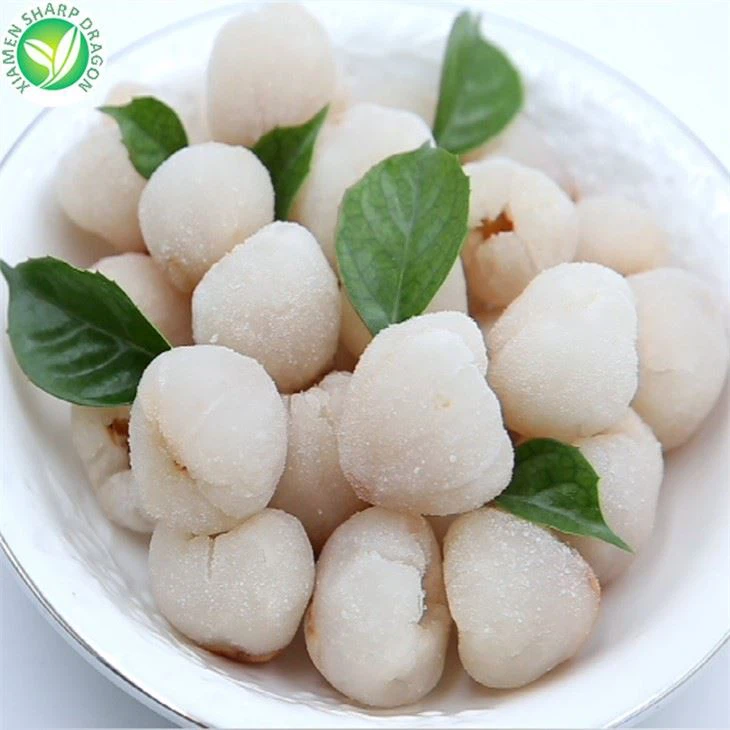
Fresh, dried and frozen lychees have different physical starting points
Fresh lychees should be harvested ripe. UC Davis's lychee fact sheet, dated May 1998, explains that they do not continue ripening after harvest. Its quality discussion also distinguishes the outer shell from the edible interior: water loss can brown the shell, while the flesh inside may or may not have lost flavour. A red exterior is not a nutritional measurement, and a brown exterior alone cannot settle the condition of the flesh. Fruit showing decay should be discarded.
Drying produces a very different food for a weight comparison. USDA's separate Litchis, dried record, 169087, lists 277 kcal, 70.7 g carbohydrate and 22.3 g water per 100 g. It is a historical dried-food entry, not a paired experiment in which the raw fruit in our first table was dried and reanalysed. It illustrates why a gram-for-gram substitution needs attention, without proving a precise retention rate for vitamins or any other nutrient.
For example, 20 g of that dried reference corresponds to about 55 kcal and 14.14 g carbohydrate. This is simply one-fifth of its 100 g values. A small weighed quantity can be useful when evaluating a dried ingredient because its physical form differs so much from fresh flesh. A current sweetened or otherwise prepared dried product needs its own declaration.
Freezing raises a different issue: texture after preparation. The National Center for Home Food Preservation explains that slow freezing can create large ice crystals that damage fruit cell walls, producing softer fruit on thawing. Firm frozen pieces are being viewed at a different stage from fruit that has followed its intended preparation directions.
For peeled frozen lychees, we would assess the prepared flesh for the job it must do. A recognisable rounded piece on a dessert has a different visual role from flesh mixed through a filling.
Lychee flavour also involves a balance of sweetness and acidity. UC Davis identifies the sugar-to-acid balance appropriate to the cultivar as one maturity consideration. Tasting a sharp or very sweet fruit therefore gives a flavour impression, rather than a vitamin C test. Acidity in the mouth is not a way to assign a vitamin concentration to a bowl of fruit.

A weighed portion turns an abstract table into a bowl
Practical example: an adult chooses 50 g of prepared raw lychee flesh as one component of a fruit bowl. Using the reference above, that contributes approximately 33 kcal and 8.27 g carbohydrate. The person also plans to add another fruit and plain yoghurt. Those ingredients are separate parts of the bowl, so the lychee calculation is only a subtotal.
A simple way to weigh the chosen amount is to put the empty bowl on the scale, reset it to zero, then add the prepared fruit. This keeps the bowl's own weight out of the result. Peeling into one container and placing the flesh in another also makes it easier to keep discarded parts out of the ingredient amount. These are measuring steps for the example, rather than a claim that every household needs a scale for eating fruit.
Suppose the person wants the lychee distributed throughout the bowl instead of concentrated on top. Dividing the same prepared amount into smaller pieces changes the arrangement, while the weighed ingredient subtotal stays the same. The rest of the meal has not changed merely because the pieces look more numerous. This is one reason a visual count can be a poor way to compare two presentations.
For packaged foods, FDA advises checking the serving size and servings per container. Nutrition information is usually for one stated serving, although a package may also carry a whole-container column. The serving size describes an amount typically consumed, rather than prescribing what a person should eat. A package containing several servings should therefore be read differently from a single-portion container.
The bowl can be as simple as the reader wants. A numerical comparison is most useful when it answers a real question, such as how much of one chosen ingredient has been added. It becomes less useful when a tidy subtotal is mistaken for a complete meal assessment. For an individual medical eating plan, use the quantities and counting method agreed with the professional providing that plan.
The units help explain the nutrition subtotal too. A milligram is one-thousandth of a gram. A vitamin amount expressed in milligrams may look numerically larger than a fibre amount expressed in grams, although it represents a smaller mass. Compare the same nutrient in the same unit and food quantity, rather than ranking different nutrients by the size of the printed number. When calculating from a reference, retain the original decimal places through the multiplication and round the result at the end. Rounding each intermediate step can create small discrepancies when several ingredient subtotals are combined.

Prepare the flesh carefully, with an extra precaution for children
Fresh lychee has a removable shell, but the surface still meets hands during peeling. FDA advises washing produce under running water before preparation, including when the skin will not be eaten. Soap and household detergent are unsuitable. Begin with clean hands, keep utensils and surfaces clean, and separate produce eaten raw from raw meat, poultry and seafood. Purchased cut produce should be refrigerated. Packaged products should be handled according to their own directions.
The peeled fruit also needs its seed removed before the flesh is served. With purchased pitted fruit, the finished use still matters: a whole rounded piece is a product form, not automatically the right shape for every diner.
Hong Kong's Department of Health school guidance gives a specific lychee precaution for children. Naturally occurring compounds, present at higher levels in unripe fruit, can interfere with glucose production. Eating a large amount on an empty stomach can cause serious low blood sugar in children. The guidance advises against empty-stomach consumption and recommends no more than five lychees at a time for children. This is that authority's child-focused advice; it is not a universal adult safe-dose calculation or a reason to replace meals with fruit.
Shape and texture need separate attention for young children. CDC recommends preparing food to match the child's development, keeping the child seated upright and supervising eating. Its potential choking-hazard list includes whole pieces of canned fruit and some dried fruits. Removing a lychee seed does not by itself resolve the shape of the remaining flesh. Follow development-appropriate preparation guidance, and seek individual advice when swallowing needs are uncertain.
For a shared meal, serve the fruit in the prepared form intended for that diner. The whole pitted fruits shown in commercial photographs identify an ingredient; they do not illustrate a recommended child portion or an assessed feeding method.

Plan a foodservice quantity in ready-to-use flesh
Worked example: a kitchen is planning 36 dessert portions with a chosen 40 g of pitted lychee flesh in each. The fruit requirement is 36 × 40 g = 1,440 g, or 1.44 kg. This is an illustrative recipe allocation, not a dietary serving recommendation. The amount refers to flesh at the stage it will be portioned into the dish.
If suitable hypothetical 500 g packs supplied that same ready-to-use amount, three packs would provide 1.5 kg. After the planned allocation, 60 g would remain. The example assumes the pack weight and recipe weight share the same preparation basis. Actual packaging, any liquid separation and product directions need to be established for the ingredient being considered.
There is a practical choice behind the arithmetic. The kitchen might need complete fruit shapes for each dessert, or it might be happy with pieces. A requirement for both a fixed weight and a fixed number of complete lychees can conflict when individual pieces differ in size. Decide which feature serves the dish: weighed fruit contribution, appearance, or an agreed combination with a little flexibility.
For our foodservice and catering discussions, that distinction helps us understand the proposed ingredient. We would ask whether the flesh appears as an intact garnish, lies in layers or is mixed into another component. It makes the sample question specific enough to answer, without turning the food into a list of assumed commercial specifications.
A short portioning run can also reveal a presentation issue that a total-weight calculation misses. If the first plate receives the largest whole pieces and later plates receive smaller pieces and fragments, the total allocated fruit may be correct while the dishes look inconsistent. Mixing the usable pieces before portioning, or separating the required shapes for that application, offers a concrete way to compare the options.
Our frozen packaging information provides a starting point for discussing how an ingredient is packed. The final request should identify the form and prepared quantity the kitchen actually needs. That leaves nutrition information doing its proper job: describing the food in a relevant amount, alongside a clear account of how it reaches the plate.

Planning a lychee ingredient? Tell us the required fruit form, prepared quantity and intended dish. We will review the relevant frozen lychee options.
References
- USDA FoodData Central: SR Legacy April 2018, raw 169086 and dried 169087
- UF/IFAS: lychee fruit structure and varieties
- FDA: total sugars and added sugars
- NIH Office of Dietary Supplements: vitamin C
- FDA: nutrients on the US Nutrition Facts label
- UC Davis: lychee maturity and quality (May 1998)
- National Center for Home Food Preservation: frozen fruit texture
- FDA: serving size and package quantities
- FDA: preparing and serving produce
- Hong Kong Department of Health: lychee and children
- CDC: food shapes and choking prevention (March 2026)
- The label calculation, bowl and foodservice examples use hypothetical inputs. Recipe quantities are not dietary recommendations, guaranteed pack sizes or documented XMSD trials. Images show whole, peeled or frozen lychees; none illustrates dried fruit or a weighed portion.