


What Is a Banana? From Botanical Berry to Kitchen Ingredient
Jun 14, 2022

A banana is the edible fruit of a Musa plant. The plant is a giant herb and the fruit is a botanical berry. In a kitchen, the practical distinctions are type, ripeness and preparation. Choose a ripe dessert banana for sweet mash, a suitable cooking type for a firm cooked side, or a prepared frozen cut when the recipe needs a repeatable piece size.
On a plate, the more useful distinction is often between a fruit you can peel and eat, an ingredient chosen for cooking, and a prepared product such as frozen pieces or dried slices. Understanding those differences explains why several foods called banana can give very different results in the same recipe.
A fruit can come from a giant herb and still be a berry
Kew describes the banana's trunk-like structure as a pseudostem formed from tightly overlapping leaf bases. The word herb refers to this plant structure; it does not classify the edible fruit as a seasoning. A large banana plant can therefore look tree-like without having the woody trunk that appearance suggests.
Berry is another technical word that travels awkwardly into everyday conversation. The New York Botanical Garden explains that botanical berries develop from the ovary of a single flower, and includes bananas in that category. The small fruits commonly grouped together as berries in a shop do not all share that botanical classification. Fruit development, rather than a particular size or taste, is the point of the term.
UF/IFAS explains that in edible cultivars, fruit can develop without pollination, a process called parthenocarpy. Many cultivated bananas are seedless, and some can set seed. For food identity, start with the stated banana type and the use. Visible seeds are a poor shortcut for deciding whether the item is a fruit.
These words answer separate questions:
|
Word
|
What it describes
|
What the cook still needs to know
|
|---|---|---|
|
Fruit
|
A plant part that develops from a flower
|
Which edible type is being offered
|
|
Giant herb
|
The non-woody plant supporting the crop
|
Whether the fruit suits the recipe
|
|
Berry
|
A fleshy fruit developing from one flower's ovary
|
The flavour and form wanted in the dish
|
You can use the ordinary word fruit when planning a meal. Calling a banana a berry adds botanical information; it does not make it a direct substitute for every ingredient called berry in a recipe. A blueberry muffin and a banana loaf are different preparations even though the scientific vocabulary places both fruits in a broad category.

The banana plant's upright support is a pseudostem formed by overlapping leaf sheaths. A flowering stalk emerges through it, and edible fruit develops in clusters called hands. A bunch can include several hands, and a finger is one banana. Those terms help when ordering fresh fruit. Once a bakery buys peeled pieces, edible kilograms and piece dimensions describe the delivery more usefully than a finger count.
The usual supermarket banana is one part of a varied crop
Cavendish bananas are familiar to many shoppers, but Kew's account places them within a much wider diversity of cultivated fruit. Banana skin, shape and size vary. The long yellow fruit in a familiar shop is a useful point of reference, rather than a complete picture of what bananas can be.
Names can be less straightforward than they sound. UF/IFAS notes that several cultivars share the common name Lady Finger. It also describes a dessert type known in south Florida as Apple, Silk, Manzana or Manzano, with a mildly tart flavour when fully ripe. Such names help introduce the range, but a local market's name needs its own context.
An apple banana is still being offered as a banana; the name is not an ingredient list saying apple has been added. Similarly, a small fruit is not automatically an immature version of a larger one. When trying an unfamiliar named banana, begin with the seller's identification and the normal eating stage for that fruit.
Harvard's Nutrition Source gives red banana as another eating type: shorter and plumper than Cavendish, with a dark reddish-purple exterior and creamy ripe flesh. A red-skinned banana therefore need not turn into the familiar yellow supermarket fruit before it belongs in a fruit bowl. Use guidance for the identified type when choosing its eating stage.
The same approach helps when a recipe names a particular type. Read the name as part of the recipe, just as you would read a specified cut of another ingredient. If only a different banana is available, choose a preparation written for it or make a small version before committing all the ingredients.
For detailed commercial descriptions, the banana identity and product-form guide goes further into supplied ingredients. In an everyday kitchen, the immediate question is simpler: what fruit do you have, and at what stage is it intended to be eaten?

Banana plant photo by Johnnybam via Wikimedia Commons, CC0 1.0.

Ripening changes flavour, while handling can change appearance
UC Davis describes Cavendish bananas harvested at mature-green stage and ripened after harvest. As the fruit ripens, starch converts to sugars, while acids and volatile compounds also affect flavor. For a recipe, cut a representative piece and check its firmness, sweetness and color together. A fruit intended for neat slices needs a different texture from fruit you want to mash.
The implication for a cook is easiest to notice in a simple food. Banana eaten on its own puts the fruit's flavour in the foreground. In a mixture, the banana has to work alongside the other ingredients. Taste a suitable ripe dessert banana on its own before deciding how much extra sweetness the finished meal needs; the starting fruit may differ from the one used previously.
Appearance can also reflect handling. The same UC Davis sheet distinguishes scuffing of the skin from impact bruising: a dropped fruit can develop brown flesh even when its skin shows no corresponding damage. It therefore makes sense to inspect the flesh during preparation instead of treating the outside as a complete account of what is inside.
Harvard's description of ripening Cavendish also follows the peel's changing texture: it becomes thinner and more flexible, while brown spots develop. The outer change is therefore not just a switch between green and yellow. That description concerns Cavendish; it should not replace the different appearance expected of an identified red banana.
Iowa State's household guidance places ripening bananas at room temperature and lists both fresh slices and frozen banana as useful kitchen forms. The planned meal can help you decide when to prepare the fruit, but it should not pressure you into using an unsuitable ingredient just because the recipe has already been chosen.
At XMSD, we would judge banana pieces at the point where they contribute to the food. A neat frozen slice and an attractive slice on a finished dessert answer different questions. For a smooth filling, we would look at the prepared mixture; for a visible garnish, we would examine the actual pieces in that presentation.

A bruised peel, chilling injury and normal ripening can produce different results inside. The UC Davis Cavendish fact sheet describes skin discoloration or delayed ripening after inappropriate cold exposure. Check the flesh of representative fruit before judging the lot. Where you need an even blend, set the accepted stage in a reference sample and keep the receiving method consistent. For household handling, see the banana storage guide.
Cooking bananas belong in the main meal as well as dessert
The dessert-versus-cooking distinction describes common uses rather than two completely isolated worlds. North Carolina Extension's profile of Musa × paradisiaca includes mostly starchy cooking types and plantains, but also some dessert types. Its food description allows both raw and cooked uses. The named fruit and the particular recipe matter more than an assumption that every banana follows one route.
FAO's older fruit-processing manual records steaming, boiling, roasting and frying as banana and plantain preparations. It also describes cooked plantain pounded into a paste called fufu and eaten with soup or sauce. These are examples of food traditions, with individual recipes providing the preparation details.
In foodservice and catering, a cooked piece served beside another dish needs a shape and mouthful that work on that plate. A mashed component is meant to be eaten together with the rest of the food. A fruit used within a sweet batter has another role again. The recipe provides the combination of ingredients and preparation that produces that result.
Cooking a dessert banana does not rename the fruit as a plantain. Equally, choosing a cooking type does not tell you whether to boil, bake or fry it. Those are decisions made through the recipe and the intended food. When learning a dish, retain both the requested banana type and the stated stage instead of changing them together.
A useful way to try a new preparation is to make the smallest sensible quantity supported by the recipe. Pay attention to the banana after cooking: the ease of cutting it with a fork, how it combines with the accompanying food, and whether its flavour suits that combination. These observations describe the meal you made, without turning it into a claim about every cooking banana.
If the result is unfamiliar rather than faulty, compare it with the recipe's intended presentation before changing the method. A banana component designed to be mashed need not resemble separate slices. Learning what the dish is aiming for is often more helpful than comparing it only with the sweet banana normally eaten straight from the peel.
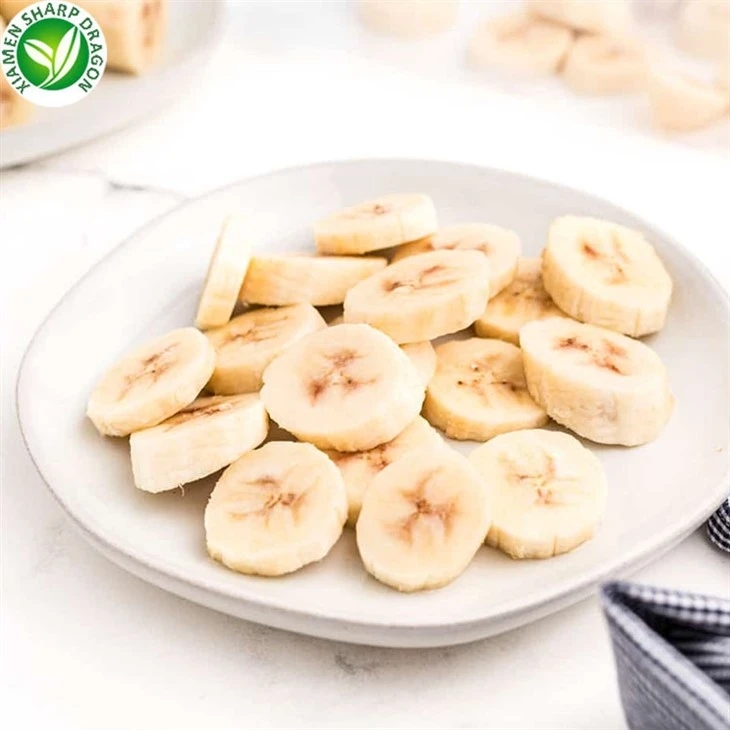
Slices, mash and frozen pieces offer different ways to use the flesh
With whole fresh fruit, you can choose the shape as you prepare it. Crosswise slices offer small pieces; a lengthwise piece creates a different presentation; mashing removes the need to preserve an individual outline. Think about how the banana will be picked up and eaten, not only how much surface it covers on the plate.
Iowa State suggests fresh banana slices over cereal or oatmeal and frozen banana in smoothies. Its guidance also says to rinse bananas under running water before eating. These are household food uses. Purchased prepared banana follows the directions for that product, including any required preparation before serving.
A narrow dessert cup and an open plate give the same fruit different spaces to occupy. In a cup, a piece needs to fit with the spoon and the other layers. On a plate, a longer piece may be part of the arrangement. Try the intended shape in the actual serving dish before preparing all the fruit; this can reveal an awkward bite that was easy to miss on the chopping board.
FAO describes banana puree as pulp made from peeled ripe fruit. In a home recipe, mashing with a fork leaves the cook in control of how much structure remains: a few small pieces may be welcome in one mixture, while another calls for a smooth ingredient. The recipe's requested texture determines when that preparation is complete.
The National Center for Home Food Preservation publishes a specific method for freezing mashed ripe banana. That method concerns a prepared home ingredient; its full directions include the treatment and packaging steps. It should not be read as a specification for supplied IQF slices or as instructions for every frozen banana product.
For the forms shown in a frozen banana range, choose the ingredient for the job it will do after its required preparation. In a blended drink, a recognisable slice is a temporary starting shape. In a fruit topping, retaining a useful piece is part of the result. Those uses can make different sample qualities relevant.
Harvard gives a further example of frozen banana's role: chopped frozen fruit blended with a little liquid makes a smooth frozen dessert alternative. Here the banana becomes the body of the mixture rather than a separate garnish. The form is useful in its own right; the recipe does not require the fruit to look like freshly cut slices afterwards.

A frozen bag, a mashed fruit preparation and a crisp dried slice serve different jobs. For a cooked loaf, compare ripe pulp or thawed pieces in the actual batter and account for any added ingredients or released liquid. For a smoothie or other cold use, check that the product is appropriate for the intended preparation and follow its instructions. The frozen banana buying guide compares bulk and retail formats.
Dried banana can be chewy, crisp or ground into another ingredient
Banana figs is FAO's term for peeled bananas dried while retaining much of their shape. The word figs in that name describes a banana product, rather than an ingredient from a fig tree.
Dried slices need not have the brittle texture of a crisp snack. Oregon State's February 2020 Food Hero recipe describes a leathery, flexible result that is no longer sticky. It also allows optional fruit juice and flavourings. That particular dried-banana method produces a useful example of a chewy food; it does not define every item sold as banana chips.
Practical example: imagine a cook choosing a ready-to-eat banana topping for a crunchy snack mixture. One candidate bends when bitten and another breaks crisply. The choice depends on the intended mouthful. If the mixture is meant to have a crisp banana component, select the product that provides it; if a chewy fruit contrast is preferred, choose that deliberately. The example describes a texture decision, not a measured comparison of named brands.
Inspect the candidate in the mixture as well as on its own. A large piece may dominate a spoonful, while a smaller piece may be easier to combine with the other ingredients. Decide whether to serve it whole or use a recipe that calls for smaller pieces. Crushing every candidate into crumbs would remove the very texture distinction the cook was trying to compare.
FAO's manual describes banana powder made by drying ripe pulp, and flour made from green fruit that is dried and milled. That gives a concrete reason to distinguish the two names: both are dry ingredients, but their starting fruit and preparation can differ. A recipe written for one should identify it, especially when the banana is mixed through a batter rather than served as a visible piece.
Read the ingredient list for the particular product when additions matter to the meal. A fruit name on the front of the pack is a description to investigate, rather than a complete formulation. A banana-based snack and plain prepared banana can both have a place in the kitchen, with the actual recipe or product label explaining what each contains.

Peel the banana before weighing a recipe portion
Worked example: Suppose a bakery needs 300 g peeled banana flesh and has 250 g prepared. The shortfall is 50 g of edible flesh. If an earlier measured trial had given 80% peeled yield for the same fruit and preparation, the bakery would need approximately 62.5 g of additional whole fruit by weight before allowing for variation. Check the actual peeled amount before mixing. Both the weight and the yield assumption are hypothetical.
Weighing another whole banana with its peel still attached would answer a different question. The recipe uses the flesh. Peel the additional fruit and weigh the amount being added, so the final quantity in the bowl corresponds to the recipe. The calculation gives no standard peel-loss percentage and no recommended amount of banana to eat.
If the baker prefers to use only the available fruit, a smaller recipe is another possible route. Here 250 ÷ 300 is about 0.833, so a suitably scalable recipe would need to be made at roughly five-sixths of its original size. Scaling the rest of the ingredients is part of that decision; simply using less banana while leaving everything else untouched creates a different formula.
A complete baking recipe may also need guidance on pan size and baking time when resized. The arithmetic establishes the ingredient relationship, while the tested recipe determines how to carry out the smaller bake. If that guidance is unavailable, obtaining the additional 50 g may be the clearer choice. This makes the calculation useful without presenting a new baking method.
At XMSD, we would use the prepared recipe quantity to understand the banana requirement. For the illustrated baker, that means 300 g in the mixing bowl. A count of whole fruit or an unopened pack weight serves a different purpose. We would keep the ingredient amount visible when discussing the forms and quantities in frozen packaging information.
Avoid converting the number of bananas into an exact prepared weight without weighing the fruit you have. Two recipes can both mention one banana while expecting different amounts, particularly when fruit size varies. A recipe that gives grams of prepared flesh removes that uncertainty for the cook using a scale.

Planning a banana ingredient? Tell us the food you are making, the required form and the prepared quantity. We will review the relevant frozen banana options.
References
- Kew: banana plant structure and diversity
- New York Botanical Garden: botanical berries (page 41)
- UF/IFAS: banana fruit development and cultivar names
- North Carolina Extension: cooking and dessert banana types
- UC Davis: Cavendish ripening and handling (November 1996)
- Iowa State Extension: bananas in the home kitchen
- National Center for Home Food Preservation: mashed banana
- FAO: banana and plantain food forms
- Oregon State Extension: dried bananas (February 2020)
- Harvard Nutrition Source: banana types and food preparation
- FDA – Ready-to-Cook Food Safety