


What happens when you eat apple everyday?
Nov 06, 2019

If you eat one apple every day, the likeliest result is modest: you add a dependable serving of fruit, water, carbohydrate, and fiber to your routine. You may feel more satisfied between meals, and your bowel pattern may change as your fiber intake rises. The more important effect, though, comes from what the apple replaces. Swapping it for a pastry, candy bar, or sweet drink changes the whole snack. Adding it after the same snack simply adds more food.
Do not expect a detox, automatic weight loss, flawless digestion, or guaranteed protection from illness. Human trials have reported some small changes in blood lipids under particular conditions, but they have used whole fruit, juice, extracts, pectin, and other apple products in different populations. Those interventions are not interchangeable, and their average results do not predict exactly what you will notice.
For most people, a plain, normal-size apple can fit comfortably into a varied diet. Keep the peel if you tolerate it, drink water normally, and watch the real outcome: appetite, digestive comfort, total snack intake, and whether other fruits and vegetables still have room in the week. If bloating, reflux, mouth itching, or another repeatable symptom appears, change the amount, timing, or form rather than treating the proverb as a rule.

The Main Change Happens in Your Food Routine
Food habits work through repetition. A single piece of fruit will not feel remarkable. Put the same choice into a work break, packed lunch, or breakfast for several weeks, and it may alter what is easy to reach for. That is a genuine result even if the mirror, bathroom scale, and laboratory values barely move.
The starting diet decides how meaningful the change is. Someone who rarely eats fruit gains a regular source of fiber and a recognizable whole-food snack. Someone who already eats several kinds of fruit may simply trade one variety for another. A third person might keep every existing meal and add a large apple dessert each night; that routine has a different nutritional direction from eating plain wedges instead of biscuits.
This is why the useful question is not "What special power builds up?" Ask instead: What food moved out of the day, what moved in, and is the new pattern easier to maintain? A crisp fruit that travels well may solve a practical problem that a complicated eating plan never solves. Convenience is not a nutrient, but it strongly affects whether a sensible choice survives a busy month.
Variety still matters. Repeating an apple is fine, yet it should not crowd berries, citrus, stone fruit, vegetables, legumes, grains, or protein foods off the menu. Different plant foods bring different fibers, textures, colors, and micronutrients. Keep the dependable habit, then rotate the rest of the produce around it.
What a Medium Apple Actually Adds
USDA FoodData Central lists a medium raw apple with skin at about 182 g. That edible portion provides roughly 95 kcal, 25 g carbohydrate, 4.4 g fiber, and 19 g naturally occurring sugars. Per 100 g, the same generic entry is about 52 kcal and 2.4 g fiber. Variety, size, ripeness, and preparation move the numbers, so weighing the edible amount is more reliable than assuming every piece is "one serving."
| Measure | Generic raw apple with skin | How to use the number |
|---|---|---|
| Edible weight | 182 g for one medium fruit | Compare actual size before estimating intake |
| Energy | About 95 kcal | Count the finished snack, including dips or pastry |
| Dietary fiber | About 4.4 g | Increase gradually if your usual intake is low |
| Carbohydrate | About 25 g | Use the real portion in an individual meal plan |
Fiber is the feature most likely to make a noticeable day-to-day difference. It adds bulk to the diet, while the fruit's water and solid structure take time to chew. That combination can make a whole apple feel more substantial than an equal volume of clear juice. "More substantial" is not the same as guaranteed fullness for every person; meal timing, appetite, sleep, activity, and companion foods all influence the experience.
The sugar in plain fruit arrives inside a water- and fiber-containing structure. Once the fruit becomes clarified juice, much of that structure is gone and drinking a larger amount becomes easy. Conversely, putting the apple into a pie with sugar and fat changes the finished dish far more than the cultivar name does. Read the entire preparation, not the fruit word on the label.

Replacement and Addition Lead to Different Results
A fruit habit is most useful when it has a job. It might replace the vending-machine snack at 4 p.m., add produce to a sparse breakfast, or provide a measured carbohydrate source before a long walk. Without a job, it can become an automatic extra eaten after hunger has already passed.
Substitution changes two sides of the ledger. You gain what the new food brings and remove what the former choice brought. A plain medium apple in place of a 250 kcal packaged pastry lowers that snack by about 155 kcal and changes its fat, added-sugar, fiber, and volume profile. Eat both, and the snack rises to about 345 kcal. Neither arithmetic line promises a body-weight outcome, because the rest of the day and later appetite may shift, but it identifies the direction of the immediate choice.
Practical example: Take a commuter who buys a sweet pastry on five workdays. For four weeks, she packs one medium, 182 g apple and eats it at the same break only when genuinely hungry. The deciding input is replacement, not addition: the pastry stays out of the bag. She records hunger before the snack, comfort two hours later, any unplanned food, and whether dinner portions change. At the end, the useful result is a visible pattern-perhaps the swap feels easy and keeps the afternoon steady, or perhaps the apple alone leaves her hungry and works better alongside a measured protein food. Either finding is more valuable than assuming a universal reaction.
A person managing diabetes or another condition with a prescribed carbohydrate plan needs individual guidance for the serving and meal context. The fruit still has carbohydrate. Pairing, timing, medication, and activity may matter to that person in ways that a general nutrition rule cannot settle.

Digestion May Become More Regular-or More Noisy
If your usual diet is low in fiber, a consistent fruit serving may make stools softer or more regular. That change may take time and is not a reason to keep increasing the quantity. One comfortable portion is a better starting point than several large apples eaten because "fiber is healthy."
Some people move in the opposite direction and notice gas, abdominal pressure, or loose stools. NIDDK explains that certain carbohydrates can escape complete digestion in the small intestine; bacteria then break them down in the large intestine and produce gas. Its examples include apples and fruit juices. A sudden increase in total fiber can add to the problem, especially when the same day also contains large portions of legumes, whole grains, or other fermentable foods.
Use a calm test. Reduce the amount to half a fruit, eat it slowly, and keep the surrounding meal simple enough to interpret. Cooked or peeled apple may feel different, although peeling also changes the fiber contribution. If one form causes symptoms and another does not, record that distinction instead of banning every food that contains apple.
Timing matters mainly when it connects to a known symptom. NIDDK advises people with nighttime reflux symptoms that finishing meals at least three hours before lying down may help. That is guidance about the eating pattern, not a special accusation against apples. An evening fruit portion may be comfortable for one person and poorly timed for another who repeatedly develops reflux near bed.
Safety note: Stop and seek qualified help for swelling, breathing difficulty, faintness, or another severe allergic reaction. Persistent pain, ongoing bowel changes, or symptoms that interfere with eating also deserve professional assessment rather than repeated home experiments.

Whole Fruit, Juice, Sauce, Dessert, and Frozen Pieces
"Apple" can describe foods with very different structures. Whole raw fruit demands chewing and retains its natural solids. Unsweetened sauce is easier to eat quickly and may have a softer effect on appetite. Juice is a drink, not a fiber-equivalent copy of the whole fruit. Dried pieces concentrate the edible material into a smaller volume. Pie, turnover, sweetened compote, and caramel-coated slices must be judged as complete recipes.
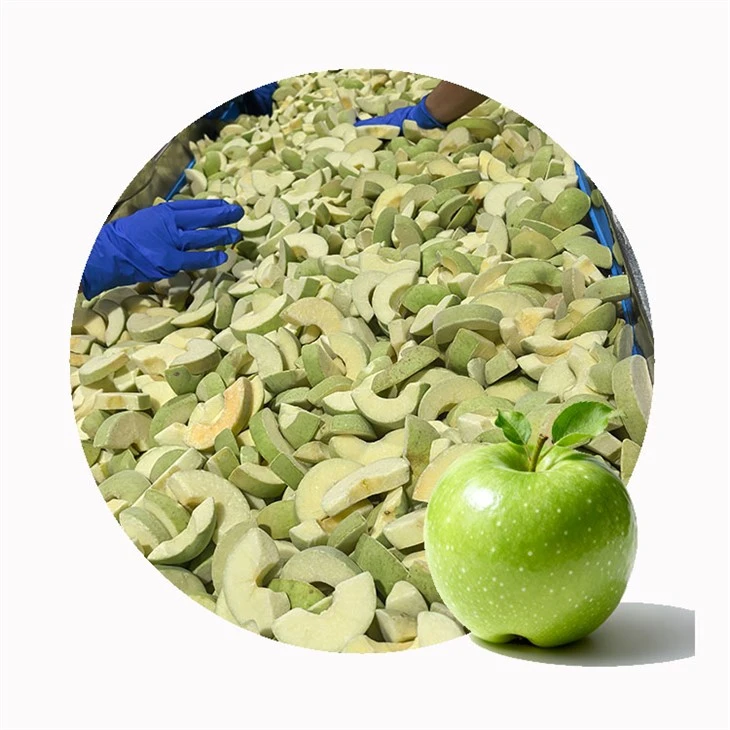
Frozen pieces sit somewhere else in the comparison. When the ingredient declaration lists only apple, IQF pieces provide a plain fruit component, but their texture changes after freezing and thawing. They are often better suited to oatmeal, yogurt preparations, bakery fillings, sauces, or heated meal components than to use as a crisp hand fruit. The nutrition decision still starts with the ingredient list and edible amount; freezing alone does not turn a sweetened formulation into plain fruit or make a large serving small.
For an overview of available cuts, the XMSD frozen apple range shows why format must follow use. A visible topping needs recognizable pieces and acceptable color after thawing. A cooked filling can accept more softening but still needs suitable flavor and water release. A smoothie or sauce cares less about intact geometry and more about consistent dosing and the finished blend.
Peel is another practical variable. Keeping it on a fresh fruit preserves the food as represented by the USDA "with skin" entry. Peeled commercial pieces have a different basis and may be chosen for color, texture, or processing reasons. Compare like with like: raw peel-on fruit against raw peel-on fruit, or the declared frozen ingredient against the exact finished recipe. Loose comparisons create confident but misleading conclusions.
Choose the form by the way it will be eaten
For a portable snack, whole fruit usually wins on simplicity. For portioned foodservice or a manufactured dish, pre-cut material may reduce preparation work and make recipe control easier. Frozen green apple slices suit an application that needs a visible slice, while dice suit spoonable products and even distribution. Neither cut is automatically "healthier." The ingredient declaration, portion, companion foods, and use decide that question.
What the Clinical Trials Really Measured
A 2022 systematic review gathered 18 randomized controlled trials of apples and apple-derived products. Interventions lasted from one to twelve weeks and ranged from whole fruit to juice, extracts, pectin, powder, vinegar, and pomace. Whole-fruit amounts in the included studies ranged from one to three apples per day. Combining all of those forms can answer a broad research question, but it is a poor basis for promising what one ordinary piece of fruit will do for one person.
Across the pooled results, total and LDL cholesterol leaned downward but the overall changes narrowly missed statistical significance; some placebo-controlled subgroups showed reductions. Glucose, insulin, C-reactive protein, triglycerides, and blood pressure were mostly unchanged. The authors also noted variation in study products and risk of bias, while the certainty rating differed by outcome.
The sensible reading is neither "apples do nothing" nor "one a day protects the heart." The trials leave room for small lipid effects in some settings, especially when the intervention and comparator are carefully defined. They do not support expecting rapid, visible changes in energy, skin, body weight, immunity, or blood tests merely because a calendar streak has begun.
Composition and health outcome are separate questions. USDA data tell you what was measured in a defined food portion. A controlled trial estimates an average change under a study design. Your kitchen decision is narrower: choose the product form, set a reasonable amount, notice tolerance, and keep the rest of the diet varied. That is enough to act responsibly without turning the habit into medicine.
A Four-Week Check That Produces a Useful Answer
Four weeks is long enough to see whether the routine fits your schedule and digestion, yet short enough to remember what changed. Keep the experiment ordinary. Choose one food form, one approximate edible weight, and one recurring eating occasion. Avoid changing breakfast, exercise, sleep, supplements, and several other snacks at the same time if you want an interpretable result.
- Record three baseline days: usual snack, hunger before and after, digestive comfort, and any reflux.
- Choose the job: replacement, breakfast addition, or measured ingredient in a meal.
- Use a repeatable portion, such as one medium fruit or a weighed amount of plain pieces.
- Review the pattern weekly, looking for repeated changes rather than one unusual day.
- After four weeks, keep, modify, or drop the habit according to comfort, usefulness, and dietary variety.
Good observations are plain: "I stopped buying the pastry on four of five workdays," "I felt hungry again within an hour," or "A full fruit produced bloating, while half with lunch did not." Weak observations are sweeping: "I felt healthier," "My body detoxed," or "My metabolism improved." If the claimed change matters medically, symptoms and laboratory values require appropriate clinical interpretation.
Do not force the streak. Missing a day has no biological penalty. The aim is to discover a durable place for fruit, not to defend an unbroken count. If another fruit is available, desired, and well tolerated, choosing it supports variety rather than betraying the habit.
Frozen Apple Checks That Matter in Real Applications
From our frozen-fruit perspective, cut distribution deserves attention before anyone discusses recipe performance. Small fragments have more exposed surface area and usually soften faster than intact pieces during thawing or reheating. When we review dice for a visible oatmeal cup, meal kit, or dairy preparation, we separate intact units, undersized fragments, surface ice, and clumps. A bag may carry the requested nominal cut while still giving uneven spoonfuls if too much material falls outside the useful piece range.
That check has nothing to do with making a health promise. It protects the eating experience that allows a fruit-containing product to be served consistently. If the first portion is mostly intact dice and the last is mostly fines, consumers receive different texture and kitchens lose control of appearance and yield. For a spoonable preparation, the acceptance question is whether the distribution remains suitable after the handling steps, not whether every frozen piece looks perfect inside an unopened bag.
Worked example: Suppose a meal-kit developer needs forty reheated portions with 75 g of usable apple in each, or 3.00 kg finished fruit. In a representative trial, the team assumes fresh wedges will lose 18% through peeling, coring, trimming, and cooking, while ready-cut IQF dice will lose 7% through drip and cooking. The starting calculations are 3.00 ÷ 0.82 = 3.66 kg fresh fruit and 3.00 ÷ 0.93 = 3.23 kg frozen dice. Those percentages are illustrative trial inputs, not XMSD yield claims. The team weighs actual usable output, reheats both forms in the same sauce, and checks structure, water release, portion consistency, and flavor. The resulting choice may favor fresh wedges for a large visible piece or IQF dice for controlled distribution; the calculation narrows the test but does not choose the winner by itself.
For repeated production, the IQF diced apple format is relevant when small, even pieces suit the formula. The sample still belongs in the actual base-oatmeal, filling, yogurt preparation, or sauce-because sugar, starch, acidity, heating, and hold time can change how the fruit behaves.

Our second check is deliberately separate: we judge aroma after heating, not just appearance after thawing. A tidy pale piece can look acceptable and still taste flat in a baked filling. Another sample may darken slightly yet release a clearer cooked-apple character. We keep recipe dose, heating temperature, time, and surrounding ingredients fixed, then compare aroma, acidity, sweetness, structure, and free liquid at the point of service. That method keeps a visual preference from overruling the finished food.
These two inspections solve different problems. Cut distribution predicts how evenly the fruit can be portioned and how consistently it will soften. The heated sensory check shows whether it belongs in the intended recipe. Passing one says little about the other, which is why a frozen ingredient deserves more than a quick look straight from the freezer.
For Repeated Menus, Packing Changes the Practical Result
A home cook may open a small bag, remove one portion, reseal it, and return it to the freezer. A hotel breakfast line, central kitchen, or meal-kit plant has a different exposure pattern. Bag size, opening frequency, resealing method, frozen holding, and portion tools affect clumping, dehydration, waste, and the consistency of what reaches the recipe.
Match the inner pack to realistic use. If a kitchen consumes 2 kg per shift, one suitable unit may be easier to control than repeatedly opening a much larger bag. If a factory empties a full bulk pack directly into a batch, fewer inner units may reduce handling. The correct choice comes from throughput, filling method, storage space, labeling duties, and how long an opened pack remains exposed-not from a universal preference for small or large bags.
When a buyer reviews frozen packaging options, the useful inputs are product cut, net weight, channel, destination, label content, carton handling, and pallet plan. Seal integrity and low-temperature suitability protect the commercial ingredient; attractive artwork alone does not solve those handling risks.

When to Modify or Stop the Routine
Adjust the habit when the same problem returns under similar conditions. Gas after one unusually large mixed meal tells you little. Bloating after the same apple amount on several quiet days is more informative. First change one variable: reduce the amount, move it into a meal, try cooked fruit, or test a peeled portion. Multiple changes at once hide the cause.
Reflux near bedtime calls for attention to total evening food and the interval before lying down. Mouth or throat itching after raw apple may point to an allergy-related issue rather than ordinary digestion, especially when it repeats. Severe symptoms need urgent care. A diagnosed digestive disorder, prescribed diet, or glucose-management plan deserves advice tailored to the condition instead of a generic fruit target.
Stop expecting the fruit to repair an otherwise unbalanced pattern. It cannot compensate for chronically inadequate meals, heavy alcohol intake, little sleep, or a medical problem. It can still be a good food. Keeping that claim modest is not dismissive; it lets the habit succeed at the job it can actually do.
A Sensible Verdict After the First Month
Keep the routine if it makes fruit easier to eat, replaces a less useful snack, feels comfortable, and leaves space for dietary variety. Modify it if the portion is too large, the timing worsens symptoms, or juice and desserts have quietly replaced the whole fruit you intended to eat. Drop the rigid calendar rule if it creates anxiety or monotony. Healthful eating has room for repetition, but it also has room for preference and change.
After a month, the best outcome may be surprisingly ordinary: a reliable snack, a little more fiber, fewer impulsive purchases, and a clearer sense of your own tolerance. That is a worthwhile result. It is also much more believable than a dramatic before-and-after promise.
XMSD sourcing note: For a frozen apple application, send the intended recipe, preferred cut, pack format, thaw or heating method, destination, and sample questions. We can review which product form gives the trial a sensible starting point.
References
- USDA FoodData Central: Apples, raw, with skin
- NIDDK: Eating, Diet, & Nutrition for Gas in the Digestive Tract
- NIDDK: Eating, Diet, & Nutrition for GER & GERD
- Metabolic and Cardiovascular Benefits of Apple and Apple-Derived Products: A Systematic Review and Meta-Analysis of Randomized Controlled Trials
If you eat apples every day, you will become more and more healthier.Apple is rich in nutrients. Apple contains boron and manganese, a mineral element that enhances bone. Polyphenols in apples can inhibit the proliferation of cancer cells. When pectin enters the body, it can bind to bile acids, and absorb excess cholesterol and triglycerides.Eating apples every day also can improve the body's resistance and immunity.
