


Is it good to eat an apple a day?
Nov 06, 2019

Yes, eating an apple each day can be a useful habit when it helps you eat fruit regularly, fits your total diet, and causes no repeated discomfort. The familiar saying belongs to folklore rather than medical guidance. One apple offers no assurance against illness, cannot compensate for an unbalanced diet, and never replaces professional care.
The benefit of the routine depends on what "apple" means and what it replaces. Plain fresh fruit or unsweetened frozen pieces are different from juice, sweetened sauce, pie, or a large dessert. A daily apple that replaces another fruit mainly changes variety. One that replaces a confectionery snack changes the eating pattern in another way. One added after an already complete meal simply adds food.
Use a practical standard: keep the portion comfortable, rotate other fruits and foods across the week, and notice any consistent gas, bloating, reflux, or allergy concern. The habit earns its place by making the wider diet easier to maintain. Its value is practical rather than dramatic.

What a Daily Apple Can Realistically Contribute
USDA FoodData Central provides composition information for a defined apple form and weight. That evidence supports ordinary statements about the nutrients present in the listed food. Composition data describe food; they neither prescribe treatment nor predict an individual's outcome. A portion has to be matched to the correct database form before any numeric comparison is meaningful.
Apples contribute water, carbohydrate, fiber, and micronutrients as part of food intake. Those components have normal physiological roles, while composition alone falls short of proving disease prevention. The appropriate conclusion is modest: apple can help build a repeatable fruit habit, especially when the routine improves what the person would otherwise eat.
A systematic review of apple and apple-derived product studies brings together research with different participants, apple forms, amounts, comparators, and durations. That is useful evidence, yet "apple products" may include forms unlike the whole fruit in your kitchen. Read the studied dose and preparation before applying a finding. A result from an extract, juice, or tightly controlled intervention should not be presented as a guaranteed effect of one ordinary apple.
Observational findings and trials answer different questions. An association between apple intake and a health outcome can justify further study, while a trial may test a narrower intervention under defined conditions. Neither design supports the folk promise that regular apple eaters never need medical care. The daily habit should be evaluated as food behavior first.
The food matrix matters when evidence is interpreted. A measured compound isolated from apple differs from chewing a piece of fruit, and a concentrated extract may deliver an amount that ordinary eating never approaches. Keep the study product attached to the conclusion. This prevents a laboratory or supplement finding from being used as advertising for an unrelated daily serving.
Outcome language needs the same discipline. A short-term change in a measured marker is different from proving fewer illnesses over many years. An observational association differs from a randomized comparison. A composition table answers yet another question. Readers can skip a research-methods lecture, but they need the boundary that changes the practical conclusion: apple is food, and the habit belongs inside the total diet.
That narrower answer is still useful. A visible, portable food can make planning easy. It can create a consistent place for fruit in breakfast, lunch, or a snack. The routine may reduce decision fatigue because the person already knows what to buy and serve. These are practical advantages, even though they are not clinical outcomes.

Substitution Determines Whether the Habit Helps
The strongest practical question is what the apple displaces. Replacing another plain fruit may leave the overall pattern broadly similar while reducing variety if it happens every day. Replacing a much richer sweet snack can change the complete eating occasion. Adding an apple to an already adequate meal creates another result. The calendar tells you frequency; substitution tells you function.
| Daily use | What changes | Better way to judge it |
|---|---|---|
| Apple replaces another whole fruit | Convenience rises; variety may narrow | Rotate fruit choices across the week |
| Apple replaces confectionery | The snack composition and portion change | Compare the complete old and new snacks |
| Apple is added after a full meal | Total intake increases | Check hunger and intended purpose |
| Apple appears as pie or sweetened sauce | The recipe becomes the food being judged | Use the recipe or label, not fruit alone |
Worked example: Suppose an adult prepares 140 g of edible apple for a daily snack. Across seven days, that is 980 g: 140 g × 7. If the apple replaces a different whole fruit every day, the person may decide to keep four apple days and use three other fruit choices for variety. If it replaces a larger sweet snack, the comparison should include the old snack's full recipe. The arithmetic illustrates habit planning; no universal apple dose is intended.
Design variety deliberately. Keep apple because it is affordable, available, or easy to portion, then make room for other fruits, vegetables, protein foods, grains, and fats. Asking one food to do every job narrows the diet. The apple remains useful precisely because it is allowed to be ordinary.
Portion consistency matters more than fruit count when apple size varies. A small apple and a very large apple are both "one," but they create different amounts. Weighing the edible portion once or twice can reveal the range without making every snack a measurement exercise. Frozen dice or slices also allow a repeatable gram basis when convenience is the priority.
Meal companions belong in the substitution record. Apple alongside oats and yogurt serves a different purpose from apple baked into a sweet pastry or eaten after a large lunch. Write down the complete old and new eating occasions when a meaningful comparison is needed. The fruit name alone leaves the change in size, sweetness, simplicity, and variety unknown.

Whole Fruit, Frozen Pieces, Juice, and Dessert Are Not Interchangeable
A whole apple keeps its piece structure and requires chewing. Unsweetened frozen slices or dice remain visible ingredients, although thawing or cooking changes texture. Juice is consumed in another way, and sweetened sauce or pastry contains additional ingredients. A daily "apple" claim loses meaning unless the form is named.
For packaged products, read the ingredient statement and serving basis. Apple may be the main ingredient, one part of a blend, or a minor component in a sweetened product. The label describes the finished food. USDA data for plain flesh describe a different food from a recipe containing syrup, pastry, cream, or several fruits.
Processing can alter eating quality and application. Freezing may soften apple tissue after thawing; heating changes it again. Slices can remain recognizable in a prepared dish, while dice distribute more evenly. Puree brings body and flavor without visible pieces. These differences support form selection rather than claims about curing or preventing a condition.
The choice should follow purpose. A portable fresh snack needs little preparation. A bakery filling may need controlled piece size and behavior during heating. A foodservice cup may need even distribution and predictable spooning. A beverage may use puree rather than intact pieces. Once the purpose is named, "eat an apple a day" becomes a specific food decision instead of a slogan.
Storage and handling determine whether the chosen form stays useful. Fresh fruit should be kept in suitable condition and used before quality declines. Frozen product should remain within its intended cold chain, and only the needed amount should enter the preparation step. An open pack that is repeatedly mishandled can create waste and inconsistent portions even when the original product was appropriate.

A Useful Habit Must Also Be Tolerable
NIDDK digestive-gas guidance explains that certain carbohydrates and fiber can contribute to gas symptoms in some people. That concern applies to a symptomatic individual rather than everyone. Adjust the daily routine when a repeatable response appears. Amount, peel, preparation, accompanying foods, and individual conditions can all change comfort.
Begin with the smallest relevant change. Reduce a very large portion. Try peeled or cooked apple if firm raw fruit is difficult to tolerate. Compare a simple serving with the sweetened recipe that caused the symptom. Record the approximate amount and response on more than one suitable occasion. A single complicated meal gives weak information.
Reflux is a separate pattern. NIDDK GERD guidance addresses personal trigger foods and the interval between eating and lying down. If symptoms occur mainly after a large late meal, review meal size and timing rather than blaming the daily calendar. An apple at breakfast and an apple pastry near bedtime are different tests.
Health note: Persistent digestive symptoms, difficulty swallowing, severe pain, unexplained weight loss, or a medically prescribed diet require individual professional guidance. A general daily-fruit habit should not override a clinical plan.
Keep the conclusion proportionate. Comfort with a measured plain serving supports continuing it. Symptoms only with a rich dessert point toward the complete dessert. Discomfort across many foods may deserve broader assessment. The goal is a sustainable habit, not endurance of a food because a proverb labels it healthy.
Make the Routine Easy Enough to Keep
Habits fail when they require too much attention. Choose a time and form that fit real life, keep the portion easy to see, and buy an amount that will be used before quality declines. Fresh fruit may suit a desk snack. Frozen pieces may suit oatmeal, baking, or a prepared cup when only part of a pack is needed at once.
Avoid turning consistency into rigidity. One missed day leaves the value of a generally useful pattern intact. Choosing another fruit may improve variety rather than break the habit. The target is regular access to suitable food, not perfect loyalty to one ingredient.
Review the routine after several weeks. Is the apple still replacing the food you intended? Is the portion comfortable? Are other fruits and foods still present? Has the preparation slowly become a larger sweetened dish? These questions catch habit drift without requiring health claims or obsessive tracking.
Success can be measured with ordinary observations. The fruit is available when planned, most of it is eaten rather than discarded, the portion remains comfortable, and the wider diet retains variety. Those signals are concrete. They also reveal when the routine needs adjustment: frequent waste calls for different purchasing, boredom calls for rotation, and repeated symptoms call for a form or portion review.
Cost and waste also belong in the decision. A fruit discarded because it overripened brought no practical benefit. Buying smaller quantities, using frozen portions, or sharing larger fruit can improve actual use. The best form is the one that reaches the meal in acceptable condition and fits the intended purpose.

Repeated Commercial Use Needs a Written Application
A manufacturer or foodservice operation repeats the apple decision at scale. It needs more than a general request for good fruit. The application should name slice or dice, inclusion amount, processing route, hold conditions, target appearance, pack use, and acceptance point. Those inputs determine what a sample must demonstrate.
In our first frozen-apple check, we compare cut definition, separation, visible damage, and texture after the buyer's actual thawing or heating method. The failure signal depends on the product: uneven dice in portioned cups, broken slices in a visible topping, excessive softening in a filling, or liquid that changes the finished formula. The application result is more useful than a generic grade label.
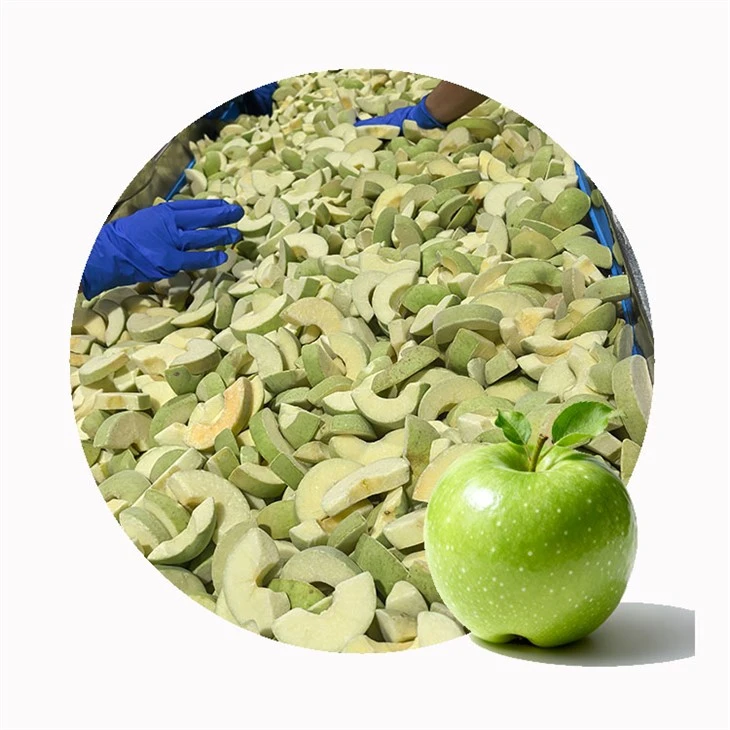
The XMSD frozen apple range frames the initial choice. Products that need a longer visible piece can start with green apple slices. Applications that need regular distribution can compare frozen diced apple. The selected sample should then be prepared in the real recipe.
Practical example: Imagine a cereal-cup producer planning 200 cups with 60 g of acceptable diced apple in each. The formula needs 12,000 g, or 12 kg, of usable fruit: 200 × 60 g. The trial records the accepted fruit after the intended thaw and mix, then calculates complete cups from that usable weight. If 11.7 kg meets the application rule, 11,700 g ÷ 60 g gives 195 cups. These illustrative values teach the method; no XMSD yield or supply promise is implied.
Repeated production adds a consistency question. One attractive trial cup is only the beginning. Review distribution across the batch, condition at the end of the hold, and any change after the package has been opened. Acceptance should be written around observable finished-food results so a later lot can be assessed by the same method.
Sample design should expose the demanding part of the process. If heat softens the fruit, run the full heating cycle. If a cup is held before sale, score both the first and last planned inspection times. If visible distribution matters, examine several portions from the batch instead of choosing the best one. A representative trial reduces the risk of approving a product under conditions that production will never use.

Packaging Has to Match the Repetition
Daily or continuous use places pressure on pack turnover. A large inner bag may suit a steady production line but create repeated opening in a low-volume kitchen. A smaller unit may improve staging while changing purchasing economics. The decision should follow actual hourly or shift use, storage space, resealing expectations, and destination.
Our second operational review follows the product from frozen storage through the last planned batch. We note opening frequency, time out of storage, clumping, liquid accumulation, and changes in piece condition. If later batches differ from the first, the cause may sit in staging or pack use rather than raw material alone. Recording that point directs the corrective action.
The frozen packaging overview can support the discussion. Final configuration follows the agreed product, application, opening rate, destination, and order specification. Ask for a pack that fits the real consumption pattern, then include the same pattern in the application trial.
Arrival inspection should preserve the link between specification and use. Check package identity and condition, then prepare the fruit through the declared process. Evaluate piece distribution, texture, liquid release, and the finished-food result. A written acceptance method makes the repeated habit commercially reliable without turning it into a health claim.
Keep the Apple, Drop the Guarantee
A daily apple can be worth keeping when it makes fruit intake convenient, replaces a less suitable snack, fits the overall meal pattern, and remains comfortable. Rotate other foods, name the actual apple form, and judge a mixed product by its full recipe. These choices produce a durable habit rather than a slogan.
The proverb becomes misleading only when it is treated as a medical promise. Health outcomes depend on far more than one food. Use apple for the practical job it can do, revise the portion or preparation when tolerance calls for it, and follow qualified care for persistent symptoms or a prescribed diet.
Season and availability can change the routine without weakening it. Fresh apple may be the easiest choice at one time, frozen pieces may reduce waste in another application, and a different fruit may offer welcome variety. Preserve the useful behavior-planned, suitable fruit-while allowing the exact ingredient to change. That flexibility is what makes a food habit durable.
XMSD sourcing CTA: For a repeated frozen apple application, send the cut, recipe, inclusion amount, thawing or heating method, batch pattern, pack turnover, destination, and sample requirement. We can review the fruit against the intended production result.
References
- USDA FoodData Central
- NIDDK: Eating, Diet, & Nutrition for Gas in the Digestive Tract
- NIDDK: Eating, Diet, & Nutrition for GER & GERD
- Systematic Review of Apple and Apple-Derived Products in Cardiometabolic Health
- XMSD operational perspective on frozen apple forms, repeated application trials, usable yield, packaging, and arrival checks.
It's ok to eat an apple a day.Apple is rich in minerals and vitamins. It is one of the fruits that people often eat. Eating an apple every day can prevent cancer. Polyphenols in apples can inhibit the proliferation of cancer cells. Flavonoids in apples can help fight cancer.And the apple contains enough potassium to combine with excess sodium in the body and excrete it, thus lowering blood pressure.
