


Frozen Carrot Identity and Buyer Specification | XMSD
Nov 06, 2019

A carrot is not a fruit. The commercial carrot is the edible storage root of cultivated Daucus carota, so frozen carrot belongs in the vegetable and root-crop category. That direct answer matters because product identity controls the raw-material standard, the part removed during preparation, the accepted styles, defect names, processing route, labeling, and the comparison you make between offers.
For an IQF order, "frozen carrot" is only the starting description. Define cultivar or agreed type where relevant, root maturity, color, peel and top removal, cut style, dimensional distribution, blanching status, defects, tenderness, free-flowing condition, cooked performance, packing, cold chain, and release evidence. We use those details to connect a representative sample with the commercial lot and to keep unlike cuts from being compared on price alone.

Why Carrot Is a Root Vegetable, Not a Fruit
In botany, a fruit develops from a flower ovary and normally carries seeds. The orange, yellow, white, red, purple, or dark portion sold as carrot is a swollen taproot. The plant can flower and produce botanical fruits and seeds later in its life cycle, but those reproductive structures are not the root supplied as frozen carrot. Color does not change the plant part or the commercial identity.
Codex CXS 320-2015 defines quick-frozen carrots as product prepared from fresh, clean, sound roots of carrot cultivars conforming to Daucus carota L. It also describes the removal of leaves, green tops, peel, and secondary roots before washing and optional blanching. That language gives you a useful identity boundary: the approved edible root remains, while field tops, peel where removal is specified, secondary roots, and unacceptable defects do not belong in the released product.
Commercial category names still need a contract definition. "Root vegetable" does not tell you whether the product is whole, sliced, diced, strip-cut, crinkle-cut, shredded, blanched, raw, IQF, or block frozen. State the form and process condition beside the identity so your label, application, cooking instruction, and inspection method refer to the same material.
Raw Root Quality Sets the Processing Ceiling
Frozen quality begins before peeling or cutting. UC Davis identifies firmness, uniform taper, bright color, low lateral-root hairiness, freedom from green shoulder or core, and low bitterness among useful fresh-carrot quality points. USDA processing-carrot standards also address varietal similarity, firmness, color, shape, smoothness, woodiness, soft rot, cracks, sunburn, internal defects, disease, insects, and mechanical injury. Your intake standard can adapt these principles to the origin, cut, and destination contract.
Large roots may improve peeling and cutting throughput for some dice or slice programs, but size alone is not quality. An oversized root can carry a coarse or woody core, internal discoloration, cracks, or a poor cortex-to-core balance. Small roots can suit whole or finger styles yet produce more trimming work in another format. Qualify size by finished output and cooked result, not by a universal preference.
At intake, connect the field or sourcing unit, harvest date, vehicle, quantity, temperature, size profile, firmness, color, defects, residue status, and disposition to the raw-material lot. Our farm-base and sourcing framework shows how origin information supports supply review. For your order, we confirm the nominated crop area, partner factory, production window, and records.
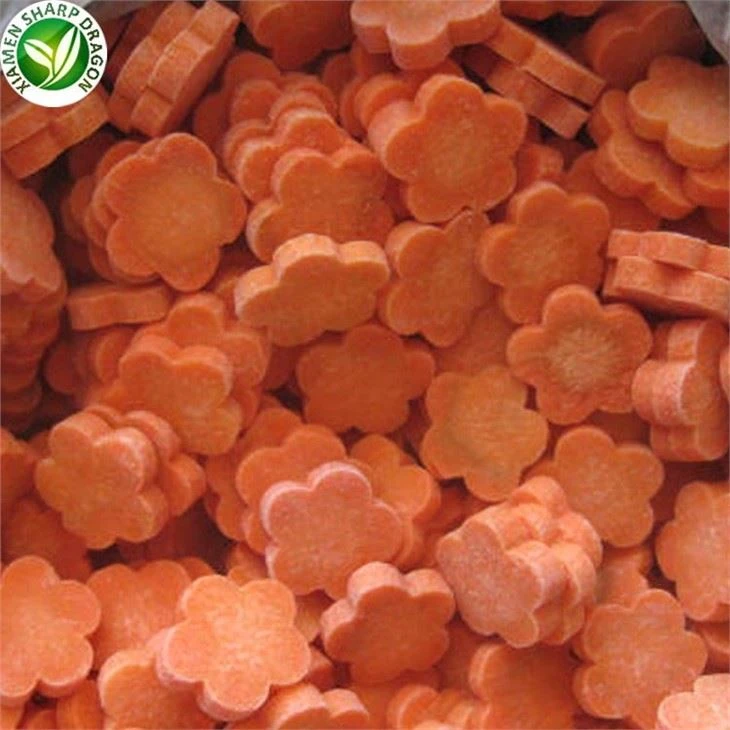
Practical example: do not grade raw carrots by diameter alone
Lot A has a larger average diameter and looks efficient for 10 mm dice, but cutting trials show a high proportion of pale core, woody texture, and longitudinal cracks. Lot B is slightly smaller, peels cleanly, cooks evenly, and produces more accepted cubes per raw kilogram. If the team buys only by root diameter, Lot A appears less expensive. A trial that combines yield, defects, and cooked tenderness identifies Lot B as the stronger commercial choice.
Specify Frozen Carrot Style Precisely
Common styles include whole, finger, halved, quartered, sliced or ring cut, lengthwise sliced, diced, double diced, shoestring, strips, julienne, shredded, crinkle-cut, and pieces. Names vary between markets and suppliers. Attach dimensions, shape sketches or photographs, and a measurement method. The same word "strip" can describe products with very different width, thickness, and length distributions.
Codex provides recognized carrot styles and sizing approaches, while USDA frozen-carrot standards score color, defects, tenderness, and size or shape uniformity. Use a named standard only when the contract identifies the edition and applicable style. If you build a customer standard, write every measurement and tolerance so an inspector can reproduce the result.
| Style | Specification focus | Typical decision |
|---|---|---|
| Whole or finger | Length, maximum diameter, taper, breakage, green top, tenderness | Visible side dishes and premium mixes |
| Slices or rings | Diameter band, thickness, broken rings, surface cracks | Soups, stews, retail blends, plated sides |
| Dice or cubes | Three dimensions, in-range mass, slivers, fines, misshapen cuts | Ready meals, fried rice, fillings, mixed vegetables |
| Strips or julienne | Width, thickness, length, short pieces, breakage after cooking | Noodles, stir-fries, foodservice and prepared foods |
| Shredded | Shred cross-section, length, fines, thawed moisture, clumping | Batters, fillings, soups and cooked formulations |
Review our IQF frozen carrot formats and wider frozen vegetable range when choosing a reference style. We then match the cut, grade, pack, and intended use to a qualified supply route.

Measure the Distribution, Not One Perfect Piece
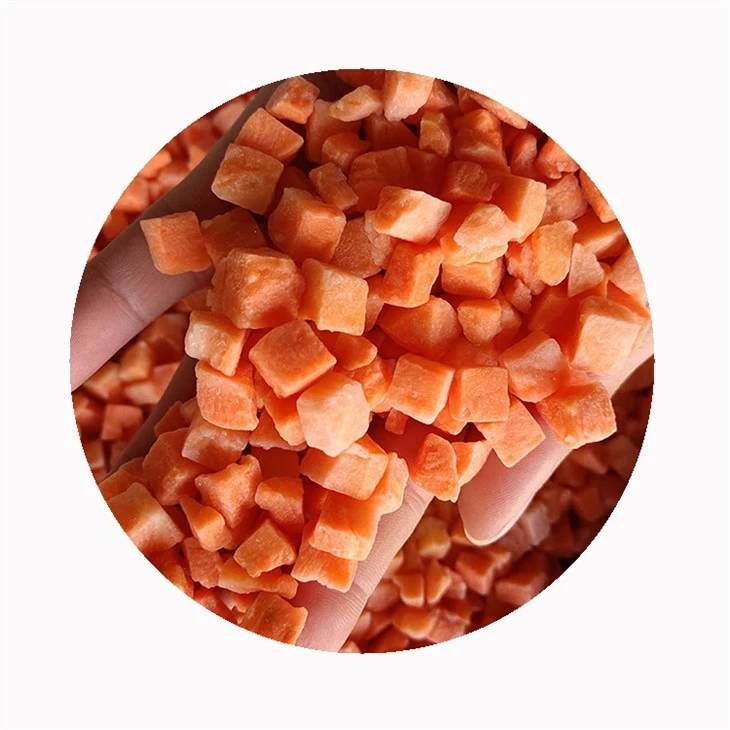
A handpicked photograph can show a perfect 10 mm cube while the bag contains broad variation. Define the sample size, conditioning state, measuring tool, sieve or dimensional method, and calculation basis. State whether tolerance is by mass or count. For dice, measure three dimensions; for slices, measure thickness and diameter; for strips, measure cross-section and length.
If your contract adopts Codex, its carrot annex states that a size-graded product contains at least 80% by mass of carrots of the declared size, and it gives a 10% mass tolerance for pieces stuck together when product is presented as free flowing. Those figures do not automatically control every private contract. They illustrate why a declared style needs numerical acceptance rules.
Treat natural taper and cutter geometry realistically. End pieces may have fewer square faces; curved roots can create irregular edge cuts. Decide which pieces remain commercially usable for the application and which count as misshapen, undersize, or fines. Overly tight cosmetic limits can increase waste without improving the cooked product.
Practical example: approve a 10 mm dice by mass
A 2,000 g laboratory sample contains 1,720 g inside the agreed dimensional range, 160 g of undersize pieces, 80 g of oversize pieces, and 40 g of fines. In-range result = 1,720 ÷ 2,000 × 100 = 86%. If the customer minimum is 85% and each separate defect limit is also met, the sample passes. The inspector records the full distribution rather than reporting only "average 10 mm."
Control Color Without Hiding Natural Variation
Orange is common, but cultivated carrots can also be yellow, white, red, purple, or dark. Name the expected cultivar or color type instead of treating every non-orange root as defective. Within an orange-carrot program, set an approved color range and defect limits for pale pieces, green shoulder or core, dark discoloration, blackened tissue, and process-related browning.
Inspect under defined lighting and against a reference sample or color target. Frozen surface frost can make pieces look pale, while thawing can deepen visible color and reveal internal defects. Record whether evaluation is frozen, thawed, or cooked. Use instrumental color values only with a defined instrument, calibration, sample preparation, measurement area, and acceptance range.
Trace color variation back to field, cultivar, maturity, root position, peeling depth, blanching, cooling, freezing, and storage exposure. A tighter sorting setting may improve appearance but lower yield. Approve the trade-off through the application: a visible retail mix can justify a narrower band than an opaque soup or puree.
Peeling, Cutting, Blanching, and IQF Control
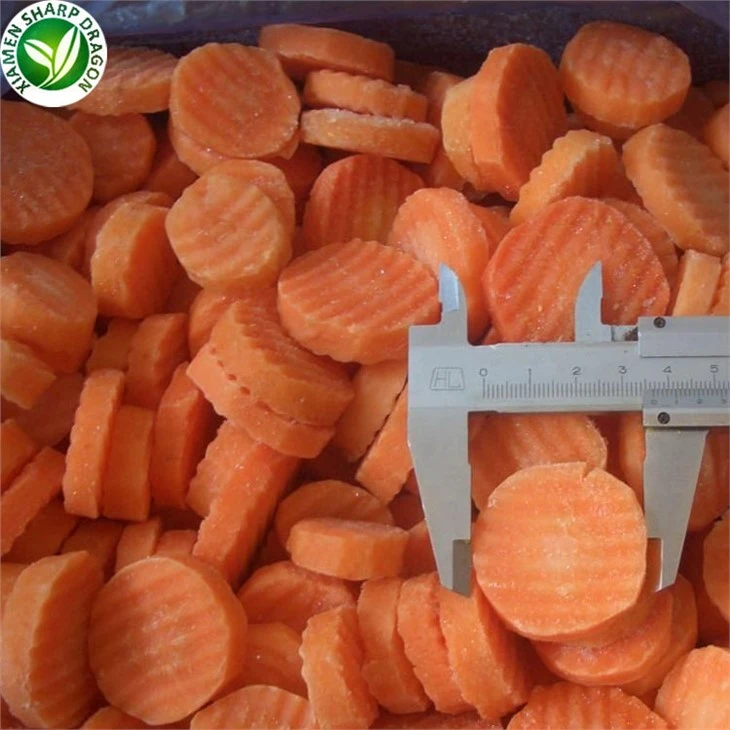
A typical route includes receiving, sorting, washing, top and secondary-root removal, peeling where specified, trimming, cutting, washing or rinsing as validated, blanching or enzyme deactivation where required, cooling, drainage, IQF freezing, sorting, foreign-material controls, weighing, packing, and frozen storage. The exact sequence and critical controls depend on the plant, style, and intended use.
Peeling must remove the specified outer tissue without excessive cortex loss. Inspect peel residue, green shoulder, rough areas, and attached secondary roots. Sharp, correctly set cutting equipment supports clean faces and dimensional control. Worn blades can increase cracks, shattered edges, and fines. Record tool inspection and the response to breakage or abnormal product.
Blanching supports enzyme control and affects color, flavor, texture, microbial load, and cooking time. Do not use one universal time-temperature value for every carrot style. A whole finger carrot and a small dice have different heat-transfer conditions. Validate the treatment with product size, load, equipment, heating medium, endpoint, cooling, and desired cooked performance. Our processing and facility overview explains the qualification framework; confirm the actual line and records for the nominated plant.
Inspect Frozen Condition and Cooked Performance Separately
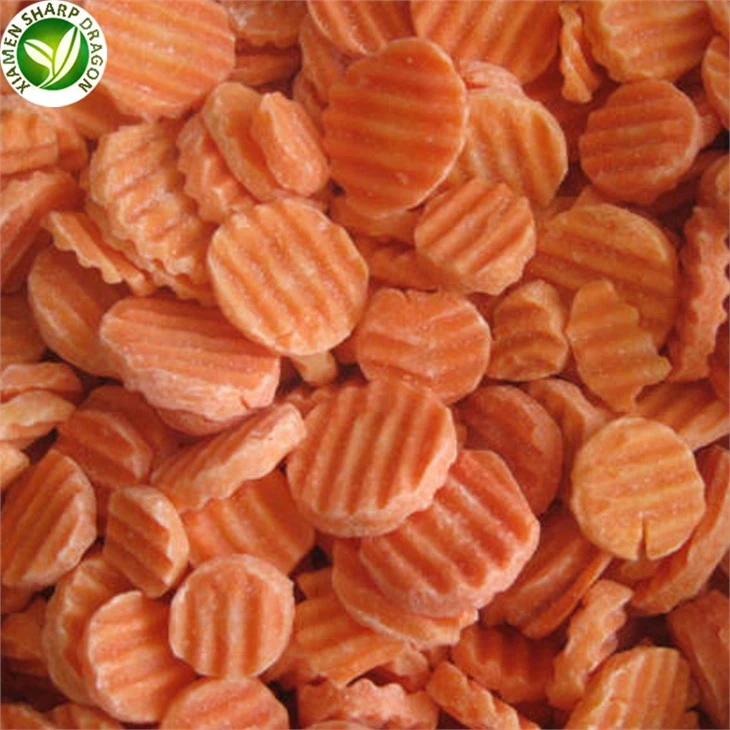
Frozen inspection covers identity, style, size distribution, color, peel residue, greening, blemishes, cracks, broken pieces, woody material, extraneous vegetable matter, ice, clumps, package condition, and temperature. A controlled cook test answers different questions: tenderness, core resistance, flavor, odor, color after heating, structural integrity, and compatibility with the intended recipe.
Standardize the cook method. Record sample mass, water or sauce ratio, starting state, equipment, heating power, time, endpoint, drain or hold time, and evaluation temperature. Compare the supplier sample, approved reference, and production lot under the same conditions. Without a named method, "tender" can mean anything from firm bite to puree-soft.
In a vegetable blend, evaluate the components together. A carrot cube that cooks well alone may remain hard after the blend reaches its label instruction, or it may soften before broccoli and beans are ready. Align carrot dimensions and pretreatment with the slowest and most sensitive components in the formula.
Practical example: choose slice or dice by process fit
A soup producer uses a short kettle cook and wants uniform spoon distribution. Thick slices remain firm and bridge across the filler, while 10 mm dice heat evenly and portion cleanly. A plated side-dish buyer wants recognizable carrot shape and accepts a longer cook, so slices create more visual value. The same raw root can be good in both programs, but the approved cut must follow the equipment and eating result.
Use Mass Balance to Compare Real Cost
Raw root weight does not equal released IQF weight. Intake rejects, tops and secondary roots, peel, cracks, decay, green tissue, trimming, cutter loss, off-size pieces, blanching and drainage changes, freezer loss, fines, clumps, and final defects all affect output. Define the weighing point for every factor and keep downgraded product separate from prime output.
Worked example: calculate raw carrots for a 10,000 kg order
A program requires 10,000 kg of released IQF carrot dice. Representative data show 94% intake acceptance, 82% yield after topping, peeling, trimming, and cutting, and 97% final IQF acceptance. Required raw carrots = 10,000 ÷ (0.94 × 0.82 × 0.97) = 13,375 kg. If prepared cut yield falls to 76% while the other factors stay unchanged, raw need rises to 14,431 kg. The six-point yield loss adds about 1,056 kg of raw roots before extra labor, freezing, and waste costs.
Use data from the named origin, season, root profile, cut, and acceptance plan. A whole-carrot yield cannot price a tight dice accurately. Compare delivered cost per released or application-usable kilogram, then include packing, freight, duty, thaw or cook loss, and complaint exposure.

Food Safety, Residues, and Release Evidence
Build the control plan from origin, intended use, destination law, customer requirements, process, and facility hazard analysis. Review agricultural inputs, irrigation or wash water, harvest hygiene, soil and foreign material, transport, raw sorting, washing, sanitation, employee practices, blanching control, exposed-product zoning, environmental or microbiological monitoring where applicable, foreign-material controls, traceability, and frozen storage.
Freezing preserves the product but is not a substitute for validated hazard control. State whether the carrot is raw, blanched, partially cooked, fully cooked, or ready to eat only when the process and evidence support that description. Cooking directions, microbiological criteria, and customer use must align with the declared status.
Map pesticide-residue testing to the crop, origin, approved inputs, destination maximum residue limits, customer restrictions, and supplier history. A release file can include lot identity, specification results, COA, applicable residue and microbiological reports, traceability references, packaging and label checks, foreign-material records, product temperature, and nonconformance disposition. Match every certificate to the legal entity, site, product scope, issuer, standard, and validity period.
Packing, Cold Chain, and Arrival Control
Choose the inner bag, seal, net weight, carton, liner, label, pallet pattern, and loading plan for the route and application. A foodservice carton needs handling strength and dispensing practicality; a retail bag needs seal appearance, coding, artwork control, and consumer-use instructions. Confirm food-contact compliance and migration evidence where the destination requires it.
Set product-temperature and storage requirements, loading checks, container condition, data-logger use where agreed, and response limits. Temperature abuse can increase clumping, ice migration, dehydration, package stress, and texture loss. Our frozen packaging and cold-chain controls can support the shipment discussion.
At arrival, inspect seal and container condition, temperature evidence, carton damage, lot codes, net weight, bag seals, color, free-flowing condition, clumps, ice, cut distribution, visible defects, odor, and cooked result. Quarantine disputed stock and connect any claim to photographs, sample identity, method, affected quantity, and storage history.
Approve a Representative Sample and Control Change
Request a sample that represents the named origin, crop window, partner factory, root type, cut setting, blanching route, and pack. Record frozen inspection, dimensional distribution, cooked result, accepted yield, and reference photographs. Do not let a hand-selected sales sample become the only quality definition.
Define reapproval triggers for cultivar, origin, crop, factory, line, peeling method, cutter, blanching conditions, pack, and specification changes. Natural variation is expected, but undeclared variation can change color, core texture, yield, size distribution, and cooking time. A controlled change gives you time to test the application before shipment.
For a comparable quotation, send the carrot style and dimensions, in-range requirement, color reference, defect limits, blanching or cooking status, texture target, pack, shipment and annual volume, destination, intended use, documents, and delivery window. We will review available supply options against the same commercial basis.
Share your cut, dimensions, grade, pack, volume, destination, application, and release-document requirements. We will review the origin, crop window, partner factory, sample route, and commercial terms for your program.
Request a frozen carrot quotationFrequently Asked Questions
Is carrot a fruit or a vegetable?
Carrot is a root vegetable. The edible commercial portion is the storage taproot of cultivated Daucus carota, not the seed-bearing structure that botanical classification calls a fruit.
Which frozen carrot style is best for a buyer?
Choose by application and equipment. Dice support portioning and mixed formulas, slices create a visible shape, strips suit noodles and stir-fries, shredded carrot suits cooked batters or fillings, and whole or finger styles suit plated products.
Does every IQF carrot need blanching?
Do not assume one route. Codex permits quick-frozen carrot that may or may not be blanched, while commercial programs often use blanching for enzyme and quality control. Specify the process state and validate safety, storage quality, cooking time, and texture for the use.
How is frozen carrot size uniformity checked?
Use a defined sample, product condition, measuring tool or sieve method, and mass or count basis. Report the complete distribution, including in-range, oversize, undersize, short pieces, slivers, fines, and fused units.
What belongs in a frozen carrot approval file?
Include product and factory identity, specification, approved sample record, dimensional and defect results, cooked test, process and hazard-control evidence, applicable certificates and tests, COA, traceability, packing approval, temperature evidence, and arrival checks.
References
- Codex Alimentarius - CXS 320-2015 Standard for Quick-Frozen Vegetables
- USDA Agricultural Marketing Service - Frozen Carrots Grades and Standards
- USDA Agricultural Marketing Service - Carrots for Processing Grades and Standards
- UC Davis Postharvest Research and Extension Center - Carrot Produce Facts