


Is it good to eat apple at night?
Nov 06, 2019

Apple can be a good nighttime snack when it answers genuine hunger, the portion feels comfortable, and eating it leaves reflux or digestive symptoms unchanged. Night brings no special benefit or automatic harm. The snack's value comes from what the apple replaces and how it fits the whole evening. Plain fruit instead of a large sweet dessert is one decision; an extra apple added after an already sufficient dinner is another.
Use three questions. Are you physically hungry or following habit? How long will you remain upright before bed? Are you choosing whole or unsweetened apple, or a richer dish that merely contains apple? For people with recurrent nighttime GERD symptoms, meal timing requires particular care. A symptom-free person who wants a modest snack has no sound reason to reserve apples for morning.
The short answer: An evening apple is useful when it relieves hunger without becoming a heavy late meal. Judge the serving, additions, symptoms, and bedtime interval-not a promise about the clock.

"Good at Night" Has Three Possible Meanings
Some readers are asking whether apple is safe after dinner. Others want to know whether it helps sleep, and a third group is deciding whether it is a sensible response to hunger. These questions need separate answers. Most people can eat apple in the evening. Apple is not an established sleep aid. As a snack, it can be reasonable when the amount and preparation fit the eater's needs.
That separation prevents a common chain of overstatement. A fruit contains nutrients; therefore it supports normal dietary intake. Composition alone tells us nothing about deeper sleep, faster metabolism, or greater weight loss from a 10 p.m. serving. A timing study would need to compare otherwise similar groups, amounts, and routines at different hours while measuring a defined outcome. General apple studies answer broader dietary questions.
The practical value is usually substitution. If the real alternatives are an apple, a large serving of ice cream, or going to bed uncomfortably hungry, the apple may be the simpler option. If dinner already met appetite and the apple is eaten automatically while watching television, it adds food without solving hunger. The same fruit can therefore be a helpful choice or an unnecessary extra without changing its intrinsic composition.
Ask what outcome you want before reaching for a nutrient fact. For hunger, use a portion that settles appetite. For reflux, prioritize the time before lying down and your known triggers. For dietary variety, consider what fruit and vegetables appeared during the whole day. A single snack does not need to carry every nutrition objective.
Begin With Hunger, Not With a Fixed Serving Rule
Nighttime hunger can reflect an early dinner, a long work shift, a smaller-than-usual meal, exercise, or a routine cue. The correct response is not identical in each case. If dinner was four hours ago and bedtime is still distant, a normal snack may be appropriate. If the urge appears immediately after a complete meal and fades when attention changes, waiting briefly may distinguish appetite from habit.
Fruit count is a poor measuring system because apples vary in size. A small apple and a very large one are not the same exposure. Cut pieces or a weighed edible portion are clearer when amount matters. This is especially useful for a caregiver, foodservice program, or person following a clinician-designed meal plan. USDA FoodData Central can provide composition for a defined apple entry and basis, but the database record still has to match the actual form and serving weight.
Pairing is optional, not a ritual. Apple alone may be enough for mild hunger. A person who needs a more substantial snack might combine it with another food that fits their dietary needs, allergies, and overall plan. The decision belongs to the complete snack. Adding nut butter, cheese, yogurt, pastry, syrup, or granola changes energy, allergens, texture, and fullness; none of those additions should be hidden behind the description "I had an apple."
Practical example: Take a warehouse supervisor whose dinner ends at 6:30 p.m., shift finishes at 10:00 p.m., and bedtime is after midnight. At 10:15 the person is clearly hungry but has no history of evening reflux. The options are a measured bowl of plain apple pieces or an oversized fried snack from a vending machine. Choosing the apple, eating it seated, and stopping when hunger settles solves the immediate need with a defined portion. The result is not "nighttime metabolism"; it is a calmer, more deliberate substitution under a long work schedule.

Reflux Changes the Timing Decision
People with GERD symptoms at night have a stronger reason to protect the interval before lying down. NIDDK states that eating meals at least three hours before bed or lying down may improve nighttime or recumbent GERD symptoms. This is the clearest authoritative timing figure in the source set. It belongs specifically to reflux care rather than to a universal rule about an apple eaten just inside that interval.
The guidance avoids naming apple as a universal GERD trigger. Individual triggers vary, and the rest of the snack can dominate. High-fat additions, a large total volume, and lying flat soon afterward may produce a different result from a modest amount of plain fruit eaten earlier. Keep the comparison fair: changing apple variety, serving, toppings, dinner size, and bedtime together hides the adjustment that actually matters.
A simple record works better than internet lists. Note the end of dinner, snack time, exact food, approximate amount, time you lay down, and any heartburn, regurgitation, cough, or sleep disturbance. Repeat observations are more informative than one difficult evening. Persistent symptoms, trouble swallowing, chest pain, vomiting, bleeding, or unexplained weight change require medical attention rather than a home timing experiment.
Someone following treatment advice for GERD should not replace that plan with a generic fruit rule. Move the snack earlier, reduce or omit it if appropriate, and discuss recurring symptoms with the treating professional. The goal is not to prove apple innocent; it is to prevent a late eating pattern from repeatedly creating discomfort.

Gas and Bloating May Matter More Than Reflux
A person may avoid evening apple because abdominal pressure disrupts comfort even without heartburn. NIDDK explains that certain carbohydrates can escape full digestion in the small intestine and be fermented by bacteria farther along the digestive tract. Its examples include apples and fruit juice. Fiber can also contribute when the amount rises quickly. This points to individual tolerance rather than general nighttime unsuitability.
The timing question is still practical. Gas that would be merely noticeable during the day may be more bothersome when someone wants to sleep. Start by reducing the serving and simplifying the snack. Eating slowly and choosing a smaller, earlier portion may be enough. If the person only reacts when apple is combined with several other fermentable foods, the total meal deserves attention.
Avoid turning a short self-observation into a restrictive diet. Removing several fruits, grains, vegetables, and dairy products without guidance can make the diet harder to manage while failing to identify the trigger. A clinician or registered dietitian can help when symptoms recur, a diagnosed digestive condition is present, or a structured elimination and reintroduction plan is being considered.
Form may alter tolerance. Raw skin, cooked fruit, sauce, juice, and frozen pieces do not provide identical structure or serving patterns. They can also differ in added ingredients. Keep form constant during a comparison, then change it deliberately if the first result suggests that texture or amount is involved.
Do Not Turn Apple Dessert Into Whole-Fruit Evidence
The words apple snack can describe radically different foods. One end of the spectrum is plain fruit. The other includes pie with ice cream, sweetened juice, caramel-coated fruit, fried pastry, or a large blended drink. The fruit name remains, but the additions and physical structure change the nutritional and digestive result. A late dessert may be heavy because of its total formulation, not because apple has a unique nighttime fault.
Composition databases require the same discipline. Select the food entry that resembles the finished item, then apply the correct serving mass. Do not quote a value for raw apple to describe sweetened filling. Do not use a 100-gram figure as though it automatically represented the bowl. If a package is present, its ingredient statement and nutrition label are usually closer to the decision than a generic fruit fact.
Longer-term apple research also needs careful interpretation. A systematic review of randomized trials combined interventions involving whole apples and apple-derived products, with differences in populations, duration, comparators, and measured markers. Such work can inform a broad view of apple foods within dietary patterns. Its scope is too broad to establish a pre-sleep effect or transfer one result to every processed apple dish.
A useful substitution question is concrete: "If I skip this apple serving, what will I choose instead?" Replacing a richer late dessert may improve the snack's fit. Adding fruit beside the dessert leaves the original dish unchanged. Replacement and addition are different behaviors, and the scale will not merge them because both involve an apple.

Frozen Apple Changes Convenience, Texture, and Portion Control
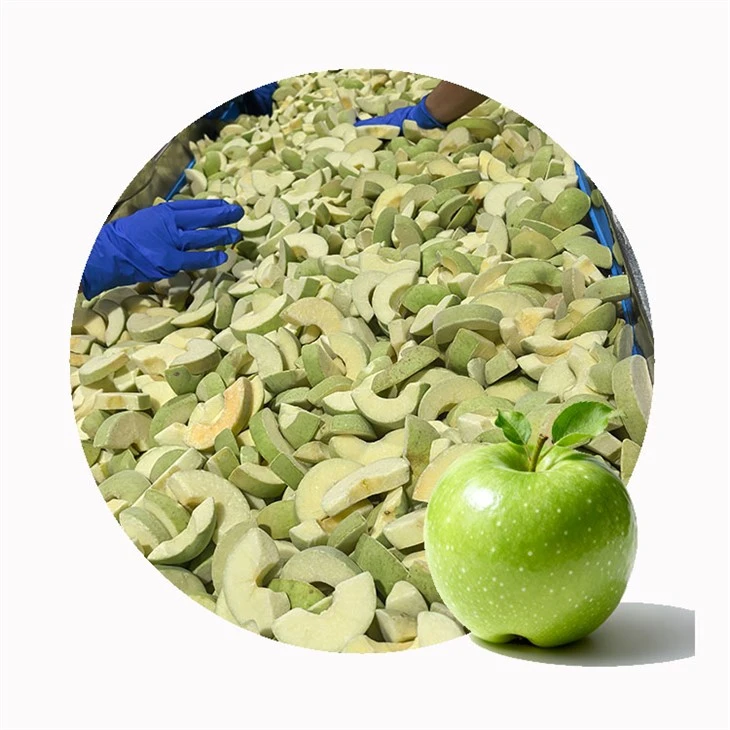
Frozen apple is especially relevant when a kitchen or manufacturer wants a repeatable cut outside the fresh season. It can remove peeling, coring, and cutting from the point of use, yet frozen formats remain functionally distinct. Slices preserve a recognizable fruit shape; dice distribute through bowls, bakery fillings, or prepared foods more evenly. Thawing can soften texture and release liquid, which may be acceptable in one use and distracting in another.
In our frozen-food work, we decide first whether the apple needs to remain visibly distinct or disappear into a formulation. A visible snack cup may favor even slices or larger pieces with clean color. A measured filling may favor dice that spread through each portion. We then check the fruit after the intended holding period, because a specification viewed only in the frozen state says little about the spoonful served later.
The XMSD frozen apple category establishes the available product direction. A program requiring a recognizable piece can review frozen green apple slices, while a recipe needing more regular dispersion can evaluate IQF diced apple. Sample choice should follow the serving concept rather than the convenience of whichever cut is listed first.
Frozen fruit may be used partly thawed, fully thawed, cooked from frozen, or blended. Each route changes release of water and texture. Keep the method stable during a trial. If the final use is an evening snack cup, evaluate the actual cup after the real chilled holding time-not a loose piece immediately removed from the freezer.
Foodservice Programs Need a Yield Basis
An institutional or hospitality snack program must turn "apple at night" into a reproducible serving. Count alone is unreliable when fruit sizes vary. Weight provides a clearer production basis, and the actual edible yield must account for trim or drain loss. Frozen prepared pieces reduce some fresh preparation work, but only a trial can show how much usable fruit remains after the chosen handling method.
Worked example: Imagine a residence serving 80 evening fruit cups with 90 grams of apple in each cup. The plated requirement is 80 × 90 g = 7,200 g, or 7.2 kg. A controlled thaw trial with the selected dice produces 92% usable weight after the operation's draining rule. The input calculation is 7.2 kg ÷ 0.92 = 7.83 kg, rounded according to the kitchen's ordering unit. The action is to base purchasing on observed usable yield. The result is consistent cups without quietly shrinking the last servings.
The pack should also match the opening pattern. If one inner bag serves several nights, repeated exposure during opening and re-closing can cause clumping, dehydration, or handling variation. If every small bag is used at once, portion control improves but packaging use and labor may rise. We compare pack mass with servings per service, freezer capacity, and the time an opened unit remains in circulation before recommending a practical format.
A useful pack review covers seal condition, inner-bag integrity, lot identification, frozen clumps, visible dehydration, and the receiving temperature process. The purpose is not to make a health claim from packaging. It is to preserve the handling and portion assumptions on which the snack plan was built. The overview of professional frozen packaging can support that discussion before samples are approved.

Run a Seven-Day Fit Check
A short observation period can answer more than a universal claim. For seven evenings, record dinner time, hunger before the snack, apple form and amount, additions, snack time, bedtime, digestive comfort, reflux symptoms, and whether hunger returned. Keep other variables as stable as ordinary life allows. This is not a clinical trial; it is a structured way to see whether the snack is solving the problem you actually have.
At the end, look for a repeatable pattern. Comfortable hunger relief supports keeping the snack. Reflux that appears when the interval is short supports moving food earlier and discussing persistent symptoms. Bloating only with a large portion suggests testing a smaller serving. No hunger and no clear benefit suggests the behavior may be routine rather than need. The result can be "keep," "move," "reduce," "change the complete snack," or "seek advice"; it need not be a dramatic ban.
Also inspect the morning that follows. A snack that settles hunger and leaves the normal breakfast routine intact is doing a different job from one that becomes so large that breakfast is repeatedly skipped. Record this outcome without assuming that breakfast timing is automatically superior. The useful signal is disruption: excessive fullness, thirst after a very sweet preparation, poor comfort, or a cycle in which a small snack steadily expands into another meal. Adjust the element that produced the disruption instead of assigning a moral label to nighttime eating.
Households can make the decision easier by preparing the intended amount before sitting down and storing the remainder. Foodservice operations can do the same through a standard scoop or weighed cup. Visible boundaries are particularly helpful with cut or frozen fruit because a bowl can be refilled without noticing the cumulative amount. Portioning is not punishment; it keeps the serving aligned with the reason it was chosen.
Set a stopping condition before the check begins. End the experiment and seek appropriate advice if symptoms are severe, persist despite simple changes, or include warning signs. Otherwise, choose the smallest adjustment that answers the pattern: an earlier time, a lighter serving, fewer additions, or no snack on evenings without hunger. A narrow correction is easier to maintain and teaches more than replacing the entire evening routine at once.
For a menu operator, the equivalent check is sensory and operational. Record portion weight, hold time, released liquid, color, texture, leftovers, and service complaints without presenting the exercise as medical evidence. The evening product succeeds if it meets the menu specification, handles reliably, and is accepted in the intended setting.
The final judgment is uncomplicated: apple can be good at night, but "good" means suitable for hunger, symptoms, and the complete snack. There is no timing magic to chase. Choose a defined form, preserve an appropriate interval when reflux is an issue, and keep richer apple dishes in their own nutritional category.

XMSD sourcing note: Share the planned snack or recipe, apple cut, serving weight, thaw method, holding time, pack size, destination, and sample test. We will help narrow the frozen apple form for that use.
References
Eating apples at night is not good,Eating apples at night may cause your stomach to feel uncomfortable,Apples are rich in a variety of vitamins and minerals, which can achieve nutritional supplements and are easy to digest .But you can't eat too much, because apples contain malic acid. Eating too much can cause too much stomach acid and cause stomach discomfort.
