


What Are Figs Good For? A Product-Form Use Guide
Sep 18, 2019

Figs are good for applications that need fruit sweetness, a jammy body and fine seed-like texture: fresh presentation, frozen sauces and fillings, dried bakery inclusions, purées, pastes, chutneys, preserves and sweet-savory pairings. The useful form depends on whether the recipe needs intact shape, available water, concentrated solids or year-round consistency.
Fresh figs give the best recognizable appearance but are delicate and short-lived. Frozen figs trade fresh firmness for availability and cookability. Dried figs give concentrated solids and chew with much less water. Fig purée or paste gives easy dosing but removes visible fruit identity.
Choose by the finished product, not by a generic claim that one form is "best." Define piece integrity, moisture contribution, sweetness, particle size, color, added ingredients, thaw loss and pack. Those fields turn a list of uses into a reproducible ingredient decision.
Fast form match: use fresh for visible garnish; frozen for cooked sauces, smoothies and fillings; dried for chew and concentrated fruit solids; purée or paste for even distribution and controlled dosing.

Start With the Job the Fig Must Perform
A fig ingredient can provide visible fruit, sweetness, soluble solids, moisture, binding body, color, aroma and fine granular texture. One form rarely optimizes every job. Rank the two or three functions that determine whether the finished product succeeds.
For a plated cheese course, intact shape and fresh aroma lead. For a cookie filling, pumpable viscosity and low free water matter more. For a chutney, acid balance, particle definition and cook yield decide. The form follows those endpoints.
Ask whether released liquid stays in the recipe. A smoothie can use fruit and thaw drip together. A laminated pastry may need drained fruit or a pre-cooked filling, because free liquid can soften the dough.
Also define what the fig must not do: no tough stem pieces, no large skin flakes, no syrup, no recognizable seeds, or no collapse after thawing. Negative requirements often separate two otherwise acceptable samples.
Fresh Figs Are Best When Appearance Leads
Fresh ripe figs work well whole, halved or quartered on plates, salads, toast, cheese boards and bakery decoration. Their thin skin, soft wall and colorful interior communicate the ingredient immediately without a label explanation.
UC Davis notes that figs intended for fresh sale must be harvested almost fully ripe for good eating quality. That maturity also limits durability: optimum postharvest life for cited California cultivars is roughly one to two weeks in air under recommended conditions.
Fresh use therefore needs rapid cooling, gentle handling and a short route to service. Skin cracking, stem wilting, fermentation aroma, insect damage and rot shorten the useful window. A hard underripe fig may travel better but will not deliver the intended flavor.
Choose fresh when visual identity pays for that handling burden. If the fruit will be cooked until unrecognizable, frozen or dried material can reduce season and shelf-life constraints without sacrificing the visible presentation that no longer exists.
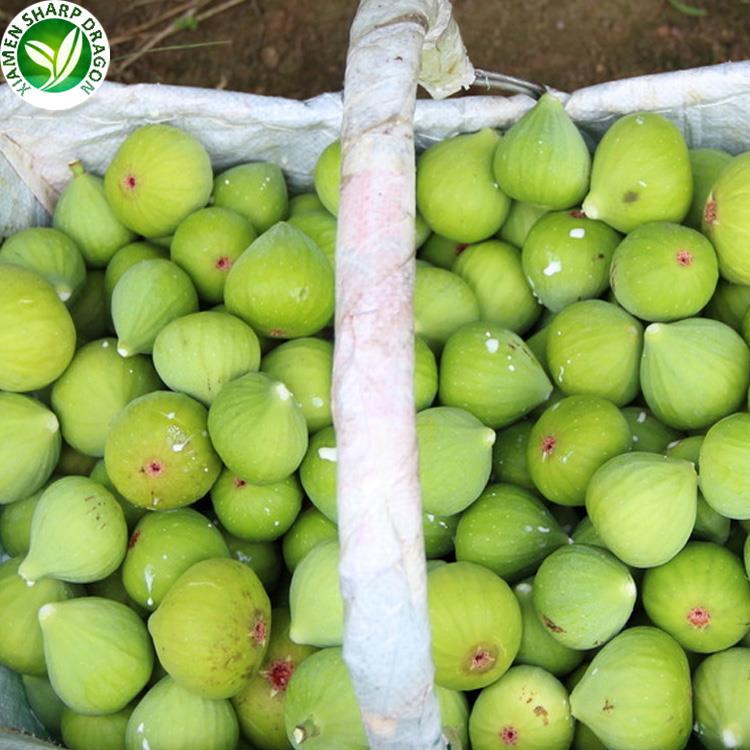
Frozen Figs Fit Cooked and Blended Applications
Freezing preserves the ingredient for later use but ice crystals damage cells. After thawing, figs are softer and may release juice. That is a disadvantage for a pristine garnish and an advantage when the fruit will be crushed, blended or cooked.
Good targets include compote, sauce, chutney, jam, smoothie, dairy swirl, bakery filling and cooked topping. Whole or half pieces can also work in rustic bakes where some collapse is acceptable. Run a thaw-and-cook trial instead of judging only the frozen piece.
The XMSD frozen fig direction provides a form reference. Confirm whole, half, slice, block or purée condition, because the offered form determines labor, thaw rate and finished texture.
If released juice contains useful flavor and solids, recombine it. If the application cannot accept free liquid, specify a drained basis and account for the lost yield. Never compare a drained sample with a recipe that uses the complete thawed pack.
Dried Figs Supply Chew and Concentrated Solids
Drying removes much of the fruit's water, concentrating natural sugars, fiber, color and flavor per kilogram. Dried figs work in cookies, bars, fruit-and-nut mixes, fillings, confectionery, cereals and chopped inclusions where a chewy bite is desirable.
They are not a one-for-one weight substitute for fresh fruit. Equal weight introduces more fruit solids and less water. Rehydration softens dried tissue, but it does not fully restore the original fresh cell structure or dilute flavor to exactly the same point.
Specify moisture or water activity, piece size, stem tolerance, surface treatment, added ingredients and texture. A soft dried fig for paste behaves differently from a firm diced inclusion intended to remain distinct through mixing.
Review the XMSD dried-fruit family as a processing reference, then confirm the actual fig format. Conventional dried, freeze-dried and sweetened products have different moisture and application behavior.

Purée and Paste Make Dosing Easier
Purée distributes fruit evenly through sauces, beverages, yogurt-style products and fillings. Paste has higher solids and viscosity, making it useful for bakery centres, bars and spreads that need body with limited free water.
Define Brix or total solids, viscosity at a stated temperature and method, particle size, seed or skin handling, color, pH, added sugar and preservatives. "Fig purée" alone does not tell a developer whether it can be pumped or whether particles will block a dosing nozzle.
A coarse purée preserves visible flecks and texture; a screened purée gives a smoother finish but changes yield. Paste can replace separate fruit and some added sweetener in a formula, yet the complete solids and sugar calculation must be redone.
Choose purée when consistency and dosing lead; choose pieces when recognizable fruit is part of the value proposition. A blend of both can provide body and visible identity, but it creates two receiving specifications.
Figs Give Body to Jam, Compote and Chutney
Soft flesh breaks down readily during cooking, while the fine inner fruitlets keep a characteristic texture. This makes figs useful for spoonable compote, set jam, whole-fruit preserves, chutney and glaze.
Jam, preserves and compote are not interchangeable process names. A jam recipe controls fruit, sugar, acid, pectin and endpoint. Whole-fruit preserves target intact pieces in syrup. A compote often remains looser and is commonly refrigerated or otherwise processed under its own system.
The National Center for Home Food Preservation provides tested fig jam, preserves and acidified canning directions. Its guidance also warns that figs are borderline-acid for canning. A general taste impression cannot replace a validated commercial scheduled process.
For chutney or savory glaze, balance fig sweetness with measured acid, salt and spices. Do not assume vinegar added "to taste" creates shelf stability. Separate culinary balance from process safety and validate the final packaged product.

Bakery Uses Depend on Water Control
Figs can appear as chopped dried inclusions, jammy centres, purée in batter, fruit layers and visible toppings. The deciding variable is often water migration rather than flavor.
A wet filling can soften a crisp shell or create a gummy interface. A dry inclusion can pull moisture from surrounding crumb and become hard. Match water activity and bake behavior through a pilot, not just incoming moisture numbers.
Frozen-thawed fruit is suitable when released liquid stays in batter or is cooked down first. Dried dice is suitable when distinct chew is wanted. Paste is suitable for an enclosed centre that needs low spread and consistent deposition.
Application example: a muffin trial with thawed figs produces wet pockets and sinking pieces. Drain and weigh the liquid, reduce piece size, or convert the same mass into a cooked preparation. Keep the option that preserves fruit flavor without destabilizing crumb.
Savory Applications Need Contrast, Not More Sweetness
Figs pair with salty cheese, roasted vegetables, meat sauces, grains, vinegar, citrus, nuts and spices. Their job is often to round acidity, add fruit body or create sweet-savory contrast rather than make a dish taste like dessert.
Whole fresh pieces work in salads and boards. Frozen fruit works in cooked relish, sauce and glaze. Dried dice holds up in stuffing and grain mixtures. Purée disperses into marinades or dressing but may thicken the system.
Evaluate sweetness after all ingredients are present. Added sugar in a fig preparation, reduction during cooking and salty or acidic partners change perception. Do not select the fruit on Brix alone.
Record flavor endpoint in sensory terms: fig aroma, caramel note, acidity, bitterness, fermented note and aftertaste. "Good flavor" is too vague to reproduce between pilot and production.
Dairy, Frozen Dessert and Beverage Systems Need Dispersion Tests
In cultured dairy and frozen dessert, fig can be a bottom layer, ripple, blended purée or piece inclusion. The preparation must survive pumping, filling and storage without unacceptable separation, color loss or hard frozen particles.
For beverages and smoothies, frozen fruit is convenient because complete thaw liquid can stay in the formula. A screened purée gives more uniform flow. Whole-fruit blending leaves skin and fruitlet particles that may be desirable in a smoothie but not in a narrow straw.
Test separation over the intended holding time, not only immediately after blending. Measure viscosity at a defined temperature. If heat treatment follows, test color, aroma and sediment after the real process.
For foodservice use, match pack size to daily throughput. Repeated partial thawing of an oversized pack undermines consistency and cold-chain control.

Worked Example: Convert Net Weight to Usable Yield
Worked example: a 10 kg carton of frozen figs releases 12% drainable liquid after the agreed thaw method. Drained fruit mass is 10 kg × (1 - 0.12) = 8.8 kg. If both fruit and liquid enter a sauce, usable ingredient remains 10 kg.
If only drained fruit enters a pastry filling, 20 cartons deliver 20 × 8.8 = 176 kg usable fruit, not 200 kg. At a delivered carton cost of USD 30, fruit cost per usable kilogram is USD 30 ÷ 8.8 = USD 3.41/kg before labor and other losses.
Recombining the liquid in sauce returns the ingredient cost basis to USD 3.00/kg, but it also adds water that must be cooked or tolerated. The right decision depends on whether that water contributes flavor and whether evaporation capacity is available.
Measure at least representative cartons with the same time, temperature, screen and drain duration. "12%" is a worked assumption, not an XMSD lot guarantee. Put the method and acceptable result into the trial record.
Match Cut Size to Labor and Process
Whole figs preserve identity and flexibility but require trimming and cutting. Halves reduce labor and thaw faster. Dice disperses consistently but exposes more surface, releases liquid faster and loses visible whole-fruit value.
Block-frozen fruit can be economical for cooking but requires controlled tempering and portion handling. Individually separated pieces support dosing and partial use, provided the pack remains free-flowing.
Specify cut dimensions and tolerance in millimetres, not only "small" or "large." Add the measurement condition because thawed soft pieces cannot be measured like frozen-solid dice.
Review options within the XMSD product range, then run the intended pump, mixer, depositor or cutting step with the actual sample.

Control Color, Flavor and Texture by Reference
Cultivar influences skin and interior color, flavor, seed-like texture and firmness. Ripeness, oxygen, heat and storage add further variation. One universal photo cannot represent every acceptable fig product.
Approve a physical reference or bounded color description for the selected cultivar and form. Define whether darkened skin, red flesh, visible grains or slight thaw breakdown is normal. Keep mold, fermentation and foreign material as separate defects.
Sensory review should use a preparation that matches the application. A raw frozen bite underestimates aroma and exaggerates hardness. A sauce sample can hide poor incoming piece integrity. Use both incoming and prepared evaluations when each affects the order.
Record temperature, thaw time, recipe and panel reference. Those controls make "fig flavor" a repeatable decision instead of a memory-based preference.
Specify the Complete Ingredient, Not a Use List
Write common and scientific identity where needed, cultivar or approved type, fresh/frozen/dried/purée form, cut, treatment, ingredients, Brix or moisture basis, defect limits, pack and storage condition. Add an application endpoint such as "pumpable at 10°C" or "visible pieces after bake."
For private-label formulation, calculate the complete finished product. Natural fruit sugar, added sugar, carrier, preservative and serving size all affect the label and cannot be inferred from the word fig.
Request a sample representative of the proposed process and pack. A hand-made laboratory purée may not reproduce factory screening or thermal load. Preserve the approved sample or documented sensory reference for later lot review.
Use purpose-specific acceptance criteria. A sauce lot can accept broken fruit that a whole-piece dessert rejects, while both still require sound, clean material and the agreed food-safety controls.
Keep Culinary Use Separate From Health Claims
The old text treated the presence of sugars, fiber, amino acids and vitamins as proof that figs are broadly "good for the human body." Composition does not establish a clinical outcome, and product form changes concentration per serving.
A culinary application can be recommended from measured functionality: a paste binds, a frozen fruit releases liquid, or a dried dice adds chew. A disease, digestion or weight claim needs relevant human evidence, dose and regulatory review.
Added ingredients also matter. A fig in heavy syrup, a sweetened paste and an unsweetened frozen fig are not nutritionally interchangeable. Keep the product identity and complete serving visible in any nutrition discussion.
This use guide therefore recommends figs for sensory and process jobs, not for treating a condition. That narrower answer is more useful to a recipe developer and more defensible for commercial copy.
Pack Size and Order Pattern Can Change the Best Form
The technically best fruit form can fail when the pack does not fit daily use. A 10 kg block may suit a factory that empties it into one kettle, while a café making small batches can lose control through repeated tempering. Match inner pack weight to one controlled production event.
Individually separated whole pieces support partial dosing, but they need enough freezer space and protection from crushing. Purée in smaller sealed units reduces handling and makes batch calculation easier, although extra packaging can increase unit cost.
If your seasonal menu uses visible fresh figs for eight weeks and cooked sauce year-round, one specification is unlikely to cover both. Keep a fresh presentation spec and a frozen processing spec, then align their cultivar and sensory references where continuity matters.
Forecast by usable kilograms, not carton count alone. Add thaw yield, trim, cooking reduction and line loss to the material plan. A lower-priced carton that produces more rejected pieces or drain loss can cost more in the finished recipe.
Approve the smallest practical trial under normal production pressure. Record opening, thawing, dosing, hold time, leftovers and cleaning. These observations often expose a pack mismatch that a bench sample cannot show.

XMSD sourcing note: Share the application, required form, cut, solids target, thaw-liquid decision, pack and annual volume. We can review a frozen fig option and sample plan.
Final Thoughts From XMSD
Figs are useful wherever fruit sweetness, jammy body and fine texture solve a recipe problem. Fresh fruit leads in visible presentation, frozen fruit in cooked and blended year-round applications, dried fruit in concentrated chewy inclusions, and purée or paste in controlled dosing.
Select the form from the finished endpoint, then validate yield, water, cut, color, flavor and process performance. A precise use-and-form match is more reliable than a generic list of benefits.
References
- UC Davis Postharvest Research and Extension Center: Fig
- National Center for Home Food Preservation: Resources for Preserving Figs
- National Center for Home Food Preservation: Canning Figs
- National Center for Home Food Preservation: Fig Jam
- USDA National Nutrient Database SR28: Raw and Dried Fig Reference Data
- XMSD operational experience in frozen-fruit form, yield, packaging and application trials.