


Carrot Growing Conditions: Soil, Water and Climate
Jan 18, 2019

Carrots are cool-season root crops, but successful production depends on more than cool air. A fine, loose seedbed supports emergence; deep, stone-free soil lets the taproot develop; full sun builds a productive canopy; and steady moisture limits stress and cracking. If you buy carrots for fresh packing or freezing, these field conditions matter because they influence usable root length, shape, color, texture, defect rate, and cutting yield. The practical target is a balanced field environment, not one rigid temperature or irrigation rule.
The short answer: Grow carrots in a sunny location with deep, well-drained, friable soil, a slightly acidic to neutral pH, cool conditions, and even moisture. Keep the seedbed consistently damp during emergence, then irrigate deeply enough to wet the developing root zone without leaving it waterlogged.

Temperature: Cool Conditions Favor Root Quality
Carrot seed can germinate in cool soil, although emergence becomes slower near the lower end of its range. Utah State University Extension reports that sowing can begin after soil reaches about 40°F (4°C), with best germination at 55–65°F (13–18°C). This is a useful field guide, not a universal guarantee: cultivar, seed vigor, soil texture, planting depth, and moisture all change emergence speed.
During active growth, commercial guidance commonly places the most favorable air-temperature zone around 60–70°F (16–21°C). Prolonged heat can slow growth and reduce root color, texture, flavor, or shape. Young plants tolerate cool weather better than many warm-season vegetables, but small seedlings can still be damaged by a hard freeze. Planting dates therefore need to follow local frost patterns and the expected harvest window.
Use temperature ranges as planning bands. Soil temperature matters most for germination, while air and soil conditions together influence later root growth. A single daily reading cannot describe the crop's full environment.

Soil Structure Matters as Much as Fertility
The edible part of a carrot is a developing taproot, so the soil must let that root move downward without repeated obstruction. Deep sandy loam is often preferred, but other soils can work when they are well drained, well prepared, and not compacted. Stones, hard clods, a crusted surface, and dense layers can contribute to forked, bent, rough, or shortened roots.
A soil pH around 6.0–7.0 suits many carrot crops, although the correct amendment program should come from a local soil test. Avoid assuming that more fertilizer means larger roots. Excess nitrogen can favor leaf growth over root development, while fresh or poorly incorporated organic material can create an uneven seedbed. Prepare the bed before sowing and use a fertility plan matched to the soil analysis and production system.
Protect the seedbed surface
Carrot seedlings are small and slow to establish. A surface crust after heavy rain or irrigation can block emergence even when the soil underneath is moist. A fine surface layer, shallow sowing appropriate to the seed and local conditions, gentle irrigation, and early weed control help the stand emerge evenly.

Light: Build a Healthy Canopy Without Heat Stress
A sunny site is the standard recommendation for carrots. Strong leaf growth supports the root's supply of carbohydrates, while deep shade can slow development and reduce root size. In hot production regions, however, the crop calendar is often more important than trying to compensate for summer heat. Scheduling the crop for a cooler season can protect root quality while still providing adequate light.
The old idea that carrots simply require "long days" needs context. Day length becomes especially important when a biennial carrot moves toward flowering after cold exposure. For first-year root production, your practical concern is a sunny, weed-free canopy combined with temperatures that do not impose prolonged heat stress.
Moisture Requirements Change by Growth Stage
Uniform moisture is essential during germination because the small seed sits close to the soil surface. Once seedlings are established, irrigation should wet the root zone rather than only dampening the top layer. Frequency depends on rainfall, temperature, soil texture, rooting depth, and the irrigation system; sandy soil usually needs smaller, more frequent applications than soil with greater water-holding capacity.
| Crop stage | Moisture goal | Main risk to avoid |
|---|---|---|
| Sowing to emergence | Evenly damp surface | Drying or surface crusting |
| Leaf and root establishment | Moist, aerated root zone | Shallow watering or waterlogging |
| Root enlargement | Consistent supply | Abrupt wet-dry swings and cracking |
| Near harvest | Stable condition suited to field and harvest plan | A sudden irrigation change based on a fixed calendar |
Carrots need oxygen as well as water. Saturated soil restricts aeration and can encourage root problems, while drought stress can produce small, tough, fibrous, or poorly shaped roots. Alternating dry periods with heavy irrigation also raises the risk of splitting. Check moisture below the surface rather than judging the bed only by its appearance.
Worked example: translate a measured water deficit into an irrigation volume
Suppose a one-hectare carrot block has a measured root-zone water deficit of 18 millimeters. One millimeter of water over one hectare equals 10 cubic meters, so the net replacement is 18 × 10 = 180 cubic meters. If the irrigation system is estimated to apply 80% of pumped water effectively, the gross volume is 180 ÷ 0.80 = 225 cubic meters. This is a calculation example, not a recommendation to apply 18 millimeters to every field.
Before using the number, you would confirm rooting depth, current soil-water measurements, forecast rainfall, infiltration rate, system uniformity, field drainage, and the crop stage. A heavy application that exceeds infiltration can create runoff or saturation even when the arithmetic is correct. In coarse soil, dividing the volume into smaller applications may keep more water in the active root zone. In soil with greater water-holding capacity, the same schedule may be unnecessary.
Decision rule: calculate from measured field conditions, then check whether the delivery rate suits the soil. Do not copy a calendar interval or a volume from another farm without verifying the root zone and recent weather.
Water management also connects to the quality discussion after harvest. Moisture cannot determine every component of composition, but it can affect maturity, texture, cracking, and the amount of usable root. If your project also needs a composition-focused view, see our separate guide to carrot nutrients and product forms. Keeping growing-condition and nutrition questions separate avoids treating one field factor as the explanation for every quality result.

Why Carrot Roots Fork, Split or Lose Quality
Misshapen carrots do not point to one single failure. Forking may follow primary-root injury, compacted or stony soil, overcrowding, or some pest and disease damage. Splitting is often associated with moisture fluctuation and renewed rapid growth after stress. Excess heat can reduce color and eating quality, while crowding can produce strong tops with limited root size.
Diagnosis should begin with the pattern in the field. If damage is widespread along a compacted layer, soil structure is a likely factor. If splitting follows a dry period and heavy rain, moisture fluctuation deserves attention. If distorted roots appear beside feeding damage or diseased foliage, identify the pest or disease before changing irrigation or fertilizer.
Practical example: diagnose forking before changing fertilizer
Imagine that a field has three production blocks. In Block A, most forked roots divide at roughly the same depth. Digging a soil profile reveals a dense layer about 20 centimeters below the surface. In Block B, distortion is concentrated near visible feeding scars. In Block C, the roots are generally straight but become shorter where stand density is highest. The visual symptom "poor shape" appears in all three blocks, yet the likely causes and corrective actions are different.
For Block A, bed preparation and the compacted layer deserve investigation. For Block B, pest identification comes first. For Block C, spacing and thinning records are more useful than adding fertilizer. This pattern-based approach helps you avoid a broad treatment that does not address the cause. It also produces better supplier evidence: field records, defect photos, and lot-level observations can explain why one harvest differs from another.
Root Production and Seed Production Are Different
Carrot is a biennial plant. In normal vegetable production, growers harvest the swollen root during the first season. Flower and seed production occur after the plant receives enough cold exposure and then returns to conditions that support stem elongation and flowering.
University of Georgia guidance notes that six to eight weeks below 50°F (10°C) can induce flowering and that increasing day length accelerates the response. That information belongs to seed-crop management and bolting risk; it should not be blended into the temperature recommendation for producing marketable first-year roots. Premature bolting makes the root less suitable for sale.

From Growing Conditions to a Buyer Specification
Good field management supports sound color, shape, texture, and maturity, but a finished ingredient still needs its own acceptance criteria. Freezing cannot correct cracking, decay, severe bruising, or unsuitable maturity. For a fresh-carrot project, you should define size, appearance, packing, and destination requirements. For a frozen project, your specification should also cover cut shape, dimensions, blanching level, defect tolerance, free-flowing condition, and performance in the final application.
| Field or root factor | What you can check in the lot | Why it matters in processing |
|---|---|---|
| Stones, clods, compaction, root injury | Forked, bent, short, or rough roots; defect percentage in a defined sample | More trimming, irregular pieces, and lower recovery for long cuts |
| Uneven moisture or late stress | Cracks, variable diameter, texture differences, decay at damaged surfaces | Sorting losses and inconsistent dice, slice, or strip dimensions |
| Maturity and heat exposure | Color, core size, firmness, flavor, and cooked-sample texture | Application performance after blanching, freezing, storage, and cooking |
| Field hygiene and crop-health controls | Supplier records, residue plan, microbiological criteria, traceability, and certificate scope | Market access and food-safety review cannot be inferred from appearance alone |
This table is a bridge, not a substitute for a signed specification. You can turn it into an incoming inspection plan by defining the sample size, defect categories, measurement method, acceptance limits, and disposition for a nonconforming lot. For example, "uniform cuts" is subjective; a specification that names the cut type, nominal dimensions, tolerance method, and sample procedure gives your supplier and quality team the same decision rule. Certificate names alone are also insufficient, so confirm the holder, product scope, site, and validity through the available certification information and controlled documents for the actual project.
Worked example: compare usable yield, not only purchase price
Suppose Supplier A quotes 1,000 kilograms of raw carrots at a lower unit price, but your trial records 18% removal for cracks, forking, decay, and trimming. Usable input is 820 kilograms. Supplier B is 4% more expensive per raw kilogram but shows 9% removal, leaving 910 kilograms. A fair comparison divides the delivered lot cost by usable kilograms and then adds processing, labor, and disposal effects. The example does not predict either supplier's performance; it shows why your trial should record recovery with the same defect definitions and cut requirements.
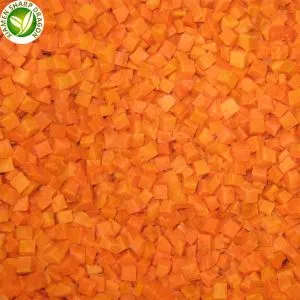
Our current IQF frozen carrot page shows dice, slices, strips, and customized cuts. A visual check is only the beginning: test a representative sample in the intended soup, ready meal, vegetable blend, stir-fry, or other process. Review pack format with the ingredient specification and the relevant frozen packaging options. If you need help connecting raw-material risks, inspection points, processing, and shipping requirements, our buyer solution overview provides the next project context.

XMSD sourcing note: Share the target carrot form, cut size, end use, packing format, and destination market. We can then discuss a suitable specification, sample review, and quotation based on the project rather than a generic grade description.
Frequently Asked Questions
What is the best growing environment for carrots?
A sunny site with deep, loose, well-drained soil, cool growing conditions, and steady moisture is the best general starting point. Local variety choice, planting date, soil test results, and rainfall determine the final management plan.
What temperature is best for growing carrots?
Carrots generally produce their best roots in cool conditions. Commercial guidance commonly identifies about 60–70°F (16–21°C) as a favorable range, but soil temperature, cultivar, daily extremes, and crop stage all matter.
How cold can the soil be when carrot seed is sown?
Utah State University Extension reports that carrots can be sown after soil reaches about 40°F (4°C), although germination is faster in warmer soil within the crop's cool-season range. Cold soil can make emergence slow and uneven.
Do carrots need full sun?
A sunny position is normally recommended. Adequate light supports leaf growth and root development. In hot climates, choose a cooler planting window rather than relying on shade to solve prolonged heat stress.
What soil type produces straight carrots?
Deep, friable, well-drained sandy loam is often preferred because the root can extend with little resistance. Heavier soil may still work if it is well prepared, not compacted, and matched with a suitable shorter-rooted variety.
What soil pH do carrots prefer?
Many extension guides place carrots in a slightly acidic to neutral range, roughly pH 6.0–7.0. Test the soil before adding lime or fertilizer because the correct treatment depends on the existing soil.
How often should carrots be watered?
There is no universal interval. Water often enough to keep the seedbed damp during emergence, then irrigate the developing root zone according to soil texture, weather, rainfall, and crop stage. Check moisture below the surface before deciding.
Why do carrots split after rain or irrigation?
Splitting can occur when stressed roots receive a sudden supply of water and resume rapid growth. More even moisture through the root-enlargement period reduces this wet-dry fluctuation, although variety and maturity can also affect cracking.
Why do carrots develop forked roots?
Common causes include stones, compacted soil, primary-root injury, overcrowding, and some pest or disease damage. Inspect the field pattern and the damaged roots before deciding which management change is appropriate.
Can carrots grow in clay soil?
Yes, if the soil drains well and is not compacted, but long-rooted varieties may become rough or misshapen. Raised beds, careful preparation, and shorter-rooted varieties can be more practical in heavy soil.
Should watering stop before carrot harvest?
Do not apply a fixed cutoff without considering soil moisture, weather, harvest method, and cracking risk. Avoid sudden irrigation changes and waterlogged harvest conditions, but also avoid severe drought stress near maturity.
Why do carrots bolt instead of making marketable roots?
Carrots are biennial. Extended cold exposure can trigger flower induction, and lengthening days then encourage stem development. Variety and planting date should be chosen to reduce premature bolting in first-year root production.
Do growing conditions still matter for frozen carrots?
Yes. Field conditions affect the raw root's shape, color, maturity, texture, and defect risk. As a frozen buyer, you should still evaluate the finished cut, blanching, defect tolerance, free-flowing condition, packaging, and performance in your intended application.
Final Thoughts from XMSD
A productive carrot environment combines cool weather, sunlight, a deep and obstruction-free root zone, and moisture that stays even without becoming saturated. Treat germination, root production, and seed production as separate stages, then adapt the ranges to local soil, climate, cultivar, and harvest goals. When you source fresh or frozen carrots, carry that field logic into a clear raw-material and finished-product specification, a representative trial, and a consistent acceptance method.
References
- University of Georgia Extension: Commercial Production and Management of Carrots
- University of Minnesota Extension: Growing Carrots and Parsnips
- Virginia Cooperative Extension: Root Crops
- Utah State University Extension: How to Grow Carrots in Your Garden
- XMSD: IQF Frozen Carrot Forms and Processing Information (product reference used in the buyer-specification section)