


Who Invented Frozen Food? Clarence Birdseye's Real Role
Sep 03, 2021

Frozen food was not invented in a single moment. People used naturally cold air, snow, ice, and frozen ground to preserve food long before written industrial history. Mechanical refrigeration then made controlled cooling and refrigerated transport possible during the nineteenth century. Clarence Birdseye's decisive contribution came later: in the 1920s, he turned rapid freezing into a practical commercial system that could produce, package, transport, and sell frozen food with better eating quality than many earlier slow-frozen products.
Birdseye is therefore best described as the pioneer of modern commercial quick freezing, not the first human to freeze food. His work connected an observation made in Labrador with equipment, packaging, refrigerated distribution, and retail display. The freezer aisle still required many other inventions: reliable refrigeration, insulated transport, suitable storage, moisture-resistant packaging, product-specific preparation, and time-temperature control. Modern individual quick freezing, or IQF, extends that system further by producing free-flowing pieces when the product and process are designed for it.
The short answer: No one invented the basic act of freezing food. Clarence Birdseye developed and commercialized a practical quick-freezing method that helped create the modern frozen food industry.
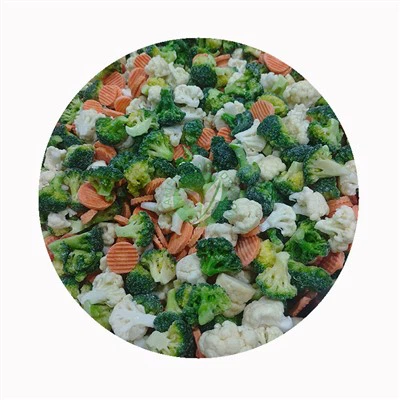
Was Frozen Food Really Invented?
The answer depends on what "invented" means. Freezing as a preservation method is a natural phenomenon that different communities used independently. An invention claim becomes more meaningful when it refers to a repeatable technical process rather than the first time food happened to freeze. That distinction prevents an ancient preservation practice, a scientific experiment, and an industrial production system from being treated as the same event.
Francis Bacon is often placed near the beginning of the story. One frequently repeated account says that in 1626 he filled a chicken with snow to test whether cold could delay spoilage. The details have been disputed, and even if the experiment occurred, it did not establish controlled quick freezing, frozen distribution, or a commercial product. Bacon's story is better understood as an early inquiry into cold preservation than as the invention of frozen food.
The next essential development was mechanical refrigeration. ASHRAE's industry timeline records refrigerated railway transport in 1858, a meat-freezing plant in Sydney in 1861, and intercontinental refrigerated shipping in 1876. These advances made low temperatures reproducible and movable. They created the infrastructure that a later food-processing innovator could use, but they did not by themselves solve the texture and quality problems caused by slow or poorly controlled freezing.
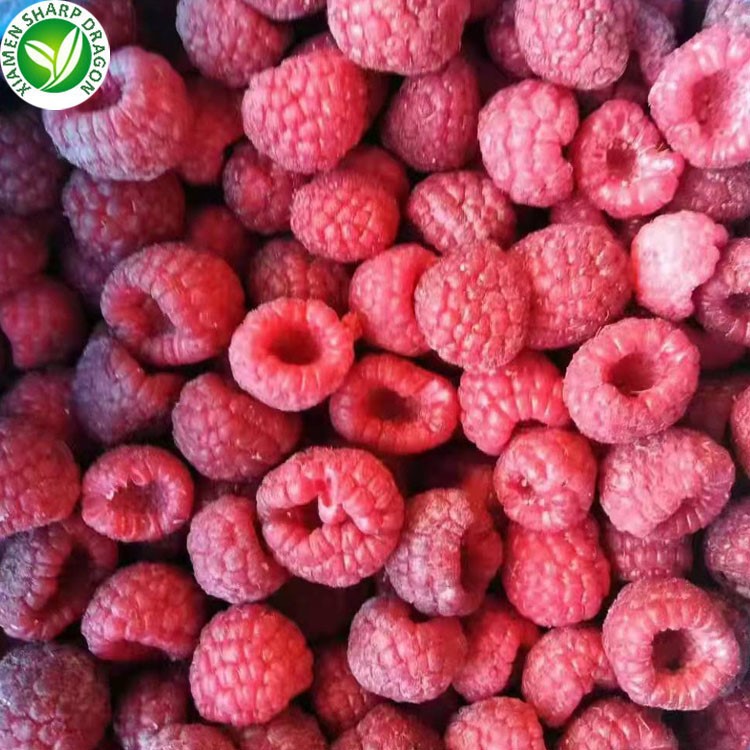
What Clarence Birdseye Actually Changed
Birdseye's breakthrough began with observation rather than a claim to have discovered cold. PBS records that he lived in Labrador from 1912 and saw Indigenous Inuit practices in which freshly caught fish froze rapidly in extremely cold conditions. The fish retained better appearance, taste, and texture after thawing than products frozen more slowly. Birdseye returned to the United States in 1917 and continued to investigate how that result could be reproduced at commercial scale.
His practical achievement was to combine rapid heat removal with packaging and production engineering. Birdseye Seafoods was formed in 1924. His U.S. Patent 1,773,079, issued in 1930, describes packaged food held between heat-conductive surfaces while refrigeration is applied. Pressure maintained close contact, and heat was extracted from opposing sides of the package. This was not merely "put food somewhere very cold." It was a designed method for freezing a marketable package quickly and consistently.
Commercialization also required a route to the customer. PBS describes refrigerated boxcars, specially designed retail display cases, and a 1930 test market in Springfield, Massachusetts. These details matter because a good freezing step loses value if the product warms during transport or cannot remain frozen in a store. Birdseye's role was unusually important because his work linked process, package, distribution, and retail presentation.

Why Freezing Speed Mattered
Food contains water, and freezing converts part of that water into ice. In many foods, slower freezing allows larger ice crystals to develop, while faster heat removal generally limits crystal growth. Large crystals can disrupt delicate tissue, so thawed products may release more liquid or lose firmness. Birdseye's insight was commercially useful because freezing rate could be treated as a controllable process variable rather than an unavoidable feature of winter weather.
Speed is important, but it is not the only quality control. Raw-material condition, maturity, variety, piece size, pretreatment, loading pattern, freezer design, final product temperature, packaging, and subsequent storage all influence the result. A product that enters the freezer in poor condition does not become high quality simply because it freezes quickly. Likewise, a well-frozen product can deteriorate if its package permits moisture loss or if its temperature history is poorly controlled.
| Development | What it achieved | What remained unsolved |
|---|---|---|
| Natural freezing | Preserved food where climate stayed cold enough | Repeatability, year-round production, and distribution |
| Birdseye quick freezing | Rapidly froze packaged food in a practical commercial system | Product-specific optimization and a mature cold chain |
| Modern IQF | Can produce free-flowing individual units for portioning | Specification, defects, packaging, and arrival performance still require control |
This comparison explains why "Birdseye invented frozen food" is useful shorthand but incomplete history. He solved a pivotal engineering and commercialization problem. Later processors, equipment designers, packaging specialists, researchers, carriers, retailers, and standards bodies continued to turn that breakthrough into today's system.

A Freezing Machine Was Not Enough
The frozen food industry expanded when the supporting system caught up with the freezing process. Retail cabinets, household freezers, refrigerated vehicles, distribution warehouses, packaging materials, and product-specific preparation all had to work together. For a fuller chronology, XMSD's history of frozen food follows these connected developments from natural ice to modern IQF.
Research became equally important. The American Chemical Society's account of USDA time-temperature tolerance studies describes systematic work from 1948 to 1965 on frozen fruits, vegetables, meats, prepared foods, and other products. The studies examined how storage duration and temperature variation affected quality through distribution. Their broader lesson remains practical: freezing does not stop every physical and chemical change, and adverse temperature experience can have cumulative effects.
This is why the invention story should not end at the freezer exit. A process must be judged as a chain. The freezing method establishes the starting condition; the package helps limit dehydration and physical damage; storage and transport preserve that condition; and the buyer's arrival checks determine whether the delivered product still meets the agreed use.

From Birdseye's Packages to Modern IQF
Birdseye's famous patent describes a compact packaged block. Modern IQF is a related but different product-format solution. The Codex standard for quick-frozen vegetables says that quick freezing should pass through the range of maximum crystallization as rapidly as possible and reach -18°C at the thermal center after stabilization. It describes IQF units as free-flowing pieces that are not stuck together or blocked to the point that they cannot be readily separated while frozen.
That definition applies to the process and physical presentation; it does not guarantee every other characteristic a buyer needs. A modern line normally follows a true sequence because later controls cannot fully correct an earlier mistake:
- Define the raw-material and finished-product specification for the intended application.
- Sort and wash the material, then prepare the required cut or presentation.
- Apply product-specific pretreatment, such as blanching where appropriate.
- Freeze under controlled loading and time-temperature conditions.
- Inspect the frozen product against agreed quality and defect criteria.
- Pack, store, and transport the product under the defined cold-chain conditions.
The exact controls vary by commodity and specification. A berry intended for bakery decoration, a vegetable cut for soup, and a puree cube for industrial processing do not have identical acceptance needs. Images of frozen-food preparation and inspection equipment can show the types of operations involved, but a buyer still needs product-specific records and sample evaluation rather than relying on equipment photographs alone.

What the Invention Story Means for Buyers
Treat "IQF" as a process description, not a complete specification
The first buyer lesson follows directly from Birdseye's work: a process matters because of the result it produces. The label "IQF" alone does not define variety, maturity, cut size, color, piece separation, defect tolerance, texture after cooking, or suitability for a recipe. A buyer should compare a representative sample with the intended application, approve measurable attributes, and define which defects make a lot unacceptable. Excess clumping, uneven dimensions, dehydration, or weak performance after cooking are more informative than a process label used without acceptance criteria.
Evaluate packaging as part of frozen quality
Birdseye froze food in its market package because heat transfer, protection, and distribution were linked. The same connection remains relevant. Packing must suit the product form, handling method, sales channel, and destination requirements. Buyers can assess seal integrity, liner condition, carton strength, label accuracy, and resistance to expected handling. The appropriate evidence may include an approved packing sample, agreed material structure, packing photographs, and checks after transport simulation or an actual trial shipment. XMSD's overview of frozen packaging and cold-chain protection illustrates why packing and logistics should be reviewed together.
Judge the shipment by evidence, not one temperature reading
A single arrival temperature is useful but cannot reconstruct an entire journey. It should be interpreted with the agreed transport conditions, available temperature records, loading and unloading information, carton condition, product clumping, visible dehydration, and application performance. The significance of any deviation depends on its duration, location, product form, and the acceptance rules established before shipment.
A sound receiving plan therefore links evidence to a decision. If cartons are intact, records show controlled handling, pieces remain acceptably free-flowing, and a representative sample performs like the approved reference, the buyer has several consistent signals. If records are missing and the product shows clumping, ice accumulation, damaged packaging, or unexpected texture loss, the lot needs investigation against the contract rather than automatic acceptance based on the word "frozen."

XMSD sourcing note: We can discuss the product form, cut, packing, application test, and arrival checks needed for a frozen fruit, vegetable, or mushroom specification.
The Honest Answer to Who Invented Frozen Food
Frozen food has many origins. Natural freezing belongs to human experience across cold regions; mechanical refrigeration made controlled cold possible; and refrigerated transport extended its reach. Clarence Birdseye deserves his central place because he made rapid freezing practical, repeatable, package-compatible, and commercially connected. He did not invent cold, but he helped transform frozen food from a seasonal preservation method and uneven industrial product into a viable modern category.
Today's IQF products are not simply Birdseye's machine repeated. They reflect later advances in food preparation, freezer design, free-flowing product handling, inspection, packaging, standards, and cold-chain management. For buyers, that is the most useful conclusion: the name of the inventor explains the turning point, while the agreed specification and evidence across the whole chain determine whether a modern shipment is fit for purpose.
References
- American Chemical Society - Frozen Foods Research and Time-Temperature Tolerance Studies
- PBS - Who Made America? Clarence Birdseye
- U.S. Patent 1,773,079 - Method of Preparing Food Products
- ASHRAE - Air Conditioning and Refrigeration Timeline
- Codex Alimentarius - Standard for Quick Frozen Vegetables, CXS 320-2015
- The New York Review of Books - Francis Bacon and the Frozen Chicken