


History of Frozen Food: From Natural Ice to IQF
Mar 31, 2020

The history of frozen food did not begin with one inventor. People in cold climates preserved food with winter air, snow, ice, and frozen ground long before mechanical refrigeration existed. The modern industry emerged only when engineers learned to make cold reliably, move perishable goods through refrigerated transport, freeze food fast enough to protect its texture, package it against moisture loss, and maintain low temperatures from the plant to the point of use.
Clarence Birdseye was the pivotal commercial innovator, not the first person to freeze food. After observing rapid natural freezing in Labrador, he developed practical quick-freezing systems in the 1920s. Retail trials followed in 1930. Yet quick freezing alone did not create the freezer aisle. Display cabinets, refrigerated railcars and trucks, household freezers, suitable packaging, product-specific processing, and postwar time-temperature research were equally important. Today, IQF fruit and vegetables sit at the end of that longer development: controlled preparation, rapid freezing, separation of individual pieces, protective packing, and an unbroken cold chain.
The short answer: natural freezing is ancient, mechanical refrigeration made frozen trade possible in the nineteenth century, Birdseye made quick-frozen retail food practical in the 1920s, and modern IQF depends on process control across the entire cold chain.
Before Factories: Cold as a Natural Preservation Tool
There is no defensible date for the first frozen food. Communities living through severe winters could observe that low temperatures slowed spoilage, and they used naturally cold environments when climate and season allowed. The American Chemical Society's history of frozen-food research notes that people in the Andes exposed potatoes and other foods to freezing high-altitude conditions. Such methods belong to the broad history of preservation, but they were not the same as a repeatable industrial freezing process.
The limitation was control. Natural cold could vary from day to day, and an ice cellar could keep food cool without necessarily freezing it rapidly or uniformly. Food type, piece thickness, water content, initial temperature, and exposure to air all changed the result. A method that worked for fish in Arctic wind could not simply be transferred to a large block of meat, a carton of berries, or a load of vegetables.
This distinction matters because the history is sometimes reduced to colorful anecdotes about snow or ice. Those stories show that people understood the preserving effect of cold. They do not explain how manufacturers later achieved repeatable texture, safe handling, commercial packaging, or reliable distribution. Industrial frozen food began when cold became a managed process rather than a favorable weather event.
Mechanical Refrigeration Made a Cold Chain Possible
The nineteenth century supplied the engineering foundation that natural ice could not. The ASHRAE refrigeration timeline records commercial vapor-compression ice making in 1855, refrigerated railway transport in the United States in 1858, a meat-freezing plant in Sydney in 1861, and intercontinental refrigerated transport by ship in 1876. These milestones did not immediately create modern retail frozen food, but they separated cold storage from local winter weather and allowed temperature-controlled trade to expand.
Early mechanical systems still faced a quality problem. Making food hard-frozen was not enough. If the thermal center cooled slowly, water had more time to form larger ice crystals and the thawed product could lose firmness and release more liquid. Packaging and transport were also weak links. A well-frozen product could deteriorate if it warmed during storage, dried at the surface, or partially thawed before sale.
That is why the industry's true invention was a chain of technologies rather than a single freezer. Refrigeration plants created cold; railcars and ships moved it; insulated storage held it; and later retail cabinets and household appliances completed the route. The next major advance was to shorten the freezing stage itself.
Clarence Birdseye and the Quick-Freezing Breakthrough
Clarence Birdseye's importance lies in connecting an observation about freezing speed to a workable commercial system. PBS records that he lived in Labrador from 1912, observed Inuit practices, and saw that fish frozen rapidly in extremely cold conditions retained its appearance, taste, and texture better after thawing. He returned to the United States in 1917 and continued experimenting with fast freezing.
In 1924, Birdseye founded Birdseye Seafoods, Inc. The American Chemical Society notes that his U.S. patent 1,773,079, awarded in 1930, covered a method in which fish, meat, and vegetables were packed in waxed cartons and quick-frozen. Plate-based systems put packaged food in close contact with cold metal surfaces, improving heat transfer and helping the product pass through ice formation faster than many earlier bulk methods.
The first retail test was not a nationwide freezer-aisle launch. PBS places the 1930 test market in Springfield, Massachusetts. The business also had to solve distribution: frozen food required refrigerated transport and special display cabinets at stores. Birdseye therefore helped turn quick freezing into a commercial network, but later growth depended on many manufacturers, researchers, equipment designers, packaging suppliers, retailers, and appliance makers.
Milestones to remember:
- Before industry: natural cold preserved food where climate allowed, but the result was difficult to standardize.
- Mid-to-late 1800s: mechanical refrigeration, cold storage, and refrigerated transport created the infrastructure for trade.
- 1920s-1930: Birdseye developed and commercialized quick-freezing methods, packaging, and retail distribution.
- After World War II: scientific storage research, better transport, retail cabinets, and household freezers supported mass adoption.

How Frozen Food Became a Mass-Market System
Frozen food became commonplace only after the surrounding system improved. During World War II, shortages and rationing encouraged consumers to try frozen alternatives. After the war, mechanical refrigerated railcars, moisture-resistant packaging, retail freezer capacity, and household freezing units became more available. Convenience products broadened the category: the Smithsonian's National Museum of American History dates the Swanson frozen TV dinner to 1954, when its divided aluminum tray could move directly from freezer to oven.
Commercial expansion also exposed quality failures. According to the American Chemical Society, the USDA Western Regional Research Center studied frozen fruits, vegetables, juices, poultry, meat, prepared foods, and bakery products from 1948 to 1965. Its time-temperature tolerance work examined what happened as frozen food moved through distribution, not just what happened inside the freezer. The research helped show that storage temperature, duration, product formulation, enzymes, packaging, and handling interacted.
This was a decisive shift in thinking. Quality could not be judged by a product being solid on arrival. It depended on the raw material, preparation before freezing, freezing conditions, packaging, and the temperature-time history after production. That systems view remains more useful than the simple claim that frozen food lasts because it is cold.

Frozen, Quick-Frozen, and IQF Do Not Mean the Same Thing
Modern terminology reflects the industry's technical development. Chilling lowers food temperature while avoiding ice formation. Frozen is a broad description for food held below its freezing point. Quick-frozen is more specific: the Codex Code of Practice defines a process that passes through the range of maximum ice crystallization as quickly as possible. For quick-frozen foods, the code emphasizes cold-chain management from receiving and processing through transport, storage, distribution, and retail.
| Term | What it describes | What a buyer still needs to judge |
|---|---|---|
| Chilled | Cooling without forming ice crystals. | Required temperature, shelf life, hygiene, and transport conditions. |
| Frozen | A broad state in which food is held below its freezing point. | Freezing method, product form, packaging, storage history, and intended use. |
| Quick-frozen / IQF | Rapid passage through maximum crystallization; IQF pieces are free-flowing rather than frozen together as a block. | Piece separation, size distribution, defects, temperature control, and application performance. |
IQF means individually quick frozen. Codex describes free-flowing quick-frozen vegetables as units that are not stuck together or formed into inseparable blocks. This format is useful for portioning and uniform downstream processing, but the initials alone do not establish grade, flavor, color, microbiological status, or fitness for a particular recipe. Buyers must connect the process description to a measurable product specification.
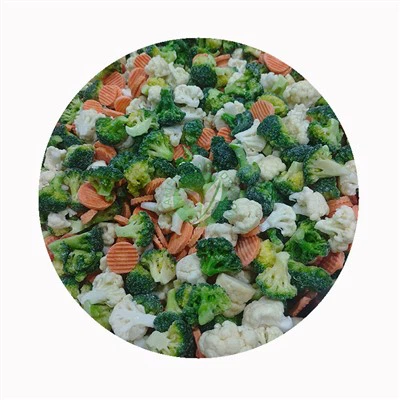
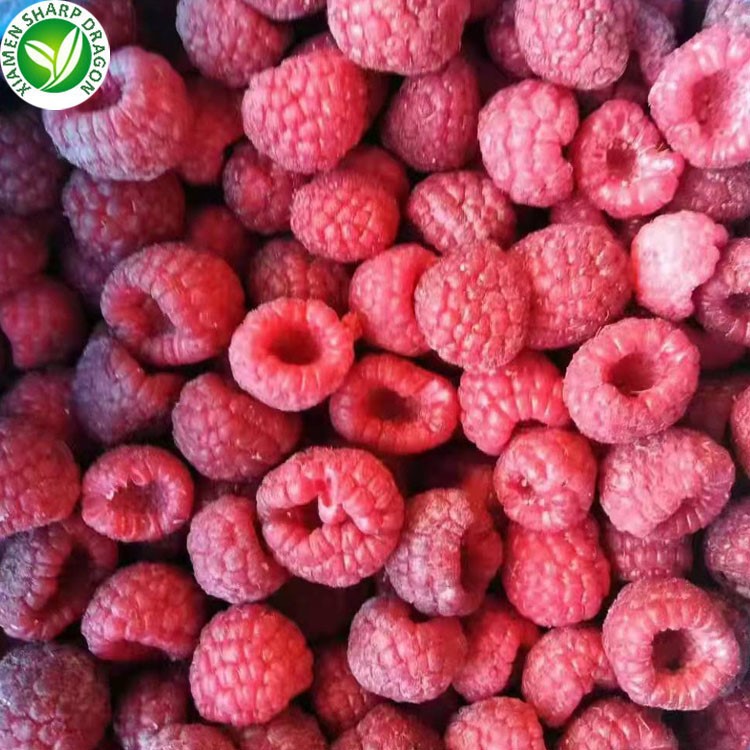
The distinction can be seen in current categories such as IQF frozen vegetables and frozen fruits, where whole pieces, cuts, grades, and product behavior differ even when the same general freezing language is used.

What a Modern Frozen Food Line Controls
A modern line turns the historical lessons into a controlled sequence. The exact operations change with the food: berries may require gentle handling, vegetables may be blanched to limit enzyme-driven quality changes, and prepared products need their own cooking and cooling controls. The sequence matters because a later freezer cannot repair poor raw material or an unsuitable pre-freezing treatment.
- Receive and assess the raw material. Maturity, variety, initial temperature, defects, and time since harvest affect the result.
- Clean, sort, and prepare it. Washing, trimming, peeling, cutting, and size grading must match the intended product.
- Apply a product-specific pre-treatment. Some vegetables are blanched; other foods need different or minimal treatment.
- Remove excess surface water and freeze rapidly. Load, piece size, equipment capacity, and airflow or contact conditions affect freezing performance.
- Inspect and pack. Separation, defects, weight, foreign-material controls, seals, and packaging suitability are checked against the agreed specification.
- Hold and transport under controlled frozen conditions. Records and handling at transfer points help show whether the product remained within the agreed cold-chain limits.
Codex guidance for quick-frozen food places the full chain within scope, from receiving and preparation to retail. It also states that freezing should not be treated as a lethal step for microbiological contamination. Hygienic raw material handling, validated food-safety controls, suitable equipment, and temperature management must work together. A useful supplier review therefore looks beyond the freezer name and examines how the plant controls the stages around it. XMSD's current overview of processing and inspection equipment shows examples of cleaning, heat-treatment, IQF, packing, and detection functions within that wider flow.

What the History Means for Frozen Food Buyers
A process label is not a complete quality claim
The move from natural freezing to controlled quick freezing improved repeatability, but terms such as frozen, quick-frozen, and IQF do not replace a specification. A buyer should define the product form, variety when relevant, cut or count, size range, acceptable defects, tolerance for clumps or broken pieces, packing format, and intended application. The useful question is not simply, "Is it IQF?" It is, "Does this lot perform as agreed in our process or channel?"
The decision method starts with an application trial. A ready-meal factory may judge piece integrity after heating; a bakery may care more about drip and color migration; a foodservice distributor may prioritize free flow and portioning. Risk signals include an undefined cut size, inconsistent samples, excessive snow inside the bag, large clumps, or acceptance language that never states how defects will be measured. An approved pre-shipment sample and a written acceptance method reduce this uncertainty.
Packaging is part of frozen quality
Postwar research showed why the package cannot be treated as decoration. It must tolerate low temperatures, protect the food from dehydration and contamination, and keep seals intact during storage and handling. The correct structure changes with product shape, puncture risk, pack weight, retail presentation, foodservice use, and transport conditions. A thin retail pouch and a bulk carton solve different problems.
Buyers can judge the package through material and seal information, filled-pack testing, label review, carton strength, pallet pattern, and sample handling at the lowest expected temperature. Frost concentrated around a failed seal, torn liners, crushed cartons, or inconsistent net weight are observable warning signs. Acceptance should cover the inner pack, master carton, labels, palletization, and any destination-market requirements. A current overview of frozen food packaging and transport protection can help frame these confirmation points.
Temperature history matters as much as departure temperature
A single cold reading at arrival is useful but incomplete. The central lesson of time-temperature tolerance research is that frozen quality carries the effects of earlier handling. Door openings, slow transfers, warm loading areas, equipment problems, and repeated fluctuations can shorten the remaining quality life even when the shipment is cold again when inspected.
The evidence should match the risk and contract: loading temperature records, container settings, logger placement and trace, seal condition, unloading observations, carton condition, and product checks from representative positions. Temperature acceptance must follow the destination requirement and agreed specification; product appearance and application performance should also be assessed because temperature alone does not guarantee quality. If records show an excursion, the response should be based on its duration, product position, product type, evidence of thawing or refreezing, and the agreed disposition procedure rather than an automatic assumption.

XMSD sourcing note: We can review the required product form, cut or size, packing format, application, sample expectations, and cold-chain documentation for a frozen fruit or vegetable program.
What the History of Frozen Food Means Now
Frozen food evolved through three connected achievements: reliable artificial cold, rapid product-specific freezing, and a managed cold chain. Birdseye supplied a decisive commercial breakthrough, but the modern category also rests on nineteenth-century refrigeration, twentieth-century transport and packaging, household and retail equipment, government research, and international process guidance.
For a buyer, the practical conclusion is straightforward. Do not judge a product by the word "frozen" alone. Judge the raw material, preparation, freezing method, individual-piece condition, package, records, shipment history, and performance in the final application. That is the operational legacy of the industry's history.
References
- American Chemical Society - Frozen Foods Research: Time-Temperature Tolerance Studies
- PBS - Who Made America? Clarence Birdseye
- ASHRAE - Air Conditioning and Refrigeration Timeline
- Smithsonian National Museum of American History - No Work, No Dishes
- Codex Alimentarius - Code of Practice for the Processing and Handling of Quick Frozen Foods (CXC 8-1976)
- Codex Alimentarius - Standard for Quick-Frozen Vegetables (CXS 320-2015)