


Corn Kernels, Corn Oil and Corn Silk: Different Foods, Different Evidence
Jul 30, 2020

Sweet corn can add carbohydrate, fiber, color and a pleasant bite to a meal. Corn oil is a cooking fat. Corn silk is the threadlike material around an ear, sometimes used in teas or extracts. They come from the same crop, but a health finding about one does not establish the same benefit for the others. Eating a bowl of kernels is not the same intervention as replacing butter with oil or taking a measured plant extract.
That distinction matters when a simple question about corn benefits produces a long list of promises. The food on your plate needs to match the food in the evidence. We find it more useful to start with the ingredient and its actual role: kernels for a side dish, oil for cooking, and any supplement question for a healthcare discussion. None should be treated as a home prescription for cancer, kidney disease or diabetes.

Start with the part of the plant you actually eat
A maize ear contains several materials that people may casually call corn. The kernels are attached to a central cob and surrounded by husks and silk. Kernels from full-sized sweet-corn ears are normally separated from the cob for a spoonable side, soup or mixed dish. An ear served whole includes material that is left behind after eating. That makes its purchase weight a different quantity from the weight of edible kernels.
Baby corn introduces another distinction. It is harvested while the ear is very young, when the small central cob is still part of the food. It cannot be assigned the same edible-yield calculation as a full-sized ear with a hard cob. Our baby corn and bamboo shoot comparison explains the young ear's structure and kitchen use. A small whole ear and a handful of sweet-corn kernels are different recipe ingredients, even when both appear yellow.
For dietary classification, USDA MyPlate places fresh or frozen yellow and white corn among starchy vegetables. This is a useful description of tender corn eaten as food. It does not turn cooking oil into a vegetable serving or make a corn-silk drink nutritionally equivalent to kernels. Plant origin tells you where a product came from; its composition and preparation tell you what you are eating.
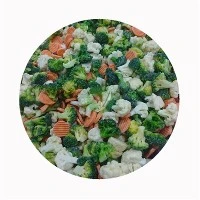
Look at a pack's precise name before making a comparison. Plain kernels, kernels in butter sauce and a mixed vegetable bag can sit next to one another in a freezer. Their appearance may be similar through a clear window, but the second and third products contain different ingredients. The same caution applies to a recipe photograph: a glossy corn dish may include a dressing that contributes much of its fat or sodium.
Kernels contribute food; the complete meal determines the result
Kernels are easy to portion and combine with other foods. A spoonful can bring scattered bites of sweetness to a savory dish, while a larger portion becomes a substantial component. Start a recipe trial with a measured quantity, taste the prepared dish, and adjust from there. Keep a note of the version you prefer so the next bag is used in the same proportion.
Choose the role before choosing the amount. In a bowl with rice and chicken, corn might be a modest addition. In a vegetable side, it may share the pan with peas and diced carrots. A corn soup uses another balance entirely. A food-group name cannot decide these proportions for you, and adding more kernels does not automatically improve a recipe that already has enough starch for the intended meal.
An ingredient photograph also cannot tell you how much corn reaches each person. A bag may feature bright kernels on the front while containing several vegetables in different proportions. Stir the prepared mix before serving if components have separated. When comparing two meals, consider the entire plate and the portion actually eaten, rather than treating every appearance of corn as an equal exposure.
Our corn health guide explains the kernel's nutrient contribution in more detail. For recipe selection, we start with the eating experience: a tender piece in soup, a distinct bite in rice, or a small amount distributed through a filling. Those uses call for different proportions and texture tests, even when the same plain kernels can work in each.

Corn oil belongs in the cooking-fat decision
Corn oil should be compared with the fat it replaces in a recipe. The American Heart Association includes corn oil among nontropical liquid plant oils that can be used in place of fats higher in saturated fat. Its advice concerns the replacement of one fat source with another as part of an overall diet. It does not say that pouring oil over an unchanged meal will remove cholesterol from the bloodstream.
Replacing and adding are different kitchen actions. If you exchange a recipe's butter for a suitable oil, you change its fat composition and may also change its flavor and texture. If you retain the butter and add oil, you have increased the total ingredients. Both dishes may contain corn oil, but they do not represent the same dietary change. Keep that distinction visible when following a recipe modification.
The cooking function deserves attention too. Oil can coat a pan or help distribute seasoning, while kernels provide pieces to chew. Swapping one for the other cannot preserve a dish's structure. A tablespoon of oil has no kernel shape to scatter through rice, and kernels cannot supply the smooth coating required for a dressing. Their shared name is not a substitution rule.
Hypothetical kitchen example: replacing a topping
Imagine four portions of cooked corn that normally receive 40 g of butter in total. A cook tests a version using 20 g of cooking oil with lime and herbs instead. The original recipe uses 10 g butter per portion; the trial uses 5 g oil per portion. Those are measured ingredient amounts, not a claim that the two recipes are identical in calories, saturated fat or taste. The relevant package values would be needed to calculate those differences.
Now suppose the cook adds the same 20 g oil while leaving all 40 g butter in place. Each portion receives both 10 g butter and 5 g oil. Calling this a butter replacement would be inaccurate. Write the full trial recipe before drawing a conclusion, then taste whether the seasoning spreads evenly and whether the finished dish still suits the meal. This is a useful household experiment, not a clinical test.

Corn silk research does not describe a serving of sweet corn
Corn silk is not the kernel, and a water extract used in research is not interchangeable with an ordinary vegetable serving. A 2024 randomized study indexed in PubMed examined corn-silk treatment in people newly diagnosed with type 2 diabetes. Its abstract reports changes in fasting glucose and glycated hemoglobin after three months. The authors investigated an extract and metabolic pathways; they did not test whether eating frozen sweet-corn kernels treats diabetes.
That study is a reason to describe the research accurately, not a reason to publish a home dosage. Its abstract alone cannot establish how an unstandardized homemade tea compares with the studied preparation, what the appropriate treatment is for a particular person, or whether results will hold in other populations. Even a positive human study must be interpreted alongside its design, limitations and the wider evidence.
NCCIH advises against replacing diabetes treatment with unproven products and notes that supplement evidence is often limited by differences in formulation, dose, participants and study quality. Herbal products can also have adverse effects or interact with medicines. Someone considering corn-silk products for a health condition should discuss the exact product with their healthcare team. A vegetable recipe cannot supply that assessment.
Why a tea recipe cannot be calculated from a kernel portion
The missing link is not merely a conversion between grams and cups. Kernels and silk are different plant materials. Extraction can further change what is present in the preparation. A quantity of kernels therefore gives no usable basis for calculating a silk-extract dose. Nor does a photograph of an ear reveal the concentration of a compound in a drink made from it.
This is also why we would not describe corn-silk research as an extra benefit of a bag of plain kernels. A customer buying food needs an accurate ingredient description and preparation instructions. If the interest is specifically in a supplement or extract, its identity and medical context must be evaluated separately. Attaching that discussion to an ordinary frozen vegetable can leave readers believing the wrong product was studied.
Antioxidant language needs a clearly defined outcome
The word antioxidant describes a type of activity, not a promise that a food prevents cancer or slows aging. The National Cancer Institute explains that encouraging laboratory findings have not translated into convincing general evidence that antioxidant supplements prevent cancer. Some trials have even found harm in particular supplement and participant settings. That history shows why a biological mechanism cannot substitute for a demonstrated outcome in people.
It would be equally wrong to turn those supplement findings into a warning that a normal serving of corn is dangerous. The preparation, dose and population still matter. A concentrated supplement trial and a mixed meal answer different questions. Keep the conclusion attached to what was actually studied rather than moving it to whichever food shares a nutrient or plant compound.
For an ordinary shopping decision, extravagant promises usually provide less useful information than a clear ingredient list. Whether the product is plain, seasoned or mixed determines how you can use it. Whether it requires cooking determines the next preparation step. A claim that it protects every organ does not help you choose between kernels for soup and a cob portion for a plate.

Compare the finished dish on the amount served
FDA's Nutrition Facts guidance directs readers to check the serving size and the number of servings in a package. Nutrient figures apply to that stated amount; a label serving is not a personalized instruction about how much to eat. If your portion differs, scale the information to the amount you actually use. This principle is more dependable than assuming every corn-based food has one nutritional profile.
The ingredient list and nutrition panel answer complementary questions. Ingredients identify what went into the product, while the panel describes nutrient quantities on a stated basis. Plain corn can contain naturally occurring sugars without sugar being an added ingredient. A sauce can introduce other ingredients that change the finished result. Read both parts of the package instead of deciding from the sweetness of a mouthful.
Hypothetical recipe example: two dishes called corn salad
Consider a 1,000 g salad made with 400 g prepared corn kernels, 300 g chopped tomato, 250 g cooked beans and 50 g dressing. Dividing the mixture evenly into five 200 g servings gives 80 g corn per serving. A second 1,000 g recipe uses 650 g corn, 150 g tomato, 150 g beans and 50 g dressing. The same serving size now contains 130 g corn. These are illustrative recipes, not measured XMSD products or individualized meal plans.
Both bowls can reasonably be called corn salad, but their ingredient proportions differ. The second supplies 50 g more corn in each 200 g portion and less of the other two main ingredients. You cannot calculate the full nutritional difference from the corn amount alone. Use suitable data for the prepared tomato, beans and dressing as well, then account for the actual amount eaten.
The comparison becomes misleading if one recipe is weighed before cooking and the other after draining. Record each ingredient at the same stage used in the recipe calculation. If a batch loses water, its final weight may change even when the starting quantities remain fixed. For a kitchen trial, weigh the finished batch and decide how many portions it really supplies. That simple record makes the next attempt reproducible.

Match the corn form to the cooking task
Loose kernels are convenient when a spoonful must contain several ingredients. Cob sections offer a visible individual piece but require the diner to leave the central cob behind. Baby corn gives a small whole-ear shape. None of these forms wins every cooking task. Choose according to how the food is served and eaten, then check tenderness and the amount needed for the recipe.
Our frozen corn range shows the distinction between loose kernels and cob products. For a soup that is eaten entirely with a spoon, loose pieces may be the easier choice. A plate designed around individual cob portions has another requirement. The photograph can help identify a form, but the specific pack instructions and product description must confirm its preparation status.
Frozen does not mean ready to eat. FDA advises that ready-to-cook foods must be prepared according to their instructions, even if they look cooked or have undergone some processing. For a cold corn salad, do not assume thawing completes preparation. Follow the product's cooking directions and handle the cooked ingredients appropriately before combining and serving them.
With a mixed vegetable product, consider how the other pieces affect the dish. A mixture selected for soup may not give the same eating texture as a plain corn side. Evaluate it in the intended recipe, including the final serving temperature. Sweetness, firmness and distribution are observable kitchen qualities; they are more useful selection criteria than a generic claim of superior health.

Questions about corn benefits and product identity
Should I weigh a whole ear when calculating the corn I eat?
Use the basis specified by the nutrition information. If it describes edible kernels, weighing the hard cob along with them overstates the kernel amount. For a home recipe calculation, separating and weighing the edible portion gives a clearer input. An ear-based label may already provide its own serving description, so read that before converting it to grams.
Does sweet-tasting frozen corn always contain added sugar?
No. Sweetness alone cannot identify an added ingredient. Check the ingredient statement and, where provided, the added-sugars line on the nutrition panel. A seasoned product needs a separate reading from a plain bag. If you are recreating a recipe, include any sweetener in its sauce or dressing rather than assigning all the sweetness to the corn.
What if I eat a pack that contains two label servings?
For a pack with two equal servings, eating all of it doubles the nutrient amounts shown for one serving. Check whether the panel already includes a whole-package column before doing the calculation. If you add butter, oil or sauce yourself, those ingredients belong in the meal total too. The package panel cannot account for additions made in your kitchen.
Can I use a corn-silk trial to choose a frozen corn variety?
The trial concerns a different plant material and preparation, so it provides no selection rule for kernel variety. For frozen food, compare tenderness, sweetness, form and cooking performance in the intended dish. If a particular nutrient value matters to the purchase, request information that applies to that exact food rather than using an extract study as a substitute.
What should I record when trying a new bag in a familiar recipe?
Keep the product identity, ingredient quantities, cooking directions used and final portion size. Note whether the kernels remain distinct, how they feel when eaten, and whether the seasoning is evenly distributed. We find a short description such as firm after the planned holding period more useful than an unexplained score. It tells the next cook what to check and which part of the method may need adjustment.
We can review a frozen-corn requirement against the intended dish, kernel or cob form, packing and destination. Send the preparation method and portion needs through our contact page, and we will confirm the relevant product details for review.
References
- USDA MyPlate: Vegetable group and starchy vegetables
- American Heart Association: Healthy cooking oils
- Cheng and colleagues, 2024: Corn silk trial, PubMed abstract
- NCCIH: Diabetes and dietary supplements
- National Cancer Institute: Antioxidants and cancer prevention
- FDA: Understanding the Nutrition Facts label
- FDA: Ready-to-cook food safety