


Sweet Corn Carbohydrates: Sugars, Starch and Fiber
Jul 30, 2020

Sweet corn contains several kinds of carbohydrate. Its sweet taste comes from sugars, but sugars are only part of the carbohydrate total. Starch and dietary fiber matter too. On a U.S. Nutrition Facts label, the total carbohydrate line already includes the sugars and fiber listed beneath it. Adding those lines together a second time exaggerates the amount in the food.
For a defined food reference, Japan's MEXT composition database lists boiled immature sweet-corn kernels with 18.6 g carbohydrate, 3.1 g dietary fiber and 95 kcal per 100 g edible portion. This describes one database food, not every variety or an XMSD product specification. It gives a useful starting point for seeing how a portion calculation works. For a packaged product, read the information that applies to that exact pack.

Read the carbohydrate lines as a group
The total is the main line. Dietary fiber and total sugars provide detail within it, while added sugars are included within total sugars. FDA's carbohydrate and added-sugars explanations support this reading of the U.S. panel. The indentation has a purpose: these are related quantities, not separate ingredients that must all be added to get a final total.
Consider an illustrative label with 20 g total carbohydrate, 3 g fiber, 5 g total sugars and 0 g added sugars per serving. The carbohydrate amount is 20 g, not 28 g. The fiber and total-sugars figures help explain the food's composition. The zero on the added-sugars line tells a different story from a zero on total carbohydrate. These invented figures are a reading exercise, not the values of a particular corn pack.
It helps to cover the front of the package for a moment and read just the panel. Locate the serving weight, then the total carbohydrate line, then the smaller entries beneath it. Return to the ingredient statement afterward. You are less likely to let a large photograph or a front label phrase decide what the numbers mean before you have checked them.
A sheet exported from a nutrition database may use different headings from a retail panel. MEXT, for example, presents several carbohydrate-related entries, including available carbohydrate on different calculation bases. Keep the original heading with a copied value. A number taken from a column called available carbohydrate should not silently become U.S. total carbohydrate in a comparison. If the definitions are unclear, compare values from one consistent system first.

Sweetness does not measure total carbohydrate
A kernel can taste very sweet without that sensation telling you its total carbohydrate grams. Iowa State University Extension describes sweet-corn types that differ in sugar content, texture and keeping characteristics. Color is another variety characteristic. It follows that yellow, white or bicolor appearance alone is a poor way to estimate sweetness or assign a nutrition value to an untested sample.
Taste remains valuable for choosing a food you enjoy. It simply answers another question. Two corn samples can suit different recipes because one gives a stronger sweet impression or a firmer bite. We would taste them under the same preparation conditions, with the same seasoning, before choosing one for a recurring dish. We would use the product's nutrition information for the carbohydrate comparison.
The distinction becomes especially useful in savory cooking. A sweet sample may work well with a plain dressing but seem too prominent in a sauce that already contains sugar. A less sweet impression may be preferable in another dish. Write down the complete recipe when comparing them. Otherwise, a difference in sauce quantity can be mistaken for a difference between the kernels themselves.
Our corn kernels, oil and silk guide separates the different materials that share the corn name. That identity check comes before any sugar discussion. A bottle of corn-derived sweetener, a spoonful of starch and a bowl of sweet-corn kernels are different ingredients; looking up the first search result for corn will not supply suitable nutrition information for all three.
Starch explains why sugars are not the whole story
MedlinePlus identifies sugars, starches and fiber as major carbohydrate types. Starch is broken down during digestion, so a food does not need to taste sugary to contribute carbohydrate. This is why someone tracking carbohydrate should use the relevant total rather than only the total-sugars line. A dietitian or diabetes educator can explain the method appropriate to an individual treatment plan.
For everyday label reading, there is usually no need to reconstruct every starch molecule from the printed figures. The total carbohydrate entry already provides the starting quantity. Subtracting the printed sugars and fiber may leave a remainder, but that arithmetic does not create a laboratory starch result. Labels can involve rounding and different component declarations. Call the result a remainder if you calculate it; do not relabel it as measured starch.
Imagine a recipe notebook with three columns: food amount, total carbohydrate and total sugars. Keeping separate columns lets you see that a change can move one quantity differently from another. Replacing a sweet sauce with an unsweetened starch-thickened sauce, for instance, requires the new sauce's own information. The absence of added sugar does not by itself tell you how much carbohydrate the replacement contributes.
In a practical kitchen comparison, retain the sauce label alongside the corn label. A spoonful of thickener may disappear visually into a soup while the kernels remain obvious. The nutrition calculation should include both. Visible pieces are useful for assessing distribution and texture, but they are not a reliable inventory of all the carbohydrate-containing ingredients in a finished bowl.

Fiber is useful information without being a second total
The fiber line helps describe the food, but adding it to U.S. total carbohydrate counts it twice. Conversely, removing fiber from a total without understanding the method changes the quantity being reported. If you keep a food log, record the heading exactly as it appears. A column labeled total carbohydrate and a column labeled a calculated net amount should not be treated as interchangeable.
There is no need to force one number to answer every dietary question. You might compare fiber because you want to understand how two foods differ, total carbohydrate because you are following a meal plan, or added sugars because you are selecting a sauce. Those are separate comparisons. Make one change at a time in the notebook so that a useful fiber figure does not obscure the portion or other ingredients.
If a healthcare professional has given you a specific counting method, follow that method rather than improvising a subtraction from an online example. A general explanation of labels cannot determine medication doses or a personal carbohydrate allowance. Bring the actual package and your usual portion to the discussion. This gives the professional something concrete to work with and avoids a conversation based on an unspecified bowl of corn.
Our corn nutrition overview covers the broader contribution of protein, micronutrients and different food forms. For this comparison, keep the narrower question in view: which carbohydrate quantity is being shown, and how much of the food does it describe? Once those two details are clear, the arithmetic is straightforward.
Convert a reference amount to the portion on your plate
Use this calculation: nutrient amount for your portion equals the reference nutrient amount multiplied by your portion weight, divided by the reference food weight. Keep grams of food separate from grams of carbohydrate. They use the same unit but describe different things. A 60 g portion of corn is not a 60 g carbohydrate portion.
Worked example: a hypothetical 60 g corn side
Using the MEXT boiled-kernel reference above, 60 g gives 18.6 × 60 ÷ 100 = 11.16 g carbohydrate. The same scaling gives 3.1 × 60 ÷ 100 = 1.86 g fiber and 95 × 60 ÷ 100 = 57 kcal. These are estimates from the stated reference. The fiber is reported alongside the carbohydrate value, not added to it. Butter, sauce or other foods would need their own calculation.
The important kitchen step is identifying the portion. Place the empty dish on a scale, remove its weight from the reading, and weigh the prepared corn you intend to serve. Keep the record attached to the relevant cooked-food reference. If you instead weigh a frozen quantity before preparation, do not quietly describe it as the cooked amount. Water and discarded material can change the relationship.
For repeated servings, choose a utensil after checking what it actually holds. Fill it in the way you normally serve, weigh several portions, and see whether they are reasonably consistent for your purpose. A heaped spoonful and a level spoonful can differ substantially. The point is not to make family cooking an exact laboratory process; it is to discover whether your usual serving resembles the amount in the calculation.

Compare two labels after putting them on one basis
The lower printed carbohydrate figure may belong to the smaller serving. Before ranking two packs, bring them to the same weight. Then return to the amount you expect to eat. A per-100 g comparison helps identify composition differences, while an actual-portion comparison answers the meal question. Both are useful, but neither should silently replace the other.
Hypothetical label example: 80 g versus 100 g
Suppose Pack A declares 16 g carbohydrate, 4 g total sugars and 2 g fiber per 80 g serving. Pack B declares 18 g carbohydrate, 6 g total sugars and 3 g fiber per 100 g serving. These figures are invented to show the method. Dividing Pack A's amounts by 80 and multiplying by 100 gives 20 g carbohydrate, 5 g sugars and 2.5 g fiber per 100 g. Pack B remains at its stated values.
On that equal-weight basis, Pack A has more total carbohydrate but less total sugars than Pack B. The apparent ranking from the original 16 g and 18 g figures reverses for total carbohydrate. This is the decision the calculation resolves: the larger printed figure did not identify the more carbohydrate-dense food. Nor would choosing the lower sugar figure necessarily choose the lower total carbohydrate figure.
Now apply the intended serving. If the recipe uses 50 g of either product, the illustrative contribution is 10 g carbohydrate from Pack A or 9 g from Pack B. That difference may be more modest than the front-of-pack discussion suggested. Choose with the actual recipe, taste and other nutritional information in view. Keep the comparison sheet so a later change in serving size can be recalculated without starting again.

Keep the cooking state and recipe ingredients attached to the numbers
A cooked reference, a frozen product label and a drained canned product may describe different states. Read the preparation wording. For canned corn, establish whether the information applies to the product with its liquid or to drained kernels. For a recipe, decide which state you are weighing and use matching data. A quick note such as cooked and drained prevents a surprisingly large amount of confusion later.
Our frozen corn range includes different physical forms. Loose kernels can be weighed directly into a trial, whereas a whole ear includes a cob that remains after eating. We would confirm the form before comparing portion records. If two cooks use the same purchase weight but only one removes an inedible cob, their records do not describe equal amounts of food eaten.
For a mixed vegetable product, the corn percentage is only one input. Other vegetables and any sauce also contribute to the finished food. In a recipe written by component weight, keep the total batch weight and number of servings beside the ingredient list. If the dish is divided unevenly, individual portions will depart from the average calculation even when the batch arithmetic is correct.
Adding water creates another useful distinction between concentration and total amount. Suppose an illustrative soup contains 100 g carbohydrate in a 2,000 g finished batch. A well-mixed 200 g portion contains 10 g on that calculation. If you add 500 g plain water without losing ingredients, the batch still contains 100 g carbohydrate, now spread through 2,500 g soup. An equal 200 g portion contains 8 g. The portion changed; the original carbohydrate did not disappear.
If you divide either version into ten equal bowls and eat one bowl, each bowl still receives one tenth of the batch carbohydrate. The more diluted version simply produces a heavier bowl. This matters when a recipe is described both by number of servings and by serving weight: those two instructions must agree after a change in water. Record the final yield before deciding which comparison you intend to make.
For chunky soup, stir before portioning and check that corn and other solids are shared reasonably evenly. The arithmetic assumes a uniform mixture. A ladle mostly filled with broth and another filled with kernels will not match the same average, even if both weigh 200 g. This is a serving-method question that a nutrition database cannot resolve for the cook.
FDA advises following cooking instructions for foods sold as ready to cook. A frozen appearance or a prior processing step does not establish that the product is ready to eat. Carry out the indicated preparation before serving, including for a dish that will eventually be eaten cold. Nutrition arithmetic and food preparation need to describe the same product in its intended use.

Questions that come up when reading corn carbohydrate figures
Does 0 g added sugars mean there are no carbohydrates?
No. Added sugars are only one part of the information. Check total carbohydrate for the total and total sugars for naturally present plus added sugars. A plain corn ingredient can contribute carbohydrate while having no sweetener added. Keep the ingredient statement with the panel when deciding whether a recipe needs a separate sweetening ingredient.
Can I estimate grams from the number of kernels?
Kernel counting is an awkward basis because piece size and the amount attached to each piece vary. Weighing the portion is more practical when a gram-based calculation matters. If you normally use a scoop, check its filled weight with the actual product. Keep the same filling method for later portions rather than assuming every scoop or variety will weigh the same.
What if my food log has a different value from the packet?
Check the food description, preparation state and serving weight first. A log may be using a generic database entry while the packet describes a particular product. Save the source you choose and use it consistently for that food. For a medical counting plan, ask the professional supervising it how to handle a persistent discrepancy instead of mixing whichever values seem preferable.
Can I ignore a small amount of corn in a large recipe?
For a rough everyday estimate, small ingredients may make little difference, but a complete recipe calculation should include the amount used. The easiest approach is to record ingredients when weighing them into the batch. You can then divide the total by the actual number of portions, rather than trying to reconstruct several missing additions after cooking.
What information is useful when checking a commercial sample?
Keep the sample identity, current ingredient statement, nutrition basis and preparation directions together. Record the amount used in the trial and the finished serving. We would also note kernel texture and distribution in the dish. This makes the comparison useful to both the person calculating the recipe and the person deciding whether the product performs well when served.
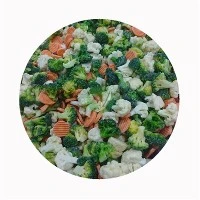
For a frozen-corn recipe project, send the kernel or cob form, preparation method, serving requirement, packing and destination through our contact page. We will review the product details needed to compare a suitable sample with your intended use.
References
- MEXT: Food 06176, boiled immature sweet-corn kernels, 2023 supplement
- FDA: Total carbohydrate on the Nutrition Facts label
- FDA: Added sugars on the Nutrition Facts label
- FDA: Understanding and using the Nutrition Facts label
- MedlinePlus: Counting carbohydrates
- Iowa State University Extension: Sweet-corn types and variety characteristics
- FDA: Ready-to-cook food safety