


Edible-Pod Pea Nutrition: Snow Peas and Sugar Snap Peas
Oct 13, 2023

Edible-pod peas include snow peas and sugar snap peas: vegetables eaten with the tender pod, not just the seeds inside. USDA's raw edible-podded pea reference contains 42 kcal, 7.55 g carbohydrate, 2.6 g fiber and 2.8 g protein per 100 g of edible food. An illustrative 80 g portion provides about 34 kcal and 2.1 g fiber before oil, sauce or other ingredients are added.
Names such as "sweet beans" and "Dutch beans" are too loose for an accurate food comparison. Snow peas have relatively flat pods; sugar snap peas have thicker, fleshy pods that become rounded as the seeds develop. Both differ from shelled green peas, green beans and baked beans. Identify the actual pod type before choosing a nutrition record or substituting one ingredient for another.
The numbers below describe the raw edible-pod category. They are useful reference values, not a guarantee that every snow-pea and snap-pea variety has identical composition. Frozen, cooked and sauced products need a matching declaration or recipe calculation. For a meal, weigh the prepared edible portion and include its accompaniments; for a supply decision, match the name to a sample and written product description.
Start with the pod, not the translated name
The practical distinction is what you eat. Snow peas are harvested with thin, relatively flat pods and small developing seeds. Sugar snap peas have thick, fleshy pod walls and are usually picked with more developed seeds. Garden peas are grown for shelling: the seeds are eaten and the pod is discarded. Iowa State Extension separates these three types on that basis.
This matters when reading a food table. A value for shelled green peas describes a different edible material from a value for peas eaten pod and all. Likewise, the word "snap" in green snap beans does not make those beans sugar snap peas. Check the full food name rather than matching one familiar word. A convenient English translation can otherwise lead you to the wrong reference.
"Sweet pea" is particularly unhelpful as a stand-alone purchasing description. Ask for the edible vegetable's full product identity, its pod form and the state in which it will be supplied. If the offer is for shelled seeds, it belongs in a shelled-pea comparison. If the offer shows flat whole pods, compare it with snow peas. A rounded, fleshy pod needs a sugar-snap description rather than a general bean label.
For us, the first sample question is pod type and maturity, not how impressive the nutrition sheet looks. A thin snow pod and a plump snap pod behave differently in a dish even if a general database places both in one category. The shelled green-pea guide describes the different seed-only format. Keep the pod identity attached to the sample through the next trial.
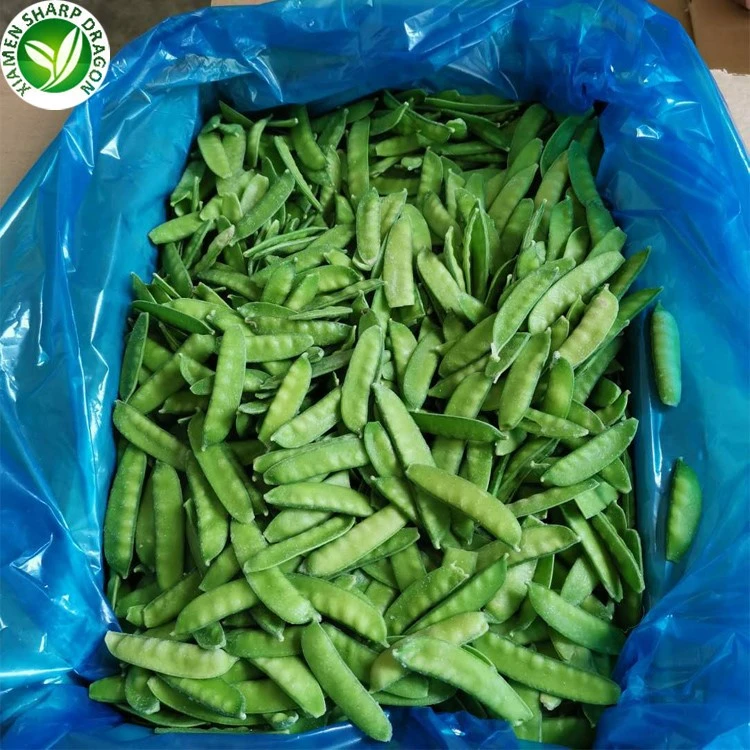
Flat green pea pods in a lined carton. The visible form is consistent with snow peas; the photograph does not establish a cultivar or a nutrient result for the pictured lot.
Commercial naming can add another trap. "Dutch beans," "sweet beans" and "pea pods" may describe different products in different catalogs, so request Pisum sativum, the intended edible pod type and a representative photograph or sample. Ornamental sweet pea is a different plant and must not be treated as an edible vegetable because of the similar name. Reject an uncertain identity rather than tasting an unknown pod.
Raw edible-pod pea nutrition by weight
The reference is USDA FoodData Central record 170010, "Peas, edible-podded, raw," in the SR Legacy collection. The values apply to 100 g of edible raw food. The 80 g column is calculated by multiplying those entries by 0.8; it is a comparison portion, not a prescribed amount or a declaration for a branded frozen product.
| Nutrient | Raw per 100 g | Calculated per 80 g |
|---|---|---|
| Energy | 42 kcal | 33.6 kcal |
| Carbohydrate | 7.55 g | 6.04 g |
| Fiber | 2.6 g | 2.08 g |
| Total sugars | 4 g | 3.2 g |
| Protein | 2.8 g | 2.24 g |
| Total fat | 0.2 g | 0.16 g |
| Vitamin C | 60 mg | 48 mg |
| Food folate | 42 µg | 33.6 µg |
| Vitamin K | 25 µg | 20 µg |
| Potassium | 200 mg | 160 mg |
| Sodium | 4 mg | 3.2 mg |
Use the edible weight after removing material you will not eat. Stems, tough strings and rejected damaged pods can make purchased weight larger than the amount served. For a small bowl, weigh the trimmed pods directly. For a kitchen batch, record the weight before and after trimming if the difference affects portions or ingredient cost. Avoid assuming that every delivery has the same trimming loss.
A cup of whole pods is less repeatable than a weight. Flat pods, plump pods and cut pieces occupy space differently, and packing them tightly changes how much fits. If your recipe uses cups, weigh the usual cup once with the actual ingredient and keep that definition with the recipe. It is an easy way to prevent a volume change from looking like a nutrition change.
This reference gives total carbohydrate, total sugars and fiber as related parts of the food's composition. Do not add sugars to total carbohydrate a second time. Nor should the word "sugar" in sugar snap peas be read as a claim that sugar was added: the ingredient list tells you about additions, while the common name identifies the vegetable.
Different databases may give different figures because the food identity, samples, analytical methods or preparation state differ. Keep one identified basis for a calculation. Combining the energy from a raw record with the fiber from a cooked record can create a table that describes no real food. For a specific packaged product, use its current declaration and serving basis as the starting point.

Flat pea pods with small seeds shown beside them. Pod form helps distinguish the vegetable, while the nutrition table remains an identified raw-food reference.
What the fiber and vitamins contribute
An 80 g reference portion supplies about 2.1 g fiber. That is a contribution to the day's intake, not the whole requirement. NIDDK advises getting enough fiber from varied foods and increasing it gradually. Pea pods can be one vegetable choice alongside whole grains, fruit, other vegetables and legumes. If a sudden larger portion causes discomfort, return to an amount you tolerate and build variety gradually.
Vitamin C supports collagen formation and helps the body absorb iron from plant foods. The raw reference includes 60 mg per 100 g, but the amount in a prepared dish can change during storage and cooking. Treat the raw value as a starting point. A product's processing and the way you use it matter more than a claim that all green vegetables retain the same vitamin content.
Folate supports normal cell division and the production of genetic material. Vitamin K has an important role in normal blood clotting. These are ordinary nutrient functions, not proof that eating pea pods will prevent disease or replace treatment. A varied diet is the useful goal; there is no need to assign one vegetable a medical job it has not been shown to perform.
If you take warfarin, NIH advises keeping vitamin K intake reasonably consistent and discussing dietary changes with the professional managing your treatment. That is different from banning vegetables. Use the same care with a substantial change in portion or eating frequency as you would with other vitamin-K-containing foods, and leave medicine adjustments to your prescriber.
The modest protein contribution also deserves perspective. A vegetable side can add some protein while another part of the meal provides most of it. For carbohydrate planning, count the portion within your own meal plan rather than assuming that a crisp vegetable has no effect on blood glucose. Composition figures describe the food; individual responses and the complete meal need their own consideration.
Raw, cooked and frozen figures answer different questions
Cooking changes more than texture. Water can leave or enter the food, soluble components may move into cooking liquid, and ingredients such as oil or sauce add their own nutrients. A cooked 100 g portion therefore need not contain the same quantity of original raw pods as a raw 100 g portion. Keep the food state visible when comparing two labels or database records.
For an ordinary recipe estimate, calculate the ingredients from their measured input weights and divide by the number of portions. If you want a value per 100 g of finished dish, also weigh the final cooked batch. That second calculation uses the final weight as its denominator. It is especially useful when one version has more sauce or retains more cooking water than another.
Vitamin C is sensitive to prolonged storage and cooking, as NIH explains. Exact retention in your dish needs more information than a raw table provides. For a label or a nutrient claim, use appropriate product-specific analysis or a validated calculation method. For everyday cooking, focus on a suitable portion, sensible preparation and a mix of vegetables rather than trying to infer a precise retained vitamin value from appearance.
Freezing can make portioning and supply planning convenient, but "frozen" is not the same as "raw" or "ready to eat." A frozen item may already have been trimmed and blanched. Read its instructions and preparation state. The frozen snow-pea product format is a useful starting point for a pod specification; the actual item and its documents should determine the nutrition basis and cooking instructions.

Sugar snap peas. Photo by Brianga via Wikimedia Commons, CC BY-SA 3.0, displayed as published on Commons.

Whole flat pea pods with visible small seed outlines. A similar green appearance across samples can still conceal differences in pod thickness and eating texture.
Preparing fresh pods and freezing them at home
For fresh edible pods, start with clean hands and equipment. FDA recommends rinsing produce under running water rather than washing it with soap or detergent. Remove damaged portions and the stems or strings that would make eating unpleasant. If a product is labeled prewashed and ready to eat, follow its label. Keep fresh produce separate from raw meat and its utensils during preparation.
Fresh edible-pod peas can be used raw or cooked, but that choice should follow a correct identification and the product's intended use. A bag of frozen pods marked for cooking needs its prescribed preparation. Thawing alone is not a cooking step. In a cold salad application, choose a product and a preparation method suited to that use rather than relying on the fact that fresh peas are sometimes eaten raw.
Home-freezing guidance is specific. The National Center for Home Food Preservation selects bright green, flat, tender pea pods, removes stems, blossom ends and strings, and leaves the pods whole. It recommends water blanching for 1½ minutes for small pods or 2 minutes for large pods, followed by cooling, draining and packaging with ½ inch of headspace before sealing and freezing.
That method includes an important maturity distinction: if the peas have started developing, the source directs the reader to green-bean instructions; if already developed, it directs shelling and green-pea instructions. Use the complete method that matches the pod stage. The short blanching time for flat tender pods is not a universal process for every plump snap pea or an industrial food-safety validation.
We would keep the blanching record separate from the finished cooking trial. One describes a preparation step; the other checks the texture and heating achieved in the intended dish. Repeating both steps without accounting for earlier treatment can leave a delicate flat pod softer than expected. The right question is what treatment the ingredient has already received and what the final recipe still requires.

Selection equipment shown as general processing context. It does not identify a particular pea product or establish the treatment history of any lot.
Example 1: the oil can change a pea side dish substantially
Worked example: suppose a catering kitchen uses 800 g of trimmed raw edible-pod peas for 10 portions. At the reference value of 42 kcal per 100 g, the peas contribute 336 kcal to the batch, or 33.6 kcal per portion. This is the pea contribution calculated from raw input, not a measured energy value for the finished cooked dish.
Now assume 20 g of oil is retained in the complete dish. Using the general energy factor of 9 kcal per gram of fat, that oil adds 180 kcal. The specified peas and oil together provide an estimated 516 kcal, or 51.6 kcal per portion. Salt, sauce, other vegetables and accompaniments would be additional inputs. Oil left behind in the pan would require a different retained-oil estimate.
If the retained oil rises to 40 g, it adds 360 kcal instead. The same peas and oil then total 696 kcal, or 69.6 kcal per portion. This is why a lightly dressed side and a generously oiled stir-fry should not share the raw-vegetable number. The change comes from the recipe, even though the number and type of pods stay the same.
For this representative kitchen, the decision is how much oil achieves the intended eating result. We would weigh the oil and compare the complete dishes, then keep the preferred method with the portion standard. Counting pods or estimating a splash by eye makes the comparison harder. The result is a repeatable recipe with an honest ingredient calculation, not a promise of a particular finished vitamin content.
The same approach helps a foodservice or catering operation compare fresh prepared pods with a frozen alternative. Use the actual frozen product declaration for that version, retain the same serving target and account for any different cooking yield. Keep the comparison on the plated portion that the guest receives.
Example 2: choosing pods for a reheated ready meal
Practical example: a ready-meal developer is comparing a flat snow-pea sample and a thicker sugar-snap sample for the same vegetable side. In this representative trial, each starts with 200 g of the proposed frozen ingredient. Both follow their own validated preparation requirements before evaluation. The developer then observes the finished samples immediately and after a 15-minute quality-observation interval under the operation's approved holding conditions.
The 15 minutes is an illustrative comparison point, not a safe-holding limit. The useful observations are bite, stringiness, pod splitting, water released into the sauce and how the pieces sit alongside the other vegetables. Record the actual preparation method and final weight. Equal starting mass alone will not reveal how much usable food reaches the finished tray.
We would judge each pod against the intended dish, not automatically favor the plumper pod. A thick, fleshy bite may suit one meal, while a thinner pod gives another dish the shape and eating texture it needs. If a sample becomes too soft after the full reheat sequence, first examine its pod type, maturity and prior treatment before assuming that a larger size will solve the problem.
The expected result is a documented sample decision: the selected form, the process used and the acceptable finished characteristics. No test result is assumed here. If neither sample suits the dish, adjust the ingredient brief or cooking sequence and repeat the comparison. This makes the eventual specification more useful than a photograph captioned simply "sweet beans."

Pea pods shown beside a caliper. This illustrates dimensional review; the photograph alone supplies no agreed size range, tolerance or acceptance result.
Turn the accepted sample into a usable specification
Write the pod type first, then the characteristics that affect the application. Useful descriptions include whole or cut form, pod length and thickness, degree of seed development, strings, broken pieces and visible defects. Define the measurement method when dimensions matter. A length measured along a curved pod is not necessarily the same as the straight distance between its ends.
For strings and toughness, use an agreed evaluation method on a prepared sample. Visual sorting can identify some defects, but it is a poor substitute for the bite that matters in the finished dish. Keep the sample code, preparation conditions and observations together so that the next person can repeat the assessment. A nutrition table and a texture acceptance record serve different purposes.
XMSD's processing and inspection equipment overview gives general process context. For an actual purchase, connect the agreed product to the relevant inspection and traceability records. Machine photographs are not lot-specific results. The useful records identify what was checked, which lot was covered and how a nonconforming result would be handled.

An inspection conveyor and control panel in a processing area. Use product-specific inspection records to assess a pea lot; this is general equipment context.
Packing affects how easily the accepted product can be used. Consider how much a kitchen opens at once, how remaining product is protected and whether the inner pack keeps the required identification after the carton is opened. Compare those practical details alongside inner-pack, carton and pallet options. Choose the arrangement for the actual handling pattern rather than treating a larger carton as automatically more efficient.
At receipt, check the item name, lot code, package condition and specified temperature conditions together. FDA advises keeping a household refrigerator at 4°C/40°F or below and a freezer at -18°C/0°F; a commercial delivery also needs its agreed product and transport requirements. Ice crystals, color changes and texture concerns need a quality review, while temperature abuse or damaged protection requires a separate safety assessment.

Wrapped cartons on a pallet illustrate transport protection. The photograph is not evidence of a particular pea shipment, its temperature history or nutrient retention.
The most useful nutrition decision starts with the right food identity. Use the raw edible-pod reference for an identified raw portion, the product declaration for a packaged ingredient and a complete calculation for a prepared dish. Then let the intended bite, preparation sequence and handling pattern determine the appropriate pea format.
For a frozen pea-pod requirement, share the pod type, whole or cut form, intended dish, preparation sequence and pack needs. We can review the sample and specification questions needed to assess a suitable product option.
References
- USDA SR28: edible-podded peas, raw, NDB 11300
- Iowa State University Extension: How Do the Various Types of Peas Differ?
- NIH Office of Dietary Supplements: Vitamin C
- NIH Office of Dietary Supplements: Folate
- NIH Office of Dietary Supplements: Vitamin K
- NIDDK: Eating, Diet and Nutrition for Constipation
- National Center for Home Food Preservation: Freezing Edible Pea Pods
- FDA: selecting and serving produce safely
- FDA: Are You Storing Food Safely?
- USDA National Agricultural Library: Food and Nutrition Information Center
- XMSD operational perspective on pod identity, preparation trials, inspection and packing.
- Texas A&M Extension: edible-podded pea types
- North Carolina Extension: ornamental sweet pea