


Is Frozen Broccoli Cheaper Than Fresh? A Usable-Cost Guide
Aug 22, 2024

Frozen broccoli is often cheaper than fresh broccoli when both are compared as plain product on an edible-portion basis, but it is not cheaper in every market or every week. USDA Economic Research Service data for U.S. retail purchases in 2023 put plain frozen broccoli at about $2.57 per pound and $1.00 per edible cup equivalent. Fresh florets averaged about $3.08 per pound and $1.05 per cup equivalent, while fresh heads averaged about $3.02 per pound and $1.32 per cup equivalent. In that dataset, frozen was the lower-cost form, although its advantage over ready-to-use fresh florets was small.
Those figures are a national U.S. snapshot, not a universal price rule. Local harvests, promotions, organic status, pack size, freight, energy, and the intended dish can reverse the result. For a household, restaurant, or industrial buyer, the fairest comparison is cost per usable cooked portion, followed by labor, spoilage, storage, and performance. Fresh can win when it is local, in season, used quickly, and the stem is valuable. Frozen often wins when buyers need trimmed pieces, measured portions, low shrink, and predictable production.
The short answer: Check the price per edible portion, not only the shelf price per kilogram. Frozen broccoli is usually the more economical option when fresh trimming loss, preparation labor, spoilage, or demand uncertainty is meaningful. Fresh may cost less during a strong local season or when the whole head is used efficiently.

Compare the Cost of Broccoli You Can Actually Use
A head of fresh broccoli and a bag of frozen florets are not equivalent purchase units. A fresh head may include a thick stalk, leaves, or damaged areas; a frozen bag normally contains a defined style such as florets, spears, cut broccoli, or pieces. If the recipe needs only florets, comparing invoice price per kilogram rewards the fresh option for weight that may never reach the plate.
USDA's Food Buying Guide illustrates the size of that distinction. It lists one pound of untrimmed fresh broccoli as 0.81 pound ready to cook. Its more specific cooked-yield entries vary by style: one pound of fresh broccoli intended as trimmed cooked florets yields 0.63 pound, while one pound of frozen trimmed florets yields 0.99 pound cooked. These are planning factors for the listed products, not guarantees for every supplier or cooking process, but they show why the comparison basis matters.
Use this calculation: usable ingredient cost = purchase cost divided by measured usable yield.
Then add preparation labor, avoidable waste, storage, and any difference in energy or cold-chain cost. For production planning, divide the final total by accepted cooked kilograms or saleable portions, not by incoming weight.

What the Latest USDA Broccoli Price Data Shows
The USDA ERS broccoli workbook, updated in December 2025 and based on 2023 U.S. retail data, makes both comparisons. Frozen broccoli had the lowest average shelf price per pound and the lowest estimated price per edible cup equivalent. Fresh florets were close on a per-cup basis because the dataset assigns them no refuse, while fresh heads became more expensive after a 0.78 preparation-yield factor was applied.
| Plain broccoli form | Average retail price per pound | Average price per edible cup equivalent |
|---|---|---|
| Fresh florets | $3.08 | $1.05 |
| Fresh heads | $3.02 | $1.32 |
| Frozen, without cheese | $2.57 | $1.00 |
This evidence answers the general question more carefully than a single supermarket price tag: frozen was cheaper on average in this U.S. dataset, but form and preparation changed the size of the difference. The workbook excludes frozen products containing cheese, so it should not be used to compare plain broccoli with sauced, seasoned, breaded, or ready-meal products. USDA also warns that its price series should not be read as a year-to-year inflation measure because products and coding methods can change.

When Frozen Broccoli Is More Likely to Be Cheaper
Trimming and preparation are real costs
Frozen broccoli transfers sorting, trimming, washing, cutting, blanching, and freezing to the processor. That processing is built into the purchase price, yet it can remove tasks at the point of use. The saving is greatest where kitchen labor is expensive, throughput is tight, or uniform portions matter. It is smaller where labor is readily available or the operation already has an efficient fresh-preparation line.
Do not assume every frozen format gives the same return. Florets, short spears, cut broccoli, and chopped broccoli have different stem ratios, piece distributions, and application value. The lower quotation may be a false economy if the format creates extra sorting, uneven cooking, or too many pieces outside the approved size.
Portion control reduces overuse and unsold inventory
Individually frozen pieces can be weighed while the remaining product stays frozen, subject to the pack instructions and proper handling. For homes, that can prevent a fresh head from being forgotten in the refrigerator. For foodservice and ready-meal production, it can reduce variation between portions and make recipe costing easier. The economic benefit depends on actual demand: a high-turnover kitchen that uses every part of fresh broccoli may see little waste advantage.
Season and distance can widen the gap
Fresh prices can fall during a local harvest and rise when supply is distant or disrupted. Frozen product also carries energy, storage, and cold-chain costs, so it is not immune to price pressure. Its commercial advantage is often predictability rather than the lowest spot price: a buyer can compare quotations against a defined frozen format and plan inventory over a longer usable window. That benefit matters only when freezer capacity, stock rotation, and demand forecasting are managed well.

When Fresh Broccoli Can Be the Better Buy
Fresh broccoli can win when it is locally abundant, priced aggressively, and used before quality declines. A kitchen that turns stems into soup, slaw, puree, or stock may achieve a much higher usable yield than an operation that discards them. When the whole head has value, the apparent trimming disadvantage becomes smaller and may disappear.
Application can outweigh price. Fresh broccoli is the more appropriate starting material for raw vegetable trays, salads, fresh displays, or dishes requiring a crisp bite and chef-controlled cuts. Frozen broccoli is normally blanched before freezing; Codex defines quick-frozen broccoli as sorted, trimmed, washed, and sufficiently blanched for stability. It therefore should not be priced as if it were a raw-texture substitute in every recipe.
Fresh may also be simpler when a buyer has limited freezer space or unusually expensive frozen storage. Conversely, a low fresh invoice price is not a saving if the operation must rush consumption, accept quality decline, or pay staff to recover a usable floret specification. The winning form is the one that meets the application at the lower finished-output cost.

Run a Five-Step Break-Even Test
A short production trial is more reliable than a general claim about which form is cheaper. Use the same recipe, finished weight, and acceptance standard for both options. The order matters because a price comparison is meaningless until the product forms and usable outputs are aligned.
- Define an equivalent specification. State whether the dish needs florets, spears, or cuts; the acceptable piece range; stem proportion; plain or prepared product; and the target cooked texture.
- Measure usable yield. Weigh incoming product, trim fresh broccoli as normal, cook each form by its intended method, drain consistently, and record accepted cooked weight.
- Record preparation cost. Time receiving, washing, trimming, cutting, sorting, and cleanup. Apply the operation's real labor rate rather than a generic estimate.
- Add shrink and storage. Include discarded material, unsold fresh product, freezer or chiller cost, packaging disposal, and any extra handling attributable to the format.
- Compare accepted output. Divide total batch cost by accepted cooked kilograms or saleable portions. Repeat across enough batches to expose seasonal and lot variation.
For example, if fresh broccoli costs less per incoming kilogram but produces fewer accepted portions and takes more preparation time, frozen can still have the lower portion cost. If a local fresh head is used almost completely and needs little labor, fresh may remain cheaper. The trial should also reject output that misses the dish's texture or appearance requirement; unusable quality is not a bargain.
For B2B Buyers, Low Cost Must Include Acceptance
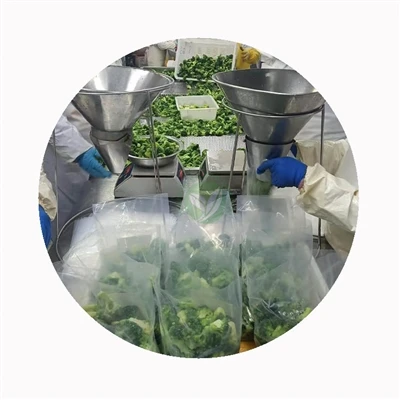
An importer, foodservice distributor, retail brand, or factory should compare landed and accepted cost, not only the supplier's unit price. The specification determines what becomes saleable: style, size distribution, stem proportion, broken pieces, color, flavor and odor, grit, defects, package condition, and cooking performance all influence yield. USDA's frozen broccoli standards illustrate this logic by grading product through defined quality factors rather than price alone.
The first buyer perspective is recipe yield. Run the quoted style in the real application and record accepted cooked output. The second is line efficiency: observe whether pieces feed, dose, heat, and mix consistently or create rework. The third is arrival risk: review package integrity, temperature records where applicable, visible clumping or excess free ice, and the agreed documents. A lower quote loses its advantage if a shipment cannot meet the approved application or destination requirements.
Before contracting, approve a representative sample and write the measurable acceptance points into the specification. Compare the same packing basis and clarify whether the quotation covers retail packs, foodservice bags, or industrial cartons. For channel planning, XMSD's frozen food application solutions show why the correct product form depends on the user's process, while its frozen packaging overview helps frame packing questions. Final values remain subject to the agreed product and destination requirements.
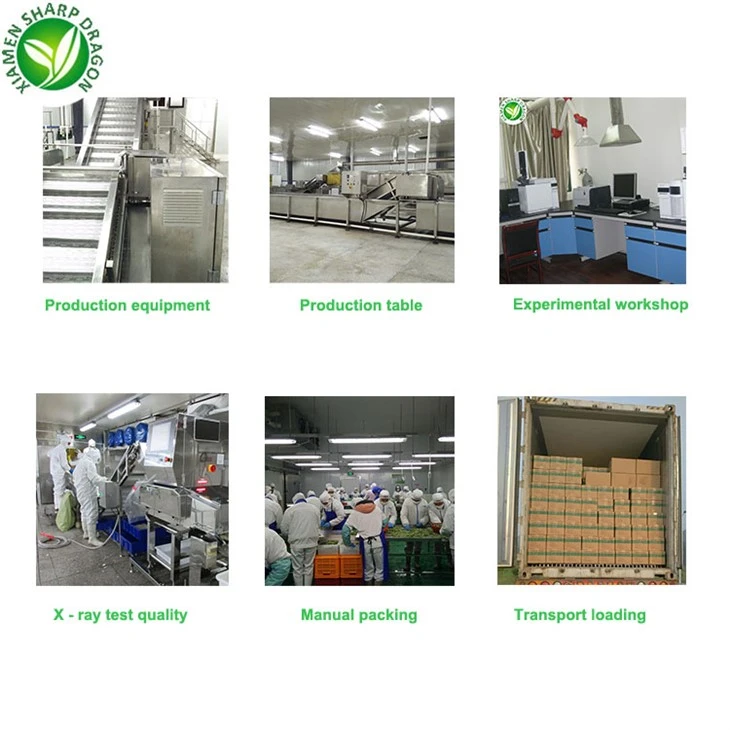
XMSD sourcing note: We can discuss the intended application, cut style, size direction, packing format, sample review, and quotation basis for frozen broccoli. A useful request tells us the finished product and acceptance method, not only a target price.
Frequently Asked Questions
Can in-season fresh broccoli be cheaper than frozen?
Yes. A strong local harvest, promotion, short delivery route, and fast turnover can make fresh the lower-cost choice. Recheck the comparison after trimming, labor, and unsold product are included, and repeat it when the season changes.
Should frozen broccoli be thawed before a cost-yield test?
Test it using the same handling and cooking method planned for production and follow the pack instructions. If the recipe cooks from frozen, a thawed trial would distort labor, drip, and texture. Measure accepted cooked and drained output consistently for both forms.
Is a sauced frozen broccoli pack a fair comparison?
Not against plain fresh broccoli. Sauce, cheese, seasoning, coating, and other ingredients change net broccoli content, processing, nutrition, and price. Compare plain with plain, or cost the complete prepared dish on an equivalent finished-portion basis.
The Practical Verdict
Frozen broccoli was cheaper than fresh florets and fresh heads in the latest USDA U.S. broccoli dataset, and it can add savings through portion control, lower preparation work, and reduced spoilage. It is still not automatically cheaper everywhere. Use a matched product specification, measure accepted cooked yield, and add labor, waste, storage, and cold-chain costs. Choose fresh when its local price, whole-head use, and texture advantage outweigh those factors; choose frozen when prepared format and predictability produce the lower accepted-portion cost.
For a household, the decision can stay simple. Record the price of the plain product, how much of it is eaten, and whether any fresh broccoli is discarded before the next shopping trip. Compare similar products on the same weight or serving basis and ignore temporary savings that require buying more than the freezer or meal plan can handle. Texture should remain part of the decision: saving a few cents is not useful if the chosen form does not suit the dish.
For a commercial buyer, repeat the test with production-scale batches and landed costs. Keep the cooking method, drain time, target piece size, and acceptance criteria constant. Review several lots rather than one ideal sample, because size distribution, breakage, surface ice, and handling history can change finished yield. The correct purchasing decision is therefore conditional and auditable: select the form that repeatedly delivers the required saleable output at the lower total cost, then recheck when season, freight, labor, or specifications change.
References
- USDA ERS: Broccoli-Average Retail Price per Pound and per Cup Equivalent, 2023
- USDA ERS: Fruit and Vegetable Prices-Documentation
- USDA Food and Nutrition Service: Food Buying Guide Vegetable Yield Table
- USDA Agricultural Marketing Service: Frozen Broccoli Grades and Standards
- Codex Alimentarius: Standard for Quick Frozen Broccoli, CXS 110-1981