


Frozen Broccoli Production Process: A Buyer Control Guide
Feb 24, 2023

A reliable frozen broccoli production process is a chain of measurable releases: receive sound raw broccoli, establish lot identity, trim and cut to the agreed style, control wash-water quality, blanch for the validated product objective, cool and drain without recontamination, freeze rapidly, remove defects and foreign material, pack correctly, and maintain the frozen chain. A flow chart alone does not prove that any of those steps worked.
For a buyer, each step needs an input, a process condition, evidence and a release rule. The specification should define product style and size, stem expectations, color, defects, foreign material, texture, cooking status, microbiological and chemical requirements, pack, coding, sampling and temperature. The factory then shows how its actual line can repeatedly meet that agreement. Process numbers are facility- and product-specific unless an applicable law or standard sets them.
Direct answer: Approve the process by tracing one lot from field or receiving record through trimming, size grading, washing, blanching, cooling, draining, IQF freezing, inspection, packing and frozen storage. Verify the critical records, test the cooked result in your application, and calculate saleable yield. Do not approve only from a staged line photograph or a generic temperature statement.
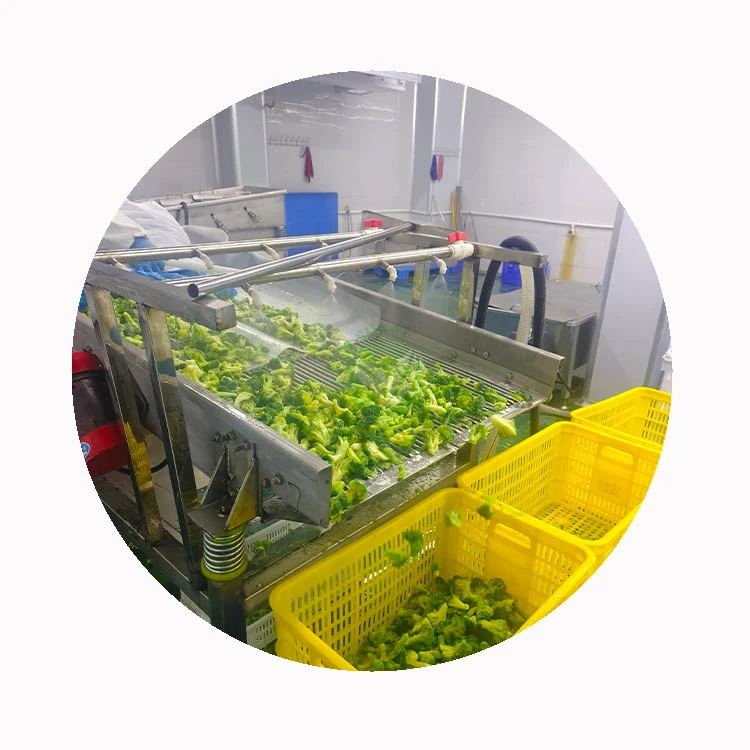
Turn the Flow Chart into Release Decisions
Codex CXS 320 describes quick-frozen broccoli as fresh, clean, sound broccoli that is sorted, trimmed, washed and sufficiently blanched for color and flavor stability, then quick frozen and maintained frozen. That sequence is a useful backbone, but it is not a factory's complete hazard analysis or your finished specification. The actual plan must reflect product style, intended use, equipment, destination rules and customer controls.
Write the process as handovers. Receiving releases identified raw material to trimming. Cutting releases pieces that fit the size and style plan. Washing releases visibly clean material under controlled water conditions. Blanching releases product that met the validated time-temperature objective. Cooling and drainage release material suitable for freezing. IQF and post-freeze inspection release product to packing. Finished-product review releases a coded lot to cold storage or shipment.
For each handover, ask four questions: what is measured, where and how is it measured, what limit or decision rule applies, and what happens when it fails? A log with check marks but no defined measurement does not close the risk. Nor does one record prove the entire run when sampling frequency is missing. Review the relevant XMSD processing overview as orientation, then request evidence for the proposed partner facility and product route.
Practical example: A factory flow chart says "grade 20–40 mm," but the buyer's soup line needs 30–50 mm florets with a short attached stem. The team does not merely rename the grade. It agrees on how the longest dimension is measured, how stems are treated, the sample size and permitted out-of-size count, then runs a representative sample through the soup-filling equipment before release.

Release Raw Material by Lot, Maturity and Usable Condition
Finished quality begins before cutting. Establish farm or supplier identity, field or receiving lot, harvest and delivery timing, cultivar where relevant, maturity, head compactness, color, flowering, pest damage, decay, soil, extraneous vegetation and temperature. Raw broccoli that is yellowing, loose, fibrous or heavily damaged will not become a uniform premium floret because it passes through an IQF tunnel.
Use a documented intake sample. Inspect more than the top layer of a bin and record the lot quantity represented. Separate defects that trimming can remove from defects that signal broader deterioration or contamination. A few damaged leaves may be a yield issue; decay, objectionable odor, contamination or an unidentified lot can be a release failure. Your acceptance plan should state who can downgrade, hold or reject the material.
Keep traceability attached as bins merge or split. A production code should lead back to relevant receiving lots, line, shift, process records and pack run. Where several farms supply one run, define the traceability unit and mass balance rather than claiming farm-to-carton identity that the records cannot reconstruct. Test recall retrieval during supplier qualification, not only after an incident.
Raw material also drives economics. Record gross received weight, rejected material, leaves, thick stem, off-size recovery and usable cut output. A lower raw price can become the higher finished cost when head size, maturity or damage raises trim loss. Use the same measurement boundary when comparing seasons and suppliers.

Control Cutting, Stem Ratio and Size Distribution
Product names such as florets, cuts and spears describe different presentations. The current Codex broccoli annex gives presentation definitions and size provisions, but a contract may use a narrower commercial range. Write the applicable definition into the specification. Include measurement direction, head integrity, attached stem, loose stems, crumbs, leaf material and out-of-size tolerance.
Cutter setting is only one variable. Raw head diameter, branch geometry, operator trimming, blade condition, feed orientation and repeated handling affect the result. An average size can hide two poor tails: too-small pieces that break or overcook and oversized pieces that fill or cook unevenly. Review a distribution across defined bands rather than one mean.
Stem ratio should be measurable. Choose among stem length on individual florets, loose-stem percentage by weight, or the total head-to-stem composition of a sample. These are not interchangeable. A photo standard can help align expectations, but pair it with a measurement method and tolerance. Lighting, thaw state and product arrangement can make the same lot look different.
Match the cut to the application. A retail steam bag may value visual floret integrity and narrow size distribution. A soup or sauce processor may accept smaller cuts but require predictable pumpability and fill weight. A puree producer may value sound raw material and low foreign material more than intact heads. The frozen broccoli product range can frame available styles; the written order still controls.

Manage Washing as a Water System, Not a Cosmetic Step
Washing removes soil and debris and can reduce surface contamination, but contaminated recirculated water can spread contamination across product. FDA produce guidance emphasizes starting and maintaining suitable process-water quality, monitoring relevant antimicrobial conditions when used, controlling organic load, and keeping water-contact surfaces clean. Apply the laws and validated procedure for the actual plant and destination.
Map water source, potable or other required quality, tanks, sprays, flumes, filters, dosing, make-up water, overflow and drainage. Record the variables that determine effectiveness for the chosen system. Depending on the chemistry, these may include active concentration, pH, temperature, oxidation-reduction potential, turbidity or organic load, contact time and water-change frequency. Do not copy a chemical concentration from a different product or jurisdiction.
Set an action when organic matter rises or a monitor drifts. Adding more chemical without correcting load, pH, calibration or flow may not restore control and can create another problem. Link the batch record to chemical preparation, instrument calibration and corrective action. Verify that the final product meets applicable residue and sensory requirements.
Inspect the physical result as well. Soil trapped in branched florets, insects, leaves and small foreign material require product-specific control. Wash intensity that is too aggressive can cause breakage, while insufficient agitation may leave debris. Compare incoming challenge, water-system data and sorted output rather than treating "washed twice" as a universal performance claim.
Validate Blanching, Cooling and Drainage as One System
Blanching is used in quick-frozen vegetables primarily to control enzyme activity and stabilize quality. Time and product temperature depend on floret size, loading, equipment, water or steam conditions and the defined endpoint. Too little treatment can leave inadequate enzyme control and unstable quality; too much can soften texture, change color and increase soluble-solid loss.
Do not call blanching a validated pathogen-kill step unless the facility has established that function for the specific process and hazard plan. The intended-use statement matters. A product requiring cooking is not automatically ready to eat because it was blanched. The label, customer specification and hazard analysis must use consistent language, and post-blanch areas must be protected from recontamination.
Measure more than machine setpoint. Confirm product loading, residence-time distribution, temperature at a representative location, startup and changeover controls, and the verified quality or enzyme endpoint where used. Document how the line responds to a larger cut, a cold incoming lot or a throughput change. A validated window needs operating limits and corrective action, not only an ideal target.
Cooling should stop excessive heating promptly under sanitary control. Drainage then removes free surface water before freezing. Poor drainage can increase ice, clumping and pack-weight ambiguity; long warm residence can weaken quality and increase exposure. Track cooling condition, product temperature, dwell time and drainage performance as connected variables.

Freeze Rapidly and Measure the Product, Not Just Tunnel Air
Quick freezing is intended to move product rapidly through its maximum ice-crystal formation range. Codex CXS 320 states that the process is not complete until the product reaches -18°C at the thermal center after thermal stabilization, and the product is then maintained at -18°C or colder through the cold chain under that standard. The tunnel's displayed air temperature alone does not prove the product endpoint.
Freezing performance changes with inlet temperature, piece size, belt depth, load distribution, airflow, equipment condition and throughput. A mixed bed of large and small florets may show uneven endpoints. Define where product temperature is measured, with what calibrated device, at what frequency and after what stabilization. Link deviations to held product and disposition.
IQF describes individually quick-frozen pieces, but free-flowing condition is a finished performance attribute, not guaranteed by the acronym. Inspect clumps, excessive surface ice, dehydration, color, breakage and loose particles after freezing. If a blockage or warm interruption occurs, segregate the affected interval using line times and lot records rather than blending it silently into good output.
Practical example: The belt is set for a normal 30–50 mm floret run. A raw-material change increases the oversized tail and bed depth. Tunnel air still reads the normal value, but representative product checks miss the thermal-center release limit. The team holds the time-defined quantity, corrects grading and feed distribution, verifies product temperature and documents disposition before packing resumes.

Protect the Post-Blanch Zone and Verify Foreign-Material Controls
After blanching, product passes through cooling, conveying, freezing, inspection and packing equipment. Hygienic zoning, traffic, condensation, drains, cleaning tools, maintenance and food-contact surfaces influence recontamination risk. Frozen storage prevents microbial growth under frozen conditions but does not reliably destroy organisms that are already present.
FDA guidance identifies sanitation controls and environmental monitoring as important tools where environmental pathogens are a relevant hazard, particularly for ready-to-eat foods. European industry guidance also addresses Listeria control in quick-frozen vegetables. Intended use, facility risk assessment, legal requirements and process design determine the monitoring plan. Review sampling sites, frequency, trend analysis, corrective action and follow-up rather than asking only whether swabs are taken.
Foreign-material control is a layered system. Agricultural controls, receiving inspection, washing, cutting, visual sorting, product-suitable sieves or screens, relevant magnets, metal detection or X-ray capability and final inspection each address different hazards and sensitivities. Request the detector standard and test-piece orientation, challenge frequency, reject verification, alarm response and disposition record. A detector cannot remove stones, insects, hard plastic or all stainless steel by itself.
Review facility and product documents through the XMSD certification page, but verify holder, address, scope and validity against the actual production route. A food-safety certificate does not replace product testing, and a clean COA does not replace line and sanitation evidence.

Pack, Code and Store the Lot Without Losing Identity
Packing begins with the approved product, not with an empty bag. Confirm net weight, frozen condition, piece distribution, pack material, liner and seal, master-carton strength, coding, label language, required allergen and cooking statements, pallet pattern and customer marks. Retail film, foodservice bags and industrial liners have different handling and barrier needs.
Protect frozen product from moisture loss, contamination, crushing and temperature exposure. The frozen-food packaging overview shows available considerations. Test the selected material and carton at the chosen net weight, distribution route and stack, then write the accepted construction into the order. Check seals and coding during the run, not only on a preproduction sample.
Reconcile packed quantity with processed input, rejects, rework and work in progress. Lot coding must identify the run and retain the link to raw and process records. Control label changeovers and obsolete packaging so a correct product does not leave under the wrong SKU, language, cooking instruction or customer brand.
Move finished cartons to frozen storage promptly under the agreed temperature condition. Inspect pallet stability, airflow clearance and case condition. Record storage and dispatch temperatures using the contract's measurement basis. A cold-room display represents its sensor location; it does not describe every carton after a door event or a warm loading delay.
Approve Saleable Yield and Cooked Performance
A finished sample should be inspected frozen and after the intended preparation. Frozen review covers color, separation, ice, clumps, size, stem, loose material, damage, foreign material, odor, coding and pack condition. Cooked review covers tenderness, fibrousness, color retention, flavor, water release, piece integrity and performance in the real dish or production line.
Define sample size and acceptance logic. Codex and voluntary USDA grade standards provide useful terminology and defect frameworks, but your contract should state which standard or customized rule applies. Do not combine critical foreign material, major defects, minor defects and size deviations into one unweighted score that hides a serious failure.
Worked example: You inspect 100 kg from representative cases. There are 2.8 kg of crumbs and loose stems outside the agreed style, 1.4 kg of oversized pieces rejected by the filler, and 0.8 kg of damaged pieces. Saleable output is 95.0 kg, so saleable yield is 95.0%. At USD 1.20 per delivered kilogram, product cost becomes USD 1.20 divided by 0.95, or USD 1.263 per saleable kilogram before cooking loss. Compare that figure with the approved sample and contract tolerances.
If your plant cooks 20 kg and obtains 17.6 kg at the target texture, cooked yield is 88%. Combined saleable-and-cooked yield is 0.95 multiplied by 0.88, or 83.6%. The delivered product therefore contributes about USD 1.435 per usable cooked kilogram before labor, energy and sauce. These are teaching values, not an XMSD lot result; use your own sample and process.
For food manufacturers, the food-processing buyer page provides the wider application route. Share filler opening, cook method, hold time and acceptable texture so the broccoli process can be judged against the job rather than appearance alone.
XMSD sourcing note: Send the broccoli style, size measurement, stem rule, defects, intended cooking process, pack, annual volume, destination, required tests and sample plan. We can match the request to an available product and partner-factory route and coordinate process and document review.
Frequently Asked Questions
Is frozen broccoli washed before freezing?
Commercial quick-frozen broccoli is normally washed during processing. You should still verify the proposed process, water-control records and intended-use or cooking statement. Washing reduces soil and contamination but does not make every product ready to eat.
Why is broccoli blanched before IQF freezing?
Blanching controls enzyme activity and supports color and flavor stability. The correct time-temperature window depends on product and equipment and should be validated. It should not be described as a pathogen-kill step unless that purpose is specifically established.
Does IQF mean every broccoli floret will stay separate?
No. Piece size, drainage, feed depth, freezing performance, packaging and temperature history affect separation. Put clumps, loose ice and free-flowing condition into the finished specification and inspect the shipped lot.
What temperature shows quick freezing is complete?
Codex CXS 320 uses -18°C at the product's thermal center after thermal stabilization for completion of the quick-freezing process. Your contract must also define the measurement method, ongoing cold-chain condition and any destination-specific requirement.
Which records should a frozen broccoli buyer request?
Request lot traceability, intake release, size and defect checks, wash-water controls, blanching and cooling records, product-temperature release, foreign-material control, packing and coding checks, applicable testing, cold storage data and corrective actions for the sampled run.
Final Thoughts from XMSD
Frozen broccoli quality is built through connected controls, then proved in the finished lot and your application. Use standards to establish common language, but lock the exact cut, process evidence, intended use, sampling and acceptance rules in the order. When raw yield, wash water, blanching, drainage, freezing, post-process hygiene, packing and cooked performance are measured together, the process becomes auditable instead of promotional.
References
- Codex Alimentarius. CXS 320-2015, Standard for Quick-Frozen Vegetables, including the broccoli annex.
- USDA Agricultural Marketing Service. United States Standards for Grades of Frozen Broccoli.
- U.S. Food and Drug Administration. Guide to Minimize Microbial Food Safety Hazards for Fresh Fruits and Vegetables.
- U.S. Food and Drug Administration. Environmental Sampling and Sanitation-Control Overview.
- European Commission. Guidance Platform, including control of Listeria in quick-frozen vegetables.