


Is Broccoli Good for Losing Weight? A Measured Portion and Swap Guide
Jun 20, 2019

Yes, plain broccoli can be useful in a weight-loss eating pattern, but it works through substitution rather than fat burning. A cup of chopped raw broccoli weighs about 91 g and provides about 31 kcal in USDA reference data. If that cup replaces part of a more calorie-dense food, the meal may become lower in calories while keeping useful volume. If you add the broccoli without changing anything else, or cover it with a generous amount of oil, cheese, cream sauce, or breading, the expected calorie reduction can disappear.
Use one cup of plain broccoli as a practical starting measure, not as a prescribed daily dose. The Dietary Guidelines for Americans 2025-2030 use one cup of raw or cooked vegetables as a serving example and set a three-serving daily vegetable goal for a 2,000-calorie pattern, adjusted for individual calorie needs. That target covers a variety of vegetables, not three cups of broccoli. The useful question is therefore not how much broccoli can be forced into a diet, but which part of a real meal it will replace and whether the finished portion remains satisfying and nutritionally complete.
The short answer: Start with about one cup of plain broccoli in a meal and use it to replace, not simply accompany, a more calorie-dense portion. Judge the complete recipe, including oil, sauce, protein, starch, and final serving weight. Broccoli can support the plan; it cannot create weight loss by itself.

Why Broccoli Can Help Only When the Meal Changes
Body weight changes over time in response to the wider balance between energy intake and energy use, along with individual factors such as activity, sleep, health conditions, and medication. No vegetable selectively burns abdominal fat. Broccoli's practical advantage is much less dramatic and much more useful: plain broccoli has low energy density because much of its weight is water, and it supplies fiber and physical volume. This can make it easier to reduce the energy density of a meal without reducing the visible amount of food to the same degree.
The CDC gives the clearest operational version of this principle. Its current healthy-weight guidance recommends replacing one cup of rice or pasta with one cup of vegetables such as broccoli, squash, or peppers. The action word is replace. A plate containing the original rice or pasta plus an extra cup of broccoli is larger than the original plate. It may still be nutritious, but it is not the same calorie-reduction strategy.
Composition supports the method, not a guaranteed outcome
USDA FoodData Central lists raw broccoli at 34 kcal, 2.6 g dietary fiber, and 89.3 g water per 100 g. Its household measure for one cup chopped is 91 g, which scales to about 31 kcal and 2.4 g fiber. These numbers describe raw broccoli. They should not be copied onto a cooked, drained, salted, sauced, or breaded product without matching the food state. Our detailed guide to frozen cooked broccoli nutrition on a 100 g basis shows why preparation words and serving weight must stay attached to every value.
Fiber and water can contribute to fullness, yet neither proves that a broccoli serving will reduce your appetite or body weight. Human intervention findings on fiber and weight are mixed. A large prospective cohort analysis covering 133,468 adults found that an additional daily serving of cruciferous vegetables was associated with 0.68 lb less weight change over four-year intervals. That was an observational association based partly on self-reported diet and weight, not a broccoli treatment trial. Residual differences in lifestyle could explain part of the result. The defensible conclusion is that broccoli fits a lower-energy dietary pattern; the study does not supply a promised number of kilograms lost.
Practical example: Suppose your usual lunch includes two cups of cooked pasta and little vegetable volume. Replacing one cup of that pasta with one cup of broccoli follows the CDC substitution model. Keeping both cups of pasta and adding broccoli does not. Your action is to photograph or weigh the baseline plate, make the one-for-one volume swap, and compare hunger, enjoyment, and total recipe calories over several ordinary lunches before deciding whether the change is sustainable.
Choose a Portion Before You Choose the Recipe
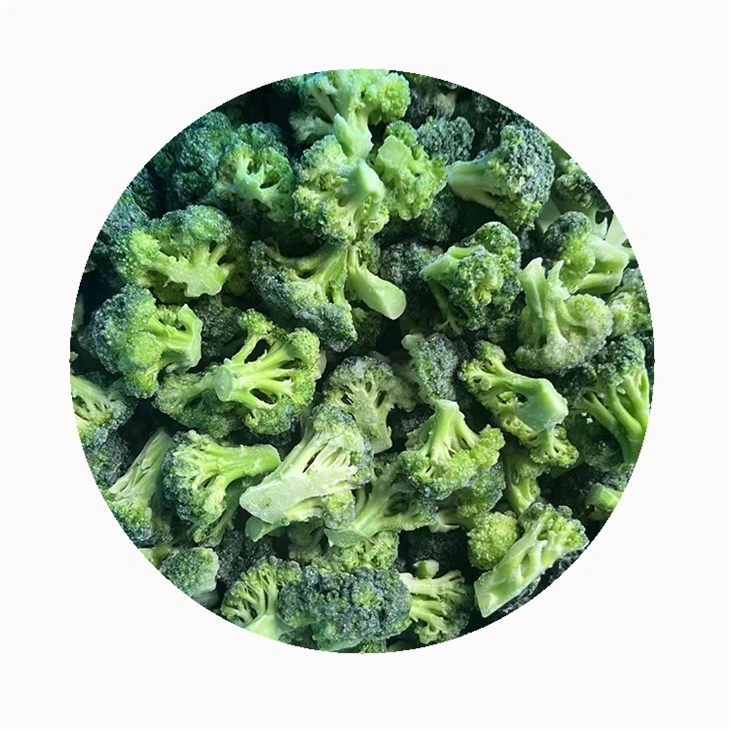
A one-cup measure is a useful starting point because it is easy to repeat and aligns with the current federal serving example for vegetables. It is not a medical prescription and it does not mean broccoli must fill the whole vegetable allowance. The 2025-2030 guidelines call for variety across vegetable types, and calorie needs vary with age, sex, height, weight, and activity. You may use less in a small meal or more in a large mixed dish, but keep the measurement basis visible.
Cup, gram, and cooked weight answer different questions
A cup answers a household-volume question. Grams answer recipe, purchasing, and nutrition-calculation questions. Cooked drained weight answers what actually reaches the plate after water gain or loss. Do not move casually between them. A cup of loosely arranged large florets can weigh less than a cup of small pieces packed into the same vessel. A frozen portion weighed before cooking may not equal its drained plated weight. For a personal meal, consistency matters more than laboratory precision; for a menu, retail pack, or factory recipe, the state and weighing point must be written into the method.
Start by choosing one of two repeatable bases. For a simple home meal, use a level one-cup measure of the form you normally cook. For a controlled recipe, specify grams at a named stage, such as "120 g cooked and drained broccoli per tray." Then use nutrition data that match that stage as closely as possible. If you weigh frozen input but calculate with raw reference data, the arithmetic may be neat while the basis remains wrong.
More broccoli is not automatically a better plan
Very large portions can become monotonous, uncomfortable, or nutritionally unbalanced if they displace protein foods, other vegetables, grains, fruit, or dietary fats needed in the broader eating pattern. A useful serving should leave room for the rest of the meal and be comfortable enough to repeat. If you need an oversized bowl of broccoli to tolerate a calorie target, the plan may be too restrictive or poorly composed. Adjust the whole meal rather than treating volume as the only goal.
| Form on the plate | What controls the result | Useful decision |
|---|---|---|
| Plain raw or lightly cooked broccoli | Portion weight and what it replaces | Use a cup or weighed serving as the swap |
| Plain frozen broccoli | Ingredient list, cook loss, drain method, and cut | Measure the state actually served |
| Broccoli with oil or sauce | Amount and composition of every addition | Calculate the complete recipe, not the vegetable alone |
| Breaded, fried, or creamy product | Coating uptake, frying fat, sauce, and serving size | Treat it as a prepared dish with its own label |

Preparation Can Preserve or Cancel the Calorie Swap
Plain steaming, microwaving, brief boiling and draining, or roasting with a measured addition can all fit a calorie-aware meal. None is automatically the best method. The preferred choice is the one that produces acceptable flavor and texture with an amount of added energy you can see and repeat. If the preparation tastes so poor that you abandon it after two meals, it has little practical value, while an unmeasured pour of oil makes comparison impossible.
The word "roasted" does not reveal the calorie total. Neither do "crispy," "healthy," or "vegetable side." Record the weight of oil, butter, cheese, dressing, or sauce used for the whole batch, divide by the number of finished portions, and add that result to the broccoli basis. For a packaged item, use the ingredient list and Nutrition Facts panel. For a restaurant recipe, use the controlled recipe and actual portion tool. For home cooking, measure the addition at least until you can reproduce it reliably.
Use a four-measurement substitution test
- Measure the baseline. Record the edible weight and calculated calories of the portion you intend to reduce.
- Define the replacement. State the broccoli form, input weight, and whether the measure is raw, frozen, cooked, or cooked and drained.
- Cook the complete recipe. Weigh every energy-containing addition and record final batch yield.
- Compare like with like. Evaluate calories per finished portion, portion volume, texture, satisfaction, and whether the replacement can be repeated without excessive waste.
Worked example: A hypothetical meal component is recorded at 230 kcal per serving in the existing recipe analysis. A revised portion contains 100 g of raw-basis broccoli, calculated from USDA data as 34 kcal, plus other measured ingredients totaling 90 kcal. The revised component is 34 + 90 = 124 kcal, a reduction of 106 kcal per serving. Across 400 servings, the recipe difference is 42,400 kcal, but that number is a production total, not a prediction of body-weight loss. Your next action is to verify the cooked yield, serving weight, and complete nutrition analysis before approving the revised recipe.
This example also shows why broccoli cannot receive all the credit. The 90 kcal from the rest of the formulation still matters. If the revised recipe later receives a larger amount of sauce, the result changes. Keep the broccoli substitution, cooking additions, and serving tool under the same version control so a recipe change does not silently invalidate the original calculation.

Build a Complete Meal, Not a Broccoli-Only Diet
Broccoli contributes vegetable volume, fiber, vitamin C, vitamin K, folate, and other nutrients, but it is not a concentrated protein food and it does not supply every nutrient in the amounts you need. A durable meal usually needs a protein source, other vegetables or fruit across the day, and an appropriate carbohydrate and fat pattern for your needs and context. Weight loss achieved through a monotonous or severely restricted menu is harder to sustain and may be inappropriate for individual health needs.
The current Dietary Guidelines use three vegetable servings per day for a 2,000-calorie pattern and specifically call for variety. This makes broccoli one option within the pattern, not a required dose. Rotate dark-green, red and orange, starchy, and other vegetables according to your overall plan. If you enjoy broccoli frequently, vary the preparation and pairings rather than increasing the portion without limit.
Satiety is a useful observation, not a product claim
You may find a high-volume vegetable serving more satisfying than a small energy-dense side. If you remain hungry, the meal may need more protein, carbohydrate, or fat for your needs. Instead of assuming fiber will control appetite, measure the practical outcome. Note hunger before the meal, comfort after eating, and whether unplanned snacking follows. If the revised plate leaves you repeatedly hungry, adjust the complete meal rather than simply doubling the broccoli.
Example: A hypothetical ready-meal developer replaces part of a 180 g starch side with 120 g cooked, drained broccoli but leaves the protein portion unchanged. The first trial meets the calorie target but looks watery because the broccoli was not drained consistently. The correct action is to standardize the heating and drain method, reweigh the final serving, and repeat the sensory check. Adding a thick sauce to hide the water would create a different recipe and could erase part of the intended calorie reduction.
If your concern is the opposite question, our separate guide explains why plain broccoli is unlikely to drive fat gain and why a prepared broccoli dish must be judged as a complete recipe. Here, the decision remains narrower: define a real substitution and verify that the changed meal performs as intended.

Fresh and Frozen Broccoli Can Both Fit the Plan
Fresh and plain frozen broccoli can both serve the same substitution purpose. The current Dietary Guidelines explicitly include fresh, frozen, canned, cooked, and raw vegetables within the vegetable group. Frozen form can reduce washing, trimming, and day-to-day portion work, while fresh form may offer a texture or cooking response you prefer. The correct choice is the one whose ingredient status, portion basis, preparation, and waste are controlled for the intended use.
Do not assume that every frozen broccoli product is plain. A butter sauce, cheese sauce, glaze, seasoning blend, breading, or mixed ready-meal formulation changes the energy, sodium, fat, carbohydrate, allergens, and serving basis. Read the ingredient list before using the front-of-pack product name as nutrition evidence. A plain IQF floret and a breaded broccoli bite belong in different rows of the recipe calculation.
Cut size changes portion behavior more than the nutrition story
Large florets create strong visual identity but can leave more empty space in a cup and may heat differently from small pieces. Smaller cuts pack more densely, distribute more evenly through soups and mixed dishes, and may lose structure faster during heating. Stem proportion, broken crowns, surface ice, and block formation also influence the usable portion. These are product and yield variables; appearance alone cannot prove calorie content or vitamin retention.
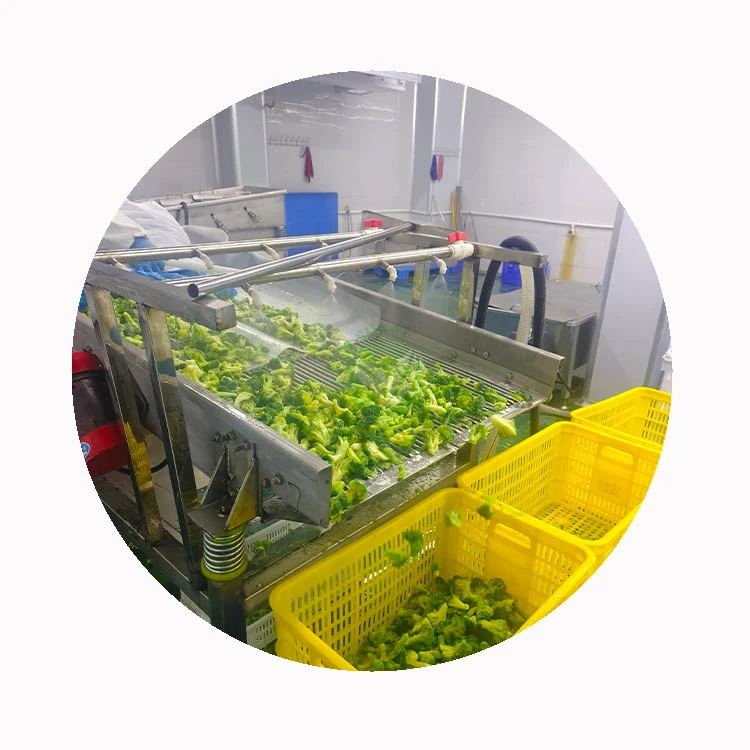
For a home meal, follow the package directions and measure the form you actually serve. For a controlled menu, run the chosen cut through the real equipment and weigh at three points: frozen input, cooked batch, and cooked drained portion. Our guide to the best cooking method for frozen broccoli by application explains why direct-from-frozen use, moisture release, and texture targets change with roasting, steaming, stir-frying, soup, and ready-meal service.
Digestive Comfort and Other Limits
Broccoli is a cruciferous vegetable, and some of its carbohydrates can reach the large intestine and be fermented by bacteria. NIDDK lists broccoli and other cruciferous vegetables among foods that may lead to excess gas for some people. Too much fiber at once can also contribute to gas symptoms. This response varies; it is not evidence that broccoli is universally difficult to digest, and temporary bloating is not the same as body-fat gain.
Comfort note: If a large raw portion causes gas or discomfort, reduce the amount, increase fiber gradually, and test a cooked form. Keep a short food-and-symptom record if the pattern is unclear. Persistent, severe, or condition-related symptoms need advice from a qualified clinician or dietitian rather than a more restrictive self-designed plan.
Medical conditions, pregnancy, an eating-disorder history, and medicines can change appropriate weight-loss advice. A general food article cannot set a personal calorie target or therapeutic diet. The practical boundary is simple: use broccoli as ordinary food within a varied eating pattern, and obtain individualized guidance when health status makes calorie restriction or major dietary change unsafe or uncertain.
Avoid detox, negative-calorie, metabolism-boosting, and cancer-prevention promises. Claims that broccoli detoxifies the liver or prevents cancer are not acceptable explanations for weight loss. Broccoli has useful nutrients and plant compounds, but that does not turn it into a treatment or allow a supplier to promise a health outcome. A measured substitution is both more accurate and easier to test.

Design a Portion-Controlled Broccoli Product
For a foodservice menu, prepared meal, or retail pack, the weight-management message must be built from the finished product rather than borrowed from plain raw broccoli. Start with the serving objective: is broccoli a visible side, a partial starch replacement, a soup inclusion, or one component of a vegetable blend? That decision sets the useful cut, cooked texture, portion weight, and acceptable amount of breakage.
Foodservice: control cooked yield and serving drift
If you operate a kitchen, define the plated weight after the actual heating and draining process. Then choose a scoop, scale check, or counted-piece method that can hold that weight during service. Watch for two failure signals: your early portions contain large crowns while later portions contain mostly small pieces, or the pan accumulates water and later servings become heavier without containing more broccoli solids. A representative cook-and-hold test gives better acceptance evidence than an uncooked photograph.
A channel plan also needs to connect recipe intent with service reality. The XMSD overview of frozen produce for foodservice and catering provides the relevant operational context; your acceptance method should still use the actual menu, equipment, holding time, and serving tool.
Retail and prepared meals: match the claim to the SKU
For a plain retail bag, confirm the ingredient statement, declared serving, nutrition evidence, cooking directions, and net weight. For a prepared meal, analyze the full recipe and the state in which the nutrition declaration applies. A database entry is useful for development, but a different cut, sauce, salt addition, cooking loss, or serving weight can make it the wrong final basis. If the product carries a weight-management message, legal review for the destination market must evaluate the exact wording and evidence; a general statement about broccoli does not automatically authorize a product claim.
Worked example: A hypothetical central kitchen needs 600 trays with 120 g cooked, drained broccoli in each. Net plated broccoli is 600 × 120 g = 72,000 g, or 72 kg. Its controlled trial shows an 88% cooked-and-drained yield from frozen input. Required frozen input is therefore 72 kg ÷ 0.88 = 81.82 kg. With 2.5 kg inner bags, 81.82 ÷ 2.5 = 32.73, so the batch plan requires 33 bags, with the small balance retained under the kitchen's normal food-safety controls. The 88% yield is an illustrative trial result, not an XMSD specification; replace it with your repeated production data.
This calculation ties purchasing to the plate. If the next lot produces only 82% usable yield, the same 72 kg target needs 87.80 kg input, nearly 6 kg more. That gap may come from drain method, breakage, excess surface ice, cut mix, or cooking severity. Record the cause before changing the portion. The acceptance rule should state the test method, sample basis, cooked condition, drain time, target yield, and action when the result falls outside the agreed range.
For retail or private-label development, the same discipline applies to label serving count and in-bag distribution. Review the private-label frozen food workflow in the context of the final SKU, then align artwork, ingredient declaration, nutrition basis, preparation directions, pack size, and change control. A product should not keep the same calorie statement after a sauce, serving, or formulation change unless the evidence is recalculated and approved.
XMSD sourcing note: If you are developing a portion-controlled menu, retail pack, or prepared meal, review our IQF frozen broccoli formats and send the intended cut, ingredient status, serving basis, packing format, destination, and cooking method. We can discuss a suitable sample and specification without making a weight-loss promise.
Frequently Asked Questions
1. How much broccoli should I eat when trying to lose weight?
One cup is a practical starting portion and matches the current federal serving example for vegetables. It is not a required broccoli dose. Adjust the amount for your calorie needs, the rest of the meal, dietary variety, and digestive comfort.
2. Is frozen broccoli good for losing weight?
Plain frozen broccoli can perform the same substitution role as fresh broccoli. Check the ingredient list, measure the portion in a defined state, and include all sauce, oil, breading, and other recipe additions in the calorie calculation.
3. Should broccoli replace all rice, pasta, or potatoes?
Not automatically. Partial replacement can lower meal energy density while preserving a carbohydrate portion that supports preference, activity, and satisfaction. Judge the complete meal and choose a change you can maintain.
4. Does broccoli burn belly fat or count as a negative-calorie food?
No. Broccoli provides calories and does not target fat from one body area. Its useful role is replacing a more energy-dense portion within an overall eating pattern that supports a sustainable calorie reduction.
5. What evidence should support a weight-conscious broccoli product?
Use the exact ingredient list, declared serving, complete recipe analysis, cooked yield, portion-control method, and destination-market claim rules. USDA reference data can support development, but the evidence must match the commercial SKU and its declared preparation basis.
Final Decision
Broccoli is good for a weight-loss plan when it performs a specific job: replacing part of a more calorie-dense food while the complete meal remains satisfying, varied, and accurately portioned. Begin with about one cup, keep the food state clear, measure cooking additions, and compare the finished recipe rather than the ingredient name. Fresh and plain frozen forms can both work. Sauce, breading, oil, cut size, cooked yield, and serving drift can change the result. The winning method is not maximum broccoli; it is a repeatable substitution that lowers the meal's energy density without creating poor texture, discomfort, misleading claims, or a nutritionally incomplete plate.
References
- USDA FoodData Central: Broccoli, raw (FDC ID 170379)
- CDC: Tips for Increasing Vegetables and Fruits in Your Diet
- Dietary Guidelines for Americans, 2025-2030
- Dietary Guidelines for Americans, 2025-2030: Daily Servings by Calorie Level
- PLOS Medicine: Changes in Fruit and Vegetable Intake and Weight Change in Three Prospective Cohorts
- NIDDK: Eating, Diet, and Nutrition for Gas in the Digestive Tract
- XMSD operational experience in frozen-broccoli specification, portion testing, processing, packaging, and foodservice application planning.