


Is Broccoli a Fruit or Vegetable? Classify the Edible Part
Oct 23, 2019

Broccoli is a vegetable in culinary use, nutrition guidance, grocery merchandising, and normal food purchasing. Botanically, the portion we eat is mainly an immature flower head-many unopened buds arranged on branches-plus part of the supporting stem. It is not a botanical fruit.
A botanical fruit forms from a flower's ovary after pollination and contains or encloses seeds. Broccoli is harvested earlier, while the flower buds are still compact and closed. If left on the plant, those buds open into flowers and the plant can later develop seed-bearing pods. The head on the plate is the pre-flowering structure, not the later fruit.
For a buyer, that answer is only the start. "Flower vegetable" describes plant anatomy but gives no usable cut specification. A frozen order still needs a named style-spears, short spears or florets, cut, chopped, or pieces-plus dimensions, crown-to-stem balance, fines, defects, color, pack, and application.
Use three labels for three jobs: immature flower head for botany, dark-green vegetable for meal guidance, and a measured frozen style for purchasing.

The Botanical Answer: An Immature Inflorescence and Stem
Broccoli belongs to Brassica oleracea, Italica group, in the cabbage family Brassicaceae. The familiar green crown is an inflorescence: a branching cluster that carries numerous immature flower buds. The tender stalk and smaller branches support those buds and are also edible.
University of Florida horticulture guidance describes broccoli florets as unopened flower buds. UC Davis postharvest guidance likewise calls the head an immature inflorescence and treats tight, closed buds as a quality characteristic. That growth stage explains why a fresh head eventually loosens and produces yellow flowers when harvest is delayed.
"Broccoli is a flower" is a useful shortcut, but it is incomplete. The purchased unit commonly includes bud clusters, branchlets, a stem, and sometimes small attached leaves. Frozen styles may contain different proportions of head and stem material. Describe the actual edible structure rather than forcing every piece into one plant-organ word.
The plant family also explains its relationship to cabbage, kale, cauliflower, Brussels sprouts, and kohlrabi. These crops are selections within Brassica oleracea that emphasize different plant structures. Shared species ancestry never makes a broccoli crown a cabbage leaf or a fruit; the selected form and harvested organ still matter.
Why It Is Not a Botanical Fruit
The decisive question is which structure is being eaten. Fruits arise after a flower develops its ovary into a seed-bearing structure. Tomato, pepper, cucumber, and squash can be culinary vegetables while also being botanical fruits because the edible portion follows that pathway. Broccoli follows a different harvest path.
A broccoli crown is collected before its individual buds open. No mature ovary or enclosed seeds define the frozen floret. The buds themselves are future flowers. If the crop remains in the field, flowers open and later seed structures may form, but those later pods are not the commercial broccoli head.
Color gives no reliable botanical test. Green apples are fruits, and red peppers are botanical fruits sold beside vegetables. Savory flavor gives no reliable test either. Identify the plant organ and development stage: closed flower buds plus stem place broccoli outside the fruit category.
This distinction matters when educational copy claims broccoli is "technically a flower." Keep the complete wording: it is a culinary vegetable whose main harvested structure is an immature flower head. That sentence stays accurate across a school lesson, nutrition page, menu, and frozen-product brief.
The Nutrition and Menu Answer: A Dark-Green Vegetable
USDA MyPlate places broccoli in the dark-green vegetable subgroup and counts fresh or frozen chopped broccoli and florets within the Vegetable Group. This classification organizes eating patterns and portion guidance. It serves a different purpose from naming the plant organ.
On a restaurant menu, school meal record, household shopping list, or nutrition database, list broccoli as a vegetable. Calling it a fruit would confuse ingredient counts and expectations. Calling it only a flower could also obscure the familiar food group unless the botanical lesson is the point.
Fresh, frozen, canned, and cooked forms can remain within the vegetable group, but a prepared dish inherits its complete formula. Broccoli in a cheese bake, breaded bite, soup, or mixed bowl still supplies a vegetable ingredient; the whole product also includes its sauce, coating, salt, fat, allergens, and stated serving.
Use the food-group label for menu planning and the finished Nutrition Facts information for a packaged product. Use the botanical description only to explain the part being eaten. These systems can coexist without contradiction because each answers a different question.

Commercial Frozen Styles Translate Anatomy into a Purchase
USDA's frozen broccoli standard begins with clean, sound stalks or shoots of Brassica oleracea Italica group and distinguishes several product styles. The names connect head and stem structure to unit size. They are more useful in a purchase contract than the broad word "vegetable."
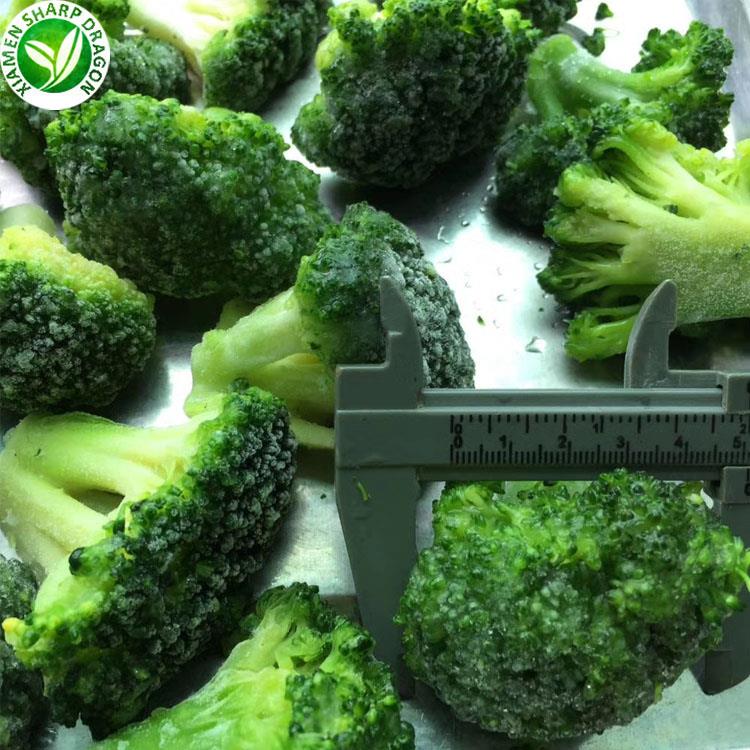
Spears or stalks include the head and adjoining stem and may include attached leaves. The cited standard places them from 9 to 15 centimeters in length. Short spears or florets also include the head and adjoining stem; the standard places them from 2.5 to 9 centimeters, with each unit above 6 grams.
Cut means portions ranging from 2 to 5 centimeters in that standard. Chopped means portions shorter than 2 centimeters. Pieces or random cut pieces cover portions that fall outside the cut or chopped style definitions. Another agreed specification is possible, but the measurement rule has to travel with the style name.
"Floret" is often used loosely in trade. Some people picture a crown-dominant bite; others accept a longer adjoining stem. Write crown width, overall length, maximum stem proportion, fines, broken units, leaf material, and sample method. Review available frozen broccoli forms and the specific IQF broccoli floret format against the real application.

Keep Identity, Style, Grade, and Application Separate
Identity names the food and plant: broccoli, Brassica oleracea Italica group. It separates broccoli from cauliflower, broccolini, romanesco, and another crop that may share a family or similar appearance. Identity belongs on the specification, ingredient record, and traceability file.
Style describes how the edible head and stem are presented after preparation. Spears preserve a long adjoining stem. Short spears or florets reduce overall length. Cut and chopped styles create smaller portions, while random pieces accept less uniform geometry. The correct style depends on how the product will be seen, heated, mixed, and eaten.
Grade or quality level evaluates agreed characteristics within a style. Brightness, flavor and odor, grit, leaf, poorly developed buds, mechanical damage, discoloration, and other defects may enter the standard. A correctly named floret can still fail the agreed quality level; a high-quality chopped product can still be the wrong style for a visible side dish.
Application decides whether the accepted identity, style, and quality work in use. Soup can tolerate a distribution that looks weak in a retail steam bag. A puréed filling values usable yield differently from a crown-forward bowl. Record the cook route, mixing stress, hold, serving method, and visible target before choosing the style.
A four-line product name can prevent a costly misunderstanding: botanical/common identity; frozen style; quality or defect basis; application and pack. "Frozen vegetable" supplies only the first broad category. "IQF broccoli short spears, defined length and crown distribution, for reheated bowls" gives the next team something testable.
Maturity Changes the Meaning of the Head
The edible structure is harvested at an intentionally immature floral stage. Tight, closed buds create the familiar compact crown. As development advances, individual buds enlarge, the cluster loosens, and yellow petals may appear. Those changes are biological maturity signals and also visible commercial quality inputs.
Freezing preserves the selected product after trimming, washing, blanching, sorting, and draining under the defined process. It never turns the head into a different plant organ. The frozen unit remains bud cluster plus stem; processing changes condition, temperature, and eating performance rather than botanical identity.
Maturity also interacts with cutting. A compact head may divide into distinct crowns with good cohesion. A looser head can shed more small buds and fine material during cutting, conveying, packing, or cooking. A frozen inspection therefore records both the accepted style and the condition of the buds inside that style.
Temperature history adds another layer. Frost, clumping, dehydration, or soft texture after preparation may reflect handling and product history rather than plant classification. Keep maturity defects, size distribution, and cold-chain observations in separate fields so one finding never masks another.
For cost comparison, calculate usable finished yield by style. A lower-priced random piece may give excellent value in soup yet create unacceptable sorting or waste in a crown-forward meal. A floret specification may cost more per kilogram but reduce rejection and improve portion appearance. Price the edible geometry that reaches the application.
Worked Example: Check Head Material in a 250-Gram Sample
Worked example: The USDA frozen standard states that the cut style should contain at least 62.5 grams of head material per 250-gram sample. That requirement represents 62.5 ÷ 250 × 100 = 25% head material by sample weight.
An inspector separates 70 grams of head material from a 250-gram sample. The observed share is 70 ÷ 250 × 100 = 28%. It clears the 25% head-material threshold on this single dimension. The remaining 180 grams include stem, other allowed product material, and any items that still need classification under the full method.
Passing that arithmetic alone gives no complete grade verdict. Flavor, odor, brightness, grit, defects, leaf material, style conformity, and the prescribed sampling plan still apply. A private contract may also require more crown material than the USDA baseline or use another recognized standard.
The calculation illustrates why anatomy becomes commercial. "Broccoli is a flower vegetable" leaves a manufacturer without the expected visible crown share in a soup or bowl. A defined head-material check supplies that missing decision input.
Representative Scenario 1 - Classify a Meal-Program Ingredient
Example: A meal-program coordinator receives plain frozen broccoli florets and sees "flower buds" in a training note. The database offers fruit, vegetable, grain, and protein categories. The decision function is food-group assignment: which category supports menu records and portion planning?
Assign the plain product to the dark-green vegetable subgroup using the program's applicable guidance. Preserve the botanical note as staff education, not as the database category. Record the product code, prepared amount, and whether sauce or other ingredients enter the served dish.
The result is a vegetable count that aligns with the menu system and a separate explanation that the edible crown consists of immature flower buds. Both statements remain true because they serve separate decisions.
Representative Scenario 2 - Approve "Florets" for a Retail Bowl
Example: A private-label bowl developer requests frozen broccoli "florets," but the reference photograph shows short crown-dominant units while the written brief gives no dimensions. The first sample contains visibly longer adjoining stems and many small fragments. The decision function is style approval: can the sample support the intended visual and bite?
Pause approval and convert the picture into measurements. Define overall length, crown width, allowed stem, fines, broken material, weight distribution, and the sampling point. Cook the sample in the exact bowl formula, because sauce and reheating can make long stems or fragments more noticeable.
The result is revise the specification and resample, not a debate over whether stem is "real broccoli." Stem is legitimate edible broccoli; the issue is whether its proportion and geometry fit this product. The approved description joins plant structure to an application-specific limit.

XMSD Experience 1 - Replace "Nice Florets" with a Measurement Rule
In our XMSD broccoli reviews, "nice florets" is one of the fastest descriptions to misunderstand. We ask which dimension drives the application: crown diameter for visual coverage, overall length for fork bite, stem length for texture, or fines for sauce and fill distribution. We then agree where the unit is measured and how a sample is spread before counting.
We also prepare the sample in the buyer's real equipment. A crown that looks large when frozen may break after mixing; a short stem may remain firmer than the crown after reheating. Our notes separate frozen geometry, cooked texture, usable yield, and finished appearance. This protects the product decision from one attractive tray photograph.
XMSD Experience 2 - Sample Across the Pack, Not Just the Top
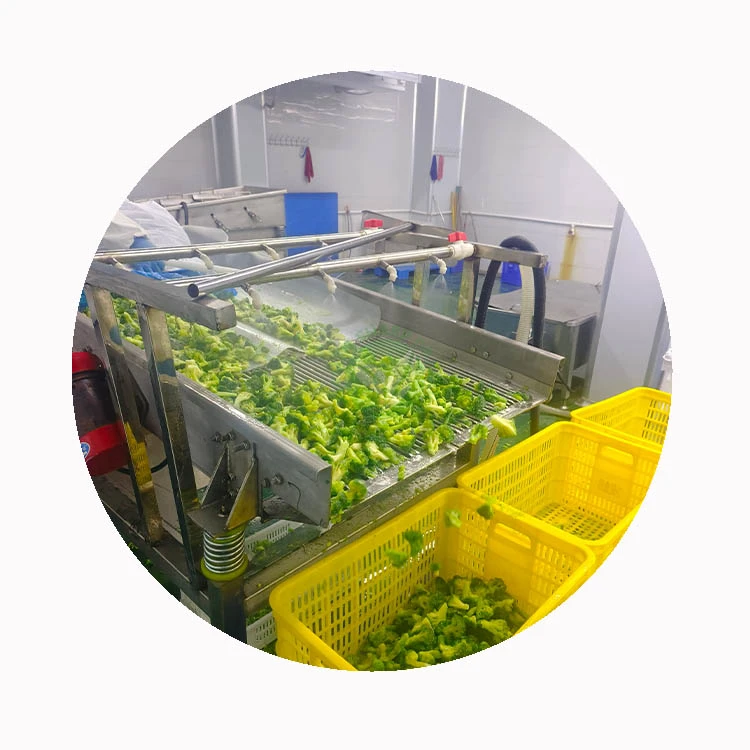
In our XMSD packing checks, crowns, stems, and fine fragments can settle differently during handling. A handful from the top of one bag may misrepresent the case. We preserve lot identity and pull the agreed number of units or grams from defined locations, then record crown, stem, leaf, fines, color, clumping, and free ice under the same method.
Pack design affects whether that method is practical. Inner-bag weight, liner strength, carton count, code position, and opening route determine how easily a kitchen or inspector can preserve a representative unit. The XMSD packaging overview helps frame those variables; the application and inspection plan select the final pack.
Use the Right Classification at Each Handoff
For education and crop knowledge, state that broccoli is Brassica oleracea Italica group and the edible head is an immature inflorescence. For nutrition and menus, place it in the dark-green vegetable group. For a product specification, name and measure the frozen style.
For quality approval, add maturity and condition. Tight buds, characteristic color, compact head structure, stem texture, leaf presence, defects, free ice, clumping, odor after cooking, and application performance all add information that "vegetable" leaves out. The broccoli selection guide provides an adjacent quality check.
For documentation, preserve the botanical name, common product name, ingredient statement, style, pack, lot code, origin, storage condition, and agreed quality standard. Certification records support their defined scope; review the XMSD certification information alongside the product-specific documents.
These classifications are complementary. Confusion begins when a label built for one handoff is expected to make every other decision. "Vegetable" gets the menu category right; "immature flower head" gets the anatomy right; "short spears or florets within an agreed size range" gets the purchase closer to the required product.
Write a Classification-Ready Broccoli Brief
Send the common and botanical product identity, frozen style, intended recipe, overall unit length, crown width, stem limit, fines and broken-unit tolerances, head-material expectation, leaf allowance, color and defect criteria, cook method, pack format, lot code, destination, standard, and document list.
Add a sampling instruction. State sample weight or unit count, number of bags or cases, selection locations, thaw or cook condition, separation method, scale resolution, and calculation. Without this line, two teams can apply the same percentage limit and still produce incomparable results.
Approve both frozen and prepared references where the application changes appearance. Archive photographs with a ruler or scale, the lot code, recipe, equipment, load, time, and scorer. That record makes future deliveries easier to compare and keeps anatomy connected to the finished product.
When comparing quotations, align every offer to that same brief. Convert case weight, inner-pack count, style distribution, usable cooked yield, inspection method, and destination terms before comparing unit price. A lower-priced "broccoli pieces" offer and a crown-controlled floret offer are different products for many applications. Classification makes the commercial comparison fair.
XMSD sourcing note: Send the intended dish, broccoli style, crown and stem targets, sample method, pack, destination, and required documents. We can align the frozen product description and sample with the classification your team will actually use.

References
- University of Florida notes on broccoli's unopened buds
- UC Davis broccoli maturity and postharvest description
- USDA MyPlate dark-green vegetable classification
- USDA AMS frozen broccoli styles and grades
- USDA detailed frozen broccoli standard
- XMSD operational experience in broccoli cut measurement, application trials, representative pack sampling, frozen-style approval, and lot records.