


Is Broccoli the Healthiest Vegetable? Audit the Ranking
Oct 23, 2019

Broccoli is a nutrient-dense dark-green vegetable, but there is no universal "healthiest vegetable." A ranking changes when its goal, nutrients, denominator, preparation, serving, and the person eating it change. Broccoli can be a strong choice without winning every comparison.
The useful question is not "Which vegetable owns first place?" It is "Which vegetable or combination best closes the gap in this meal?" One menu may need a dark-green vegetable, another may need red-orange variety, and a third may need a side that people will actually finish after reheating.
For product selection, rank the prepared serving rather than the ingredient's reputation. Include the stated serving, full formula, cooked yield, plate waste, sensory acceptance, dietary restrictions, and weekly vegetable mix. A transparent scorecard turns a superlative into a decision.
Short answer: broccoli deserves a regular place in a varied diet, yet "healthiest" is an undefined contest until the comparison rule and meal goal are written down.

"Healthiest" Hides Several Different Questions
A vegetable can rank highly for one nutrient and lower for another. A per-calorie calculation rewards foods that supply several selected nutrients with little energy. A per-serving calculation reflects the amount offered. A per-100-gram calculation makes laboratory values easier to compare. Those denominators answer different questions.
The word can also refer to diet quality rather than nutrient density. In that frame, diversity matters. Broccoli belongs to the dark-green subgroup, so it contributes something different from a red pepper, carrot, bean, pea, potato, or tomato. Repeating broccoli seven times may add less variety than rotating several well-chosen vegetables.
Preparation creates another contest. Plain steamed florets, an oil-roasted side, a cheese-covered bake, a breaded bite, and a blended soup all contain broccoli. They differ in ingredient proportions, added sodium, fat, texture, serving size, and likely intake. The vegetable name alone is too coarse for a finished-meal judgment.
Personal fit changes the answer again. Allergy, swallowing needs, gastrointestinal tolerance, kidney-related dietary instructions, medication advice, cultural preferences, and a clinician's individualized plan can outweigh a generic rank. A food that looks excellent on a chart may be unsuitable in a particular situation.
Use the superlative only after defining the job. "Best dark-green side for this reheated meal" is testable. "Highest score under one named nutrient-density method" is testable. "Healthiest vegetable in the world" mixes too many objectives to guide a menu or purchase.
A Five-Question Audit for Any Vegetable Ranking
1. What is the decision? Write the intended outcome before listing nutrients. It might be filling a dark-green vegetable slot, increasing menu variety, reducing plate waste, meeting a finished-label target, or selecting a visually attractive frozen side. A score without a decision rewards whatever happens to be easiest to count.
2. What is the denominator? Choose raw 100 grams, cooked 100 grams, the label serving, calories, purchase weight, cooked yield, or actual eaten portion. Never compare broccoli per 100 calories with carrots per stated serving and call the result a ranking. Align state and unit first.
3. Which attributes enter? Name every nutrient, ingredient, dietary limit, sensory factor, operational factor, and weight. A nutrient-density table may omit price and acceptability. A procurement table may include size distribution and cooking yield. Neither table becomes universal just because it produces a number.
4. Which product state is ranked? Raw values belong to raw food. Frozen broccoli is commonly blanched before freezing and later cooked. A prepared commercial dish also contains everything in its formula. Use the relevant specification, label, laboratory basis, and preparation route for that product.
5. What was actually eaten? Offered weight is not automatically consumed weight. Trim loss, cooking loss, fragments left in the bag, serving-line hold, rejected stems, and plate waste all affect delivered intake. Record these separately rather than burying them in a flattering nutrient table.
This audit also reveals missing information. If two products use different serving sizes, rescale them. If one formula is unavailable, defer the finished-product rank. If personal restrictions are unknown, keep the conclusion general and invite individual professional guidance where appropriate.

What a Famous Nutrient-Density List Really Says
A 2014 peer-reviewed paper hosted by the U.S. Centers for Disease Control and Prevention developed a "powerhouse fruits and vegetables" method. It calculated the average percentage of daily values for 17 named nutrients supplied per 100 calories, applied bioavailability weights to several nutrients, and capped unusually large single-nutrient contributions.
Under that exact method, watercress scored 100, Chinese cabbage 91.99, spinach 86.43, and broccoli 34.89. Broccoli qualified as a powerhouse food in the scheme, but it was not number one. The result is often stripped from its denominator and turned into a universal league table.
Read the method before reading the rank. The calculation used raw-food values for comparability, expressed selected nutrients per 100 calories, and left out phytochemicals because uniform data and intake recommendations were unavailable. The authors also described the classification as preliminary and identified the need for further validation.
That limitation is not a flaw to hide; it defines the tool's proper job. The table teaches nutrient density under one explicit equation. It says nothing direct about a restaurant's cooked yield, a child's acceptance, a private-label sauce formula, a customer's allergy, or whether a weekly menu already overuses dark-green vegetables.
Broccoli's middle position in that list also shows why a single headline can mislead. It remains a valuable vegetable even when several leafy foods score higher per calorie. A person may eat a larger, more satisfying prepared broccoli serving than a tiny amount of watercress. Selection needs the real serving and the full diet context.
Use named rankings as inputs, not verdicts. Record publication date, food state, nutrient list, equation, caps, exclusions, and population context. Then decide whether that method matches the meal decision at hand. If it fails that test, build a fit-for-purpose comparison.
Worked Example: The Winner Changes with the Denominator
Illustrative example: A menu team is comparing one target nutrient in two cooked sides. Their verified product data show Side A provides 20% of the daily value per 100 grams; Side B provides 16% per 100 grams. On that basis, A appears higher.
The team offers 100 grams of each. Diners eat an average of 75 grams of A and 100 grams of B. The delivered amounts become 20% × 75 ÷ 100 = 15% for A and 16% × 100 ÷ 100 = 16% for B. Side B now supplies slightly more of the target nutrient in the average eaten portion.
The arithmetic never proves that B is healthier overall. It shows that "per 100 grams" and "per eaten serving" are different comparisons. Add other nutrients, the complete recipe, frequency, restrictions, cost, and the rest of the meal before making a broader claim.
For broccoli, measure frozen input, cooked output, served weight, and returned waste. Note whether crowns or stems are left behind. A 10% difference in cooked yield and a 15% difference in plate waste can matter more to delivered nutrition and cost than a small label difference between vegetables.
Use the same exercise for price. Purchase price per kilogram is only the opening number. Divide landed or kitchen cost by usable cooked kilograms, then by accepted eaten portions. A style with better crown distribution and less waste may cost more at purchase yet less per finished serving.

Variety Beats a Permanent First-Place Vegetable
The Dietary Guidelines for Americans, 2025–2030 recommend a wide variety of whole, colorful, nutrient-dense vegetables and fruits. That language points toward a portfolio, not a champion. Broccoli supports the portfolio as a dark-green vegetable; other colors and subgroups broaden it.
A weekly rotation can track dark-green, red-orange, beans or lentils, starchy, and other vegetables. It can also track texture, flavor, cuisine, season, availability, and acceptance. If broccoli already appears several times, another vegetable may be the better next choice even when broccoli performs strongly on a nutrient chart.
Variety has an operational benefit too. A menu that depends on one vegetable concentrates supply, price, harvest, and acceptance risk. A qualified portfolio lets a foodservice team respond to season, crop condition, freight, equipment, and customer preference without abandoning nutrition goals.
The rotation still needs standards. Name the frozen style, size distribution, pack, cook route, sensory target, and serving weight for each item. Compare the complete meal, not a loose list of ingredient reputations. See the focused broccoli benefit guide when the decision specifically concerns what broccoli contributes.
A useful menu report states "broccoli supplies this week's dark-green serving in meals A and B" rather than "broccoli is the healthiest." The first statement is traceable to a plan. The second invites an argument about a contest that was never defined.
Frozen Broccoli Keeps Its Place, but the Product Still Matters
Frozen broccoli remains broccoli and can support a varied vegetable menu. Freezing is a preservation route, not a health rank. Commercial product is normally prepared, blanched, frozen, stored, and later cooked, so evaluate the state that reaches the plate.
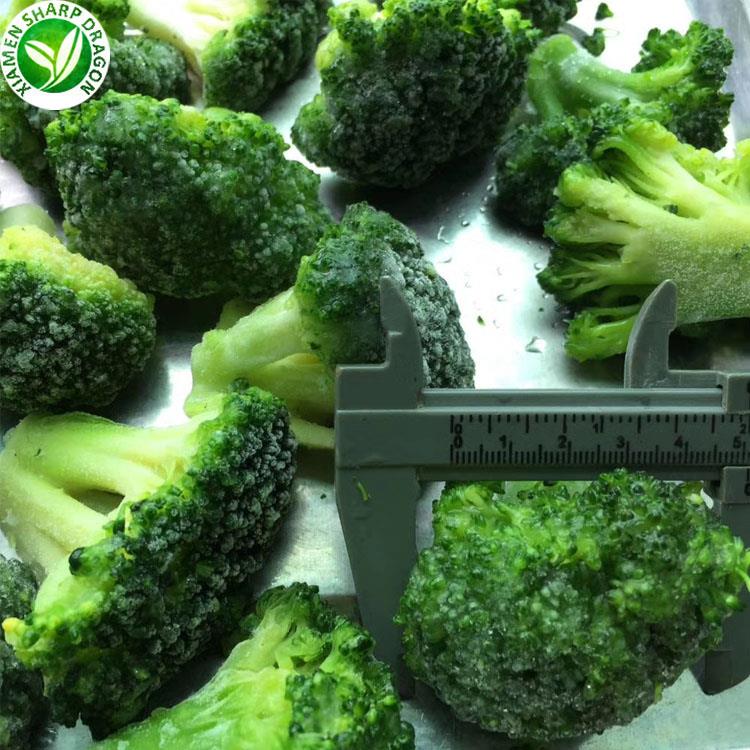
Style affects portioning. Large florets may present well but create count variation across fixed-weight servings. Small cuts can distribute more evenly but soften faster in a long hold. Crown-heavy units and stem-heavy units may create different visual acceptance, bite, and leftover patterns.
Cooking affects the finished result. Steam, microwave, combi oven, boil, stir-fry, and direct recipe addition apply different heat and water exposure. Time, load, vessel, sauce, hold, and cooling route matter alongside the vegetable. Use the frozen broccoli cooking comparison to set a controlled trial rather than assigning one method to every kitchen.
Pack and cold handling shape usable quality. A damaged inner bag, temperature abuse, free ice, dehydration, or clumping can reduce portion control and sensory appeal. These findings describe product condition; they do not turn broccoli into an unhealthy vegetable. Keep nutrition, safety, quality, and acceptability as distinct report fields.
Plain IQF broccoli offers a different evaluation basis from a seasoned or sauced item. For a plain product, the ingredient list is short and the kitchen controls the final recipe. For a prepared product, review every ingredient, declared serving, nutrition panel, allergen statement, and use instruction before ranking.

Representative Scenario 1 - Build a School Menu Rotation
Example: A menu planner has broccoli available at a favorable contracted price and sees a chart that ranks it as nutrient-dense. The cycle already includes broccoli on Monday, Wednesday, and Friday. The decision function is portfolio design: which vegetable best improves the full week's pattern and remains acceptable to students?
The planner keeps broccoli in two well-performing meals, then tests a red-orange side and a bean-based vegetable dish in the open slots. Each item receives a stated serving, controlled recipe, subgroup assignment, and plate-waste check. Broccoli's position is protected where it works, while the rotation gains color, flavor, texture, and subgroup variety.
The decision is retain broccoli selectively and diversify the cycle. No vegetable is rejected as inferior. The planner uses the ranking as one input, then chooses a portfolio that serves more than one nutrition and acceptance objective.
Representative Scenario 2 - Approve a Private-Label Broccoli Side
Example: A private-label team compares plain florets with a seasoned broccoli side. The seasoned sample gets higher sensory scores, but its broccoli inclusion, serving size, sodium, sauce pickup, cooked yield, and plate waste differ from the plain sample. The decision function is finished-product approval: which formula matches the label, nutrition brief, cost, and eating target?
The team verifies ingredient percentages and label inputs, prepares both samples in the intended equipment, weighs cooked output, and records accepted servings. It also reviews allergen controls for the seasoning system and checks whether sauce hides color or collects in the pack. The broccoli reputation gives neither product an automatic pass.
The decision is approve only the formula that passes the written finished-product brief. If neither does, revise seasoning or cut and repeat the trial. This process treats "healthy" as a set of declared product targets, not a halo transferred from one ingredient.
XMSD Experience 1 - Measure the Serving That Leaves the Kitchen
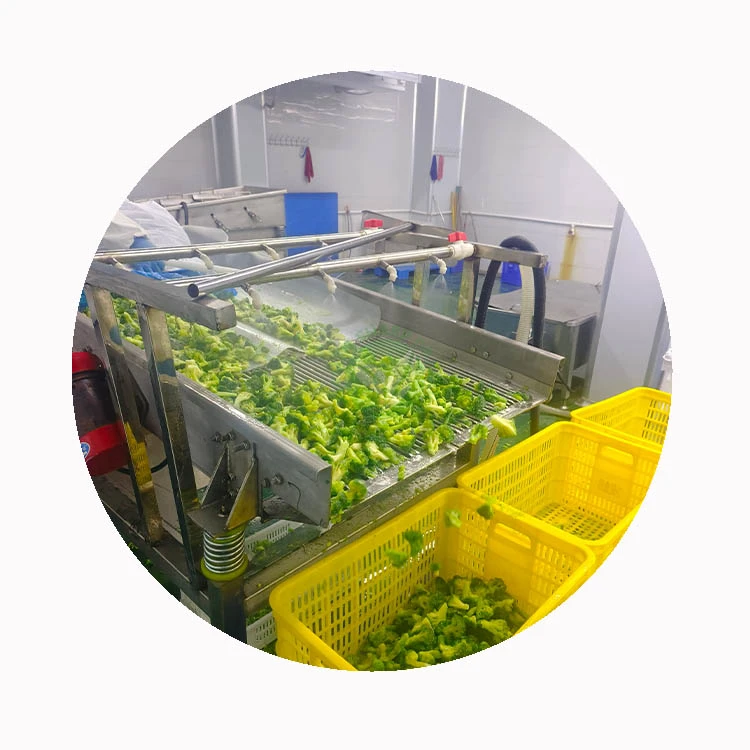
In our XMSD broccoli trials, we keep four weights separate: frozen input, cooked output, portioned output, and returned waste. We also record the cut distribution and note whether crowns, stems, or fine pieces are left behind. This exposes a gap that a nutrient table alone misses.
We run the buyer's time, load, equipment, sauce, and hold instead of relying on a small idealized pan. A result that stays bright and firm for three minutes may soften after a service hold. A large floret that looks premium may produce uneven scoop weights. The observed prepared yield becomes part of the product choice.
When the target is a repeatable vegetable serving, we connect those observations to a defined style and pack. The XMSD frozen broccoli range provides a starting set of forms; the kitchen test identifies the usable one.
XMSD Experience 2 - Keep the Claim Traceable to the Lot
In our XMSD supply reviews, a broad health claim never substitutes for product records. We align product name, ingredient statement, origin, lot code, pack, size range, defect criteria, storage, and document scope. For a seasoned item, the sauce formula and allergen declaration join the file.
We compare approval samples and later lots with the same preparation and scoring sheet. Photographs include the lot identity and a scale reference where size matters. Cook notes include equipment, load, time, yield, texture, color, and any separation or purge. That record makes a change visible before marketing language outruns the product.
Packaging is part of the repeatability check. Inner weight, bag seal, carton protection, code position, free ice, and clumping can affect portions and waste. Our frozen packaging overview frames the available controls, while the signed brief defines the order-specific requirement.
Certification information is reviewed by holder, site, scope, and validity rather than treated as a universal badge. The XMSD certification page introduces the document area; the matching controlled copy and product records support the actual qualification decision.
Build a Comparison Sheet That Another Team Can Repeat
Start the sheet with the decision statement. Add food identity, product code, food state, comparison date, serving basis, preparation, and source for every numeric value. Keep raw, frozen, cooked, and finished-formula values in separate columns. Mark unavailable inputs instead of estimating them silently.
Next list the factors that matter for this job: target nutrients, subgroup contribution, ingredient proportion, dietary flags, cooked yield, serving uniformity, plate waste, sensory acceptance, landed cost, preparation labor, hold stability, pack, and supply continuity. Give weights only after the team agrees on priorities.
Add exclusion rules. A product with an unresolved allergen declaration, failed food-safety requirement, unacceptable quality defect, or missing mandatory document may be removed before weighted scoring. A high nutrition subtotal never cancels a critical approval failure.
Show both the number and its basis. "Fiber: 12%" is incomplete. Write whether it means per label serving, per 100 grams prepared, per portion offered, or per average eaten amount. Do the same for cost and yield. Clear denominators prevent a polished spreadsheet from comparing unlike units.
Finish with a sensitivity check. Change the serving, waste assumption, or priority weight within a plausible range. If the winner changes easily, report a close decision rather than a decisive rank. If one product stays ahead across reasonable assumptions, the choice is more robust for that declared job.
Broccoli often performs well in such a sheet because it combines nutrition, familiar use, freezer availability, and flexible applications. Its real strength is usefulness within a varied system. That is more durable than calling it the single healthiest vegetable.
XMSD sourcing note: Send the broccoli style, serving goal, recipe, equipment, size distribution, pack, destination, and required records. We can align a sample and comparison method with the prepared product your team needs to approve.

References
- Dietary Guidelines for Americans, 2025–2030 vegetable and fruit guidance
- USDA MyPlate vegetable groups and dark-green examples
- CDC-hosted peer-reviewed powerhouse fruit and vegetable scoring method
- USDA FoodData Central nutrient-data source
- XMSD operational experience in broccoli portion trials, cooked-yield checks, cut-distribution review, pack inspection, and lot comparison.