


Is Apricot Good for Diabetes? Carb Counts by Form
Aug 20, 2019

Apricots can fit many diabetes eating plans, but they do not treat diabetes or lower blood glucose by themselves. Count the carbohydrate in the portion you actually eat and distinguish plain fruit from dried, juiced, canned or sweetened products. USDA SNAP-Ed lists one 35 g raw apricot with 4 g total carbohydrate, 1 g dietary fiber and 3 g total sugars. That small-fruit reference is useful for planning, not a guaranteed response or a prescription.
The American Diabetes Association says fresh, frozen or canned fruit without added sugars can be good fruit choices, while dried fruit and juice have smaller portions and may be less filling. CDC uses about 15 g carbohydrate as one carb serving for diabetes meal planning. Using the rounded USDA value, four average 35 g apricots provide about 16 g carbohydrate-close to one carb serving. Real fruit sizes and database rounding vary, so weigh an unusual portion or use the product label.
Your meal target, medicine, activity and glucose plan determine whether that portion is appropriate. If you use mealtime insulin, follow the insulin-to-carbohydrate plan from your healthcare team rather than copying a dose from a fruit guide. For a packaged apricot food, read total carbohydrate per labeled serving, fruit percentage, added sugars and the complete ingredient list. "No added sugar" does not mean carbohydrate-free.
The short answer: You usually do not need to exclude plain apricot solely because you have diabetes. Measure the form and portion, count total carbohydrate within your individual plan, and never use apricot as a substitute for prescribed care.

Replace "Good or Bad" With a Carb-and-Meal Decision
Diabetes does not turn fruit into a forbidden category. NIDDK includes fruit in healthy meal plans for people with diabetes and explains that carbohydrate from food is converted to glucose, which can raise blood glucose. The practical task is therefore to place fruit within a meal plan, not to award it a universal "good" or "bad" label.
A claim that apricot "regulates blood sugar through pancreatic beta cells" goes far beyond ordinary food evidence. To support that wording, a controlled human trial would need to test the relevant edible apricot form and dose in the intended population against an appropriate control, with predefined glucose outcomes. Nutrients, polyphenols or laboratory mechanisms cannot be promoted into proof that normal apricot flesh improves diabetes or its complications.
Start with your planning method. If you count carbohydrate, use grams from a reliable food database or the finished pack. If you use the diabetes plate method, NIDDK places higher-fiber carb foods, including fruit, in one quarter of a nine-inch plate, alongside half nonstarchy vegetables and one quarter protein foods. The plate method controls proportions without requiring every person to use the same number of apricots.
Do not use a single blood-glucose cutoff from a blog to decide if the fruit is "allowed." Targets can differ with diabetes type, age, pregnancy, medication, risk of hypoglycemia and the care plan. The safe sequence is to know your target, count the food, take medicines as directed and use the monitoring schedule agreed with your healthcare professional.
Practical example: make the claim proportionate. You eat two small fresh apricots as part of lunch and the meal fits your usual carb allocation. The supported conclusion is that the measured serving fits that meal plan. It does not prove that apricots lower glucose, repair beta cells or prevent complications, and it does not tell another person how to adjust insulin.

Use 35 Grams and 4 Grams of Carbohydrate as a Starting Reference
USDA SNAP-Ed reports one raw apricot serving as 35 g and rounds total carbohydrate to 4 g, dietary fiber to 1 g and total sugars to 3 g. The entry also lists zero added sugar. These are composition values for a defined raw serving. They do not describe every cultivar, piece size, commercial pack or prepared recipe, and zero added sugar is not zero natural sugar.
CDC explains that total carbohydrate is measured in grams and appears on the Nutrition Facts label. It uses about 15 g carbohydrate as one carb serving for diabetes meal planning. A carb serving is not necessarily the package's "serving size," and it is not a universal meal target. It is a counting unit that can help translate foods into an individual plan.
Worked example: count four fresh apricots. Four average fruits at 35 g each weigh 4 × 35 g = 140 g. Using the rounded USDA value, estimated total carbohydrate is 4 × 4 g = 16 g. Against CDC's approximate 15 g carb-serving unit, that is 16 ÷ 15 = 1.07 carb servings, usually counted as about one choice under a plan that uses this method. If your fruits are much larger or smaller, weigh the edible portion and use a per-100 g database value or validated application rather than multiplying the one-fruit entry.
Rounding matters when you scale. The displayed 4 g is not an infinitely precise laboratory value. Four rounded entries can differ from a calculation made with unrounded per-100 g data. For home meal planning, that small difference may be acceptable under your care plan. For a commercial nutrition panel, use the market's approved database, recipe calculation or laboratory analysis and its rounding rules.
Fiber should remain inside the food's full carbohydrate context. It is reasonable to prefer whole or piece fruit when it suits the recipe and tolerance, but subtracting fiber from total carbohydrate is not handled identically in every plan or market. Use the method your healthcare team taught you. A supplier should not state an insulin dose or "net carb" result on behalf of an unknown person.
Fresh, Frozen, Canned, Dried and Juiced Apricot Are Not One Portion
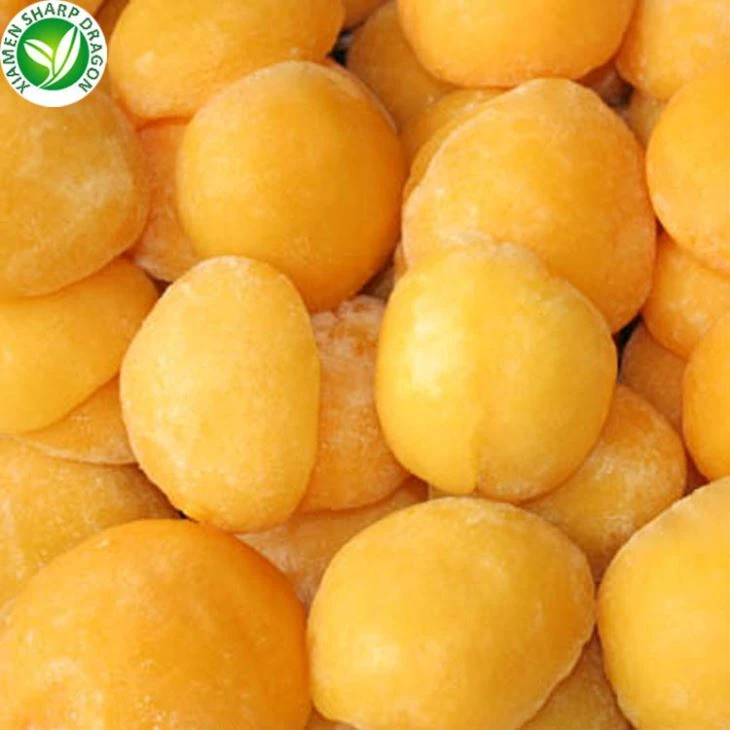
Plain fresh and plain frozen pieces can be compared on an equal edible-weight basis when no sugar or syrup is added. Freezing changes storage and texture, and IQF freezing keeps pieces individually portionable. It does not remove natural carbohydrate and it does not turn the food into a diabetes treatment.
Dried fruit has had much of its water removed. A small volume can therefore contain the solids from more fruit and can be easy to over-serve. ADA notes that dried fruit portions are small and may be less filling than other choices; its general illustration is only two tablespoons of dried fruit for about 15 g carbohydrate. Use the Nutrition Facts panel for the actual dried apricot product, because piece size, moisture and added ingredients differ.
Canned apricot may be packed in water, juice, light syrup, heavy syrup or another medium. ADA recommends looking for descriptions such as "packed in its own juices," "unsweetened" or "no added sugar." Still read total carbohydrate and serving size. Draining syrup changes what is consumed, but do not invent a carbohydrate deduction; use label data that matches the consumed portion or a validated recipe calculation.
Juice is consumed quickly and normally has less intact structure than whole fruit. ADA gives a broad range of one-third to one-half cup fruit juice for about 15 g carbohydrate, depending on the juice. Apricot nectar can also contain water, puree, juice concentrate, sugar or other ingredients. The product name alone cannot tell you its carb count.
| Apricot form | Best counting basis | Main error to avoid |
|---|---|---|
| Fresh fruit | Number plus edible weight | Assuming every fruit is 35 g |
| Plain frozen pieces | Frozen or drained weight, stated clearly | Treating "frozen" as carbohydrate-free |
| Dried apricot | Pack label and weighed grams | Comparing equal visual volumes |
| Canned fruit | Label serving and packing medium | Ignoring syrup or declared basis |
| Puree, nectar or filling | Finished formula per serving | Copying raw-fruit nutrition to the SKU |
Practical example: compare by label, not by the word "apricot." One snack is 35 g of plain fresh apricot. Another is a 35 g apricot fruit spread with sugar and juice concentrate. Equal weights do not imply equal carbohydrate. Use the USDA reference for the plain fruit and the finished Nutrition Facts panel for the spread. Choose the option that fits your meal target; do not transfer the fresh-fruit entry to the sweetened product.

Read Total Carbohydrate Before Marketing Language
On a packaged food, start with serving size and servings per container. Then read total carbohydrate per serving. CDC notes that sugars include both the natural sugar in fruit and added sugar in products such as soda. The Nutrition Facts label separates total sugars and added sugars, but diabetes meal planning still begins with the relevant total carbohydrate method rather than treating natural sugar as invisible.
"No added sugar" means no sugar was added under the applicable labeling definition; it does not mean the fruit has no sugar or carbohydrate. "Unsweetened" also needs to be read with the ingredient list and numbers. A puree can be unsweetened and still supply carbohydrate from apricot. A reduced-sugar statement compares products under regulated conditions and is not a promise about your glucose response.
Check the multiplier when a package contains more than one serving. If the panel lists 12 g total carbohydrate per 100 g but you serve 175 g, the portion contains 12 × 1.75 = 21 g before any rounding required on the final label. If the panel instead declares per 75 g serving, use that basis. Do not compare a per-100 g number from one pack with a per-serving number from another without converting.
Ingredient order also helps explain unexpected numbers. Sugar, glucose syrup, fruit juice concentrate, sweetened yogurt, pastry or granola can add carbohydrate around the fruit. A product with a large apricot picture may contain a modest percentage of apricot and substantial carbohydrate from other ingredients. The finished SKU, not the front image, is the unit you count.
Private-label development should lock formula, serving, nutrition method and artwork together. Through an OEM and private-label workflow, the apricot form and packing request can be documented, but the destination-market label needs its own nutrition and regulatory approval. A supplier's raw-material specification cannot authorize a medical claim on the finished food.

Match Apricot to Medication, Timing and Your Response Plan
Meal timing and medication make the answer personal. NIDDK explains that the best times to eat or drink may depend on diabetes medicines, physical activity and work schedule. If you take insulin, carb counting can help match the dose under the plan created with your healthcare team. Changing fruit does not justify changing medication without that plan.
Hypoglycemia requires its own protocol. Do not assume that a few apricots are an interchangeable emergency treatment because they contain carbohydrate. CDC's treatment guidance uses 15 g of fast-acting carbohydrate followed by a 15-minute wait and recheck, but individual instructions can differ, especially for children or people using specific devices or medicines. Follow the rescue plan supplied by your clinical team and use its specified foods.
Glucose monitoring can help evaluate a meal when your clinician has asked you to test. Record the apricot form and grams, the entire meal, medication, activity and the agreed testing times. A single reading can be affected by many variables. Repeat observations may help your care team adjust the plan, but a personal meter or continuous-glucose-monitor trace is not proof that apricots have the same effect in everyone.
Digestive tolerance can also influence the chosen form. If dried fruit produces bloating or a large juice portion feels uncomfortable, the apricot tolerance guide explains how to separate portion, IBS/FODMAP, reflux and allergy. Keep that question distinct from glucose management; a food can fit a carb target yet be poorly tolerated, or be comfortable yet exceed the planned carbohydrate.
Apricot kernels also stay outside the meal-planning answer. The edible fruit and the seed inside the stone are different materials. Do not add kernels in pursuit of an alleged "vitamin B17" or diabetes effect. Pitted flesh is the intended fruit ingredient, and any stone-fragment control belongs in the food specification.
Build a Finished-SKU Carb Basis for Foodservice or Retail
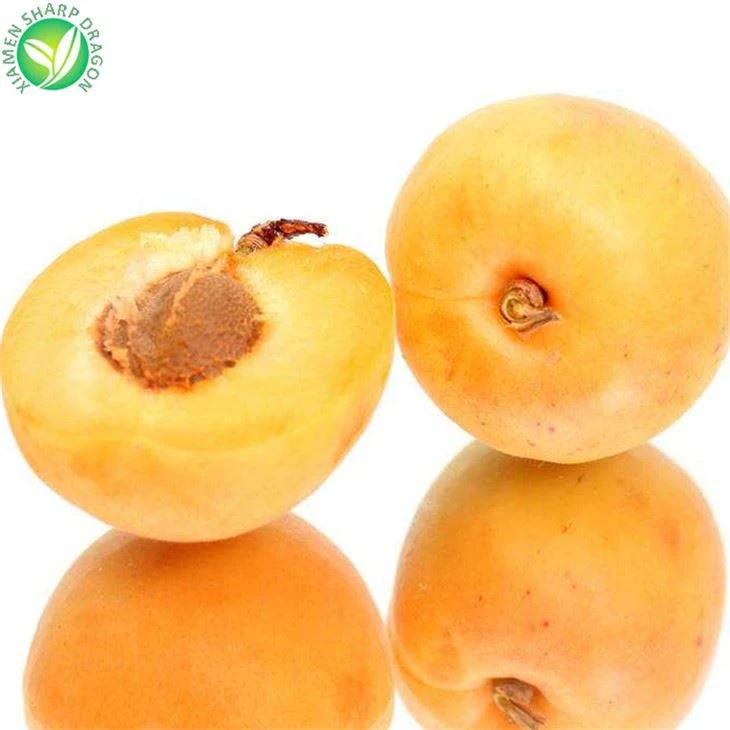
A commercial product needs a defined formula before any diabetes-friendly wording is considered. Record apricot percentage, plain or sweetened status, concentration, other carbohydrate ingredients, processing, net weight and declared serving. Choose the exact frozen apricot form for the application, then calculate or analyze the finished product rather than pasting raw-fruit data onto it.
Worked product example: expose every carbohydrate input. A 180 g yogurt cup contains 25% plain apricot pieces, so apricot per cup is 180 g × 0.25 = 45 g. Using the rounded USDA raw-fruit reference only as a development estimate, apricot carbohydrate is 45 g ÷ 35 g × 4 g = 5.14 g. Suppose the approved yogurt base contributes 14 g carbohydrate and a separate sweetener contributes 6 g per cup. The preliminary formula total is 5.14 + 14 + 6 = 25.14 g carbohydrate. That is about 1.68 of CDC's 15 g carb-serving units, not "one fruit serving." Final label values require the approved formula, appropriate ingredient data or analysis, and destination rounding rules.
The example shows why fruit percentage alone is insufficient. If R&D removes the 6 g sweetener contribution but increases yogurt-base carbohydrate, the front claim may change while the total remains similar. If the serving becomes 150 g, recalculate every input. If apricot changes from single-strength pieces to concentrate, its mass and composition basis change. Version-control the formula and nutrition worksheet together.
Set purchasing fields that protect the calculation: product name, cut, skin status, ingredient declaration, soluble solids or concentration where relevant, net weight, tolerance, sampling plan and certificate requirements. For canned or thawed products, define net versus drained weight. For IQF pieces, define the frozen dosing basis and how clumps or drip affect yield. These facts support consistent recipes; they do not guarantee a clinical response.
Pack copy should use accurate, permitted language. "Contains apricot," a factual fruit percentage and a correctly calculated Nutrition Facts panel are different from "controls blood sugar" or "improves diabetes." Send medical or disease-related wording to qualified regulatory and legal review for the destination market. In most ordinary fruit products, clear composition and serving information is more useful than a disease halo.
XMSD specification note: We can align plain apricot form, cut, ingredients, pack weight and lot coding with your approved brief. You retain control of the finished recipe, serving, nutrition calculation and destination-market health wording.

A Clear Decision for the Original Question
Apricot can be one of the fruits in a diabetes eating plan. A 35 g raw apricot provides a small, countable amount of carbohydrate, and four average fruits are roughly one 15 g carb choice using rounded USDA and CDC references. That arithmetic gives you a starting point, not a universal recommended portion.
Choose the form deliberately. Fresh and plain frozen pieces make edible weight visible. Dried fruit and juice can place more carbohydrate in a small volume. Canned fruit and formulated products require the packing medium, ingredient list and Nutrition Facts panel. Count the whole meal, use your prescribed medication and monitoring plan, and ask your care team when the result is unclear.
Reject claims that vitamins, polyphenols or flavonoids make apricot repair pancreatic cells, lower glucose or improve diabetic complications. Those statements are not established by the nutrient list of ordinary fruit. The broader apricot nutrition overview can own general composition; diabetes decisions remain grounded in measured carbohydrate, individual care and the exact product.
For a plain frozen-apricot brief, send the required cut, ingredients, dosing basis, pack size, destination and finished application through the XMSD inquiry form. We can identify the raw-material facts your nutrition and regulatory reviewers need without making a diabetes treatment promise.
References
- USDA SNAP-Ed. Apricots: nutrition information for one 35 g fruit. Accessed August 27, 2026.
- American Diabetes Association. Best Fruit Choices for Diabetes. Accessed August 27, 2026.
- Centers for Disease Control and Prevention. Carb Counting. Updated May 15, 2024. Accessed August 27, 2026.
- Centers for Disease Control and Prevention. Carb Choices. Updated May 15, 2024. Accessed August 27, 2026.
- National Institute of Diabetes and Digestive and Kidney Diseases. Healthy Living with Diabetes. Accessed August 27, 2026.
- Centers for Disease Control and Prevention. Treatment of Low Blood Sugar. Accessed August 27, 2026.
- U.S. Food and Drug Administration. How to Understand and Use the Nutrition Facts Label. Accessed August 27, 2026.
- XMSD operational experience in frozen-fruit specification, IQF handling, portion control, packaging and export coordination.