


Is Pumpkin a Fruit or a Vegetable? Follow the Plant Part
Jan 08, 2020

Pumpkin is a fruit in botany and a vegetable in everyday cooking. The botanical answer comes from how the pumpkin develops on the plant: it grows from a flower's ovary. The kitchen answer comes from how we use its flesh as food. Neither description needs to cancel the other.
An easy way to understand the difference is to follow the plant part, rather than taste the dish. Scooping out seeds leaves the pumpkin's fruit tissue behind. That tissue can then become a savory soup or a sweet filling. Preparation changes the food you serve; the plant supplied the same starting material.
The most helpful explanation therefore starts with the whole pumpkin, separates its flesh from its seeds, and follows the flesh through cutting and cooking. That approach also makes a bag of orange frozen pieces much easier to describe accurately.

Start with the flower, not the flavor
The round or elongated structure harvested as a pumpkin develops at the base of a female flower. University of Illinois Extension describes the small swelling at that flower's base as a useful way to distinguish it from a male flower, which lacks the swelling. The flower and the developing fruit are connected stages of the plant's growth, not two unrelated objects that happen to share a stem.
Oregon State University Extension distinguishes the ovary from the ovules inside it. In ordinary fruit development, the ovules become seeds after fertilization, while surrounding tissue forms the fruit. Pumpkin belongs on the fruit side of this anatomical distinction. The broad orange wall that supplies familiar pumpkin flesh is not a swollen root growing underground.
You do not need to recognize every flower part to use this explanation. On a garden plant, look for the developing pumpkin behind the flower. With a harvested pumpkin, the stem attachment and enclosed seed cavity help connect the food to that history. A supermarket piece hides much of this structure, which is why the ingredient name matters as well as the photograph.
This is a description of pumpkin development, not a universal shortcut for identifying every edible plant. Some botanical fruits have more complicated structures than a pumpkin. Keep the explanation focused on the crop in front of you rather than trying to settle every fruit-and-vegetable exception at once.

The rind, flesh and seeds belong to different parts of the picture
Cutting a known food pumpkin open reveals a tough outer rind, a wall of flesh, and a cavity containing seeds and stringy material. In the kitchen, these become separate preparation choices. Flesh may go into soup, the seeds may be prepared separately, and the rind may remain on a wedge or be removed. They came from one harvested pumpkin, but they are not interchangeable ingredients.
The distinction is especially useful when reading the word 'pumpkin' on a food description. Pumpkin flesh means the substantial material between the rind and cavity. Pumpkin seeds mean the separate seed structures collected from inside. A spoonful of seed kernels is a different ingredient from a spoonful of orange flesh; substituting one for the other would change both the texture and the character of the food.
The broad botanical term also has a more specific name. Denver Botanic Gardens describes pumpkin as a pepo, a type of botanical berry associated with the gourd family and characterized by its outer rind. Here 'berry' is a technical category. A pumpkin and a raspberry can have very different structures and eating qualities despite the familiar word creating a misleading connection.
If that extra term makes the explanation harder rather than clearer, leave it until after the basic answer. 'A fruit grown from a flower, used as a vegetable' is enough for an everyday conversation. Pepo adds detail to the anatomy; it adds no special eating benefit.

Why vegetable remains a sensible kitchen word
Vegetable is not the opposite of fruit in every conversation. In food use, the category includes edible plant parts served in familiar vegetable roles. Some are roots, some are leaves, and some are botanical fruits. A plate of roasted vegetables can therefore contain carrot root, cabbage leaves and pumpkin flesh without making the menu description contradictory.
Texas A&M AgriLife explains the distinction through how people eat foods. Tomatoes and cucumbers are familiar examples of botanical fruits commonly treated as vegetables. Pumpkin makes the overlap particularly visible because it appears in both savory dishes and desserts. Its place in a meal reflects cooking traditions and the chosen recipe.
At a market, asking for pumpkin among the vegetables is ordinary, useful language. During a plant-science lesson, describing its development as a fruit is more precise. Correcting someone who is simply writing a shopping list may add nothing useful. The context determines how much explanation is needed.
For questions about menus and trade terminology, our guide to why pumpkin is treated as a vegetable follows that practical use. The anatomical question is narrower: which part of the plant are you eating?
Removing seeds does not remove the fruit identity
A common source of confusion is a seed-free piece. If a whole pumpkin is a fruit because it developed around seeds, what should a peeled cube be called after those seeds have been removed? It is still pumpkin flesh, cut from a botanical fruit. It has lost visible clues to its origin, not acquired a different origin.
Think of the preparation as subtraction. Scooping the cavity removes seeds and loose material from the ingredient you intend to cook. Peeling removes rind. Dicing divides the remaining flesh. None of those operations makes the orange tissue become a leaf, root or stem. A slice of peach does not become a vegetable when its stone is taken out; the same reasoning applies to prepared pumpkin flesh.
I would describe a seed fragment in a bag of peeled pumpkin dice as a preparation or quality question, not as proof that the pieces are 'more truly fruit.' A kitchen expecting clean flesh may find the fragment objectionable. Correct botanical identity and suitable preparation are separate judgments.
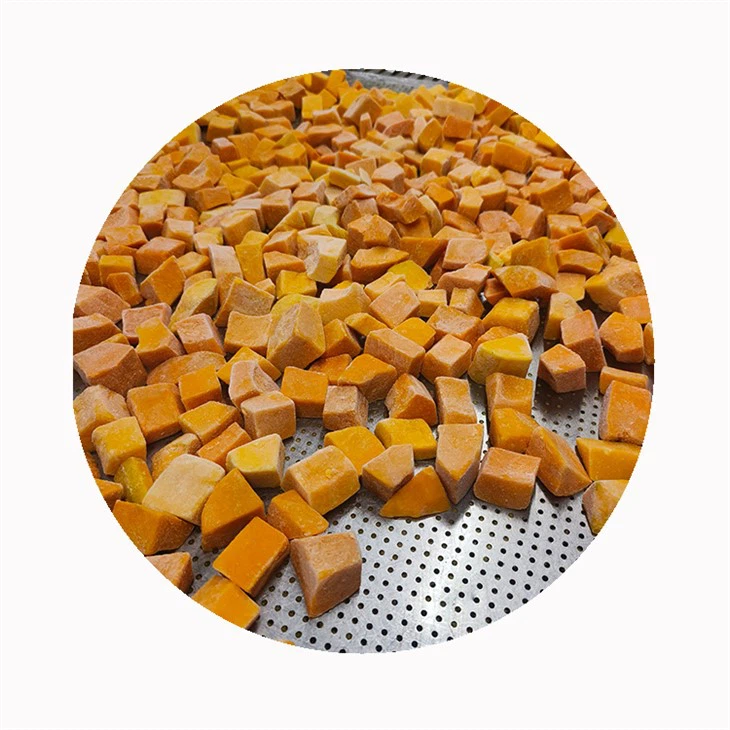
A seed-free photograph presents a different problem: identifying an unknown orange food. Carrot, sweet potato and pumpkin can all be cut into similar shapes. Begin with the product description, then use the image to understand the preparation. A curved piece with rind attached shows more of the original structure than a neat orange block. Neither image, by itself, establishes the identity of material in an unmarked bag.

Sweetness, color and cooking are unreliable classification tests
Flavor can describe a food beautifully while giving a poor answer about its plant anatomy. Different botanical fruits can taste tart, mild or sweet; some roots also taste noticeably sweet. Roasting or adding sugar changes the eating impression of pumpkin. Its development on the plant provides the classification.
Color is equally unreliable. An orange carrot and orange pumpkin flesh may look related on a chopping board, yet they are different plant organs. Green skin on a pumpkin piece is rind, quite different from a green leaf. Cooking habits can be misleading too: apples are baked, tomatoes simmered, and lettuce eaten raw. Heat and seasoning tell you about preparation. They offer no dependable dividing line between fruits and other edible plant parts.
The simplest test is to trace the ingredient back to its source on the plant. Taste, color and serving temperature can then be discussed for their own useful purposes.
Food handling needs its own answer. A frozen ingredient may require cooking according to its instructions, even when its source is a botanical fruit. For a demonstration or tasting, use a pumpkin sold for food and prepare it by the appropriate directions. Keep the lesson about anatomy separate from deciding whether a particular pack is ready to serve.
Practical example: sort a family shopping basket two ways
Imagine a parent preparing a small food lesson before dinner. The basket contains a cooking pumpkin, a carrot, a lettuce and a red pepper. The aim is to compare plant parts with familiar meal ingredients.
First, the adult handles any cutting and displays a cross-section or clear photograph of the pumpkin and pepper. The child points out the seed cavity, then compares it with the carrot root and lettuce leaves. On a plant-part sheet, pumpkin and pepper go under fruit, carrot under root, and lettuce under leaf. Ask the child to explain each placement using something visible in the food or its growing plant. If all the ingredients have already been cut, pictures of the whole produce and plant provide the missing context.
Now arrange those same four ingredients for dinner: pumpkin and carrot pieces to cook, lettuce and pepper for a salad. All four fit ordinary vegetable language at that meal.
Keep two headings on the paper: 'plant part' and 'usual food use.' A single pair of boxes marked only 'fruit' and 'vegetable' leaves the sorting rule unstated. With the two questions separated, the child can explain both placements. The adult can also accept a sensible answer in the child's own words rather than requiring a formal botanical term.
For a younger child, stop there and return to preparing the meal. For an interested older child, add the terms flower and seed, or show a picture of a pumpkin developing on the vine. The result of this illustrative activity is a clearer explanation, not a test of intelligence or a reason to pressure anyone to eat a particular food.

Food groups and nutrient amounts answer another question
A nutrition grouping is not a diagram of plant organs. USDA's fruit-and-vegetable learning cards, for example, describe pumpkin flesh within the red and orange vegetable subgroup and its seeds within the protein foods group. That educational distinction makes sense because the flesh and seeds have different roles as foods, despite coming from the same pumpkin.
Do not read that as a requirement to give an entire pumpkin a single nutrient profile. Figures for raw flesh, cooked flesh, seed kernels and a sweetened filling refer to different foods. The serving basis matters too. Comparing a large helping of pumpkin soup with a small spoonful of seeds requires the quantities and other ingredients, not just a shared word on the package.
Nutrient composition is a third topic to keep distinct. There is no vitamin, carbohydrate or fiber threshold that changes pumpkin into a botanical fruit: it was fruit tissue before anyone measured those constituents. To compare foods nutritionally, choose data for the exact flesh or seed product and the amount eaten. To classify plant anatomy, follow development.
A soup with pumpkin, cream and stock is a composed dish. Its nutritional information should describe that dish and its portion. Calling pumpkin a fruit provides no shortcut around knowing the recipe.
Whole, diced and pureed describe preparation
A whole pumpkin shows most of the features used in an anatomy explanation. A skin-on wedge retains a curved outer edge and some rind. Peeled dice retain the flesh but hide the original outline. Puree goes further and removes the visible piece structure. This is a sequence of preparation, not a progression from fruit to vegetable.
Commercial frozen pumpkin diced products illustrate the point well. Their visible features are cut faces, color, rind presence or absence, and the arrangement of pieces. The useful description is pumpkin flesh in a specified prepared form. There is no need to find a seed in every piece to support the ingredient's name.
Puree deserves particular care because a smooth appearance can hide added ingredients. Plain pumpkin puree, a savory preparation and a sweetened filling may look similar. Read the ingredient list before choosing one for a recipe. A product with salt, sugar, dairy or other additions brings those ingredients into the finished food alongside the pumpkin. The product name and directions should make that choice easier.
When I compare a product photograph with a recipe request, I would separate two questions: is it pumpkin, and is it the part and form the cook intends to use? A seed product, a hollowed shell and peeled flesh can all be associated with pumpkin. Only one may match that recipe. This small distinction prevents the correct broad food name from concealing a very practical mismatch.
Worked example: follow pumpkin through a soup formula
Consider an illustrative kitchen formula using 1,200 g of plain prepared pumpkin puree, 600 g of stock and 100 g of cream. The cook wants to explain the finished food accurately.
The ingredient total before further heating is 1,900 g. The pumpkin proportion on that input basis is 1,200 divided by 1,900, or about 63.2%.
The input calculation identifies the pumpkin ingredient within a mixture. Stock and cream complete the soup, bringing the total above the weight of the pumpkin itself. Calling the resulting food pumpkin soup communicates both the featured ingredient and the fact that the cook has made a dish. It would be misleading to describe every gram in the pot as pumpkin flesh.
If some water evaporates during heating, the final soup weight and the percentage calculated from that weight will differ. If the cook adds extra stock before serving, the composition changes again. Keep the input calculation separate from any finished-food nutrition or portion statement. The 63.2% figure belongs only to the stated starting formula.
Now change the task: a colleague asks for 1,200 g of pumpkin seed paste instead of pumpkin puree. The arithmetic may still add to 1,900 g, but the ingredient has changed substantially. The food part matters more than the word pumpkin shared by both names. The cook should pause and clarify the request before preparing the recipe.
For these illustrative quantities, write the pumpkin amount as 1,200 g, the total starting ingredients as 1,900 g, and the final soup weight in a separate space after cooking. Those three entries keep ingredient identity, formulation and finished quantity understandable. The example supplies arithmetic rather than a tested recipe or a serving recommendation.

Explain the ingredient clearly when other people will cook it
A short description often works better than an argument over categories. 'Peeled pumpkin flesh, cut into cubes' tells the next cook far more than 'a fruit used as a vegetable.' The longer botanical explanation belongs where someone has asked for it. During preparation, the important details are which edible material is present and what has already been done to it.
Pay particular attention to what a photo leaves out. A clear inner bag can show orange chunks while hiding the lower layers. A close-up of skin-on pieces demonstrates the rind on the pictured material. I would use those images to explain the proposed form, then check the product description before agreeing what the kitchen will receive. If the recipe calls for skin-free flesh, asking whether the actual item is peeled is more useful than debating whether pumpkin belongs among fruits.
Keep the name and preparation directions with an opened bag. An unmarked container leaves the next cook guessing.
For a foodservice application, we would begin with the form the cook needs and the wording used in the recipe. Our frozen packaging overview provides a starting point for discussing how that ingredient will be identified and handled in its pack.
The concise answer remains the same at the end of the journey: pumpkin is a botanical fruit commonly used as a vegetable. Follow its development to explain the science; follow its flesh, seeds and added ingredients to explain the food.
For a frozen pumpkin ingredient, tell us whether you need peeled flesh or skin-on pieces and how the kitchen plans to use them. We can review the requested form through the XMSD inquiry channel.
References
- Texas A&M AgriLife: pumpkin, plant structure and culinary language
- Oregon State University Extension: reproductive plant parts
- University of Illinois Extension: pumpkin flowers and developing fruit
- Denver Botanic Gardens: pumpkin as a pepo
- USDA fruit and vegetable learning cards: plant parts and food groups