


Frozen Food Certifications: Buyer Scope Matrix | XMSD
Aug 16, 2026

Do not ask whether a supplier is "internationally certified" as one yes-or-no question. Food-safety schemes, management-system standards, legal registrations, organic or religious certifications, social audits, laboratory accreditations, product test reports, and shipment documents have different owners and purposes. Approval depends on the exact certificate holder, site, activity, product category, standard and edition, audit or certification body, accreditation, validity, status, and buyer program.
Our practical method is to convert every customer and destination requirement into a row in a scope matrix. Classify what the evidence proves, verify it with the issuing source, match it to the real processing, packing, storage, and shipment route, record gaps, and close those gaps before product or artwork commitments. A long certificate list is less useful than six documents that cover the exact order.
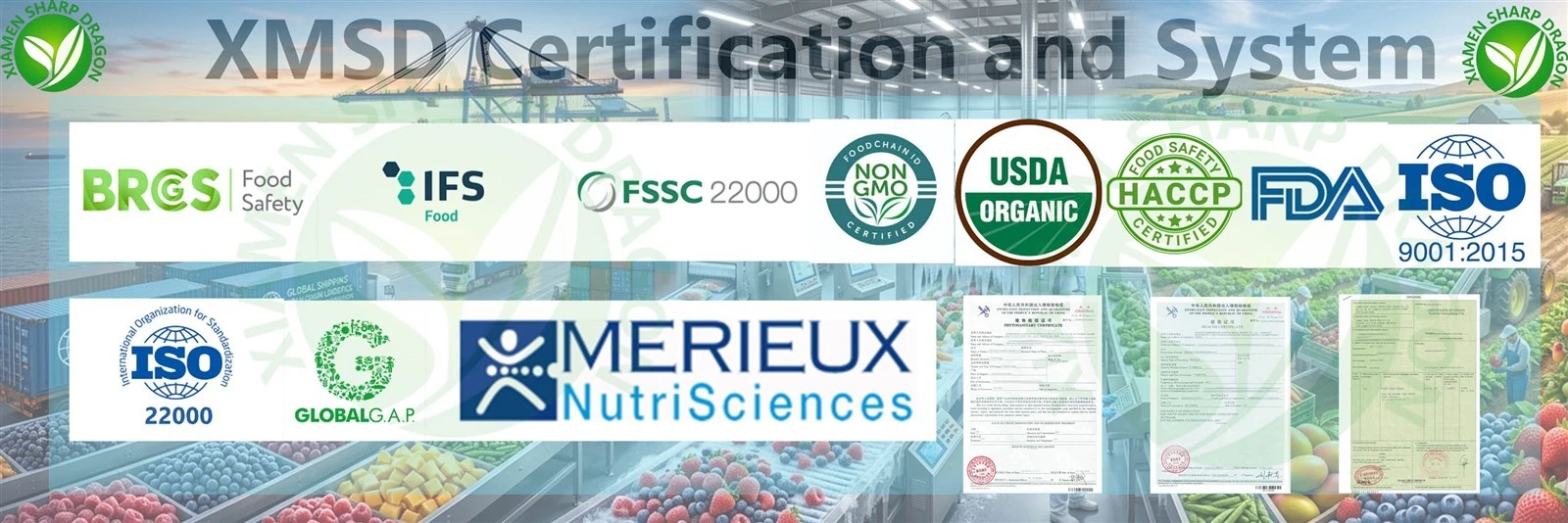
A useful certificate file shows what each document proves, which site it covers, and which order requirement it closes.
Separate Six Evidence Families
| Evidence family | Primary question | Typical evidence | Common mistake |
|---|---|---|---|
| Food-safety system | Does the named site operate an audited system for covered activities? | BRCGS, IFS, FSSC 22000, SQF, or ISO 22000 certificate | Assuming every scheme is accepted by every customer |
| Legal market entry | Is an entity or facility registered, listed, licensed, or approved where required? | Authority registration or establishment record | Calling registration a product certification |
| Product claim | May the exact product carry a controlled claim? | Organic, kosher, halal, or other claim certificate and schedule | Extending one product or brand to an entire range |
| Audit or due diligence | Does the operation meet a social, ethical, security, or customer code? | Audit report, platform record, or corrective-action closure | Reading a membership logo as an audit pass |
| Batch evidence | Did the named lot meet specified test or inspection criteria? | COA, laboratory report, or inspection certificate | Treating one lot report as a facility certificate |
| Shipment evidence | Can the order be exported, cleared, and received? | Origin, health, phytosanitary, customs, and transport documents | Requesting a document that no authority will issue |
Start by assigning each requirement to one family. If a retailer asks for a GFSI-recognized food-safety certificate, an FDA registration number, kosher approval, pesticide testing, and a certificate of origin, that is five separate controls. One ISO logo cannot close all five.
Keep the intended use beside every row. A food manufacturer may need an ingredient-site food-safety scheme and allergen evidence; a supermarket may add private-label, social-audit, and artwork requirements; an importer may prioritize establishment eligibility and shipment documents. The same supplier can pass one program and fail another without contradiction.
Set a hard-gate rule for each family. A missing legal registration can stop market entry; an unaccepted food-safety scheme can stop customer onboarding; a missing claim schedule can stop label use; a failed lot result can stop batch release; and an unavailable authority document can stop export. Ranking all files as "important" hides which consequence applies and who has authority to resolve it.
Lock the Buyer and Destination Requirements
Ask for the customer's approved scheme list, minimum grade or score, accepted certification bodies, accreditation rules, standard edition, unannounced-audit requirement, certificate remaining-validity rule, report-sharing condition, and product-category coverage. Record whether a certificate is mandatory at quotation, sample, production, shipment, or annual review.
Define the destination separately. A legal facility registration, establishment listing, import permit, product approval, organic equivalence route, or health-certificate condition comes from the applicable authority and commodity pathway. Do not infer the requirement from another market. Give your customs broker or regulatory adviser the product, composition, process, origin, facility route, HS classification assumption, destination, and importer role for a documented answer.
Example: retailer scheme mismatch. A processor holds ISO 22000 certification, while the retail program requires a named GFSI-recognized certification program covering frozen produce processing. ISO 22000 may show a certifiable food-safety management system, but it does not automatically satisfy that retailer wording. The buyer either selects an accepted certified site, obtains a formal customer exception, or changes the route before award.

Buyer approval joins system evidence, product evidence, packing control, and shipment readiness without confusing their functions.
Understand GFSI Recognition Correctly
The Global Food Safety Initiative benchmarks and recognizes certification programs against its requirements. Its recognized-program material lists schemes by scope, including food-manufacturing categories. GFSI does not audit or certify an individual frozen-food factory. The facility certificate is issued under a recognized program through an approved certification path.
Verify the scheme name, version, category code or scope, certification body, certificate number, facility, audit dates, issue and expiry, grade or result where applicable, and live status. Then compare the category with the real activity: processing frozen fruit, vegetables, or mushrooms; packing; cold storage; brokerage; or transport. A storage or broker certificate does not certify manufacturing.
Customer acceptance still controls. Some programs name BRCGS, IFS, FSSC 22000, or SQF; others accept any recognized scheme for the applicable scope; some impose grade, audit-option, or report-upload conditions. Record the actual rule and evidence, not the marketing phrase "GFSI certified."
Know What ISO 22000 Proves
ISO states that ISO 22000 sets requirements for a food-safety management system and can be used by organizations across the food chain. Certification is optional, and ISO itself does not certify organizations. If a supplier presents an ISO 22000 certificate, identify the independent certification body and confirm the body's credibility and accreditation for the stated scope.
Read the scope statement. "Manufacture of individually quick frozen vegetables" is materially different from "trading of food products," "cold storage," or a corporate office scope. Match the legal entity and address to the facility map. Confirm the standard edition and amendment status, because ISO 22000:2018 remains published while a new edition is under development in 2026; a draft has not superseded the published standard.
Do not use ISO 9001 and ISO 22000 interchangeably. ISO 9001 addresses a quality management system; ISO 22000 addresses a food-safety management system. Both may support supplier controls, but the buyer requirement decides which is relevant and what additional scheme, legal, product, and lot evidence remains necessary.

The scope statement must cover the actual processing and packing activity, not only the company name.
Do Not Call FDA Registration a Certificate
FDA states that food facilities do not need an FDA certificate of registration and that FDA does not issue or recognize private certificates of registration or product status. Registration is not FDA approval, product certification, inspection clearance, or endorsement. Treat an attractive third-party "FDA certificate" with an FDA logo as a red flag rather than stronger evidence.
Determine whether the specific domestic or foreign facility must register, whether an exemption applies, which entity is the owner, operator, or agent in charge, whether a foreign facility needs a U.S. agent, and whether the registration is active for the applicable period. Protect registration numbers, PINs, usernames, and passwords. FDA's July 2026 reminder specifically warns businesses about misuse of food-facility registration information.
Example: misleading document. A broker sends a colorful "FDA approved certificate" issued by a private registrar. The importer rejects the wording, verifies the manufacturing facility's registration through appropriate owner and U.S.-agent channels, and separately checks preventive-control, foreign-supplier, label, admissibility, and shipment requirements. The registration row passes only its defined purpose.
Verify Holder, Address, Activity, and Product Scope
Create a route map for farm or raw source, processor, freezer, packer, cold store, trader, laboratory, and loading point. Put the legal name and physical address beside each role. Then map each certificate or registration to the role it actually covers. A trader's quality certificate does not automatically cover a partner factory, and a processor certificate does not automatically cover an external repacker.
Read inclusions and exclusions in the scope. Confirm product categories, technologies, outsourced processes, storage, packing, and any sites listed in an annex. For a product from our frozen fruit, vegetable, and mushroom range, match the selected partner facility, product style, formulation, and pack to the certificate route before relying on the document.
When names differ because of an English translation, merger, address change, or group company, require corporate evidence and issuer confirmation. Do not bridge legal identities with an informal explanation. Record the effective date and determine whether the certificate must be updated.

Product code, pack, brand, facility, and lot link a certificate to physical goods.
Handle Organic, Kosher, Halal, and Other Claims Separately
Product claims need their own authority, scope, chain of custody, and label permission. An organic certificate may need product schedules, ingredient and farm evidence, certified handling, transaction evidence, and destination equivalence. Kosher and halal programs govern religious requirements through their respective certifiers. One does not imply the other, and none substitutes for a food-safety certificate.
Match product, formula, ingredient sources, processing site, packing site, brand, designation, symbol, validity, and production period. Review the dedicated frozen-food kosher certificate scope guide for agency, private-label, artwork, and line controls. Apply the chosen halal or organic program's written rules through its own authority.
Lock label claims to approved evidence. A certification mark is usually controlled intellectual property, not decoration. Confirm the exact logo, qualifier, color, minimum size, brand permission, product schedule, and expiry management before printing.
Separate Certificates, Audit Reports, and Test Reports
A certificate is a conformity statement within a defined standard and scope. An audit report shows observations, nonconformities, evidence, grading logic, and corrective actions under a scheme or customer program. A laboratory report shows results for named samples and methods. A COA may be issued by a supplier or laboratory for a particular lot. These files answer different questions.
Request the amount of audit detail your risk and customer program require. Verify major and critical findings, corrective-action closure, repeat issues, audit option, product-category coverage, and report authenticity. A valid certificate can coexist with open improvement risks that matter commercially. A high audit grade also does not guarantee your SKU meets its cut, texture, residue, microbiological, packing, or cold-chain specification.
For testing, confirm laboratory identity, accreditation scope where required, sample identity, sampler, custody, method, reporting limit, units, specification limit, result, uncertainty treatment where relevant, and lot relationship. Use our order coordination and inspection process to connect factory, product, sample, pack, and shipment records.
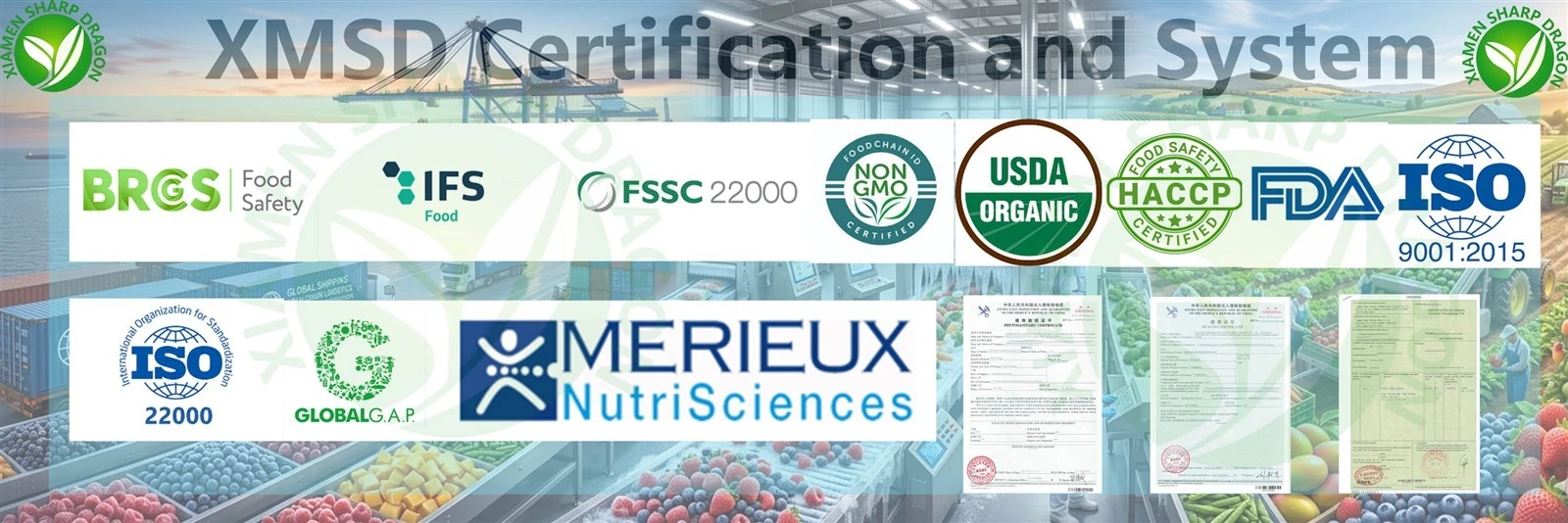
System certificates, audit evidence, product-claim schedules, and batch reports remain separate but traceable.
Check Issuer and Accreditation
Identify who owns the standard or scheme, who audited, who issued the certificate, and who accredits or approves that certification body for the stated scope. Verify through official directories where available. Similar logos and company names are not enough. Record directory link, certificate number, status, scope, verification date, and reviewer.
Check independence and conflicts. A consultant can help implement a system but should not be presented as the authority that certifies its own work. A laboratory accreditation may cover some test methods but not the method used on your report. A certification body may be accredited for one management system or country scope but not another. Verify the exact claim.
Example: partial accreditation. A laboratory advertises broad international accreditation, but its published scope lists pesticide testing for fresh produce and not the requested frozen-mushroom method. The buyer asks for the exact method and matrix scope, selects an appropriate lab, or obtains a documented customer acceptance of the alternate method before sampling.
Manage Validity, Surveillance, Suspension, and Renewal
Capture issue date, certification decision date, last audit, expiry, surveillance frequency, status, and next action. A printed expiry date alone does not show whether the certificate is active, suspended, withdrawn, reduced in scope, or transferred to another certification body. Check the live directory and ask the issuer when status is unclear.
Calculate the commercial window backward from production and sale. Seasonal raw material may be contracted months before processing; private-label film may be printed before production; ocean transit and customer inventory may extend beyond certificate expiry. Ask the customer whether certification must be active at production, shipment, receipt, or throughout sale, and record the rule.
Set alerts at useful lead times. A complex site transition may need customer approval, a new audit, corrective actions, database updates, and artwork changes. A thirty-day reminder is insufficient if alternate supply qualification takes twelve weeks. Link renewal risk to sales commitments and stock allocation.

Renewal dates must be compared with seasonal production, frozen inventory, shipment, and customer acceptance windows.
Score Coverage Without Hiding Hard Gaps
Worked example: certification matrix. An importer has 18 mandatory evidence rows for a retail frozen-vegetable program. Fifteen rows pass. The processing site's food-safety certificate is accepted, legal registration evidence is verified, and product-claim files match. Three rows fail: the external repacker is outside scope, a social-audit corrective action remains unclosed, and the organic product schedule omits one SKU. Simple coverage is 15 ÷ 18 × 100 = 83.33%, rounded to 83.3%.
The order is not 83.3% approved. All three rows are hard gates. The team moves packing to the covered site, closes and verifies the corrective action, and obtains product-schedule approval before organic artwork or production. Percentage shows workload; hard-gate status controls release.
If alternate packing adds USD 1,260, expedited audit verification costs USD 740, organic-schedule administration costs USD 310, and revised artwork proofing costs USD 190, the stated gap-closure basis is USD 2,500. Across 20,000 accepted kilograms, USD 2,500 ÷ 20,000 kg = USD 0.125/kg. These figures are illustrative; use written site, certification, audit, artwork, logistics, and delay costs for the real order.
Certification Release Checklist
- Customer and destination requirements are written as separate evidence rows.
- Scheme, standard, edition, certification body, and accreditation or authority are verified.
- Legal holder, physical site, activity, category, product, and outsourced route match.
- Certificate, audit, registration, claim, test, and shipment evidence are not confused.
- Live status, grade, audit option, issue, expiry, surveillance, and corrective actions are acceptable.
- Product claims and certification marks have exact product, brand, site, and artwork permission.
- Batch reports identify samples, methods, units, limits, results, and lot relationship.
- Changes to site, product, formula, pack, subcontractor, standard, or status trigger review.
- Every hard gate passes before purchase, artwork, production, and shipment commitments.
Assign one evidence owner and one independent checker. Archive the verified copy, directory result, scope interpretation, customer acceptance, and expiry alert. Review the XMSD certification and document gallery for available capability examples, then request the exact facility and product evidence for your order.
A failed row requires a different facility or product route, an issuer correction, customer exception, new audit or approval, removal of a claim, or refusal of the order condition. Do not average a mandatory gap away with unrelated certificates.
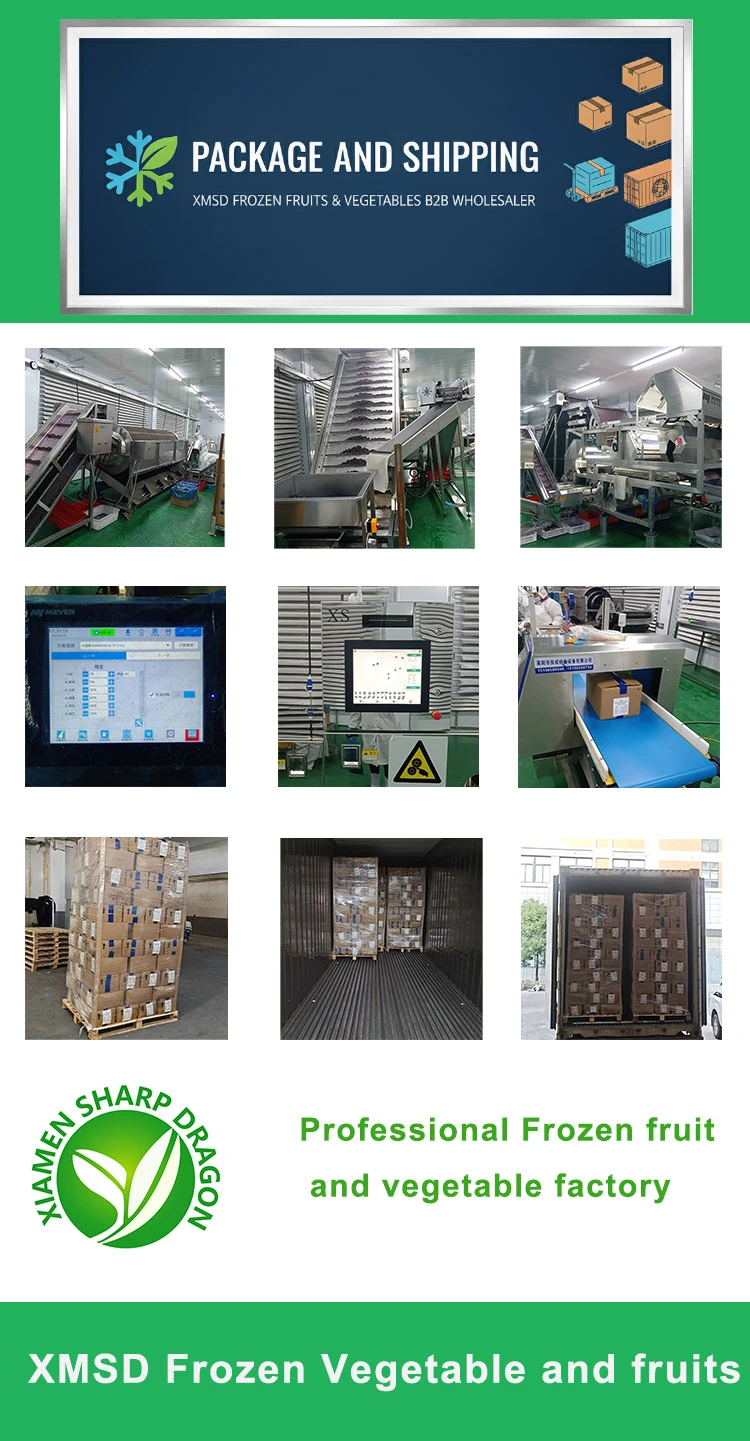
Verified certification scope must connect to the exact lot, packing, pallet, and loading route.
Send the product, destination, buyer channel, accepted schemes, required claims, packing route, test list, and shipment documents. We will identify which facility, product, inspection, packing, and export records can be coordinated for your review.
Frequently Asked Questions
Is a GFSI certificate issued directly by GFSI?
No. GFSI benchmarks and recognizes certification programs. A factory is certified under a specific recognized program through its certification process. Verify the scheme, category, body, facility, status, dates, and customer acceptance.
Does ISO issue ISO 22000 certificates?
No. ISO develops and publishes standards but does not certify organizations. Certification, when chosen, comes from an independent certification body. Verify that body, its accreditation, and the exact holder, site, activity, and standard scope.
Does FDA food-facility registration mean FDA approval?
No. FDA states that it does not issue food-facility registration certificates or recognize private certificates of registration or product status. Registration is a legal record, not product certification, endorsement, or proof that every import requirement passes.
Can one factory certificate cover an outside repacker?
Only when the applicable program and certificate scope explicitly cover the route or the buyer accepts documented evidence for the external site. Map processing, storage, repacking, and loading addresses; verify every required role independently.
What should an importer send XMSD for certificate review?
Send the exact product and formula, destination, buyer program, accepted standards and schemes, required claims, factory and pack route, test requirements, order dates, and shipment-document list. Our importer support overview helps organize the commercial and compliance inputs.
References
- Global Food Safety Initiative - Recognition and benchmarking
- GFSI - Recognized Certification Programme Owners and scopes
- International Organization for Standardization - ISO 22000 food-safety management
- ISO - ISO 22000:2018 status and certification explanation
- U.S. FDA - Food-facility registration and private certificate warning
- U.S. FDA - Protecting food-facility registration information, July 2026