


Frozen Food Recall Plan & Traceability Guide | XMSD
Aug 16, 2026

A frozen food recall plan must let your team identify the affected item and lot, stop distribution, trace every shipped quantity, notify the right businesses and authorities, verify customer action, reconcile all stock, and document disposition. Traceability records alone are not enough. A usable plan assigns decision authority, 24-hour contacts, data sources, communication templates, reconciliation rules, effectiveness checks, and mock-recall testing before an incident occurs.
For an importer, distributor, food manufacturer, or private-label buyer, recall readiness begins before the purchase order. Define the supplier and facility route, lot-code structure, one-step-back and one-step-forward records, shipment and consignee fields, complaint escalation, sample retention, document access times, and responsibilities across countries. Legal duties differ by market and incident, so your qualified food-safety and legal teams should apply the destination rules and contact the competent authority when required.
Recall readiness connects the affected product and lot to distribution, contacts, quantities, instructions, responses, and disposition evidence.
Separate Traceability, Withdrawal, and Recall Decisions
Traceability is the ability to follow food and its inputs through production, processing, and distribution. It supplies the evidence used to investigate and define scope. A withdrawal generally removes food from the supply chain before or without consumer retrieval under the applicable market rules. A recall can require removal or correction after distribution and may include consumer communication. Terminology and thresholds are jurisdiction-specific; record the legal basis and authority direction for the incident rather than applying one market's label everywhere.
In the United States, FDA guidance addresses information supplied to the agency, customer notification, recall strategy, status reporting, effectiveness checks, and termination. In the European Union, Regulation (EC) No 178/2002 establishes traceability duties in Article 18 and food-business-operator withdrawal, authority notification, and, when necessary, consumer recall duties in Article 19. Codex General Principles of Food Hygiene calls for effective procedures to respond to food-hygiene failures, identify implicated lots, remove affected food, and retain records.
Keep the operational question plain: What happened, what risk may exist, which exact units may be affected, where are they, who has authority to decide, which authorities and customers must be contacted, and how will action be verified? The recall coordinator should involve food safety, quality, regulatory, legal, commercial, logistics, communications, and senior management at defined triggers. A supplier cannot replace the importer's local regulatory duty, and an importer cannot reconstruct factory records that were never retained.
Build an Order Identity That Survives the Supply Chain
The minimum identity set normally includes legal product name, commercial description, botanical species where relevant, cut or style, formulation, brand, pack size, case count, factory, packing site, production date, lot or batch code, pallet identifier, purchase order, sales order, container number, bill of lading, consignee, shipment date, destination, and quantity. Add ingredient and packaging lots when they can define or expand exposure. Use the same controlled values across specification, production, label, case mark, pallet label, invoice, packing list, health document, and shipment file.
A broad description such as "frozen mixed vegetables" is inadequate if three formulas, two packing lines, and four customer labels share a production day. The lot code should support the precision required by the hazard analysis and process. Document how every character is decoded, who assigns it, how duplicate codes are prevented, how rework is linked, and how labels are verified at line start, product change, roll change, and end of run.
Example: shared ingredient exposure. Two frozen vegetable blends use spinach from raw-material lot SP-1608, while a third blend made on the same day does not. If the incident concerns that spinach lot, the scope follows every finished lot containing SP-1608, including rework, rather than every item packed that day. The production formula, weigh-up record, material issue, and rework log create the defensible boundary.

A usable identity chain links raw inputs, processing, packing, inspection, pallets, containers, documents, and customers.
Assign the Recall Team and Decision Authority
Name a primary recall coordinator and an alternate. List office, mobile, and after-hours contacts for the processor, exporter, importer, brand owner, cold store, laboratory, freight partners, insurer, legal counsel, communications lead, and relevant authorities. Define who may stop production, place stock on hold, block order release, contact a regulator, notify customers, approve public statements, authorize returns, and decide disposition. Test every contact at least during the scheduled mock exercise.
Use a severity and escalation protocol without delaying protective action. Inputs may include pathogen or toxin findings, undeclared allergens, foreign material, pesticide or chemical nonconformity, packaging failure, coding error, fraud, temperature abuse, consumer illness, authority alerts, and supplier notifications. The team records the source, time received, product and lot identity, known distribution, evidence reliability, immediate control, risk-assessment owner, authority contact, and decision deadline.
Prepare for incomplete information. An initial laboratory result may be presumptive; a complaint may lack a pack photo; a distributor may have split pallets among secondary accounts. The plan should allow a conservative hold while facts are checked. Record assumptions, expand scope when evidence demands it, and narrow scope only when traceability and technical assessment support the boundary.
Create the Traceability Data Pack
Agree the records needed to move backward from a finished lot and forward to every consignee. Backward records include farm or raw-material supplier, receiving lot, date, quantity, inspection, test status, ingredient and processing-aid lots, packaging lots, production line, time window, cleaning transition, rework, hold, and release. Forward records include finished quantity, warehouse location, pallet IDs, order, invoice, container, shipping document, customer, ship-to address, contact, date, and quantity.
Set an access-time requirement in the supplier approval and purchase terms. Critical records should be retrievable during weekends, holidays, and time-zone gaps. Define the file format, language, responsible person, retention period, backup, and secure transfer method. A certificate stating that traceability exists does not demonstrate how quickly a specific lot can be traced under pressure.
For products selected from our frozen fruit, vegetable, and mushroom range, confirm the exact partner facility and pack route at order level. Our order coordination and inspection process can help collect the commercial, production, packing, and shipment identifiers available for buyer review.

Backward tracing needs material, process, line, time, test, rework, hold, and release evidence tied to the finished code.
Define Scope Without Guessing
Start with the suspect unit and identify the common factor: raw lot, ingredient source, production line, environmental zone, time window, packaging roll, label version, cold store, container, or other evidence. Map every finished lot connected to that factor. Then challenge the boundary: Did rework cross into another run? Did the line continue before cleaning? Were labels or cases carried over? Did laboratory sampling represent one lot or several? Did a warehouse combine pallets or relabel cases?
Use both inclusion and exclusion evidence. An affected-lot table states why each lot is included. A neighboring-lot table states why it is excluded, supported by separate raw materials, validated cleaning, production time, test evidence, line segregation, or packaging control. Product age and frozen storage do not remove a microbiological, allergen, chemical, or labeling concern by themselves.
Example: label transition. Retail bags for Product A declare milk, while bags for Product B do not. A line-clearance failure leaves 36 Product A bags on the Product B line. Scope must consider the time from the last verified correct check through discovery, packaging reconciliation, rejected units, scanner challenge, and pallet locations. Finished-food test results cannot correct an undeclared-allergen label.
Stop Movement and Preserve Evidence
Issue an unambiguous stop-ship or hold instruction containing product, brand, pack, affected codes, date range, pallet or container identifiers, reason, action, contact, issue time, and authorization. Block the item in warehouse and order systems, physically identify stock, notify third-party cold stores, and require acknowledgment. If a container is moving, identify its carrier, route, port status, customs status, consignee, and safe interception options.
Preserve complaint units, retained samples, photographs, labels, case marks, seals, temperature files, production and sanitation records, laboratory reports, communication logs, and system exports. Maintain chain of custody for samples sent to an accredited laboratory. Do not destroy suspect stock until the authorized decision, legal requirements, insurance conditions, and evidence needs have been addressed.
Align packaging and code controls through our frozen packaging capability overview. The operational record still needs the exact film, carton, code, pallet, quantity, and line-clearance evidence for the selected order.

Physical segregation and system blocks should identify the same product, code, pallet, and quantity.
Prepare Customer and Authority Communications
A customer notice should make recognition and action easy. Include a clear recall or withdrawal heading when legally appropriate, legal product and brand name, pack size, photographs where useful, lot and date codes, case and pallet identifiers, reason and risk statement approved by the responsible team, distribution dates, immediate action, further-distribution instruction, stock-report request, return or disposition route, response deadline, and 24-hour contact. Keep commercial promotion out of safety communication.
Maintain templates, but require incident-specific approval. Translation must preserve the product identity, hazard, action, and contact details. Confirm the language and channel required by each market and customer. Email may be supported by phone, customer portal, electronic data interchange, courier, or public communication depending on urgency, distribution depth, authority direction, and legal requirements.
Example: onward distribution. An importer shipped 600 cases to one distributor, which sent them to 18 foodservice depots. A notice only to headquarters is incomplete if the distributor does not identify and contact the depots. The recall file captures every secondary account, quantity, notification time, acknowledgment, remaining stock, further distribution, and action.
Reconcile Quantities with a Mass Balance
Quantity reconciliation exposes missing distribution data. Establish the units and conversions first: kilograms, bags, cases, pallets, and containers. Record good production, waste, samples, rework, on-site stock, shipped quantity, customer-held quantity, returned quantity, destroyed quantity, sold or consumed quantity, and unexplained variance. Prevent duplicate measurement; customer-held stock that is later returned moves category but does not become an additional recovered amount.
| Reconciliation field | Required evidence | Control question |
|---|---|---|
| Produced and released | Batch, yield, waste, release records | What quantity entered saleable stock? |
| On-site or controlled | Warehouse locations and physical count | Is movement blocked and verified? |
| Distributed | Orders, invoices, shipment and consignee data | Do all shipped units have a destination? |
| Customer response | Acknowledgment, count and onward sales | Was the requested action completed? |
| Disposition | Return, destruction or authorized correction evidence | Is quantity and method documented? |
| Variance | Calculated difference and investigation | What remains unexplained? |
Worked example: 95.0% controllable recovery. A frozen vegetable lot contains 24,000 kg of released product. The factory still holds 1,200 kg, so 22,800 kg was shipped. Customers confirm 18,240 kg isolated in their warehouses, 3,420 kg returned or destroyed under control, and 1,140 kg already sold or otherwise unavailable. Distribution reconciliation is 18,240 + 3,420 + 1,140 = 22,800 kg, with zero unexplained variance. Controllable held, returned, or destroyed quantity is 18,240 + 3,420 = 21,660 kg. The controllable recovery rate is 21,660 ÷ 22,800 × 100 = 95.0%.
The 95.0% figure does not prove the response is legally or scientifically sufficient. The risk, distribution level, authority instructions, speed, consumer exposure, and effectiveness checks still govern action. It does show exactly where the shipped quantity went and prevents a misleading claim based only on returned cases.
A mass balance separates full distribution reconciliation from the portion that remains controllable.
Verify Effectiveness Instead of Assuming Receipt
Sending a message is not the same as effective action. Define how you will verify that accounts received and understood the notice, stopped use and distribution, checked inventory, identified onward customers, returned the requested form, isolated stock, and completed return, correction, or disposition. The competent authority or recalling firm may determine the depth and sampling method under applicable requirements.
Track account name, contact, channel, first notice time, acknowledgment time, response status, quantity received, quantity remaining, quantity further distributed, action, evidence, follow-up owner, and escalation. Investigate nonresponders, quantity conflicts, invalid addresses, closed businesses, and accounts that cannot identify their customers. A customer who replies "received" without stock and onward-distribution data has not closed the operational question.
Example: response-rate illusion. Nine of ten direct accounts answer, suggesting a 90% response rate. The missing account received 52% of the affected quantity. Account count hides exposure, so the team reports both contact response and quantity coverage, escalates the high-volume account immediately, and maps its secondary distribution.
Control Returns, Storage, and Disposition
Define where returned food may go, who can receive it, how it is labeled, how cold-chain and safety risks are managed, and how quantities are verified. Keep affected stock segregated from saleable stock with clear status, access control, and inventory blocks. Record case count, net weight, lot, source account, receipt date, condition, pallet location, and responsible checker.
Disposition may involve destruction, reconditioning, relabeling, diversion, or another legally authorized route depending on the defect and authority decision. Obtain approval before action, supervise the method, reconcile quantities, and retain certificates, photographs, weighbridge tickets, waste-contractor records, revised labels, or other proof. Prevent recalled goods from re-entering commerce through unauthorized sale or donation.
Cold storage affects handling but not the need for control. Review our certification and quality-document overview as general capability evidence, then request order- and lot-specific records from the selected route.
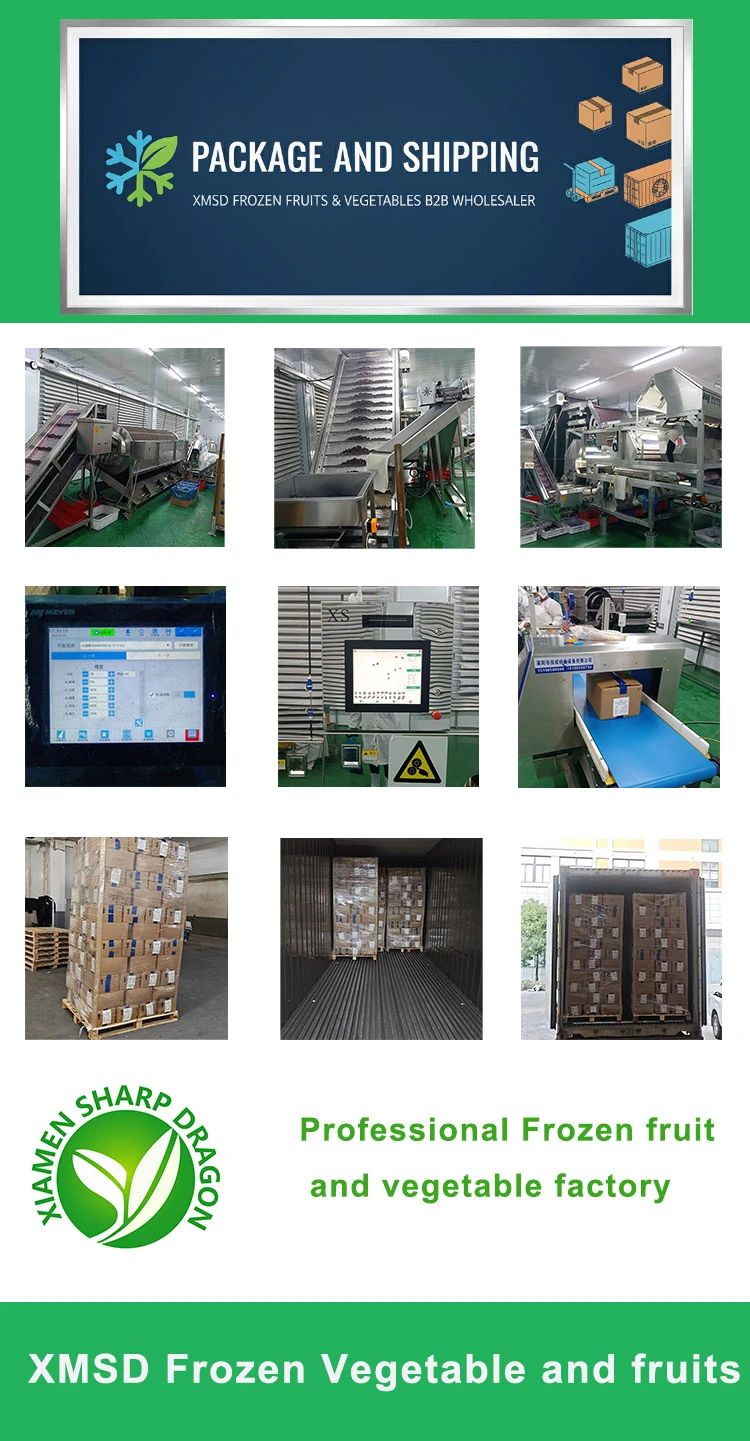
Lot, pallet, container, inspection, and loading evidence helps connect physical stock with distribution records.
Run a Mock Recall That Tests Weak Links
Select a realistic scenario and begin with a specific trigger, not a prepared answer sheet. Trace backward to inputs and forward to customers, calculate mass balance, draft notifications, test after-hours contacts, verify system holds, retrieve records, and record elapsed time. Include the processor, exporter, importer, brand owner, cold store, and distributor when the commercial route depends on them.
Measure more than completion. Useful indicators include time to convene the team, time to define initial scope, time to obtain the distribution list, percentage of quantity reconciled, unexplained variance, contact success, quantity coverage, record errors, duplicate or missing codes, and time to approve communication. Set acceptance criteria before the exercise so weak results cannot be explained away afterward.
Example: mock-recall time. A team's target is a complete trace and distribution pack within four hours. It identifies the input and finished lots in 55 minutes, but the overseas warehouse needs 3 hours 50 minutes to supply pallet-level shipments. Total elapsed time is 4 hours 45 minutes, so the exercise fails the agreed criterion even though the quantities eventually reconcile. Corrective action addresses warehouse access and after-hours ownership, followed by a focused retest.
Close the Event with Root Cause and Preventive Control
Termination follows the applicable authority and company requirements; it is not simply the date when returns stop arriving. Assemble the decision record, affected scope, notification log, effectiveness results, distribution and quantity reconciliation, disposition proof, consumer or complaint data, authority correspondence, and unresolved issues. Retain records for the required period and customer program.
Root-cause work should distinguish the technical failure from detection, containment, and system failures. A pathogen event may reveal weak environmental monitoring, but it may also reveal slow laboratory escalation, incomplete lot mapping, inaccessible shipment records, or unclear customer contacts. Assign corrective action, owner, due date, verification method, and effectiveness review for each failure.
Use the lessons in supplier approval, specifications, contracts, label control, traceability fields, warehouse agreements, training, tests, mock exercises, and management review. For importer-focused coordination across factory, packing, shipment, and destination records, see our global buyer support overview.
Buyer Recall-Readiness Checklist
- A named coordinator and alternate have authority, 24-hour access, and tested contacts.
- The plan distinguishes traceability, withdrawal, recall, authority notification, and public communication under destination rules.
- Product, formula, lot, line, pack, pallet, shipment, and customer identities use controlled fields.
- Backward and forward records are retrievable within a written target, including outside office hours.
- Stop-ship, physical segregation, system block, sample custody, and evidence preservation are defined.
- Customer notices state the exact affected units, risk, action, onward-notification duty, response deadline, and contact.
- Quantity reconciliation covers production, on-site stock, distribution, customer stock, return, disposition, unavailable stock, and variance.
- Effectiveness checks test understanding and action, not only message delivery.
- Return and disposition routes prevent uncontrolled re-entry into commerce.
- Mock recalls test real facilities, warehouses, time zones, and records against measurable criteria.
- Corrective actions cover technical cause, detection, scope, communication, record access, and verification.
Ask suppliers to demonstrate the system with an order-relevant scenario, but retain your own importer, brand, distributor, and authority procedures. Approval should be evidence-based: the test identifies the right units, accounts for every quantity, reaches the right parties, and produces records within the agreed time.

Cold-store location, pallet identity, status block, quantity, and customer route must remain visible during a response.
Send the product, formula, pack, brand, destination, facility requirement, volume, lot-code fields, trace target, document list, warehouse route, and customer standard. We will review the commercial and order data needed to coordinate the selected frozen-food supply route.
Send your frozen-food traceability and order-control requirements to XMSD.
Frequently Asked Questions
How quickly should a frozen food lot be traced?
Use the applicable legal and customer requirements, then set a measurable internal target tested in a mock exercise. A buyer should know the elapsed time for initial scope, backward trace, full distribution list, quantity reconciliation, and contact activation. Fast but incomplete data does not pass.
Is one-step-back and one-step-forward traceability sufficient?
It is a core legal concept in some markets, but buyers usually need enough internal transformation and lot linkage to define the affected finished goods accurately. Formula, material issue, rework, line, time, packaging, pallet, shipment, and secondary-distribution data may all be necessary.
Does frozen storage make a recall less urgent?
No general assumption is safe. Freezing may limit growth of some microorganisms, but it does not reliably eliminate every pathogen, allergen, chemical hazard, foreign object, fraud, or labeling defect. Qualified risk assessment and authority direction determine the action.
What should a buyer request from a supplier mock recall?
Request the scenario, selected lot, backward and forward trace, distribution list, mass balance, elapsed times, contact test, system-hold evidence, gaps, corrective actions, owners, due dates, and retest result. Sensitive customer names may require controlled handling, but quantity and performance evidence must remain auditable.
Who contacts authorities in an international frozen food incident?
The responsible parties and deadlines depend on jurisdiction, role, product, and facts. The processor, exporter, importer, brand owner, and distributor should define the contact matrix before trade begins, obtain qualified legal and food-safety advice, and avoid assuming that another party has completed a duty.
References
- U.S. Food and Drug Administration - Product Recalls, Including Removals and Corrections: Guidance for Industry
- U.S. Food and Drug Administration - Industry Guidance for Recalls
- EUR-Lex - Regulation (EC) No 178/2002, Articles 18 and 19
- European Commission - General Food Law requirements for traceability, withdrawal, recall, and notification
- Codex Alimentarius - CXC 1-1969 General Principles of Food Hygiene