


Frozen Lychee Maturity, Pitting, Browning and Safety Guide
Apr 15, 2019

The old version of this article gave a blanket 0.25-kilogram serving limit and told people with acne, colds, liver disease, kidney disease, diabetes or gastrointestinal disease not to eat lychee. It also mixed those statements with a brief allergy warning. That is not a sound medical guide, and it gives a frozen-fruit buyer almost no basis for approving a commercial lot.
This replacement deals with the decisions an importer, distributor, beverage processor, dessert manufacturer, foodservice buyer or private-label team can actually control: Litchi chinensis identity, cultivar, mature raw fruit, whole in-shell versus peeled and pitted form, size distribution, Brix and acidity method, aril color, pit remnants, tears, browning, thaw drip, texture, aroma, food-safety status, packing and cold-chain evidence.
Lychee is nonclimacteric, so it does not meaningfully ripen after harvest. That makes raw-material maturity a commercial control rather than a problem that frozen storage can repair. For peeled and pitted IQF fruit, a pale aril is only the beginning. You still need to measure pit removal, flesh loss, breakage, free ice, sweetness-acidity balance, characteristic aroma and usable yield after the customer's thaw or cook.
The short answer: Buy frozen lychee by product state and application. Lock species and cultivar, mature raw fruit, whole in-shell or peeled-pitted form, count or diameter, Brix-acid method, pit-remnant and tear limits, color, thaw drip, texture, flavor, free flow and intended use. Then verify microbiology, residues, traceability, treatment, pack and frozen-chain records on the actual route.

Lock Identity, Cultivar and Product Form
Write the botanical identity as Litchi chinensis Sonn. when needed, plus the cultivar or agreed commercial type, origin and crop window. "Lychee" and "litchi" are spelling variants; neither proves cultivar, size, seed class, sweetness or processing route. Variety can influence fruit size, aril-to-seed relationship, flavor, color and performance after freezing.
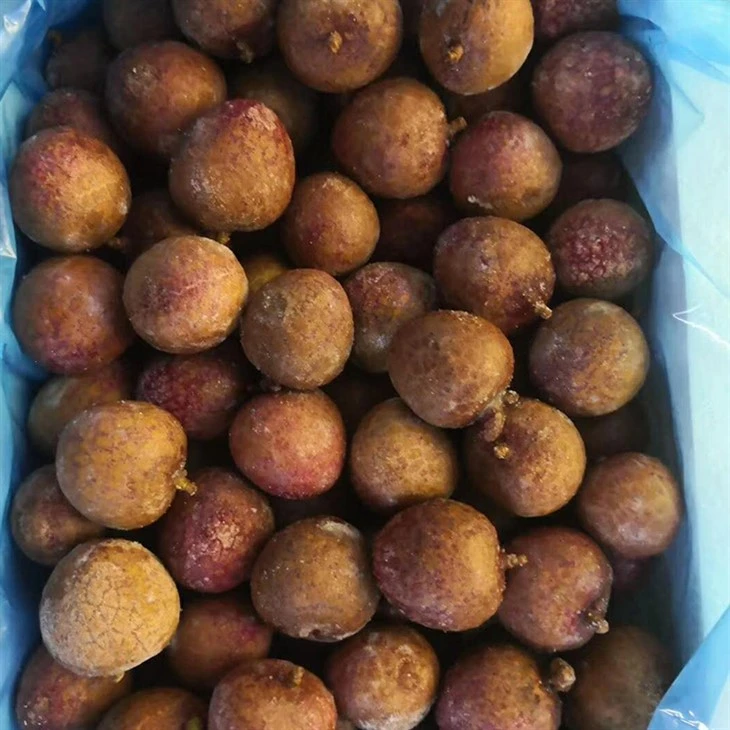
Separate whole in-shell, peeled with seed, peeled and pitted, broken arils, pulp and puree. Whole in-shell fruit emphasizes pericarp color, cracking, decay, diameter and shell-to-aril yield. Peeled and pitted IQF fruit emphasizes hole size, pit remnants, aril damage, color, free flow and thawed texture. Pulp or puree needs Brix, acidity, consistency, screening, ingredients and formulation performance rather than whole-fruit geometry.
The XMSD frozen lychee range provides the product-family starting point. Use it to select whole, peeled or pitted direction, then request the current specification, process flow, representative sample and partner-facility evidence for the exact quoted item.
Do not approve a generic "IQF lychee" name while the intended form remains open. A cocktail garnish needs intact pitted arils. A beverage base may accept broken pulp if aroma and soluble solids are controlled. A retail in-shell pack values size and external appearance. A dairy preparation may need screened pulp and a defined acid-sweet balance. Each application has a different usable-output calculation.
State all ingredients and processing aids. A plain fruit claim requires evidence that no sugar, syrup, acid, antioxidant or preservative was added. If a browning-control treatment is used, verify its identity, legal status, residual limit and labeling in the destination market. Appearance alone cannot establish an untreated product.
Maturity Is Set Before Freezing
UC Davis identifies red pericarp color, fruit size and the cultivar's sugar-to-acid balance as maturity indicators. It notes that lychee should be harvested fully ripe because it is nonclimacteric. The fruit does not gain the missing balance of sweetness, acidity and aroma after picking. Freezing preserves the selected state; it cannot turn immature raw fruit into a fully developed ingredient.
Codex CXS 196-1995 covers fresh litchi rather than frozen industrial fruit, but it supplies useful identity and defect language. It calls for whole, sound, clean, sufficiently developed and mature fruit, practically free from brown markings, damage and abnormal moisture, and able to withstand handling. Use that vocabulary to write incoming-fruit controls without pretending the fresh standard is the finished frozen contract.
Set a raw-material acceptance method. Record cultivar, orchard or receiving lot, harvest date, pericarp color distribution, diameter, cracking, decay, insect injury, odor and aril condition. Measure soluble solids with a calibrated refractometer at a fixed temperature and state whether the result is expressed as degrees Brix. Pair it with pH or titratable acidity; a Brix number alone cannot describe flavor balance.
Use a representative composite rather than the sweetest fruit. Report the distribution across multiple receiving containers. If the program uses a minimum Brix, define sample preparation, instrument calibration, temperature correction, number of fruit, averaging and lot action. For acidity, name the titrant, endpoint and acid basis. Run sensory checks for characteristic floral aroma, sweetness, tartness, fermentation and other off-notes.
Maturity also affects processing yield. Underdeveloped fruit can have less desirable flavor and a different aril-to-seed relationship. Overmature fruit can soften, split or break during peeling and pitting. Trend raw diameter, aril mass, seed mass, pit-hole damage and finished whole-aril yield by cultivar and crop period.
The XMSD IQF litchi reference can frame a sample request. Lock mature raw-fruit criteria, product form and application test before treating color or flavor descriptions on any page as a lot guarantee.

Measure Size, Pitting and Aril Integrity Separately
For whole in-shell fruit, define diameter or count per stated mass. Decide how oval or irregular fruit is oriented for measurement. Record undersize, oversize, cracked shell, missing stem, decay and severe browning as separate findings. One average diameter can hide a wide distribution that causes poor retail presentation.
For peeled and pitted arils, size is not enough. Pitting creates a natural opening, but excessive tearing reduces appearance and can accelerate breakage during filling and thawing. Define intact aril, acceptable pit opening, large tear, split fruit, flattened unit and fragment with photo anchors. State the classification order so one unit is not counted in every defect category.
Pit control needs escalation. Separate whole pit, pit fragment, hard seed coat, stem material and other foreign material. State the detection method, sample size, unit of result and lot action. A whole pit can injure equipment or consumers; it should not be diluted into a general cosmetic defect percentage. Review pitting setup, inspection, detection capability and corrective action.
Worked example: A dessert manufacturer samples 500 peeled and pitted arils from ten bags. Its working specification requires at least 88% intact units by count, no more than 7% large tears, no more than 5% fragments by mass, and zero whole pits in the sample; pit fragments follow a separate critical limit. Inspectors record 454 intact arils, 31 large tears and 15 split or flattened units. Intact is 90.8% and large tears are 6.2%, so those rules pass. Fragment mass is 4.1%, also a pass. One whole pit is found, so the lot fails the critical rule and is held for investigation even though the cosmetic percentages pass.
Agree the inspection state. Frozen fruit supports free-flow and arrival checks but frost can obscure tears. A controlled partial thaw can expose flesh color and pitting damage but also changes texture. Record the time, temperature, tray, lighting and handling. For a beverage or dessert application, follow with the actual recipe and hold.
The XMSD peeled and pitted IQF lychee reference provides a format discussion point. Confirm the actual diameter or count, pitting method, pit-remnant limit, whole-aril distribution and thaw performance for the quoted program.

Separate Pericarp Browning From Aril Quality
Lychee shell browning is visually important, especially for whole in-shell packs, but it does not always predict the edible aril's condition. UC Davis explains that water loss can cause brown spots that enlarge across the pericarp, while the flavor of the aril may or may not be affected. It also identifies cracking, chilling injury, aril breakdown and decay as separate problems.
Define shell color, brown area, cracks, mold or decay and foreign material independently. For peeled fruit, define aril color, translucency, pink or brown tissue, oxidized pit cavity, bruising and breakdown. A dark shell with sound aril can fail a premium retail appearance rule but remain usable for a pulp route; decayed or off-odor fruit is not a cosmetic concession.
Fix the observation conditions. Frozen frost can make shell and aril color look pale. Thawing can reveal drip, translucency and tissue damage. Use fixed lighting, white balance, background, sample temperature and time after opening. An instrument color value is useful only when the measurement surface and state are defined.
A peer-reviewed frozen-lychee study reported that the pericarp can darken during freezing or thawing even when the aril remains acceptable. Treat its acid-dip findings as research context, not a universal processing instruction. Any acid, sulfite or other treatment needs product-specific validation, legal review, residual evidence and accurate labeling for the destination.
For peeled fruit, focus on the aril the customer uses. Measure pale-to-cream color distribution, browned tissue, surface dehydration, tears and off-odor. After the standard thaw, assess drip, firmness, springiness, fibrous membrane and aroma. For whole in-shell fruit, add shell-to-aril yield and ease of peeling.

Thaw Drip, Texture and Aroma Decide Application Fit
Freezing changes fruit tissue. The rate of freezing, raw maturity, fruit size, pitting damage, storage temperature and thaw method affect drip and texture. Do not promise "fresh-like" performance without a comparative method. State the actual customer use and evaluate the product under that process.
For a fruit cup or garnish, thaw a fixed mass under controlled refrigeration, drain for a fixed time and record whole-aril recovery, drip, color, aroma and bite. For a beverage, blend at a fixed fruit percentage and measure Brix, pH, acidity, sediment, aroma intensity and hold. For dairy, check flavor balance, color, separation and texture after the actual heat or cold mixing step.
Texture terms need anchors. "Firm" can mean rubbery to one buyer and pleasantly elastic to another. Use an approved reference scale or instrument method with sample temperature, probe, speed and geometry. Compare the full distribution; a good average can hide several collapsed or woody-feeling pieces.
Aroma is a major part of lychee identity. Use a covered thaw to reduce volatile loss, then evaluate at a fixed temperature and time. Record characteristic floral fruit aroma, fermented notes, sulfur-like notes, stale freezer odor and other off-notes. If a treatment is used, include aftertaste in the review.
Pulp and puree are separate routes. The XMSD frozen lychee pulp reference helps organize Brix, acidity, screen or consistency, ingredients, pack and formulation questions. Do not compare puree price directly with whole-aril price without converting both to application output.

Calculate Usable Lychee, Not Delivered Weight
Delivered price can hide loose ice, pit remnants, torn arils, fragments, browned tissue, weak aroma and excess thaw drip. Define non-overlapping deductions and calculate usable output for the real application. Keep safety failures and undeclared treatment outside this commercial calculation; those require hold or rejection.
Practical example: A 1,000-kilogram lot of peeled and pitted IQF lychee costs USD 2,480 delivered. The signed frozen and application inspection finds 16 kilograms of loose ice, 44 kilograms of fragments outside the dessert specification, 28 kilograms of excessive pitting damage, 22 kilograms of browned or off-color tissue and 90 kilograms of excess thaw drip. No mass is deducted twice. Usable output is 800 kilograms, so the cost is USD 2,480 divided by 800, or USD 3.10 per usable kilogram. A USD 2,560 offer yielding 850 kilograms costs about USD 3.01 per usable kilogram and may be better if pit, safety, document and sensory gates also pass.
Change the deductions by application. A puree line can use sound broken arils but rejects hard pit material and off-flavor. A premium dessert pack values whole shape and pale color. A beverage processor may accept wider size variation but needs stable aroma, Brix-acid balance and pumpable consistency. Document the approved route-specific exception.
Trend raw fruit size, Brix, acidity, aril-to-seed yield, pit-hole damage, whole-aril recovery, frozen fragments, loose ice, thaw drip, color and sensory result by lot. Link shifts to cultivar, maturity, peeling and pitting setup, drainage, freezer load, storage temperature and transport history.

Handle Toxicology and Allergy Without Blanket Claims
A universal disease-exclusion list should not be repeated. A widely cited case-control investigation of a 2014 acute encephalopathy outbreak in Muzaffarpur, India, found an association with lychee consumption, absence of an evening meal and metabolites of hypoglycin A or methylenecyclopropylglycine. The cases involved a specific outbreak and vulnerable children; the result is not evidence that every adult must follow one serving cap.
For commercial control, exclude immature, damaged and decayed raw fruit, document cultivar and harvest maturity, maintain supplier and lot traceability, and follow destination risk assessment. Do not market frozen lychee as a treatment for high or low blood sugar. Medical questions belong with qualified health professionals, not a procurement specification.
Lychee allergy appears uncommon, but published case reports describe severe reactions and cross-reactivity involving profilin or latex sensitization. That supports accurate ingredient identity and a serious response to reported allergy; it does not justify calling lychee broadly allergenic for everyone. Review destination labeling, customer allergen policy and cross-contact controls on the actual line.
If a customer markets the fruit to children or nutritionally vulnerable populations, ask its qualified safety team to review the intended serving and communication. Procurement staff should not invent medical warnings, serving limits or disease exclusions from an old website paragraph.
Food Safety, Packing and Cold Chain Complete Approval
Freezing does not kill most bacteria. FDA notes that frozen food held at 0 degrees F, or minus 18 degrees C, stops bacterial growth but does not sterilize the product. Decide whether the lychee is ready to eat, ready to thaw and serve, or intended for a validated further process. That decision changes environmental hygiene, microbiological criteria, package instructions and customer handling.
Peeled fruit loses the protective shell and may be handled extensively during peeling and pitting. Review water, personnel hygiene, equipment sanitation, time and temperature, post-process exposure, environmental monitoring, foreign-material control, freezing and packing. Set microbiological requirements by organism, method, sample unit, sampling plan and lot action.
Confirm pesticide-residue, heavy-metal and other chemical requirements for the destination and customer. Review any sulfite, acid or other treatment and the related declaration. Traceability should connect orchard or receiving lot, cultivar, harvest and receiving date, wash, peel and pit run, treatment, freezer batch, inspection, packing code, cold-store position and shipment.
Choose pack and fill weight to protect arils. Excess compression can flatten or tear pitted fruit; excess headspace can increase movement and breakage. Validate food-contact material, net weight, seal integrity, coding, carton strength, pallet pattern and arrival condition. For repeated foodservice use, assess partial-bag handling and return-to-freezer policy.
Set limits for loose ice, clusters and separation force. Review multiple bags and pallet positions. Write the storage and transport set point, logger location, permitted deviation, review owner and receiving action. A product can leave the freezer in good condition and still arrive clumped or dehydrated after a weak frozen chain.
For beverage, dessert, dairy, fruit-preparation and industrial programs, the XMSD food-processing buyer route helps organize form, maturity, Brix-acid, pitting, treatment, pack and evidence inputs. We review a suitable product and partner-facility route order by order.
Use a Stage-Gated Frozen Lychee Approval
Run the gates in order because a later test cannot repair an earlier mismatch. A beautifully frozen aril is still the wrong product if the buyer needed pulp; a strong Brix result cannot excuse a whole pit; a low delivered price cannot compensate for an undeclared treatment or an unsupported ready-to-eat claim.
Keep one approval record that connects the signed specification, representative sample, application test, facility and certificate scope, lot COA, pre-shipment inspection, temperature history and receiving decision. Reopen the relevant gates when cultivar, crop, plant, pitting method, treatment, pack or intended use changes.
- Lock identity: Litchi chinensis, cultivar or agreed type, origin, crop window, ingredients and treatment.
- Lock form: in-shell, peeled, peeled and pitted, broken arils, pulp or puree with application.
- Set maturity: raw color, size, Brix, pH or titratable acidity, aroma, cracks, damage and decay.
- Set geometry: diameter or count, intact arils, pit opening, tears, fragments, whole pits and pit fragments.
- Validate performance: frozen separation, color, thaw drip, texture, aroma, recipe result, hold and usable yield.
- Verify safety: intended use, microbiology, residues, treatment, allergens, foreign material, traceability and facility scope.
- Validate delivery: bag, carton, pallet, frozen-chain record, arrival sampling and shelf-life application test.
Send the cultivar or agreed type, product form, count or diameter, Brix-acid target, pitting and tear limits, color, treatment, intended use, pack, destination, volume and evidence list. We can review a suitable frozen lychee product and partner-facility scope before quotations are treated as comparable.
XMSD sourcing note: Tell us the lychee form, maturity method, size, Brix-acid target, pit-remnant and tear limits, thaw test, pack and destination. We will review a suitable IQF lychee route and the required evidence.
Discuss Your Frozen Lychee RequirementFrequently Asked Questions
Do lychees continue to ripen after harvest?
No meaningful postharvest ripening should be expected. Lychee is nonclimacteric, so approve cultivar-specific color, size and sugar-acid maturity before processing and freezing.
Does a brown lychee shell mean the aril is bad?
Not always. Shell browning can result from water loss or frozen handling, while aril quality may remain acceptable. Inspect shell appearance, aril color, odor, texture, decay and application performance separately.
How should pit-removal quality be checked?
Use a representative sample and separate intact arils, large tears, fragments, whole pits, pit fragments and hard seed coat. Critical pit findings need their own hold and escalation rule.
Is one Brix number enough to approve frozen lychee?
No. Pair soluble solids with pH or titratable acidity, aroma, maturity, texture and application result. Define sampling, temperature, calibration and lot action so results are comparable.
Is IQF peeled lychee automatically ready to eat?
No. Ready-to-eat status depends on the validated process, environmental controls, microbiological evidence, post-process handling and labeling. Freezing alone does not sterilize fruit.
References
- UC Davis Postharvest Research and Extension Center, Lychee. Nonclimacteric behavior, maturity, size, sugar-acid balance, browning, cracking, aril breakdown and storage context.
- Codex Alimentarius, Standard for Litchi, CXS 196-1995. Species identity, maturity, soundness, cleanliness, defects, browning, size and fresh-fruit packing vocabulary.
- Jiang, Li and Li, Browning control and quality of frozen litchi fruit. Frozen and thawed pericarp browning, aril quality and treatment research context.
- FAO AGRIS record, immersion freezing for litchi quality preservation. Freezing-rate, drip-loss, texture, microstructure and browning comparison.
- Shrivastava et al., litchi-associated acute toxic encephalopathy outbreak investigation. Case-control evidence, hypoglycemia, meal status and detected HGA or MCPG metabolites.
- Quantification of MCPG and hypoglycin A in three Chinese litchi cultivars. Cultivar and storage-related concentration differences.
- Case report of lychee anaphylaxis and profilin sensitization. Severe allergy and plant cross-reactivity context without a population-wide claim.
- U.S. Food and Drug Administration, Are You Storing Food Safely?. Frozen storage, bacterial survival, package directions and freezer temperature guidance.
- FDA Draft Guidance for Industry, Hazard Analysis and Risk-Based Preventive Controls for Human Food, Fresh-Cut Produce. Ready-to-eat status and fresh-cut produce hazard-control context.
Disclaimer: This article provides general frozen-food procurement and product-development information, not medical, legal or process-validation advice. Confirm identity, specifications, processing, intended use, food-safety controls, labeling and compliance on the actual product, partner facility, destination market and application.