


Dragon Fruit Nutrition Facts: Portions and Product Forms
Oct 13, 2023

Dragon fruit, also called pitaya, supplies carbohydrate, some fiber and small amounts of protein and fat. For a clearly identified numerical reference, USDA FoodData Central survey record 2709234 lists 68 kcal, 16.24 g carbohydrate, 1.8 g fiber, 0.68 g protein and 0.21 g fat per 100 g. A 150 g edible portion calculated from that record provides 102 kcal and 24.36 g carbohydrate. Weigh the flesh you eat, rather than the fruit with its peel.
Those figures need one important qualification: this USDA entry is a survey-food reference, with an unspecified-fruit input, rather than a laboratory analysis of a named dragon-fruit variety. Another USDA survey entry lists 57 kcal per 100 g. Use an identified reference for a general estimate and the actual product's composition data for a commercial declaration. Neither number is a promise about every fresh fruit or frozen pack.
For everyday use, portion and preparation make the biggest practical difference. Plain fruit, sweetened puree, concentrated ingredients and a finished smoothie are different comparisons. Red flesh can provide a striking color, but its appearance alone tells you little about the amount of sugar, fiber or vitamin C in a serving.

Dragon fruit nutrient content: read the basis with the numbers
This table uses USDA's "Dragon fruit" survey-food entry 2709234, published in October 2024. The 150 g column is calculated for that amount of edible fruit. It is an illustrative amount, not a universal serving recommendation. The entry is useful for showing the scale of a portion, while its survey basis limits how specifically it describes white-flesh, red-flesh or yellow-skinned varieties.
| Nutrient | Reference per 100 g | Calculated per 150 g |
|---|---|---|
| Energy | 68 kcal | 102 kcal |
| Carbohydrate | 16.24 g | 24.36 g |
| Total sugars | 12 g | 18 g |
| Fiber | 1.8 g | 2.7 g |
| Protein | 0.68 g | 1.02 g |
| Total fat | 0.21 g | 0.32 g |
| Vitamin C | 19.8 mg | 29.7 mg |
| Potassium | 206 mg | 309 mg |
| Magnesium | 14 mg | 21 mg |
| Sodium | 1 mg | 1.5 mg |
Keep the units visible when comparing another sheet. Milligrams and grams differ by a factor of one thousand; a value for a whole serving also differs from a value per 100 g. The 150 g column is simply the reference multiplied by 1.5. For a different amount, multiply the per-100-g value by the edible weight in grams and divide by 100.
The peel is a separate weight. A whole fruit weighing 300 g is not automatically a 300 g edible portion. Remove the peel and weigh the prepared flesh if the calculation matters. For frozen pieces, use the product's stated weight basis and preparation instructions. A bag weight that includes syrup or another medium needs a different interpretation from plain peeled fruit.
Avoid combining attractive figures from different tables. Taking the calories from one source, the highest vitamin C value from another and the largest fiber value from a third creates a profile that may describe no single reference food. Retain the source name, entry number and preparation basis together, even in a simple kitchen worksheet.
Why one table says 57 calories and another says 68
USDA survey entry 2344729 gives 57 kcal, 15.23 g carbohydrate and 3.1 g fiber per 100 g, whereas entry 2709234 gives 68 kcal, 16.24 g carbohydrate and 1.8 g fiber. The vitamin C values also differ: 4.3 mg and 19.8 mg respectively. These are different database records. Their differences are not measurements of what freezing did to one batch of fruit.
A reference can change because of the data used to represent a food, not just because a fruit changed. The newer entry's input is listed as "Fruit, NFS," meaning fruit not further specified. That is a particularly good reason to keep the table's role modest: it supports a transparent general estimate, not a claim that a named red-flesh crop always contains 19.8 mg vitamin C.
In procurement, we would first ask which question the number is meant to answer. A menu-development estimate can begin with an identified database record. A printed nutrition declaration needs the product data and calculation or testing method appropriate to that finished food and market. A claim about a specific batch needs a suitable batch-linked result. Those three jobs deserve different levels of precision.
For a food diary, choose a reference matching the form as closely as possible and use it consistently. For a branded frozen product, its nutrition information is usually more directly relevant than a generic search result. If the pack is a blend or has added ingredients, preserve that distinction instead of substituting an entry for plain fruit simply because the front label says "dragon fruit."
Small numerical differences also deserve proportion. At 150 g, the two calorie references give about 86 and 102 kcal. That gap is worth understanding, but adding sweetened yogurt, syrup and granola creates an entirely new dish. Record the ingredients and their amounts before treating the fruit-reference choice as the only source of uncertainty in a bowl or drink.
Color, flesh type and maturity are separate decisions
Dragon fruit can have white or red-to-purple flesh, and the skin color is not a reliable substitute for looking inside. A red-skinned fruit may have white flesh. When ordering an ingredient for a pink drink, specify the flesh color and review the actual prepared sample; a description of red skin alone leaves the main application question unanswered.
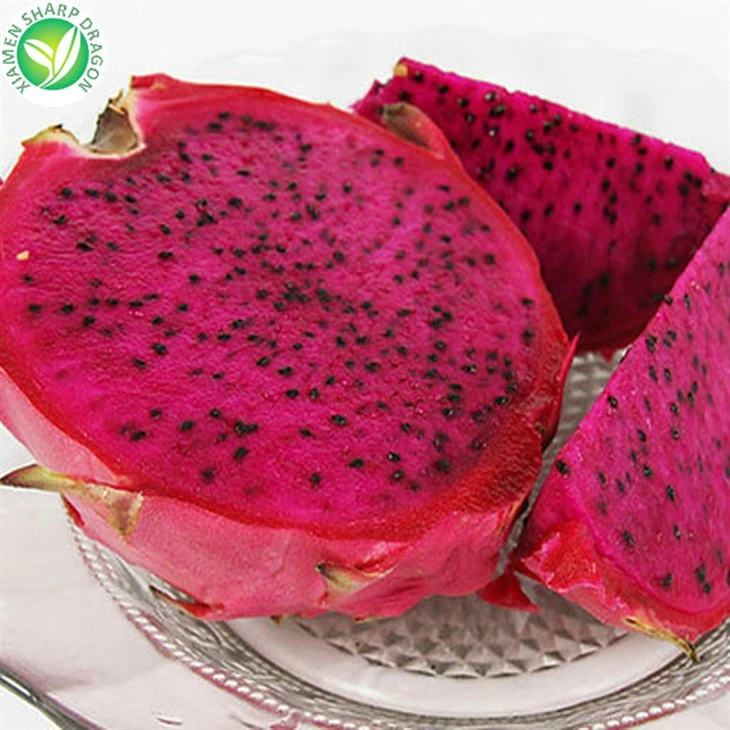
The red-flesh photographs here show product appearance and form, not the precise food represented by the survey nutrient table. This distinction is useful beyond nutrition: two lots can both be sold as dragon fruit yet produce different color intensity, sweetness or texture in the same recipe. Name the intended result before selecting the material.
We would compare color in the final base, not only in the frozen sample. Milk, yogurt, another fruit or added water changes the appearance of a blend. Use the same fruit inclusion rate, base and mixing method for the comparison. A vivid sample on its own may become much lighter after dilution, while a milder color can be entirely acceptable for a mixed-fruit product.
Sweetness also needs more than a photograph. A Brix result is a soluble-solids measurement, not a complete nutrition label or a direct reading of every gram of sugar in a mixed ingredient. For a purchasing comparison, retain the test method and sample state with the result, then taste the fruit in the intended recipe. Acid balance and the other ingredients affect perceived sweetness as well.
For a plated fruit portion, uniform pieces and their condition at service may matter more than a slightly stronger color. For a blended drink, visible piece shape largely disappears, while color, flavor and seed distribution remain relevant. Choosing the most expensive-looking form without reference to the application can pay for a characteristic the process immediately removes.

Fiber and vitamin C: useful nutrients, limited promises
Fiber is a useful part of the dietary picture, but the difference between the two USDA records shows why a precise dragon-fruit fiber claim needs a clear basis. NIDDK advises adults to obtain roughly 22–34 g fiber daily according to age and sex, to increase intake gradually and to drink enough liquids to help fiber work. A portion of fruit contributes to that wider pattern rather than replacing the rest of it.
The 150 g amount in the selected reference contains 2.7 g fiber. It can sit alongside other fiber-containing foods across the day. A sudden large increase in fruit or other fiber-rich foods may be uncomfortable for someone unused to it, so a modest portion is a more sensible starting point than treating a large bowl as a digestive intervention. Persistent digestive symptoms belong in a healthcare discussion.
Vitamin C supports collagen formation, normal immune function and the absorption of iron from plant foods, as NIH explains. Presence of the vitamin is different from a promise that eating dragon fruit prevents illness. The wide difference between the two reference values is also a reason to avoid a universal "high vitamin C" description without appropriate product data and the rules for the intended claim.
Research on concentrated components needs its own context. A randomized study of 107 healthy adults tested dragon-fruit oligosaccharides dissolved in water at 4 or 8 g daily for four weeks. It reported changes in selected immune or gut-microbiota measures. The tested ingredient and doses were not servings of ordinary dragon-fruit pieces, so the study supplies no direct conversion into a daily fruit portion that guarantees the same result.
The practical food decision remains simple: choose the fruit for its taste, variety and role in the meal. It is not a treatment for diabetes, constipation or another condition. If a medically prescribed diet requires exact carbohydrate or other nutrient control, use the agreed product information and discuss portion planning with the professional responsible for that diet.
Plain frozen fruit, puree and sweetened preparations
Plain freezing adds no sugar to a fruit. Added sugar comes from the formulation, so read the ingredient statement rather than judging a pack by whether it is fresh or frozen. FDA distinguishes sugars naturally present in fruit from sugars added during processing, including sweeteners such as sugar, honey and syrup. "No added sugar" and "sugar-free" answer different questions.
For example, the selected survey reference contains 12 g total sugars per 100 g. A plain ingredient can therefore have naturally occurring sugars even when no sweetener was added. On a United States Nutrition Facts label, added sugars are included within total sugars, not an extra amount to add again. Check the serving weight before comparing two packs with different serving sizes.
Puree describes a form, not a complete composition. A plain puree retaining the fruit material, a strained product, a diluted beverage base and a sweetened preparation may have different fiber, solids and sugar profiles. Ask what is present and what has been removed. A product that pours easily could be a smooth puree or a thinner formulation; flow alone will not settle the ingredient question.
Compare frozen dragon fruit forms such as cut fruit, pulp with seed and puree as separate ingredients. Pieces suit a visible fruit component; a pulp or puree can suit a measured blend.
Choose against the equipment and finished texture, then match the nutrition information to that exact form. A recipe name such as "pitaya base" is not enough to establish what went into it.
Freezing can also change texture. The National Center for Home Food Preservation explains that ice crystals can damage fruit cells, leaving thawed fruit softer. That is a quality and application issue, not proof that the fruit has lost all its nutrients. NIH notes that prolonged storage and cooking can reduce vitamin C, so an unchanged-vitamin promise for every frozen product would be too broad.

Calculate the fruit contribution to a smoothie or bowl
Worked example: suppose a café uses 150 g of plain edible dragon fruit in each smoothie. Using the selected survey reference, the fruit contributes 102 kcal, 24.36 g carbohydrate, 18 g total sugars and 2.7 g fiber. The calculation multiplies each per-100-g value by 1.5. It is a recipe-development estimate based on that reference, not a measured result for a particular pack.
Now compare a recipe using 75 g fruit with one using 150 g, while keeping the other ingredients unchanged. The fruit contribution doubles. The glass size alone does not reveal this difference because water, ice, dairy or another base can fill the remaining volume. Write the fruit weight into the recipe instead of describing the ingredient as "one scoop" without a defined scoop weight.
To calculate the whole drink, add the contribution of every ingredient. If a syrup or sweetened base is used, take its actual label data rather than assuming it is nutritionally equivalent to water. For a bowl, count the toppings too. The red color may come from a relatively small fruit inclusion, while the finished food obtains much of its energy from the other components.
A foodservice and catering trial should therefore pair the recipe sheet with a portion check. We would weigh several normal scoops during the trial and compare the spread, then choose a practical portioning method. The useful result is a repeatable edible-fruit amount, not merely a drink that looks similar in a photograph.
Texture is worth recording alongside the weight. The same fruit amount blended directly from frozen can behave differently from fully thawed fruit because the ice fraction and available liquid differ. Keep the preparation state consistent during the comparison. Adjust the recipe deliberately, record the final yield, and recalculate when the ingredient amount or portion count changes.

Test cut size and thaw behavior for the intended use
Practical example: a dessert kitchen is choosing between two hypothetical cuts for a 200 g yogurt cup, with 40 g of dragon fruit in each cup. One sample has smaller dice; the other has larger chunks. Both use the same flesh type and the same fruit weight. The decision is about distribution, visible pieces and liquid release after the kitchen's planned holding period, rather than which sample looks larger in the bag.
Prepare equal trial batches under the intended process. Record whether each cup receives a similar amount of fruit, whether the pieces remain recognizable and whether liquid collects in the base. Smaller dice may distribute more evenly, while larger pieces may deliver the desired visible fruit effect. Select the cut that meets the serving target, then retain the preparation method with the acceptance notes.
The illustrative 40 g inclusion contributes 27.2 kcal and about 6.50 g carbohydrate from the chosen reference. It says nothing about the yogurt's own contribution. Keeping the form trial and the nutrition calculation together prevents a later switch from plain dice to a sweetened fruit preparation from passing unnoticed in the recipe documentation.
We would distinguish broken pieces from the liquid released during preparation. They create different problems: fragments affect the visual portion, while extra free liquid can alter the base. Record both rather than reducing them to one vague description of "poor texture." A defect that matters in a layered dessert may be unimportant in a blend, so acceptance criteria should reflect the use.

Handling and packing still matter after the nutrition check
Wash whole fresh fruit under running water before peeling or cutting, as FDA recommends for produce, and use clean hands and utensils. Washing the outside first helps reduce transfer from the surface onto the flesh during preparation. Soap and household detergents are not intended for washing fruit. Keep prepared fruit away from raw meat and its utensils.
FDA advises keeping the refrigerator at 40°F (4°C) or below and the freezer at 0°F (−18°C). Follow the actual frozen product's storage and use instructions, including whether it is intended for eating without a further cooking step. Freezing is a storage process, not a universal microbial kill step. A clean-looking piece or bright color is not a safety test.
For a kitchen choosing a pack, our first question is how much is used at one opening. A large bag can be efficient for a full production batch but inconvenient when only a small amount is needed repeatedly. In frozen-food packing, inner-pack size, reclosure and protection during handling deserve attention alongside the carton size. The general pallet image illustrates transport protection, not the contents or condition of a particular dragon-fruit shipment.

The cold-chain handover should connect the product and lot to its receiving checks. Record pack damage, temperature observations and any unusual clumping for review against the agreed procedure. Clumps or frost can warrant an investigation; they do not reconstruct the entire storage history by themselves. Keep the observation separate from the conclusion about acceptance.
When considering frozen-fruit storage life, distinguish the labeled storage conditions from what happens after opening or thawing. A quality date on an unopened frozen pack is not a universal permission to hold thawed fruit for the same period. Plan the quantity to thaw around the next use, and retain the product-specific instructions with the kitchen record.
For a useful dragon-fruit comparison, finish with three items together: an identified nutrition basis, an edible weight and the actual product form. Then check how that form performs in the recipe. This keeps the nutrient calculation honest while leaving color, texture, packing and safe handling in their proper place in the decision.
For a dragon-fruit ingredient review, share your intended recipe, flesh color, product form, fruit inclusion and pack needs. We can review the sample and specification information useful for that application.
References
- USDA FoodData Central: Dragon fruit, survey record 2709234
- USDA FoodData Central: Dragon fruit, survey record 2344729
- NIH Office of Dietary Supplements: Vitamin C
- NIDDK: Eating, Diet and Nutrition for Constipation
- Pansai et al. (2023): Dragon fruit oligosaccharides in healthy adults
- FDA: Added Sugars on the Nutrition Facts Label
- National Center for Home Food Preservation: Freezing Fruits FAQs
- FDA: 7 Tips for Cleaning Fruits and Vegetables
- FDA: Are You Storing Food Safely?
- UF/IFAS Extension: Brix Basics
- XMSD operational perspective on fruit forms, portion trials, packaging and cold-chain handovers.