


Broccoli and Cancer: What a Meal Can and Cannot Do
Apr 28, 2022

Eating broccoli has not been shown to stop or cure cancer. Broccoli can be a useful vegetable in a varied diet, but research on its compounds does not establish a treatment delivered by an ordinary portion. The sensible next question is how to use it in food that suits the person and the meal.
That question leaves plenty to discuss: what a study actually measured, how a dietary pattern differs from one ingredient, which broccoli form works in a recipe and how much a kitchen needs to purchase. During cancer treatment, meal choices may also need to follow an individual nutrition plan.
Broccoli's everyday role is easier to understand when the nutrition and recipe questions remain concrete. Our broccoli nutrition guide compares food forms and portion bases. Here the focus is the cancer question and the decisions a cook can reasonably make after reading about the evidence.
A study result needs its food, participants and outcome
The National Cancer Institute explains that cruciferous vegetables contain glucosinolates, which form other compounds during preparation and digestion. Laboratory research has investigated biological effects of some of those compounds. Its cruciferous-vegetable fact sheet also reports mixed human findings. Reviewed in June 2012, that page is useful background rather than a new review of every study published since then.
One later study illustrates why the outcome matters. In the 2019 ESCAPE trial, 61 men with prostate cancer on active surveillance were randomized and 49 completed a twelve-month intervention. They received a weekly soup made from standard broccoli or one of two varieties with enhanced glucoraphanin concentrations. The main outcome was gene expression in prostate tissue, with metabolites as a secondary outcome. The paper reported changes in gene-expression patterns, while explicitly stating that the study was not powered to assess clinical progression.
The useful distinction is between a biological finding and a demonstrated clinical benefit. This trial measured the former. Its defined soup and participant group also matter when interpreting the result; an ordinary shopping choice cannot reproduce the study simply by including broccoli.
When a headline interests you, keep the original study title with it. The title often identifies the participants, intervention and measured result more precisely than the headline does. Note the publication date as well. A news story published recently can be discussing an older experiment, and the date of the story does not change when the study took place.
It also helps to separate a question from a conclusion. Asking whether a food affects a biological process is a legitimate research question. Answering it requires the actual result and its limits. A short social post may keep the question but omit the conditions, leaving the reader with a stronger impression than the experiment supports.
For a cook, the immediate task remains identifying the food needed for the recipe. Keep the product description and preparation together. A research headline does not tell the kitchen which cut belongs in its vegetable filling.

A dietary pattern is larger than one vegetable
The World Cancer Research Fund recommends a diet that includes wholegrains, vegetables, fruit and legumes such as beans and lentils. Its assessment identifies strong evidence for wholegrains and foods containing dietary fibre in relation to lower colorectal-cancer risk. Findings linking individual non-starchy vegetables or fruit with particular cancer sites are more limited. That supports thinking about the overall pattern rather than assigning the whole recommendation to broccoli.
Look at the meals you actually prepare.
Broccoli may be used beside another dish, incorporated into a filling or included in a vegetable mixture. Different recipes can use other vegetables. There is no need to make every meal a repeated demonstration of the same green ingredient.
A recipe list can make those choices visible. Write the dishes first, then identify the ingredient each one needs. This is easier to work with than a shopping list built around a single headline. It lets the cook see where the ingredients are going and notice when several purchases have been assigned to the same meal while another meal has no plan.
Consider the complete food on the plate. A handful of broccoli in a bowl does not tell you what the rest of the bowl contains or how it was prepared. Name the other components when comparing recipes. The vegetable, staple, protein ingredient and additions all belong to the dish being assessed.
A simple two-dish plan can also show where preparation effort is going. Suppose a cook wants a broccoli side one evening and a filled pastry for another meal. Write the vegetable form beside each dish before buying. The side might be trialled with whole florets, while the pastry trial might use smaller pieces. The cook can then decide whether one purchased form will serve both preparations or whether the two recipes need separate ingredients. That choice comes from the meals, not from the prominence of a food in a headline.
This is also useful when the household shares the cooking. A clear dish description gives another person a starting point without asking them to guess which ingredient was supposed to be central. If the planned recipe changes, change the ingredient list with it. The shopping record should reflect the food that will be made, rather than an abandoned idea that happens to include broccoli.

During treatment, work from the person's nutrition plan
NCI's guidance on diets and supplements states that no food, dietary trend or supplement has been proven to slow, cure or prevent cancer from returning. It also warns that supplements can interfere with treatment. Discuss a proposed diet or supplement with the care team rather than treating an extract as an upgraded version of a vegetable.
NCI's nutrition guidance explains that treatment can affect appetite, taste and the ability to eat. Some people need additional protein and calories. A registered dietitian can help develop a plan for the individual's needs. Some treatments also increase foodborne-illness risk, making the person's food-handling advice important. These considerations may matter more than maximizing one vegetable.
If you are helping with meals, begin with the food and preparation the person currently wants and can manage under that plan.
Broccoli is an optional ingredient, not a measure of someone's effort. A meal offer should make eating easier, and the person receiving it should be able to say that another dish would be more useful.
For a practical handover, describe exactly what you intend to provide. A named soup, a prepared filling or an ingredient for someone else to cook gives the recipient more information than a message saying that healthy food is coming. Establish which task you are offering to do, so two people do not unknowingly prepare the same meal while another task is left unfinished.
The same clarity helps when a request changes. Update the person doing the shopping or preparation before they repeat an earlier order. There is no benefit in treating the first food choice as a permanent commitment when the person has asked for something different. Keep the conversation about the current request and the practical help being offered.

Choose fresh or frozen broccoli for the actual dish
Start with the form you have. A fresh head, a pack of frozen florets and chopped broccoli involve different preparation work. The product's instructions belong with that product. For a frozen option, retain the label and use the relevant directions; a familiar ingredient name does not establish that every supplied form is ready to eat.
FDA recommends washing fresh produce under running water, using clean hands, keeping food that will be eaten raw separate from raw meat and its utensils, and discarding produce that looks rotten. It does not recommend soap or detergent on produce.
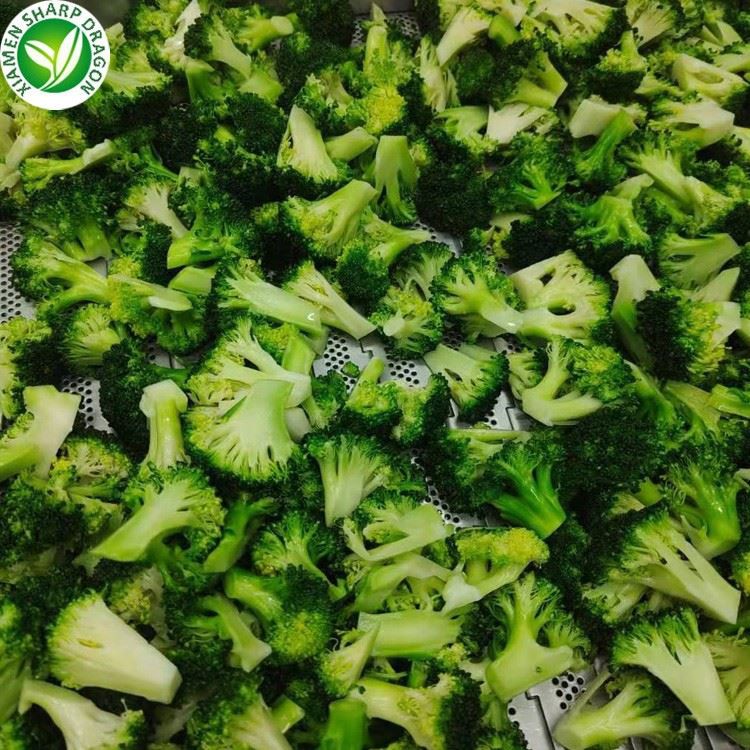
For a side dish, a recognizable floret may be part of the intended presentation. Look at the prepared serving, including how the pieces sit beside the other food. If the cook wants a different appearance, identify what should change. A broad request for premium broccoli says less about the meal than a clear description of the preferred serving. For a filling or mixed component, the questions can be different. A large piece that looks appealing as a side may be inconvenient in a small filled item. Assess the distribution after the filling has been divided into its normal portions. Cut open a representative portion and look at where the broccoli appears within it.
At XMSD, we would use that application to review a candidate from our frozen broccoli range. We would ask which form the recipe needs and which observation will decide whether the sample is suitable. That puts the product discussion in terms the cook can assess in the finished food.
Keep the preparation record with the sample identity. If the kitchen changes the method, note the change before comparing the results. Our frozen broccoli cooking guide addresses cooking choices in more detail. A trial is most useful when the next person can identify both the ingredient and the preparation used.
Compare two ordinary meals without giving either a health score
Practical example: a household is planning a rice bowl with tofu and a cooked vegetable component. Broccoli is available in the freezer, and the cook has the relevant product directions. In this illustrative case, the first decision is whether the broccoli should remain in distinct pieces beside the tofu or be incorporated into a mixed topping.
The cook chooses distinct pieces for the first version. That choice becomes part of the recipe, along with the tofu and rice amounts and the intended serving arrangement. The preparation then follows the product instructions and the intended dish. Once the bowl is assembled, the cook can assess whether its components are convenient to eat together. A picture of the broccoli alone would not answer that question.
For another meal, the household plans a different vegetable combination with the same basic bowl format. The comparison concerns the food: the arrangement, the amount prepared, how the components are portioned and which version the household wants to repeat.
The shopping consequence is concrete. If one version becomes the preferred recipe, record its ingredients in the form actually used. A recipe calling for frozen florets should not silently become one measured from an untrimmed fresh head. The cook can make that alternative, but the preparation and amount need to be considered on their own terms.
If two people will prepare the bowls on different days, give them the same recipe version. A quick note saying rice bowl can hide different quantities and different cuts. The written version need not be elaborate; it should identify what goes into the bowl and how the kitchen intends to prepare and portion it.
After the meal, make a specific revision if one is needed. The household may prefer the broccoli served separately, or may want to try another cut in the topping. Name one change and keep the other recipe details steady for the next comparison. That gives the cook a useful observation instead of an unexplained instruction to make the food better.
The result of this illustrative comparison is a named recipe version and a purchasing list that matches it. Keep the alternative version as a separate recipe if the household wants to use both.

Work out the catering quantity at a stated preparation stage
Worked example: a kitchen plans 50 portions, each using an assumed 60 g of supplied frozen broccoli weighed before the kitchen's cooking step. The required input is 50 × 60 g = 3,000 g, or 3 kg. This is a recipe calculation. It is not a daily-intake recommendation, a cancer-prevention dose or the final cooked weight.
The quantity gives the purchaser a clear starting point, but the proposed packs still need comparison. If hypothetical 1 kg packs were available, three would supply the assumed requirement exactly. If the alternative were hypothetical 2 kg packs, two would supply 4 kg, leaving 1 kg after the planned allocation. These pack sizes illustrate the decision and are not a claim about XMSD's available specifications.
The remainder belongs in the kitchen's planning. Another recipe may use the same ingredient, or the kitchen may prefer to discuss a different actual packing arrangement. The choice should be made with the product's supplied storage instructions and the wider menu in view. Increasing the nominal serving just to use a pack changes the recipe rather than solving the original calculation.
For a foodservice and catering sample, prepare the intended portion before treating the number as a complete meal specification. Two samples at the same weight can present differently. The cook needs to decide whether the accepted cut gives the appearance and distribution the dish requires at that input amount.
Use the intended serving container in that assessment. A plate and a compartment in a takeaway box give the cook different spaces to work with. Place the other meal components where they belong, then inspect the broccoli portion in that setting. If the kitchen intends to change the container, include that change in the sample review instead of assuming the original arrangement will fit.
The portioning task can also be recorded directly. Describe whether staff select individual pieces, weigh each portion or use another defined serving method. The accepted quantity should be practical for that method to deliver. If a sample is arranged differently for a sales photograph, keep that photograph separate from the record of the kitchen's normal serving action. This makes the product comparison easier to repeat during an actual preparation trial.
If the preferred recipe changes, repeat the arithmetic from the new amount. Keep the unit and preparation stage visible in the purchasing note. A figure recorded as cooked weight should not be compared directly with a supplied-frozen input as though they describe the same measurement. The trial record can establish the kitchen's actual relationship between those stages.
At XMSD, we would bring the dish, cut, component requirement and actual proposal together in a packing discussion. Those details make a sample request useful. They identify the food the kitchen wants and the work it plans to do with it.

Keep the accepted recipe easy to repeat
A useful recipe record should allow the next cook to understand the accepted version. Identify the broccoli product, the amount at its stated stage, the preparation used and the place it has in the meal. Keep the most relevant serving observation with that record, rather than relying on a general note that the sample was good.
For example, a side-dish trial might be accepted because the serving arrangement worked alongside the rest of the plate. A filling trial might be accepted because the pieces were distributed as intended after portioning. Those are different reasons for choosing an ingredient. Record the reason that actually guided the kitchen's decision.
Attach the accepted recipe version to the next order. If the supplier proposes another cut, the kitchen can point to the relevant part of its trial: the portion on the plate or the inside of the filled item. A side-by-side preparation with the proposed alternative will answer a more useful question than comparing two bags before cooking. Record the alternative separately until the cook has decided which version to use.
If the recipe moves to another application, decide which observation needs to be repeated. A broccoli side becoming a filling is a meaningful change in the food, even if the same pack is used. The team can retain what it knows about the ingredient while checking the part of the preparation that has changed.
Describe the resulting dish in ordinary food terms: a broccoli side, a rice bowl or a vegetable filling. This helps a diner or another cook understand what is being served. The product can be useful, enjoyable and practical on those terms, and the recipe can improve through clear observations of the food itself.

Planning a broccoli dish for your menu? Share the dish, preferred broccoli cut, quantity at its preparation stage and packing needs. XMSD will review product information for a practical kitchen sample.
References
- NCI: Cruciferous Vegetables and Cancer Prevention (2012)
- Traka et al.: ESCAPE broccoli-soup trial (2019)
- WCRF: Wholegrains, Vegetables, Fruit and Beans
- NCI: Popular Diets, Supplements, and Cancer (2024)
- NCI: Nutrition During Cancer Treatment (2024)
- FDA: Selecting and Serving Produce Safely
- XMSD recipe and purchasing judgments are separate from the cited research. Both labeled examples are illustrative. The catering calculation uses supplied frozen broccoli before kitchen cooking, with assumed quantities and packs; it does not report a clinical diet, actual customer result or XMSD packing specification.