


Broccoli Nutrition: Raw, Frozen and Cooked Portions
Feb 08, 2022

Broccoli provides fiber, vitamin C, vitamin K and folate, with relatively little energy when served plain. USDA's reference entry for 100 g of raw broccoli lists 34 kcal, 2.6 g fiber and 89.2 mg vitamin C. Its separate entry for frozen chopped broccoli, boiled, drained and prepared without salt lists 28 kcal, 3.0 g fiber and 40.1 mg vitamin C per 100 g. Both can contribute useful nutrients to a meal.
The deciding detail is the food you actually weigh and eat. Raw florets, unprepared frozen pieces, drained cooked broccoli and broccoli in cheese sauce are different calculation bases. Use a matching food description and a measured portion before comparing numbers. The two USDA entries above describe separate reference foods; the difference between them is not a measured nutrient-loss percentage for one batch.
For everyday eating, choose a form and preparation you enjoy, include other foods in the meal, and count added ingredients separately. For a kitchen or prepared-food business, take that same principle further: measure cooked yield, control the serving method and connect the nutrition information to the exact product and recipe. That is how a useful ingredient number becomes a useful meal number.
Broccoli nutrition on a consistent 100 g basis
The table compares equal weights of edible food using two USDA FoodData Central SR Legacy records: raw broccoli, FDC 170379, and frozen chopped broccoli cooked by boiling, drained, without salt, FDC 169969. The cooked column refers to the broccoli after that preparation. It is not a label for every bag of frozen florets or a statement about a particular XMSD lot.
| Nutrient per 100 g | Raw broccoli | Frozen chopped; boiled and drained |
|---|---|---|
| Energy | 34 kcal | 28 kcal |
| Protein | 2.82 g | 3.10 g |
| Carbohydrate | 6.64 g | 5.35 g |
| Total fat | 0.37 g | 0.12 g |
| Dietary fiber | 2.6 g | 3.0 g |
| Vitamin C | 89.2 mg | 40.1 mg |
| Vitamin K | 101.6 μg | 88.1 μg |
| Total folate | 63 μg | 56 μg |
| Potassium | 316 mg | 142 mg |
These figures give a reference comparison, not a ranking of every fresh and frozen product. Water content, edible parts, crop variation and preparation affect the amount of each nutrient in 100 g. A higher value in one column can reflect a more concentrated food or a different underlying sample. It does not mean cooking created that nutrient. A lower value also needs more context than the word "frozen."
Keep the units attached to the nutrient: grams for protein and fiber, milligrams for vitamin C, and micrograms for vitamin K and folate. One milligram equals 1,000 micrograms. Read the nutrient name as well as its unit when comparing a database with a Nutrition Facts panel; natural food folate and added folic acid are different descriptions.
If your product is unprepared frozen chopped broccoli, use the matching record instead. USDA FDC 169968 lists 26 kcal and 56.4 mg vitamin C per 100 g for that form. That entry is useful for an ingredient weighed before final cooking; the cooked entry is more relevant to a drained side dish. Avoid assembling a hybrid panel from the highest values in several records.

What the main nutrients contribute
Vitamin C, vitamin K and folate
Vitamin C helps the body make collagen and improves absorption of iron from plant foods, according to the NIH Office of Dietary Supplements. Broccoli contributes to that intake alongside other vegetables and fruit. These are normal nutrient functions, not evidence that broccoli treats a symptom.
Vitamin K is involved in normal blood clotting and bone health. The raw and cooked reference foods both contain it. If you take warfarin, NIH advises keeping vitamin K intake approximately consistent from day to day and discussing changes with your health professional. The practical issue is a large change in your usual eating pattern, not a reason to remove broccoli automatically.
Folate is a B vitamin used in making DNA and in cell division. Broccoli adds some natural food folate to the diet, as do other vegetables and legumes. NIH distinguishes natural food folate from folic acid used in fortified foods and supplements. Broccoli's folate content should therefore be read as one food contribution; it should not be used to replace prescribed or life-stage-specific supplementation advice.
Fiber, protein and the rest of the meal
Fiber is one reason broccoli remains useful after cooking. NIDDK includes broccoli among vegetables that supply fiber and recommends increasing fiber gradually, with adequate fluids, when improving a low-fiber diet. A portion of broccoli can help add to your total, but comfort and intake come from the whole eating pattern. A sudden large portion may be less comfortable than a smaller amount you eat regularly.
Broccoli supplies about three grams of protein per 100 g in these reference foods. That is a modest contribution to a mixed meal. Include another appropriate protein source, such as beans, tofu, eggs, fish or meat, when planning a main dish.
Potassium and other minerals add to the nutritional picture, but one mineral value should not decide whether broccoli belongs in a recipe. The amount served, the rest of the meal and any individual dietary restriction matter. If you follow a prescribed diet or need help planning food around a medicine or condition, use your clinician's or dietitian's advice for the portions and restrictions that apply to you.

Turn the reference values into your portion
For a weighed portion, multiply each per-100-g value by the portion weight divided by 100. The important part is weighing the matching food state. A 150 g portion of cooked, drained broccoli belongs with a cooked, drained reference; a 150 g quantity taken from a frozen bag before cooking belongs with the as-sold or unprepared reference.
Worked example: Suppose a home cook weighs 150 g of frozen chopped broccoli after boiling and draining it without salt. Using FDC 169969, the multiplier is 150 ÷ 100 = 1.5. The reference estimate is 42 kcal, 4.65 g protein, 4.5 g fiber and 60.15 mg vitamin C. For an everyday description, that is about 42 kcal, 4.7 g protein, 4.5 g fiber and 60 mg vitamin C. This is an illustrative portion calculation, not a recommended portion for every person or a laboratory result for the food on that plate.
A cup measurement can be convenient, but the grams in a cup change with the product. Chopped pieces fit into spaces that a large floret leaves empty. Cooked broccoli also settles differently from firm raw pieces. If a recipe needs repeatable nutrition estimates, weigh the normal filled cup or serving scoop instead of assuming that every cup of broccoli has one fixed mass.
Serving size on a food label has another purpose. FDA explains that it reflects the amount people typically eat and is not an instruction for how much a person should eat. Check how many labelled servings your portion contains. A large bowl may hold more than one serving even when it feels like one snack, while a mixed dish may contain much less broccoli than its total weight suggests.
When broccoli is one ingredient in a mixed vegetable portion, calculate its share first. A bowl containing broccoli, carrots and peas cannot be evaluated by applying broccoli values to the entire bowl. Record each ingredient's amount or use reliable information for the exact blend. This small distinction prevents a recipe estimate from looking precise while describing the wrong food.

What blanching, freezing and cooking change
Plain frozen broccoli remains a useful source of nutrients, but its processing history is part of the comparison. Broccoli prepared for freezing commonly passes through blanching and cooling. The National Center for Home Food Preservation includes those steps in its home-freezing guidance, while commercial processing follows the validated procedure for the product and equipment. A home blanching schedule should not be treated as a factory specification.
Blanching and final cooking are separate stages. The first prepares the vegetable for frozen storage; the second prepares it for eating or for a finished recipe. If you compare fresh raw broccoli with a frozen product that has already been blanched and is then boiled, you are comparing several differences at once. The broader guide to frozen vegetable nutrition explains why processing, storage and preparation belong in the same discussion.
Vitamin C can be reduced by prolonged storage and cooking. NIH notes that steaming or microwaving may reduce cooking losses. Keep unnecessary prolonged cooking out of the method, follow the product's preparation instructions, and stop at the intended texture. There is no single retention percentage to apply across different pans, portions and products.
Draining changes the calculation basis too. For a plain side dish, the food weighed after draining excludes the water poured away. In a soup, some of that liquid stays in the recipe, so a drained-vegetable entry alone is an incomplete description of the whole dish. Water added to a sauce also increases its mass without adding broccoli solids, which can make the broccoli contribution per 100 g of finished food smaller.
For us, a useful cooking comparison keeps the product, batch size, equipment loading and drain endpoint consistent. Otherwise one sample may appear to give a larger portion simply because it carries more surface water. Record the cooked mass and observe the plate after a short normal service hold. That reveals whether the chosen preparation delivers the texture and moisture behavior the recipe needs. Our frozen broccoli cooking guide develops the method and texture choices.
Count the complete meal, including what you add
Broccoli's plain-food numbers are most useful when you keep the additions visible. Oil, cheese, cream, dressings and sauces contribute their own energy and nutrients. They may make a vegetable dish more appealing, which can be valuable, but the finished dish needs its own calculation. "Contains broccoli" tells you an ingredient is present; it gives no fixed calorie, sodium or protein value for the meal.
Start with the recipe quantity and decide how much of each addition remains in the food served. If oil is stirred into a finished broccoli dish, include the amount added. If a cooking process leaves a measurable quantity in a pan, use a method that accounts for that remainder. The same logic applies to sauce left behind in a mixing bowl. Choose a realistic basis and use it consistently rather than switching assumptions between recipes.
Salt illustrates a different issue. An unsalted reference record does not describe a salted dish, and "without salt" in a database name means no salt added in that preparation, not a guarantee of zero naturally occurring sodium. A seasoned frozen product may also contain ingredients beyond broccoli. Check the ingredient list and the product's nutrition information before using plain-vegetable figures in a meal plan.
A thick green soup may contain plenty of broccoli solids, added thickening ingredients, or less water after cooking. Each produces a different nutrition profile. Use the ingredient quantities and final yield to calculate the soup; color and thickness alone cannot tell you how much broccoli each bowl contains.
If your aim is to include more vegetables, choose a preparation that helps you eat an appropriate portion within the meal you enjoy. There is no need to turn every serving into a nutrient competition with another vegetable. Broccoli, carrots, leafy greens and other foods bring different flavors and nutrients; variety also makes a menu easier to maintain over time.

Choose a cut that reaches the plate
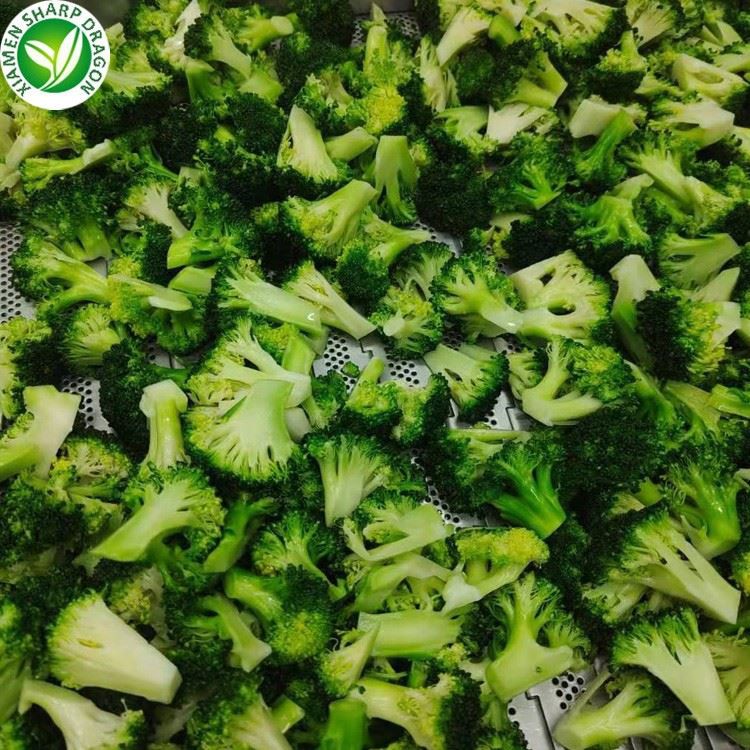
From an XMSD frozen-ingredient perspective, the nutrition figure is only part of the product choice. An intact floret side dish needs a useful spread of sizes and enough crown integrity to look consistent when portioned. Chopped broccoli used in a soup or filling has a different job: it should distribute through the mixture without leaving occasional large stems or empty-looking portions. The frozen broccoli range includes forms that can be discussed for those different uses.
We would judge a proposed cut after the intended preparation and service hold, rather than choose it from a frozen photograph alone. Compare the amount of recognizable floret, the amount of stem, the small pieces left in the pan and the liquid that collects after serving. These observations help you decide whether the food people receive matches the portion and appearance assumed in the recipe.
Practical example: Suppose a central kitchen measures 2.4 kg of cooked, drained broccoli and plans 24 vegetable portions. Dividing 2,400 g by 24 gives 100 g per portion. In a serving trial, however, 240 g of small pieces remains in the pan because staff choose only intact florets. The broccoli reaching the plates is then 2,160 g, or 90 g per portion on average. These quantities are illustrative; they show why the serving method belongs in the yield check.
For that plated side, review the cut distribution and portioning method so the planned usable mass can be served consistently. If the same broccoli is going into a blended soup, the small pieces may be perfectly suitable and the main concern shifts to uniform mixing and final recipe yield. Select the form for the application, then base the nutrition estimate on the food actually served. The foodservice and catering application information provides a useful starting point for that discussion.
The expected result of the trial is a practical recipe correction: a revised portioning method, a better-matched cut, or a changed purchase quantity based on usable yield. It is not a claim that one cut contains more nutrients than another. We would keep physical acceptance and nutrition documentation connected through the product identity while judging each with the evidence appropriate to it.

Use the right information for menus and product labels
A generic database entry is a useful starting reference. A finished commercial label needs a documented basis that fits the actual ingredient, recipe, preparation and destination requirements. Keep the product description, ingredient status and measurement state with the numbers. Otherwise a spreadsheet can carry accurate values for the wrong broccoli through several recipe revisions without anyone noticing.
For prepared-food and processing applications, record the broccoli quantity issued, its preparation method, the other ingredients, the final batch yield and the serving weight. A change from drained pieces to broccoli plus retained cooking liquid should trigger a recipe review. So should a switch to a seasoned product. These are changes to the food being calculated, even when the purchasing description still says broccoli.
At sample review, agree on the physical details that affect the recipe: floret or chopped form, expected stem distribution, cooking response and how much usable product reaches the portioning step. Ask for the nutrition information on the same product basis, including whether it describes the food as sold or after a stated preparation. Keep the source and version with the recipe so later updates can be traced.
Read a Nutrition Facts panel from the serving information downward. Compare like amounts, then assess energy and the nutrients relevant to the meal. Read the ingredient list as well: it identifies additions such as salt, seasoning or sauce that would make a plain-broccoli reference an incomplete match.
For an ordinary meal, a defensible estimate and a sensible preparation method are usually the useful outcome. For a menu declaration or packaged product, the required documentation and calculation or testing method deserve a separate technical review. The goal in either case is the same: describe the broccoli and the finished portion clearly enough that another person can reproduce the calculation.

Developing a broccoli dish or frozen product? Send XMSD your required cut, recipe application, preparation method, portion or pack weight and destination market. We will review the product form and the information needed for a practical sample and specification discussion.
References
- USDA FoodData Central, FDC 170379: Broccoli, raw
- USDA FoodData Central, FDC 169968: Broccoli, frozen, chopped, unprepared
- USDA FoodData Central, FDC 169969: Broccoli, frozen, chopped, cooked, boiled, drained, without salt
- NIH Office of Dietary Supplements: Vitamin C - Consumer Fact Sheet
- NIH Office of Dietary Supplements: Vitamin K - Consumer Fact Sheet
- NIH Office of Dietary Supplements: Folate - Consumer Fact Sheet
- NIDDK: Eating, Diet, and Nutrition for Constipation
- National Center for Home Food Preservation: Freezing Broccoli
- FDA: How to Understand and Use the Nutrition Facts Label
- USDA Foods Product Information Sheet: Broccoli, No Salt Added, Frozen
- XMSD operational perspective on frozen broccoli cut selection, preparation yield, portioning and application review. The worked examples are illustrative scenarios.