


Do Figs Make You Poop? Fiber, Portions, and Evidence
Sep 10, 2019

Figs may support regular bowel habits because they provide dietary fiber, and fresh figs also contain substantial water. They do not reliably "make" every person have a bowel movement, and no ordinary fig portion is a guaranteed constipation treatment. Response depends on total fiber, liquids, activity, medicines, health conditions, product form, portion, and individual tolerance.
USDA reports 2.9 g fiber and 79.11 g water per 100 g raw figs. Dried figs contain about 9.8 g fiber per 100 g but far less water, so the serving is smaller and adequate liquids matter. Introduce a measured amount gradually. Persistent or concerning constipation needs assessment rather than progressively larger fig portions.
The short answer: Figs can contribute fiber to a bowel-friendly eating pattern, but evidence does not justify a promise that they will make you poop. Start with a normal weighed fruit portion, keep the rest of the diet and liquid intake in view, and stop escalating if you develop pain, diarrhea, urgency, or other unwanted symptoms.

What "Make You Poop" Can and Cannot Mean
A bowel movement after eating figs does not prove a direct cause. Meals can stimulate normal gut activity, and the same day may include coffee, other fruit, vegetables, legumes, exercise, medicines, stress changes, or a different routine. A repeatable pattern with a measured amount is more informative than one event, but it still is not a diagnosis.
Constipation is more than missing one day. NIDDK describes signs such as fewer than three bowel movements a week, hard, dry, or lumpy stools, difficulty or pain passing stool, or a sense of incomplete emptying. Normal frequency varies among people, so the target is comfortable, regular function-not forcing a daily event with a particular food.
The 2023 systematic review of foods, drinks, and diets for chronic constipation included 23 studies, but only one fig intervention. Its authors concluded that certain fruits and other foods may improve some outcomes while emphasizing scarce evidence and the need for more trials. That is much weaker than proof that fresh, frozen, or dried figs work for everyone.
Observation example: Someone eats 120 g thawed figs at breakfast and has a bowel movement that afternoon. The useful record includes the meal, liquid intake, other fiber, activity, stool form, symptoms, and recent pattern. The correct conclusion is "a bowel movement followed this meal," not "120 g figs cured constipation." Repeat symptoms or failure to improve calls for a broader review.

How Much Fiber Is in a Fig Portion?
USDA FoodData Central lists 2.9 g dietary fiber per 100 g raw figs. At that basis, a 150 g portion supplies about 4.35 g fiber. A smaller 80 g portion supplies about 2.32 g. Fruit size varies, so grams create a more reproducible calculation than "two figs." The actual product label governs a branded pack.
Worked example: A foodservice bowl contains 125 g plain retained thawed fig. Using the raw USDA reference as an estimate, fiber is 2.9 × 1.25 = 3.625 g per bowl. Four hundred bowls use 400 × 125 g = 50 kg retained fruit and theoretically deliver 400 × 3.625 = 1,450 g fiber across all bowls. Verify the finished product data before making a label claim.
That calculation does not establish a laxative dose. It tells a menu developer the approximate contribution of one component. The whole bowl may contain oats, seeds, yogurt, sweeteners, or another fruit, each affecting total fiber, liquid, energy, carbohydrate, allergens, and tolerance. Nutrition communication belongs to the complete serving.
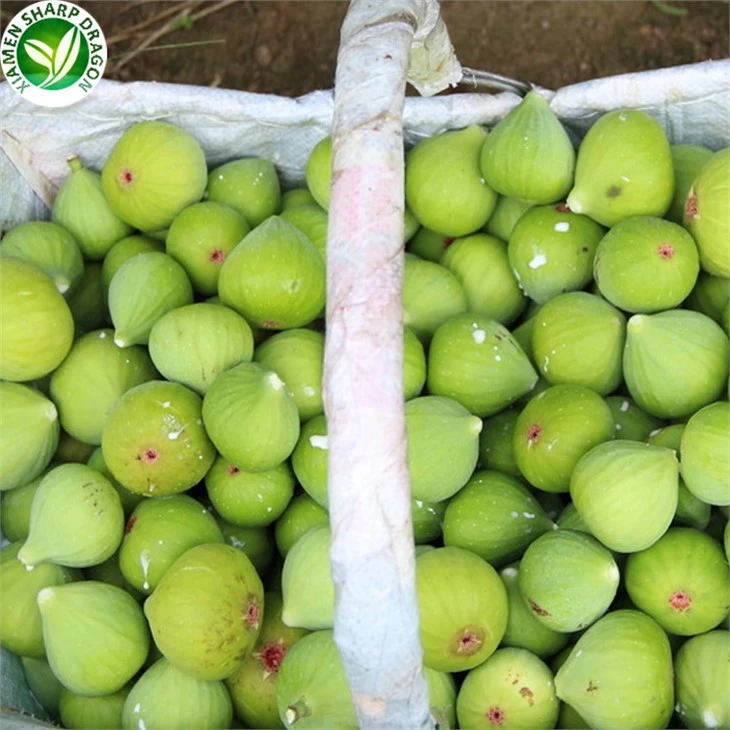
A normal fruit portion should fit the meal rather than be enlarged until a bowel movement occurs. Our fresh and frozen fig portion guide uses 100–150 g as a practical comparison, not a treatment amount or daily maximum.
Fresh and Dried Figs Deliver Fiber Differently
Raw figs contain about 79.11 g water and 2.9 g fiber per 100 g in USDA's reference. Dried figs contain about 30.05 g water and 9.8 g fiber per 100 g. Removing water concentrates fiber and carbohydrate by weight, which is why equal 100 g portions do not represent comparable eating occasions.
A 150 g raw portion supplies about 4.35 g fiber and 118.67 g water from the fruit itself. A 30 g dried portion supplies about 2.94 g fiber and 9.02 g water. The raw portion is far larger and wetter; the dried portion is compact. Drinking liquids according to your needs and medical advice remains important when fiber increases.
Plain frozen figs remain a higher-water fruit form, although thaw drip and handling change the retained serving. Dried pieces, pastes, and powders can be eaten rapidly or distributed through a formula. Do not copy a fresh portion into a dried application. Do not describe a dried inclusion as equivalent merely because both originate from figs.
Dried products may also contain coatings, added sugar, anti-stick ingredients, nuts, or allergens. A formulated bar has a different nutrient and tolerance profile from plain fruit. Check ingredients, declared serving, Total Carbohydrate, fiber, Added Sugars, and any sugar alcohols, which can independently affect gastrointestinal tolerance. Use the fig sugar comparison to keep total and added sugars separate.

Why More Fiber Can Backfire
NIDDK advises adding fiber a little at a time so the body can adjust. A sudden increase can cause gas, bloating, fullness, cramps, urgency, or diarrhea in some people. The practical amount depends on total dietary fiber, not the fig number alone. Bran cereal, legumes, vegetables, other fruit, supplements, and fortified foods all count.
Liquids matter, but "drink as much as possible" is not safe advice for everyone. People with heart failure, kidney disease, or prescribed fluid limits need individualized instructions. For others, inadequate liquid intake can make a fiber increase less comfortable. Follow a clinician's restriction rather than a generic hydration slogan.
Large fig portions also increase carbohydrate and energy. Dried fruit concentrates these especially. If the objective is bowel comfort, escalating the portion until diarrhea occurs is a failed trial, not success. Our guide to eating too many figs explains common tolerance problems and urgent warning signs.
Tolerance example: A person moves from little fruit to 200 g dried figs plus a fiber supplement in one day and develops cramps and loose stool. The deciding inputs are form, gram amount, total fiber, liquid plan, and symptoms. The action is not to repeat the challenge. Return to a normal eating pattern if safe and seek clinical advice when symptoms are severe, persistent, or accompanied by warning signs.
A Careful Seven-Day Food-and-Symptom Check
A short record can help when there is no urgent concern and no reason to avoid figs. Keep the product form stable, weigh the edible portion, and note the whole meal. Record bowel-movement frequency, stool form, straining, pain, bloating, urgency, liquid intake, activity, and relevant medicines. Change one dietary variable at a time.
Choose a normal portion rather than a treatment dose. For example, use 100 g plain fresh or retained thawed figs on two or three planned days, not a growing daily ladder. A day without figs is useful comparison data. Do not stop prescribed medicine or alter laxatives without professional advice.
Record example: Week one has three bowel movements, two with straining. During week two, a measured fruit portion replaces another snack on three days; there are four bowel movements and one with straining. That observation may justify discussing the pattern, but it cannot isolate figs from other changes or prove a durable treatment effect.
Stop a food trial after hives, oral swelling, throat symptoms, breathing difficulty, faintness, or a rapid multisystem reaction; urgent symptoms require urgent care. Stop and seek advice for significant pain, repeated vomiting, or dehydration. Repeated home challenge after an allergy-like reaction is not an acceptable way to establish tolerance.

When Constipation Needs Medical Assessment
Contact a clinician when constipation is persistent, recurring, or not improving with appropriate self-care. NIDDK highlights rectal bleeding, blood in stool, and continual abdominal pain as reasons to seek care. NHS also identifies unintentional weight loss, regular bloating, tiredness, sudden bowel-habit change, and suspected medicine-related constipation as reasons for review.
Severe abdominal pain, repeated vomiting, inability to pass stool or gas, marked distension, fever, faintness, or significant dehydration may require urgent assessment. Diarrhea can occur around fecal impaction, so watery leakage does not always mean the blockage is resolved. Do not attempt manual removal or improvise high-dose laxative combinations.
Constipation can relate to medicines, pregnancy, reduced activity, neurological disease, metabolic conditions, pelvic-floor dysfunction, bowel disorders, or other causes. A clinician may review history, examination, medicines, diet, and tests. A food company cannot diagnose the cause through a serving recommendation.
Children, frail older adults, and people with cognitive or communication difficulties may need prompt support because symptoms can be missed. Follow age-appropriate clinical guidance. An adult fig portion and a consumer article should never be copied into pediatric treatment advice.
How Product Form Changes Bowel-Relevant Claims
Whole and cut figs retain visible plant structure. A strained juice removes much of the insoluble material. A purée keeps more of the fruit but changes eating speed and recipe distribution. A sweetened preparation can add syrup, while a bar may add fibers, sugar alcohols, fats, grains, nuts, or other ingredients. Each form needs its own nutrient and tolerance evaluation.
A "contains fiber" claim may be possible only when the finished product meets the destination-market threshold and evidence rules. A lawful nutrient-content claim still does not authorize "relieves constipation" or "makes you poop." Disease and physiological-function claims have separate regulatory requirements. Obtain qualified review before artwork or advertising is approved.
Formulation example: A 200 g smoothie uses 60 g fig purée, 120 g juice, and 20 g syrup. Applying the raw fig fiber reference only to the fig component gives about 60 × 2.9 ÷ 100 = 1.74 g fiber before verified data for other ingredients. Describing the entire drink as equivalent to 200 g whole figs would overstate the fig contribution and ignore the full formula.
When a product brief targets digestive wellness, translate the aspiration into measurable specifications: finished serving, fiber target, source ingredients, sugar and energy constraints, texture, allergen limits, claim market, shelf life, and sensory acceptance. Then test the recipe. Do not ask a fruit supplier to guarantee an individual bowel outcome.
Frozen Fig Specification and Thaw-Yield Control
For a frozen application, identify single-ingredient fruit versus a preparation. Define whole or cut form, size, maturity, defects, ingredients, pack, storage, shelf life, and microbiological and foreign-material criteria. The frozen fig product format can start the discussion, but the approved offer and specification decide the supplied food.
State whether a serving is weighed frozen, thawed with liquid retained, or drained under a written time and method. A 125 g retained serving cannot be produced reliably from a 125 g frozen issue if thaw loss is discarded. Run representative trials at the intended time, temperature, container, and hold condition.
Yield example: A kitchen needs 800 bowls with 125 g retained fig, or 100 kg. A representative trial gives 94% retained yield. Frozen input is 100 ÷ 0.94 = 106.38 kg before any documented contingency. This establishes purchasing quantity; it does not establish a bowel benefit.
Packaging protects net weight, hygiene, traceability, and cold-chain performance. Confirm liner, seal, case, pallet, lot coding, and destination documents through the frozen packaging review. Approve sensory quality and yield in the intended recipe, not only the appearance of fully frozen fruit.

Turn a Digestive-Wellness Brief into Testable Criteria
A brief that says "develop a fig product for regularity" is not ready for sourcing or formulation. It mixes a consumer outcome with an ingredient request and leaves the serving undefined. Rewrite it into measurable inputs: target market, intended population, serving weight, permitted ingredients, nutrition target, texture, sugar limit, claim language, packaging, shelf life, and sensory acceptance. Regulatory review decides whether the proposed communication is allowed.
Define the evidence route before selecting a favorable number. A database estimate may support early formulation, while a compliant nutrition declaration may require calculation from approved data, laboratory analysis, or another permitted method. A clinical outcome claim would require a much higher evidence and authorization standard. Do not let a raw-fruit fiber value travel unchanged into a sweetened multi-ingredient product.
Build an acceptance matrix for the prototype. On one side record the required serving weight, fiber, total carbohydrate, ingredients, allergen status, viscosity or piece identity, and label basis. On the other record measured or documented results, method, lot, date, and pass/fail decision. Add sensory notes for flavor, grittiness, seed perception, free liquid, and hold stability. This makes failure visible before artwork and scale-up.
Prototype example: A 160 g breakfast cup targets at least 4 g fiber and no added sugar under the destination rules. Its 80 g fig component is estimated at only 2.32 g fiber from the raw USDA reference. The team cannot claim the target is met just because figs are present. It must reformulate with suitable ingredients or change the target, then validate the complete cup and its realistic tolerance.
Run shelf-life and use-condition checks as well. Fiber grams do not reveal whether fruit pieces break down, whether free liquid separates, or whether consumers reject the texture. Evaluate the product immediately after preparation and after the intended refrigerated or frozen hold. Record the serving actually eaten in a trial; declared fill weight and consumed amount may differ when liquid or residue remains.
Finally, separate consumer education from a promise. It is reasonable to explain the product's verified fiber amount and serving instructions. It is not reasonable to guarantee a bowel movement, set a universal time-to-effect, or tell users to ignore persistent symptoms. Clear limitations protect both the consumer and the brand while preserving the real value of a well-specified fruit ingredient.

Frequently Asked Questions
How quickly do figs cause a bowel movement?
There is no reliable universal timing. A bowel movement after a meal may reflect normal gut activity and the whole day, not one ingredient. Do not keep increasing the portion to force a deadline.
Are fresh or dried figs better for constipation?
Fresh figs provide more water per gram; dried figs concentrate fiber and carbohydrate. Neither is proven universally superior. Choose a form and portion that fits the person, liquid plan, meal, and tolerance.
Can too many figs cause diarrhea?
A large or sudden fiber increase can contribute to gas, cramps, urgency, or loose stool in some people. Other ingredients and the total diet also matter.
Should a fig product claim to treat constipation?
No claim should be made without applicable legal authorization and adequate evidence for the finished product. A fiber value or ingredient reputation does not prove treatment.
XMSD sourcing note: Share your fig form, finished serving, ingredient list, thaw basis, fiber target, claim market, pack, annual volume, and application. We can review a frozen-fig sample and specification for recipe performance without promising a consumer bowel outcome.
Final Thoughts from XMSD
Figs can contribute fiber, and fresh or plain frozen forms also contribute water, but they do not guarantee a bowel movement or treat constipation for everyone. Use a normal measured portion, increase total fiber gradually, respect liquid restrictions and individual tolerance, and seek care for persistent symptoms or warning signs. For a commercial recipe, validate the complete serving, fiber evidence, ingredients, thaw yield, and claim boundary.
References
- USDA FoodData Central: Figs, Raw
- USDA FoodData Central: Figs, Dried, Uncooked
- NIDDK: Constipation Definition, Diet, and Medical Review
- Alimentary Pharmacology & Therapeutics: Systematic Review of Foods and Chronic Constipation
- NHS: Constipation Symptoms and When to Seek Care
- XMSD operational experience in frozen-fig specification, ingredient review, sample evaluation, retained-yield trials, packing, and B2B recipe inputs.