


Are Figs High in Sugar? Fresh, Dried, and Product Comparisons
Sep 10, 2019

Fresh figs contain a meaningful amount of naturally occurring sugar, but calling them simply "high in sugar" hides the measurement basis. USDA reports about 16.26 g total sugars per 100 g raw figs. Dried figs are much more concentrated at about 47.92 g per 100 g because much of the water has been removed. A syrup-packed, sweetened, or coated fig product may contain added sugar as well.
Judge the actual food by product form, grams eaten, total carbohydrate, added sugars, ingredients, and meal context. In the United States, FDA does not establish a Daily Value for total sugars, so a universal "high" classification cannot be calculated from total sugar alone. Added sugars have a separate label declaration and percent Daily Value.
The short answer: Raw figs provide about 16.26 g total sugars per 100 g; dried figs about 47.92 g. Compare grams per serving and added sugars rather than assigning one label to every fig product. Sweet taste, Brix, total carbohydrate, total sugars, and added sugars are related measurements, but they are not interchangeable.

Start with the Food and the Measurement Basis
A useful sugar answer needs a denominator. "Sixteen grams of sugar" means little until you know whether it is per 100 g, per fruit, per declared serving, per retail pack, or per finished recipe. Nutrition databases commonly use 100 g for comparison. Consumer labels use a serving defined under the destination market's rules. Recipe developers need the finished formula and yield.
The food identity matters just as much. Raw ripe figs contain natural fruit sugars and water. Plain IQF figs normally contain fruit only, although the actual specification decides. Dried figs contain less water per gram. Canned figs may include juice or syrup. A fig jam, bar, filling, or chocolate-coated snack is a formulated food rather than plain fruit.
USDA's raw fig reference lists about 79.11 g water per 100 g; the dried reference lists about 30.05 g. That water difference helps explain why equal weights deliver different amounts of fruit solids. It does not mean every dried fig has an identical value: cultivar, maturity, dehydration endpoint, storage, and other ingredients can change the result.
Practical example: A tray contains 120 g fresh figs. A snack cup contains 30 g dried figs. At USDA reference values, the fresh portion has about 16.26 × 1.20 = 19.51 g total sugars. The dried portion has about 47.92 × 0.30 = 14.38 g. The dried food is higher per 100 g, yet the smaller real portion contains less total sugar in this comparison.

Fresh Figs: Read Sugar with Carbohydrate and Serving Size
USDA reports about 19.18 g total carbohydrate, 16.26 g total sugars, and 2.9 g fiber per 100 g raw figs. Sugar is therefore one part of total carbohydrate. Subtracting fiber from carbohydrate to create a casual "net" value is not a substitute for the applicable label or an individualized plan, especially across markets that define carbohydrate differently.
Worked example: For a 150 g fresh portion, multiply each 100 g value by 1.50. Total sugars are 16.26 × 1.50 = 24.39 g; carbohydrate is 19.18 × 1.50 = 28.77 g; fiber is 2.9 × 1.50 = 4.35 g; and energy is 74 × 1.50 = 111 kcal. These are reference calculations for raw figs, not guaranteed numbers for a frozen retail item.
A person eating half that amount consumes roughly half the reference nutrients. That is why piece count can mislead: two large figs and two small figs may differ substantially in weight. Our fresh and frozen fig portion guide explains how to convert a weighed sample into a practical count without inventing a universal daily limit.
The whole meal determines relevance. A 150 g fruit serving eaten instead of a sugar-sweetened dessert changes intake one way. The same fruit added after the dessert changes it another way. Looking only at the fruit's sugar cannot tell you the day's total energy, carbohydrate, added sugar, fiber, or dietary quality.
Dried Figs Are Concentrated, Not Automatically "Bad"
USDA reports about 63.87 g carbohydrate, 47.92 g total sugars, 9.8 g fiber, and 249 kcal per 100 g dried, uncooked figs. On an equal-weight basis, those values are substantially higher than raw figs because the dried food contains less water. The sensible response is a smaller portion and a correct label-not a moral judgment about the ingredient.
A 25 g dried portion provides about 11.98 g total sugars and 15.97 g carbohydrate at that basis. A 40 g portion provides about 19.17 g sugars and 25.55 g carbohydrate. The gram range is compact enough that pouring from a bag can easily double it. Weighing is more reliable than describing the portion as a handful.
Plain dried figs do not necessarily contain added sugars. Check the ingredient list and Added Sugars line rather than inferring from the high total-sugar value. Some products may be syrup-infused, coated, sweetened, or combined with other ingredients. "No added sugar" does not mean sugar-free; the fruit's naturally occurring sugars remain in Total Sugars and Total Carbohydrate.
For a daily dried portion, use the product label, gram weight, meal plan, and tolerance. The dried fig serving guide uses 25–40 g as a comparison range and explains why that is not a prescription. This sugar comparison should not be turned into a second portion page.

Total Sugars and Added Sugars Answer Different Questions
FDA explains that Total Sugars includes sugars naturally present in fruit plus any sugars added to the product. Added Sugars is the subset introduced during processing or packaged as sweeteners under the regulatory definition. If a serving lists 18 g Total Sugars and "Includes 6 g Added Sugars," the 6 g is already included in the 18 g; it is not added again.
FDA has not established a Daily Value for Total Sugars because no total daily recommendation has been made. It does establish a Daily Value for Added Sugars-50 g on the U.S. label based on a 2,000-calorie diet. Therefore, FDA's low/high percent-Daily-Value guide can be applied to Added Sugars, not casually transferred to the Total Sugars number of whole fruit.
The ingredient list supplies essential context. Words such as sugar, glucose syrup, fructose syrup, honey, or concentrated juice used as a sweetener may indicate added sugars, subject to the applicable rules. Syrup-packed figs need the pack medium identified. A claim such as "unsweetened" or "no added sugar" must meet destination-market requirements; it cannot be supported by appearance alone.
Label example: Product A is single-ingredient frozen figs and lists 17 g Total Sugars, 0 g Added Sugars per serving. Product B is a glazed fig topping and lists 22 g Total Sugars, including 8 g Added Sugars. Product B does not contain 30 g sugars; 22 g is the total. Compare the same serving weight before deciding which formulation fits the brief.
Brix Is Not the Same as Nutrition-Label Sugar
A refractometer reading expressed as degrees Brix estimates soluble solids under defined conditions. In a simple sucrose solution, the relationship to sucrose concentration is direct. In fruit, soluble solids include sugars plus other dissolved compounds, and temperature, juice extraction, calibration, and sample uniformity affect the reading. Brix is valuable for maturity and lot comparison, but it is not automatically grams of Total Sugars on a label.
If Brix is application-critical, agree on sample preparation: number of fruit, edible part, thaw state, homogenization, temperature compensation, instrument, calibration, replicates, and reporting rule. A reading from free thaw liquid can differ from homogenized retained fruit. Neither basis should be substituted silently for the contracted method.
Nutrition labeling uses the formulation, analytical data, validated database methods, and regulations that apply to the destination. You can use Brix as a receiving specification while using a different evidence route for nutrient declaration. Keep both records traceable to the correct lot and food form, but do not expect them to carry the same numeric value.
We recommend specifying the business consequence of a Brix range. A dessert sauce may need sweetness and viscosity consistency; a bakery inclusion may prioritize piece integrity and moisture migration; a plain fruit cup may prioritize natural variation. Without an application consequence, a narrow number can add rejection risk without improving the finished product.

Health Context: Use Total Carbohydrate for the Meal
People with diabetes do not need a slogan declaring all fruit safe or unsafe. ADA notes that fruit contains carbohydrate and should be counted in the meal plan; fresh, frozen, and canned without added sugars are preferred forms. A small whole fruit or about one-half cup frozen or canned fruit may supply around 15 g carbohydrate, but the actual food and label determine the amount.
At USDA's raw fig reference, the theoretical weight containing 15 g carbohydrate is 15 ÷ 0.1918 = 78.2 g. That calculation is only a comparison. Cultivar, ripeness, product formulation, and label rounding can change the value, and glucose response varies. Medication, insulin, and meal changes require individualized guidance rather than a database equation.
Fiber, food structure, meal composition, activity, and individual physiology affect response, but none cancels the carbohydrate. Do not subtract an assumed amount or call a fruit "free." For a packaged fig product, use Total Carbohydrate on the applicable label. For a recipe, calculate the complete serving and validate the method used.
A full question about figs and diabetes deserves its own treatment; here the boundary is narrower: sugar content should be interpreted through total carbohydrate and an individual plan. Seek medical help for severe or unexplained glucose symptoms. A marketing claim cannot replace clinical management.
Compare Finished Products, Not Ingredient Reputations
A plain frozen fig, a fig purée, a syrup preparation, a bakery filling, and a snack bar can all display "fig" prominently while carrying different serving sizes and sugar values. Compare the Nutrition Facts panel, ingredient order, serving weight, Total Carbohydrate, Total Sugars, Added Sugars, fiber, energy, and other nutrients relevant to your brief.
Product A may be lower in added sugar but served at twice the weight. Product B may have a smaller serving but a concentrated matrix. A front label can therefore create the wrong impression. Normalize both to 100 g for formulation comparison, then return to the realistic serving to understand consumption. Keep both views; neither alone answers every question.
Comparison example: A 100 g plain fruit cup has 16 g total sugars and 0 g added sugars. A 60 g fig filling has 24 g total sugars, including 12 g added sugars. Per serving, the filling supplies 8 g more total sugars despite weighing 40 g less. Per 100 g, it supplies 40 g total sugars. The correct procurement action is to compare both the recipe concentration and intended dose.
Claims such as "reduced sugar," "low sugar," "no added sugar," and comparative statements have specific legal conditions that vary by market. Obtain regulatory review and supporting records before artwork approval. A favorable raw-fruit database entry does not automatically substantiate a finished-product claim.
Build a Sugar Specification for Frozen Figs
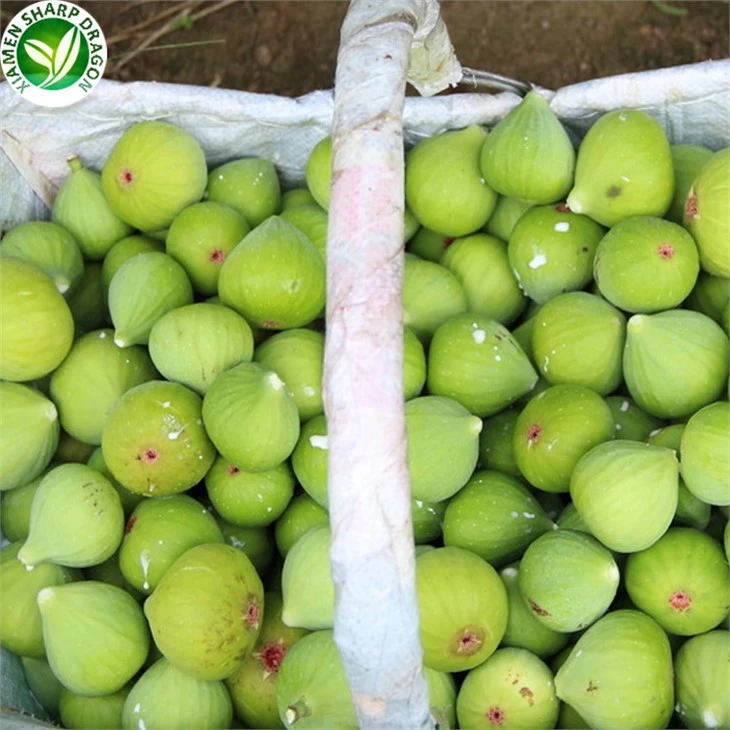
Start with product identity: single-ingredient IQF figs, sweetened fruit, or a preparation. State whole or cut form, cultivar or color if material, maturity, size, defects, and permitted ingredients. If the request is "no added sugar," make that an ingredient and compliance requirement rather than assuming the entire frozen fig range uses one formulation.
Define whether analytical or Brix results apply to frozen fruit, retained thawed fruit, drained fruit, or expressed juice. State the method, temperature, sampling, number of replicates, acceptance range, rounding, and disposition of an out-of-range result. A specification without a method leaves two laboratories free to produce incomparable results.
Review pesticide-residue requirements, microbiological criteria, foreign-material controls, allergen cross-contact, pack integrity, net weight, lot coding, traceability, storage, shelf life, pallet pattern, and documents for the destination. Sugar is one attribute within a supply specification; it should not displace food-safety or cold-chain controls. Use the frozen packaging overview to define the pack evidence needed for the intended channel.
Use a representative sample in the final recipe. Measure thaw yield, free liquid, sweetness perception, texture, color, and piece integrity after the intended process and hold. The XMSD frozen fig format is a starting point for the discussion, not a substitute for an order-specific offer and approved specification.

Worked Formulation and Label Basis
Suppose a frozen fig topping contains 85% plain fig and 15% syrup by finished batch weight. A run of 1,000 retail packs at 300 g each requires 300 kg finished product. Fig input is 300 × 0.85 = 255 kg, and syrup input is 300 × 0.15 = 45 kg before any documented process adjustment.
The plain-fruit sugar value cannot be printed as the finished topping value. The nutrition calculation needs the actual fig data, syrup composition, processing yield, serving size, and destination rules. Added Sugars must be determined using the compliant method and records. If the syrup contains water as well as sugar, treating all 45 kg as sugar would also be wrong.
Now suppose the declared serving is 75 g. Each serving contains a nominal 75 × 0.85 = 63.75 g fig and 11.25 g syrup mixture before yield effects. That component calculation helps purchasing and recipe control, but it still does not state grams of sugar. The syrup specification and validated nutrient data complete the calculation.
Document incoming weights, batch yield, solids loss, pack overfill policy, and retained records. If the process concentrates the product, a simple ingredient-weight average may understate nutrients per 100 g. If free liquid is discarded, the retained-fruit basis changes. Validate the model against the real process before label release.

Frequently Asked Questions
Are fresh figs sugar-free?
No. USDA reports about 16.26 g naturally occurring total sugars per 100 g raw figs. Single-ingredient fresh or frozen figs can have 0 g added sugars while still containing total sugars.
Why do dried figs show more sugar per 100 g?
Drying removes much of the water and concentrates fruit solids. The comparison must use a realistic smaller dried serving, not only equal 100 g weights.
Does "no added sugar" mean low total sugar?
No. It addresses sugars added under the applicable definition, not the fruit's natural sugars. Read serving size, Total Carbohydrate, Total Sugars, Added Sugars, and ingredients together.
Can Brix be copied into a nutrition panel?
No. Brix is a soluble-solids measurement under a defined method. Nutrition declarations require appropriate compositional evidence and destination-market rules.
XMSD sourcing note: Tell us whether you need single-ingredient IQF figs or a formulated preparation, plus serving weight, Brix method, ingredients, size, pack, destination, label stage, and annual volume. We can review a sample and frozen-fig specification against the finished use.
Final Thoughts from XMSD
Fresh figs contain about 16.26 g total sugars per 100 g at USDA's reference, while dried figs contain about 47.92 g. Those figures need a real serving and product identity. Separate total from added sugars, use total carbohydrate for meal planning, and keep Brix in its proper technical role. For a commercial product, compare the finished formula, validate its label basis, and write the specification around the intended application.
References
- USDA FoodData Central: Figs, Raw
- USDA FoodData Central: Figs, Dried, Uncooked
- U.S. FDA: Added Sugars on the Nutrition Facts Label
- American Diabetes Association: Fruit and Carbohydrate Guidance
- XMSD operational experience in frozen-fig specifications, Brix methods, sample comparison, thaw-yield review, packing, ingredient confirmation, and B2B formulation inputs.