


How to Specify Frozen Strawberry Flavor: A Buyer Guide
Jul 18, 2023

Frozen strawberries do not fall into a few fixed flavors such as sweet, sour or aromatic. What you perceive after thawing comes from soluble solids, acids, volatile aroma compounds, cultivar, maturity, growing conditions, freezing, storage, product form and the final recipe. Two lots can show the same °Brix and still taste different. A whole berry approved cold may also perform differently after thawing, heating or blending into yogurt.
For purchasing, replace "good strawberry flavor" with a testable target. Define the application, ingredient statement, form, sample preparation, °Brix, titratable acidity, pH, sensory attributes, prohibited off-notes, reference sample, lot plan and decision rule. Use instrument results to describe part of the profile and a controlled application trial to decide whether the fruit actually works.
Direct answer: Specify frozen strawberry flavor with three connected controls: measurable composition, a repeatable sensory method and performance in the intended recipe. Approve ranges for °Brix and titratable acidity rather than a sweetness word alone; record pH separately; score strawberry aroma, sweetness, tartness and off-notes against a reference; and repeat the decision after the agreed thawing or processing step.
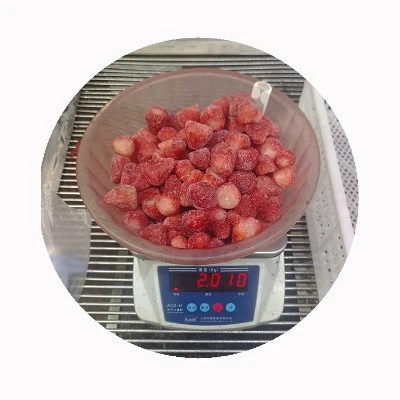
Define What "Strawberry Flavor" Means for Your Product
Begin with use, not variety. A bakery filling may need recognizable fruit after heating and added sugar. A yogurt preparation needs balanced acidity, stable color and aroma that remains noticeable in dairy. A smoothie may accept soft fruit but needs sufficient flavor intensity after dilution. A retail whole-fruit pack needs a clean characteristic aroma plus attractive whole pieces after a controlled thaw. One adjective cannot cover these different jobs.
Then identify the actual product. State unsweetened or sweetened, whole, halves, slices, dice, crumble or puree; cultivar or approved cultivar group when relevant; harvest window; pack; and intended use. Added sugar, syrup, juice or an acidulant changes both the numbers and the sensory result. A certificate for sweetened sliced fruit should not release an unsweetened whole-IQF order.
USDA's voluntary frozen-strawberry standards treat flavor, color, defects and character as separate quality factors. Grade A calls for good characteristic normal flavor and odor without objectionable flavor or odor, alongside its own color, defect, character and score requirements. This is useful language, but a grade does not provide your recipe-specific balance target. Keep grade, analytical composition and application performance as related but distinct evidence.
The XMSD frozen strawberry range can help you shortlist forms. The signed order still needs the form, ingredient statement, flavor targets, sample method and acceptance rule for the selected facility and lot.
Application example: A buyer considering the same strawberry for smoothie and fruit-on-the-bottom yogurt prepares both prototypes. The smoothie passes because banana and juice soften the fruit's acidity. In plain yogurt, the sample seems sharp and its aroma disappears. The correct decision is not that the lot has "good" or "bad" flavor; it is approved for one defined formula and not yet approved for the other.

Use °Brix, Acidity and pH for Different Questions
°Brix from a refractometer is commonly used as an estimate of soluble solids. In strawberry material, sugars are important contributors, but the reading is not a direct taste score and is not necessarily identical to sugar percentage. Dissolved acids and other solids also contribute to the reading. Define whether you measure thawed juice, homogenized fruit, puree or another prepared portion, because different preparation can produce different results.
Titratable acidity measures the amount of acid neutralized under the named method and endpoint, normally reported as an acid equivalent such as percent citric acid. pH measures hydrogen-ion activity on a logarithmic scale. They are related but answer different questions. Titratable acidity often connects more directly to perceived tartness and buffering in a formulation, while pH matters to process and stability decisions. Do not substitute one for the other on a COA.
A soluble-solids-to-titratable-acidity ratio can help compare similarly tested lots. It is a screening ratio, not a flavor law. A ratio of 12 may come from 9.6°Brix and 0.80% acidity or from 7.2°Brix and 0.60% acidity; both arithmetic results are 12, but sweetness intensity, aroma, texture and recipe impact may differ. Preserve the two underlying values instead of reporting only the ratio.
UC Davis identifies soluble solids, titratable acidity and flavor volatiles as strawberry flavor-quality indices. Its fresh-fruit fact sheet suggests a minimum of 7% soluble solids and/or a maximum of 0.8% titratable acidity for acceptable flavor. Treat those numbers as a fresh postharvest reference, not an automatic import specification for every frozen cultivar, ingredient format or customer recipe.
| Measure | Useful for | Does not prove |
|---|---|---|
| °Brix / soluble solids | Comparable lot and formulation screening | Sweetness perception or aroma by itself |
| Titratable acidity | Acid quantity and taste-balance comparison | pH or microbiological safety |
| pH | Process and formulation context | Total acid or sensory tartness |
| Sensory panel | Aroma, balance, aftertaste and off-note decision | Analytical identity without a lab method |
| Application trial | Performance in the buyer's formula and process | Universal suitability for other recipes |

Do Not Reduce Aroma to Sugar and Acid
Strawberry identity comes partly from a complex volatile profile. Esters, furanones, terpenoids, lactones and other compounds can contribute fruity, floral, jammy, green or creamy impressions. A 2021 consumer study covering 148 strawberry samples over seven years found that liking was strongly associated with sweetness, texture liking and flavor intensity. Models that added volatiles to sugars and acids explained substantially more variation than models using sugars and acids alone.
That evidence does not turn a handful of volatile compounds into a routine frozen-fruit purchasing limit. It shows why equal °Brix does not guarantee equal perceived sweetness or liking. For ordinary supplier approval, a trained sensory method with a retained reference is usually more useful than demanding a costly volatile chromatogram without knowing which result would change the commercial decision.
Cultivar and production conditions matter. A Texas study of named fresh cultivars reported °Brix values from 8.0 to 12.9 and soluble-solids-to-acidity ratios from 9.1 to 15.3 under its study conditions, while identifying more than 300 volatiles. Use these figures as evidence of real biological variation, not as a frozen-strawberry buying range for China or any other origin.
Freezing and storage can change aroma composition. A study comparing fresh, frozen and differently dried strawberries identified 165 volatile compounds and showed that each treatment shifted the profile differently. Its frozen samples retained more fruity and sweet aroma than several drying treatments under that experiment. This supports treatment-specific evaluation; it does not prove that every frozen lot tastes fresher than every dried or fresh lot.
Build a short sensory lexicon for your purchase: characteristic strawberry aroma, fruity intensity, sweetness, tartness, green/unripe note, fermented note, musty note, cooked note, oxidized note and aftertaste. Choose only terms that change acceptance. Panelists should not invent new poetic descriptions during lot release.

Standardize Sampling, Thawing and Sensory Evaluation
A good specification can still fail if sample preparation changes. Define the lot, number of cartons, sampling locations, sample mass, frozen transport, storage time before testing and whether units are tested separately or combined. A top-of-carton handful may miss variation deeper in the liner. A composite gives an average but can conceal a weak subunit, so choose the design for the decision.
State the thaw method exactly: sample mass, container, covered or uncovered, time, temperature, drain treatment and target serving temperature. Aroma release and acid perception change with temperature. Drip loss can also change the apparent composition of the fruit and liquid. If the buyer evaluates drained pieces but the supplier homogenizes all released juice back into the sample, the results are not comparable.
Use blind randomized codes and a defined serving order. Evaluate a retained approved reference and the candidate under the same conditions. Three trained people can provide a useful internal decision when the attribute list and disagreement rule are prewritten; a consumer-preference claim requires a different and usually much larger design. Record individual scores before discussion so the loudest voice does not become the method.
A simple five-point scale can work: 1 is clearly below the approved reference, 3 is comparable and 5 is clearly above. Set critical rules separately. For example, a median characteristic-aroma score of at least 3 may pass, while any confirmed fermented or musty off-note may trigger a hold regardless of the average. Define how confirmation happens and who makes the disposition.
Panel example: Five trained assessors compare a candidate with a retained approved lot after an 18-hour covered thaw at 4°C. Candidate scores for characteristic aroma are 3, 3, 4, 2 and 3, giving a median of 3. No assessor records a confirmed musty or fermented note. The analytical results are within the signed ranges, so the sample passes the screening stage. It still proceeds to the application trial because the sensory panel did not test performance in the buyer's recipe.

Translate Flavor into an Order Specification
Write composition as ranges supported by your approved samples, process capability and application, not numbers copied from a marketing page. Each line should state method and sample basis. "°Brix 8–10" is incomplete if one party measures expressed thaw juice and the other measures a homogenized composite. "Acidity 0.6–0.9%" is incomplete without the acid equivalent and titration method.
Write sensory acceptance in observable language. A practical clause might require clean characteristic strawberry aroma, agreed sweet-tart balance, no fermented, musty, chemical or scorched note, and performance comparable with reference code R-24 in the named formula. State whether the reference is stored frozen, when it expires and how a replacement is approved.
Keep form and physical condition beside flavor because they alter use. Whole fruit, halves, dice and puree expose different surface areas and release flavor differently. Drip, ice glaze, clumps, pale pieces, overripe soft pieces and calyx material may change the trial even when bulk °Brix passes. The bulk frozen strawberry page shows available form discussions; final tolerances belong in the purchase specification.
For puree, agree whether the product is single-strength, sweetened or otherwise formulated, then specify screen, seed level, viscosity context and treatment as relevant. A puree distributes aroma and acid differently from whole fruit and is usually dosed by weight. Review the frozen strawberry puree format separately instead of approving it from a whole-fruit sample.
Distinguish a naturally tart lot from a defective lot. Tartness may be appropriate in a sweetened filling; fermented, musty, chemical or oxidized notes are different. The sweet-versus-sour frozen fruit guide provides broader comparison context, while this specification should define strawberry-specific release evidence.

Run a Worked Blend and Application Decision
Instrument results are most useful when they lead to a pre-agreed choice. Suppose a processor has an approved lot A at 10.2°Brix and 0.70% titratable acidity, and a candidate lot B at 7.8°Brix and 0.95% acidity. Both are measured on homogenized thawed samples by the same methods. The buyer is considering a 60:40 blend by strawberry weight for a filling trial.
Worked example: The estimated blend soluble solids are (0.60 × 10.2) + (0.40 × 7.8) = 9.24°Brix. Estimated titratable acidity is (0.60 × 0.70%) + (0.40 × 0.95%) = 0.80%. The screening ratio is 9.24 ÷ 0.80 = 11.55, compared with 14.57 for lot A and 8.21 for lot B. These weighted calculations assume comparable measurement bases and approximately additive behavior. They predict a composition target; they do not predict aroma, texture or the effect of added sugar and heat.
The processor now makes the filling at the real fruit dose, sweetener level, heating profile and finished pH. A blind panel compares the blend with the approved finished-product reference. If the blend passes flavor but releases too much liquid or loses color, it is not fully approved. If it misses characteristic aroma, adding sugar may raise sweetness without restoring strawberry identity.
Decide disposition before the trial: accept as ordered, accept only for a named application, blend under documented control, redirect to a more suitable product, request another sample or reject. Do not quietly add sweetener, flavoring or acid and call the original fruit conforming. Any formulation change affects ingredient declaration, cost and customer approval.

Control Seasonal Lots and Supplier Evidence
Cultivar, field, maturity and harvest weather can move composition and aroma. A supplier name alone does not freeze that variation. Approve an order-level cultivar policy, harvest window where useful and lot definition. Compare early, peak and late-season samples if the program spans the crop. If blending is allowed to achieve consistency, specify traceability and how the blend is calculated, tested and labeled.
At production, review reception maturity and defects, time before freezing, washing, trimming, sorting, cut preparation, freezer records and post-freeze packing exposure. These records cannot predict aroma precisely, but they help explain a change. A low-flavor lot may begin with immature raw fruit; a fermented note may indicate damaged fruit or time-temperature abuse; a dull cooked note may connect to an unapproved process or recipe condition.
At shipment and arrival, preserve lot codes, quantity, carton and liner condition, reefer setting, temperature evidence and sample chain. Frozen storage slows change but does not make quality independent of time and temperature. Compare origin and arrival only when sampling and preparation methods match. A warm, partly thawed arrival sample should be isolated and investigated instead of used as if it were a routine sensory replicate.
The COA should show legal entity or facility, exact product and form, lot, production and sample dates, method, result, unit and specification. Verify document scope through the XMSD certification overview, but do not treat a public certificate image as evidence that a specific lot meets your flavor targets.
Trend each approved lot against the same reference and application result. If °Brix remains stable while aroma scores fall, investigate cultivar mix, maturity, storage age and process history before changing the numerical range. The evidence should lead the correction.
XMSD sourcing note: Send your application, fruit form, ingredient statement, target °Brix, acidity and pH, sensory reference, pack, volume and destination. We can match the request to an available product and partner-factory route and coordinate sample, specification and order-document review.
Frequently Asked Questions
What °Brix is good for frozen strawberries?
There is no universal number for every cultivar, form and application. Build a range from approved samples and recipe trials, then name the sample preparation and refractometer method. Review titratable acidity, aroma and use performance beside °Brix.
Does a higher °Brix always mean a sweeter strawberry flavor?
No. Higher soluble solids can support sweetness, but acids, volatile compounds, temperature, texture and the recipe influence perception. Two samples with equal °Brix may not have equal sweetness or characteristic aroma.
Should a buyer specify pH or titratable acidity?
Often both, if both matter to the product. pH supports process and stability assessment; titratable acidity describes acid quantity under a named method and often helps explain tartness and buffering. They are not interchangeable.
Can one sensory sample approve a full container?
Only if the agreed sampling plan makes it representative enough for that decision. Define the lot, cartons and locations sampled, sample units, compositing rule and rejection process. One convenient top-of-carton handful is weak evidence for a variable load.
Can sugar correct a weak frozen strawberry lot?
Sugar can change sweetness and balance, but it cannot restore missing volatile aroma or correct fermented, musty or chemical off-notes. Any sweetener change also affects formulation, labeling, cost and customer approval.
References
- USDA Agricultural Marketing Service, Frozen Strawberries Grades and Standards.
- UC Davis Postharvest Research and Extension Center, Strawberry produce fact sheet.
- Fan Z. et al., Strawberry sweetness and consumer preference are enhanced by specific volatile compounds. Horticulture Research, 2021.
- Yan J. et al., Exploring Plant Performance, Fruit Physicochemical Characteristics, Volatile Profiles, and Sensory Properties of Strawberry Cultivars Grown in Texas. Journal of Agricultural and Food Chemistry, 2021.
- Influence of Freezing and Different Drying Methods on Volatile Profiles of Strawberry, 2021.