


Can you eat corn at night?
Oct 30, 2019

Yes, corn can be eaten at night. The clock does not stop digestion, and plain cooked sweet corn is not automatically converted to body fat after sunset. For an overnight worker or a 24-hour food operation, however, the useful question is more specific: which corn form, portion, meal role, break time, holding method, and reheating plan will still work at 1 a.m.?
Focus on the overnight-service decision rather than a general bedtime answer. A night-shift meal may be eaten halfway through a work period and many hours before daytime sleep. Its constraints include limited breaks, refrigerator and microwave capacity, reduced menu choice, irregular demand, batch replenishment, and safe handling through the quietest part of service.
Treat corn as a measurable starchy component. Plain kernels, cob segments, buttered corn, cream-style corn, popcorn, and corn chips have different ingredient lists and roles. Decide whether corn replaces another starch or is being added to an unchanged meal; then review the complete serving rather than blaming night itself.
Quick answer: Corn has no universal nighttime ban. In an overnight program, define the edible grams, meal function, break and sleep context, cook/hold/reheat sequence, replenishment batch, and individual comfort. Keep the food cold or hot under the applicable control; the fact that service is quiet does not relax the food-safety plan.

The Overnight Decision Is Not the Same as a Bedtime Snack
"At night" can mean dinner at 7 p.m., a snack before lying down, or a scheduled meal during a shift that runs from evening to morning. The general corn-at-night portion and timing guide owns the broad consumer distinction. An overnight service has a different job: feed awake people safely and consistently when demand and staffing vary.
The next sleep period still matters. A worker eating at 1 a.m. may not sleep until 9 a.m.; another may finish a shift at 3 a.m. and lie down at 4 a.m. Use the actual wake, break, commute, and sleep schedule instead of an arbitrary rule such as "nothing after 8 p.m."
Laboratory studies of simulated night work suggest meal timing and meal size can affect glucose handling during circadian misalignment. A 2024 trial of 55 healthy, non-shift-working adults compared fasting, a snack, and a meal during simulated night shifts; glucose tolerance was more impaired in the nighttime meal group than the fasting group, with a smaller change in the snack group. The study supports careful planning, not a corn-specific prohibition.
Night workers are diverse, and laboratory schedules are not every workplace. Someone managing diabetes, reflux, medication, pregnancy, a prescribed diet, or recurrent symptoms needs individualized clinical guidance. A foodservice page should not convert a simulated-work result into medical advice for every shift worker.
Give Corn One Clear Job in the Meal
Corn can act as the main starch in a bowl, part of a mixed vegetable side, a soup ingredient, a salad inclusion, a cob portion, or a small component of a ready meal. State the role first. If kernels are counted as the starch, reduce duplication with rice, pasta, bread, or potato according to the menu brief.
Additions change the serving. Butter, cheese, mayonnaise, cream sauce, frying oil, salty seasoning, or sweet coating create a different formula from plain corn. A night-shift menu descriptor should name the dish honestly rather than borrowing the nutrition reputation of plain kernels for a rich recipe.
Pair the starch with the rest of the planned meal. Depending on the program, that may include another vegetable, a suitable protein food, and water or an unsweetened beverage. The exact choice follows dietary requirements, culture, preference, allergens, availability, and operational equipment.
A measured corn portion may be useful during a break because kernels are easy to dose and reheat. It may be a poor choice when the only available recipe is very spicy and the eater has reflux near sleep. The ingredient remains the same crop; meal context changes the decision.
Set a Portion Before Setting the Break Time
Start with edible grams. A ladle, bowl, or cob can vary, especially when several staff members serve across a long shift. The earlier USDA SNAP-Ed corn reference displays a 145-gram cup at about 125 kilocalories, 27 grams carbohydrate, 3 grams fiber, and 5 grams protein. Use the current verified value for the actual product when labeling or prescribing a menu.
Worked example: A staff meal uses 90 grams of plain kernels. Relative to the 145-gram reference, the illustrative calculation is 90 ÷ 145 × 125 = 77.6 kilocalories and 90 ÷ 145 × 27 = 16.8 grams carbohydrate. The full meal, not this single component, determines the serving total.
Now identify the displaced food. If 90 grams of corn replaces part of a rice side, the program has made a substitution. If the same rice, bread, dessert, and drink remain, corn is an addition. This distinction matters more than whether the break starts at 23:30 or 00:30.
For cob segments, weigh edible kernels or establish a measured edible-yield range. Gross cob mass overstates the amount eaten. For a mixed vegetable bag, record the corn share. For canned corn, state drained or undrained basis. For a sauce SKU, calculate the complete formula.
Choose a Form That Fits Night Staffing and Equipment
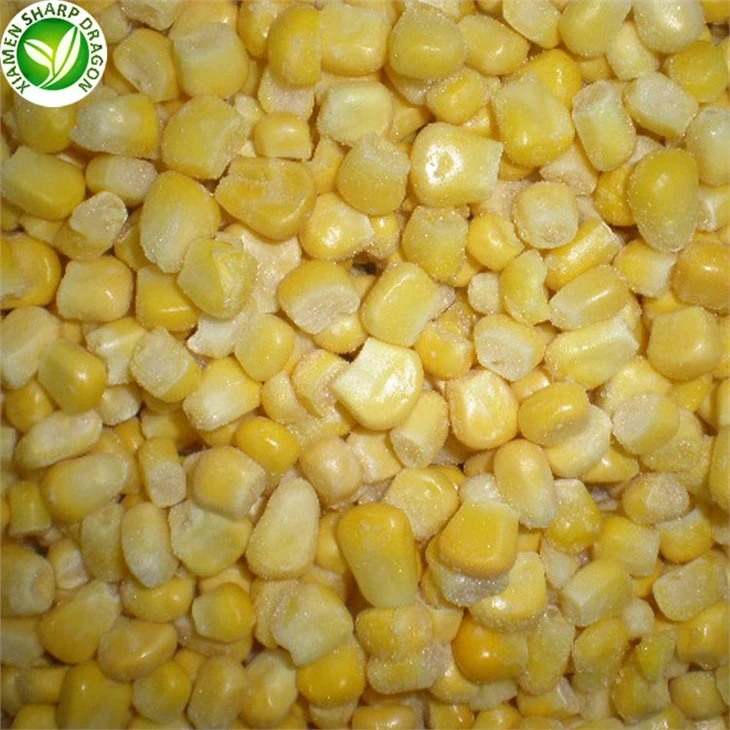
IQF kernels are portionable and can fit soups, rice dishes, vegetable sides, salads, and bowls. Their free-flow condition matters when the kitchen issues part of a bag. Fused blocks slow portioning and make a quiet-shift cook improvise with time and temperature.
Cob pieces deliver a recognizable serving but add variability in edible yield and tenderness. They may require more eating time and create waste at desks or control rooms. In a sit-down canteen, that can be acceptable; in a ten-minute break, kernels may be more practical.
Canned corn reduces freezer demand but introduces drained-weight, liquid, sodium, container, and open-can handling questions. Prepared pouches may improve speed but require exact heat instructions. Popcorn and chips belong to snack design, not as direct substitutes for a plain sweet-corn vegetable component.
Use the frozen corn range to compare kernels and cob directions, then write the selected form, size, ingredient statement, packing, cook state, and intended meal into the specification. A catalog image cannot define a shift meal.

Representative Scenario 1: A Hospital Staff Canteen
Practical example: Take a hospital canteen serving staff between 22:00 and 04:00. The decision function is reliable break service with limited staffing. Demand arrives in short peaks, and the kitchen must avoid leaving a large pan under holding conditions for the entire six-hour window.
The menu tests two forms: 90 grams of plain kernels in a vegetable bowl and one cob segment with butter sachet. Kernels reheat and portion faster, create less plate waste, and allow optional seasoning. The cob has stronger visual identity but longer pickup time and variable edible yield.
The canteen chooses kernels and prepares small replenishment batches at 22:00, 00:00, and 02:00 based on recorded demand. It holds each batch under the site's approved time-temperature control, labels the production time, and discards or cools only according to the food-safety plan. Quiet demand never becomes permission to extend an unapproved hold.
The result is an operational release: a measured corn component can be available at night without a digestive or weight promise. Menu nutrition uses the complete bowl, while batch records answer safety, waste, and service consistency.
Use Demand Records to Set Replenishment
An overnight menu often fails through daytime assumptions about demand. Record portions prepared, portions served, time of each peak, leftovers, disposal, and stock-outs for at least two representative cycles. Separate regular weekdays, weekends, scheduled maintenance, and unusual staffing because they may create different curves.
Convert those observations into a starting batch and a replenishment trigger. If the first 30 minutes consistently use 70 percent of a pan, begin with more or release the next batch earlier. If most waste appears after 03:00, reduce the late batch instead of stretching its hold or removing the menu without testing a smaller issue.
Keep stock-out and waste targets separate. Zero leftovers can hide repeated lost service, while zero stock-outs can require excessive disposal. The operation needs an agreed balance, supported by how quickly another batch can be safely prepared and how essential the item is to the complete meal.
Kernel form makes this easier only when the frozen product remains free flowing and the inner pack fits the batch. A five-kilogram bag is awkward if each replenishment uses 1.2 kilograms and remainder controls are weak. The batch model should therefore inform the purchasing specification before routine supply begins.
Procurement example: Suppose three normal night cycles record corn demand of 28, 34, and 31 kilograms. The average is 31 kilograms, but the peak is 34. Start the next controlled trial near the peak only if the food-safety system, replenishment speed, and acceptable waste support it; otherwise stage smaller issues against recorded demand.

XMSD Experience: Frozen Separation Must Survive Partial Use
When we review IQF corn for a multi-batch program, we inspect the frozen material before discussing the night menu. Kernel color, maturity, tenderness, size distribution, surface ice, clumps, broken pieces, foreign material, and free-flow behavior all affect portion accuracy and cooking consistency.
We then cook the actual sample with the actual method. A steam table, combi oven, saucepan, microwave pouch, soup kettle, and rice line create different heat and moisture conditions. The accepted result records time, product temperature, drainage, tenderness, flavor, and the finished dish rather than only "cooks well."
Partial use adds another test. The inner bag should dispense the planned quantity without prolonged exposure or uncontrolled thawing. We compare inner-pack mass with batch mass and remainder so the cook is not forced to repeatedly handle an awkward open unit across the night.

Representative Scenario 2: Ready Meals for a Factory Night Shift
Application example: In a typical factory program, 2,400 chilled ready meals are produced for three staggered night breaks. The decision function is finished-meal manufacturing release. Each meal specifies 75 grams of cooked corn within a chicken, corn, and mixed-vegetable rice bowl.
Net cooked-corn need is 2,400 × 75 g = 180 kilograms. A line trial begins with 50.0 kilograms frozen and delivers 48.5 kilograms accepted cooked and drained corn, a 97 percent yield. Frozen input for the program is 180 ÷ 0.97 = 185.57 kilograms before translating the result into whole inner packs.
The developer tests piece distribution, rice moisture, sauce migration, reheated tenderness, package seal, label readability, and temperature across the stated shelf life. A 75-gram target alone cannot secure meal consistency if corn settles or portioning equipment drifts.
The action is to use smaller frozen-corn feed batches tied to scheduled production runs and verify portion weights at defined intervals. This scenario differs from the canteen: the hospital decides real-time replenishment; the factory decides manufacturing yield, distribution, package, shelf-life, and reheating performance.

Food Safety Does Not Change at 2 A.M.
Frozen corn is not a ready-to-eat guarantee. Follow the product's cook status and instructions, and control time and temperature through preparation, hot or cold holding, cooling, transport, reheating, and service. A validated process and site food-safety plan govern the meal, not assumptions about the freezing step.
Night service often has fewer staff and less immediate technical support, so records must be simple enough to use. Batch code, preparation time, measured temperature, hold start, corrective action, and disposal time should remain legible. Equipment alarms and deviations need the same escalation path as daytime production.
Cold meals brought by workers need continuous cold storage until use and suitable reheating where required. Food left in a car, locker, or break room for hours presents a handling problem, not an inability to digest corn at night. Sudden vomiting or diarrhea after a mishandled meal should be treated as a safety concern.
Separate safety release from sensory release. A batch may remain inside the approved temperature control and become dry, tough, or watery. Another may look attractive and have an undocumented temperature deviation. Both layers must pass before service.
Reflux, Comfort, and the Next Sleep Period
A worker who will sleep soon after the shift may need a different portion or break plan from someone who remains awake for hours. NIDDK guidance notes that people with nighttime GERD symptoms may benefit from finishing meals at least three hours before lying down. That is a reflux consideration, not a corn ban.
A rich recipe may matter more than plain kernels. Fat, spice, acidic sauce, alcohol, caffeine, and meal size can change comfort. Record the complete dish and next sleep time before deciding that corn is responsible. The corn digestive-tolerance guide covers hulls, gas, repeated symptoms, and red flags.
Persistent reflux, severe abdominal pain, repeated vomiting, blood, faintness, breathing difficulty, or a clinician-directed restriction requires qualified care. Do not use a night-shift menu trial to diagnose disease or override medication advice.
XMSD Experience: Packing Has to Follow the Night Demand Curve
We map portions per batch, batches per shift, peak demand, inner-pack mass, and the treatment of remainders. A single large inner bag may work in continuous daytime production and create excessive partial handling in three small overnight replenishments. The route through frozen storage, opening, issue, cooking, and any unused portion belongs in the choice.
We also review carton and pallet details against the receiving operation. A night delivery or limited freezer access can make an otherwise efficient pallet pattern difficult. Seal integrity, code legibility, carton strength, stack, frozen condition, and temperature information support arrival release.
The frozen-food packaging overview provides the broader pack and route framework. For an overnight corn program, the final pack decision should make the approved batch size easier to execute, not merely fill the carton neatly.

Claims to Leave Out of an Overnight Menu
Do not say the stomach rests and stops processing corn at night. Do not say corn sugar remains "undigested" until it becomes fat. These explanations are inaccurate shortcuts that distract from portion, formula, circadian context, total intake, and later sleep.
Do not promise that corn improves sleep, prevents hunger until morning, treats constipation, or produces weight loss. A menu can state verified ingredients, serving size, nutrition, allergen information, cook instructions, and storage conditions. Clinical outcomes need a different level of support. Keep menu testing focused on portion acceptance, waste, service time, texture, temperature control, and the complete dish that is actually offered.
Use operational wording: 90 grams plain sweet corn; prepared in small batches; held under the approved control; complete bowl nutrition calculated; optional seasoning; replenished on recorded demand. These facts allow a clear decision without turning a night meal into a health treatment.
XMSD sourcing note: Share the corn form, serving, night application, cook/hold/reheat flow, batch demand, inner pack, destination, and acceptance test. We can review a frozen corn direction around the overnight service you need.
Final Decision
Corn can be served and eaten at night. For overnight work, success depends on a defined portion and meal role, a form that fits break length and equipment, reliable batch replenishment, food-safety control, and comfort relative to the next sleep period.
Keep the claim modest and the operation specific. Use the complete meal for nutrition, the actual demand curve for packing and batches, and the approved control plan for safety. That answers a 24-hour foodservice problem without pretending that corn follows a different digestive rule after dark.
References
- Randomized Trial of Meal, Snack, and Fasting Conditions during Simulated Night-Shift Work
- Daytime Eating and Circadian Alignment during Simulated Night Work
- NIDDK: Eating, Diet, and Nutrition for GER and GERD
- U.S. Food and Drug Administration: Are You Storing Food Safely?
- XMSD operational experience in frozen corn form selection, cooking trials, batch planning, usable yield, packing, cold-chain handling, and arrival review.
You can eat corn at night, but you should not eat too much. The dietary fiber in corn can promote the digestion of the stomach, but the stomach is at rest in the night. If you eat too much corn, it will increase the burden on the stomach and lead to insomnia. And corn is also very high in sugar. Eating too much corn at night may cause sugar not to be digested in time and increase weight.
