


Can Lychee Grow in the Philippines?
Aug 13, 2019

Yes, lychee can grow and fruit in the Philippines, but not equally well at every site. Documented cultivation has concentrated in cooler highland areas of the Cordillera, including Benguet and Mountain Province, with plantings also reported in Ilocos Sur and some cooler lowland or elevated microclimates. Warm tropical lowlands often allow tree growth without the dependable cool induction needed for commercial flowering.
The country also has a native taxon, Litchi chinensis subsp. philippinensis, commonly associated with alupag. That botanical fact does not make the native fruit identical to commercial cultivated lychee. FAO describes the Philippine subspecies as noncommercial or different in aril traits, while commercial fruit usually comes from selected subsp. chinensis cultivars.
A serious feasibility decision therefore needs site-level temperature and rainfall, elevation, cultivar, mature-shoot timing, irrigation, wind, propagation material and several years of fruiting evidence. "A tree survives here" is only the first gate. "A block flowers, sets, retains and packs enough fruit consistently" is the commercial answer.
The short answer: Lychee is feasible in selected Philippine highlands and suitable microclimates, especially where mature shoots receive a cool, dry floral-induction period followed by warm, adequately watered fruit development. Commercial expansion should follow a cultivar-by-site trial, not a national yes/no rule.
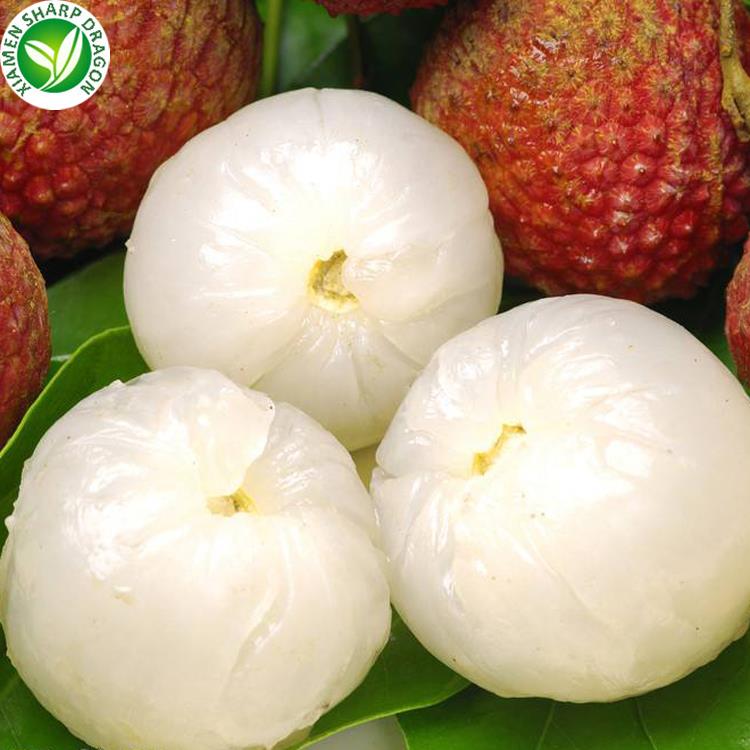
The Old "Cannot Grow" Answer Is Incorrect
FAO's Philippine country chapter documents fruiting trees and predominantly highland cultivation in the Cordillera Administrative Region, particularly Benguet and Mountain Province, as well as Cervantes in Ilocos Sur.[1] It also records smaller or individual plantings in Batangas, Laguna and Cagayan de Oro. That evidence directly contradicts a blanket statement that lychee cannot grow in the country.
The same source explains why some introductions failed at low altitude: the trees grew but did not flower or fruit consistently. The correct distinction is not Philippines versus non-Philippines. It is a match among genotype, shoot maturity and a site that supplies the required seasonal signal.
Historical data in the FAO chapter are valuable evidence of feasibility but not current national production statistics. It reported very small surveyed orchards and limited scale at the time. Do not reuse those old tonnages as a 2026 market-volume claim without a current agricultural source.
"Can grow" can mean at least four outcomes: a seedling survives, a grafted tree establishes, a mature tree flowers, or an orchard produces saleable fruit consistently. State which outcome you mean. The old page collapsed them into one and therefore reached the wrong conclusion.

Native Philippine Lychee Is Not Automatically the Commercial Fruit
Kew accepts Litchi chinensis subsp. philippinensis and records its native range in the Philippines and New Guinea.[2] This is important botanical evidence. It shows the genus has a native Philippine lineage rather than being only a recent foreign introduction.
Commercial identity still needs caution. FAO's botany chapter describes subsp. philippinensis fruit as morphologically different and not commercialized in the same way as cultivated subsp. chinensis fruit.[3] Common names such as alupag can also create confusion with related fruits.
Do not market native germplasm as standard lychee merely because the genus matches. Compare fruit size, peel, edible aril coverage, seed, flavor, yield and intended use. Protect and study native genetic resources without making unsupported equivalence claims.
For commercial planting, identify the exact cultivar and propagation source. Seedlings are genetically variable and slower to prove; air layers or grafts of a known selection can preserve cultivar identity. Rootstock compatibility may be promising, but a nursery trial is not evidence of mature orchard yield.
Why Philippine Highland Sites Have an Advantage
Elevation can reduce night and seasonal temperatures. FAO reported Philippine lychee concentrated around 1,000–1,380 m in suitable highland districts and described an approximately 15–19°C cool, dry period as important for flower initiation in those production observations.[1] Treat those values as documented regional guidance, not a universal threshold for every cultivar.
Highland advantage is not elevation by itself. Slope aspect, cold-air movement, cloud, wind, rainfall, soil depth and access change within short distances. A 1,200 m ridge and an enclosed wet basin can have different bloom and disease conditions. Install or obtain site weather records instead of assuming all contour lines behave alike.
After induction, the crop needs adequate warmth and moisture for flowering, set and development. Philippine dry seasons can create irrigation demand precisely when flowers and young fruit need support. Strong wind can damage panicles, limit pollination and increase water stress. UPLB work has highlighted dry-season water and wind among local constraints.[4]
Access is part of site feasibility. Steep or remote highland orchards may offer climate but raise nursery delivery, irrigation, picking, crate handling and transport challenges. Fruit is highly perishable, so a successful tree far from cooling or a processor may not become a viable frozen supply base.

A Site-Screening Decision Needs Monthly Data
Collect at least ten years of monthly and daily weather where possible: minimum and maximum temperatures, rainfall, wet days, relative humidity, wind and extreme events. Map the expected shoot-maturation and induction window for each cultivar. Annual averages hide the short cool period that decides flowering.
Inspect water supply and quality. Estimate irrigation demand for establishment, bloom, fruit set and growth under dry-season conditions. Verify source capacity in a dry year, pump reliability, storage and drainage. A favorable cool period does not compensate for fruit drop caused by unmanaged water stress.
Sample soil depth, texture, pH, drainage and rooting constraints across the actual block. Lychee dislikes prolonged waterlogging and young plants are sensitive to establishment stress. A hillside may drain rapidly but have shallow soil; a valley may offer depth but collect excess water.
Record wind exposure and typhoon risk. Identify shelter, windbreak design, drainage paths and access after heavy rain. Do not place windbreaks so densely that they create excessive shade or stagnant humidity. Local agronomic design should balance physical protection and airflow.
Compare nearby evidence. A fruiting tree of known cultivar and age within the same microclimate is stronger than a national suitability map. Ask for bloom and yield across several years, not one fruit photograph. The global lychee origin guide provides the wider climate context.
| Site factor | Pass evidence | Failure signal | Next action |
|---|---|---|---|
| Floral induction | Mature shoots plus repeated cool-season bloom | Healthy canopy, repeated leaf flush, no panicles | Change site/cultivar or trial only |
| Dry-season water | Tested source and storage capacity | Young-fruit stress and drop | Size irrigation before expansion |
| Wind and access | Protected block and harvest route | Panicle damage or long warm transit | Redesign block/logistics |
| Commercial output | Multi-year pack-out and buyer trial | Fruit but weak aril/seed ratio | Change cultivar or application |
Use a Cultivar-by-Site Trial, Not a Single Demonstration Tree
Choose several cultivars with documented performance in comparable warm or highland climates. Keep identity records from propagation through planting. A mixed unlabelled block makes it impossible to learn whether poor bloom came from cultivar or site and whether good fruit can be reproduced.
Replicate each cultivar across the site rather than planting one tree in the most protected corner. Include enough trees to observe variability, pests and management demand. Use a randomized or blocked design where possible, with rows spanning representative soil and exposure conditions.
Measure survival and canopy growth, but do not declare success there. Record flush dates, terminal maturity, panicle percentage, bloom timing, initial set, fruit drop, cracking, harvest weight, fruit size, seed proportion, soluble solids, acidity and sensory quality. Repeat across multiple seasons before scaling.
Trial example: Cultivar A produces vigorous trees at 300 m but flowers on only 10% of sampled terminals in three warm winters. Cultivar B grows more slowly at 1,150 m yet flowers on 70%, 62% and 76% of terminals. If the objective is commercial fruit, B's highland match is stronger even though A looks larger.
Define failure criteria before planting. If no cultivar reaches a minimum flowering frequency or fruit quality after the agreed juvenile period and several induction seasons, pause expansion. Do not keep adding hectares to solve a climate mismatch that the trial already exposed.

Worked Pilot Calculation: From Trial Trees to Finished Arils
A pilot should test yield, quality and processing fit together. Fruit with a large seed or thin aril can be horticulturally successful yet commercially weak for pitted whole-aril production. Keep fresh yield and edible recovery as separate measured quantities.
Worked example: A replicated highland trial has 80 mature trees. In the third evaluated crop season, 60 trees bear marketable fruit at an average 24 kg per bearing tree, giving 1,440 kg gross harvest. If 90% passes raw intake, 1,296 kg remains. At 55% pitted-aril recovery and 94% freezing/inspection yield, finished output is 670 kg (1,296 × 0.55 × 0.94).
Now change only the aril recovery to 42% for a large-seeded selection. Finished output falls to about 512 kg. That 158 kg difference from the same accepted raw fruit changes labor, freezing, packaging and transport economics. Select the cultivar for finished use, not only number of fruits per tree.
Do not extrapolate 670 kg linearly to hundreds of hectares after one season. Add density, juvenile ramp, alternate bearing, storm risk, irrigation capacity, processing throughput and market pack-out. Scale in stages and keep a stop/review gate after each commercial block.
A Lowland Tree Needs a Different Proof Standard
Reports of individual lowland fruiting trees are useful leads, not a reason to generalize across tropical plains. First verify identity, cultivar, propagation type, tree age, exact location and whether fruiting was repeated. A mislabeled longan, an isolated cool microclimate or a single unusual winter can all create a misleading story.
Install a weather logger near the canopy and record shoot stages. If the tree flowers, compare the induction period with years when it did not. This reveals whether fruiting follows short cold events, drought, pruning or a cultivar trait. Without the paired nonfruiting years, you cannot distinguish repeatable adaptation from coincidence.
Propagate the candidate clonally and plant replicated trees at the source site and at comparison elevations. Keep management as consistent as practical. If clones fruit only at the cooler site, the original tree did not prove general lowland adaptation. If they fruit reliably at multiple warm sites, the selection deserves deeper evaluation.
Measure commercially relevant traits as early bearing begins: crop frequency, yield, fruit size, cracking, seed size, aril recovery, flavor, shelf behavior and disease pressure. A low-chill tree with thin aril or irregular set may still be valuable as breeding material while remaining unsuitable for immediate processing investment.
Do not use unregistered growth regulators or severe girdling to make a weak site appear commercially adapted. Any intervention requires local legal status, qualified agronomic oversight, worker safety, tree-health review and residue consideration. A treatment-dependent demonstration may also be too costly or variable at orchard scale.
Lowland example: One mature tree fruits in Laguna after an unusually cool December. The next step is not a 10 ha planting. Propagate a documented selection, establish replicated plots, log three or more induction seasons, and compare flowering and finished recovery with a highland control before any capacity claim.
Keep conservation, breeding and commercial messages separate. A rare adapted genotype may justify preservation even before it produces competitive tonnes. Calling it a ready export origin too early can damage both research credibility and buyer trust. Publish the measured stage honestly and state the next evidence gate.

Commercial Scale Requires More Than Agronomic Success
Map fruit volume to a harvest and cooling plan. Lychee loses appearance and quality quickly after harvest. Define picking maturity, shaded field holding, crate depth, transport time, intake schedule and pre-cooling or processing capacity. A scattered smallholder base may need collection controls to prevent mixed age and temperature histories.
Qualify pitting and freezing recovery on the actual cultivar. Check whole/broken ratio, cavity appearance, seed fragments, color, texture after thaw, soluble solids/acidity if required and sensory identity. Use the live lychee flavor specification guide to keep evaluation consistent.
Build residue and phytosanitary programs for intended markets before large production. Approved crop-protection inputs, preharvest intervals and maximum residue limits differ by destination. Review packhouse/facility certification, product scope and current validity through controlled documents such as the XMSD compliance evidence route.
Secure power, water, labor, cold storage and outbound logistics. A highland crop may peak inside a short window. If the freezing line cannot receive fruit promptly, additional orchard yield can increase losses rather than saleable product. Match daily harvesting tonnes to daily intake and storage capacity.
Finally, compare local economics with existing origins and product forms. The frozen lychee range shows how whole aril and pulp can serve different applications. A Philippine project may find a better entry in pulp or regional fresh supply before demanding premium export whole-aril scale.

How to Judge Annual Reliability Before Expansion
Require at least several mature crop cycles. A single highland bloom proves possibility, not regularity. Track the proportion of flowering terminals, bearing trees, yield per bearing tree, accepted intake and finished recovery. Explain every missing or low season with evidence rather than removing it from the average.
The annual lychee bearing guide details the induction, set, retention and pack-out gates. Use those gates in Philippine trials so warm-season failure is attributed correctly and management changes can be tested.
Model typhoon and access disruption in addition to biological off-years. Ask whether roads, power and cooling are resilient at peak harvest. Split future capacity across blocks or districts only if the hazards are meaningfully independent; two sites on the same storm path may not provide true diversification.
Set expansion milestones: survival, first bloom, repeated bloom, marketable harvest, buyer trial, processing yield, compliance readiness and contracted demand. Release investment only when the preceding evidence passes. This keeps a promising tree from turning into an oversized unsupported commercial claim.

The Practical Answer
Lychee can grow and fruit in the Philippines. Established evidence points most strongly to selected cooler highland environments, while some lowland trees or adapted selections may fruit in suitable microclimates. The native Philippine subspecies confirms botanical presence but should not be assumed identical to standard commercial lychee.
Do not rank provinces from elevation alone. A workable shortlist combines measured induction temperatures, dry-season water, wind shelter, soil, road access and nearby fruiting evidence. Visit the proposed block during both the cool period and wet season; one inspection cannot reveal the full annual constraint.
Separate trial, emerging origin and approved commercial origin in every presentation. A trial can show promise without supporting a delivery claim. An emerging origin may have fruit but insufficient processing or compliance capacity. Approval requires repeatable finished product, current documents, scalable volume and a route to the destination.
For a planting decision, match cultivar to monthly site data and run a multi-year replicated trial. Measure flowering, retention, fruit quality and finished recovery, then evaluate irrigation, wind, postharvest, processing and market access. Retain negative seasons and failed selections in the record; they define the boundary of the recommendation and prevent a selected success from becoming a misleading average. The accurate answer is "yes, conditionally"-with the conditions documented before scale.
XMSD sourcing note: Share your intended lychee format, origin policy, annual volume, delivery months and quality criteria. We can compare existing frozen-origin evidence while a new Philippine site builds multi-year commercial proof.
References
- Sotto RC. Food and Agriculture Organization of the United Nations. Lychee Production in the Philippines.
- Royal Botanic Gardens, Kew. Litchi chinensis subsp. philippinensis. Plants of the World Online. Accessed August 27, 2026.
- Food and Agriculture Organization of the United Nations. Lychee Botany and Taxonomy.
- Namuco LO. Lychee Production in the Philippines: Problems and Prospects. University of the Philippines Los Baños, 2003.