


Can Bananas Make You Fat? Energy Balance and Portions
Oct 16, 2019

Bananas do not automatically cause body-fat gain. A banana supplies energy, but so does every energy-containing food. Weight gain occurs when the longer-term pattern provides more usable energy than the body expends. The practical question is whether the banana replaces another item or is added to an unchanged diet.
USDA reference data put one medium banana, about 118 g edible fruit, near 105 kcal. Replacing a 250 kcal dessert with that fruit lowers the eating occasion by about 145 kcal. Adding the same banana after the dessert raises it by about 105 kcal. The food is identical; the energy change is opposite.
Form matters. Whole fresh or plain frozen banana is easy to weigh. Chips may be fried or sweetened. Smoothies can include juice, syrup, nut butter and large fruit quantities. Never apply a whole-fruit answer to a finished product without counting the entire recipe.
Add-or-replace test: write down the banana grams and the food removed. If nothing was removed, it is an addition. If a higher-energy item disappeared, the substitution may support a lower-energy pattern.
Fat Gain Is a Pattern, Not a Fruit Property
Body mass changes from multiple components, including fat, water, glycogen and digestive contents. A scale increase after a salty meal or a hard training day does not show that one banana became body fat. Look at a multi-week trend under reasonably consistent weighing conditions.
Banana carbohydrate can contribute to the day's energy intake. It can also replace a more energy-dense snack and provide fruit, fiber and micronutrients. Those statements can both be true because context changes the net intake.
Do not assign moral categories such as "fattening fruit" and "free fruit." Use grams, recipe composition and frequency. This produces an adjustable plan rather than an unnecessary food ban.
For a broader portion question, the banana and weight-loss guide can support meal planning. This page owns only the causal add-versus-replace decision.
Worked Example: Replacement Versus Addition
Worked example: a person normally eats a 250 kcal dessert after lunch.
Plan A replaces it with one 118 g banana at about 105 kcal. Net change = 105 − 250 = −145 kcal for that occasion.
Plan B keeps the dessert and adds the banana. Net change = +105 kcal.
Across five weekdays, the arithmetic difference between the two plans is 250 × 5 = 1,250 kcal, before any appetite or behavior response.
The calculation does not predict an exact amount of body-fat change. Human energy expenditure, intake on other days, water and adaptation vary. Its value is narrower: it prevents an addition from being described as a substitution.
If the banana reduces later hunger and another snack disappears, record that too. A complete day is more informative than the lunch line alone.

Measure the Edible Portion Once
Fruit size makes "one banana" imprecise. USDA household measures range from extra-small to extra-large. Weigh the edible fruit without peel when the calculation matters. A medium reference is a comparison tool, not proof that the fruit in your hand weighs 118 g.
For frozen pieces, choose the basis before weighing. A smoothie usually uses the frozen-as-sold amount. A product with a drain step needs that method documented. Do not change between frozen and thawed weights in one calculation.
Once the normal portion is known, daily weighing may be unnecessary for a household. Recheck when fruit size, cut, scoop or recipe changes. Commercial service should verify more frequently because different staff and packs add variation.
The scale removes false precision from cup measures. Banana rounds settle and overlap; irregular chunks leave different air spaces. Gram control is faster than debating whether a packed cup is "one fruit."
Whole Fruit, Smoothies and Chips Are Different Decisions
Whole fruit has a visible boundary. Peeling and chewing one fruit slows the eating occasion and makes the amount obvious. Plain frozen banana can preserve a similarly simple ingredient list, although a blender makes it easy to combine several servings.
A smoothie must be calculated from every component. Two bananas, 250 ml juice, sweetened yogurt and nut butter can be a substantial meal. Calling it "a banana drink" hides most of the energy. Water, ice and unsweetened additions create another recipe.
Banana chips are often dried or fried and may contain added sugar or oil. Their energy per 100 g can be much higher because water is gone and fat may be added. Read the label rather than multiplying a fresh-banana household measure.
Bakery products use banana as one ingredient among flour, fat and sweeteners. "Made with banana" is not a nutrition summary. The finished portion determines the weight-related decision.

Timing Does Not Change Banana Energy
A banana does not acquire extra calories at night. Timing can change behavior: an evening banana may replace dessert, or it may be added after a complete dinner. The add-or-replace record again decides the direction.
Athletes may use banana near training as a convenient carbohydrate source. Another person may prefer it at breakfast for appetite management. Neither timing guarantees fat loss or gain.
Sleep, shift work and meal regularity can influence appetite and food choice. Those pattern effects should not be turned into a rule that fruit after a clock time becomes harmful.
Use the time when the substitution is easiest to maintain. A routine that fits the day is more valuable than a complicated "fat-burning" schedule.
Audit Seven Days of Additions and Replacements
Create three columns: banana item, food removed and later compensation. Write the actual banana grams and form in the first. In the second, name the pastry, chips, dessert or nothing. The third captures an extra snack that appeared later.
A blank replacement column means addition. That is not necessarily wrong-an athlete may deliberately need more energy-but it should not be described as a weight-loss substitution. The intended goal determines whether addition is useful.
Record weekend and weekday patterns separately. A successful office snack swap can coexist with a large weekend smoothie. An average without meal context can hide the behavior that needs adjustment.
Do not chase exact calories from an uncertain household measure. Weigh the normal fruit once, use a reliable reference and keep the estimate honest. The purpose is to distinguish a 100 kcal-scale fruit from a 500 kcal-scale composite drink.
After seven days, look for one repeatable change. Replacing the largest regular discretionary snack is usually easier to evaluate than removing fruit from an otherwise balanced meal.
Energy Density Changes with Water, Oil and Sugar
Fresh and plain frozen banana contain considerable water. Drying removes that water, so more fruit solids fit into 100 g. Frying adds fat, which supplies more energy per gram than carbohydrate. A sugar coating adds another energy source.
This makes per-100-g comparisons useful for product concentration, but serving size still matters. A 25 g chip portion and a 118 g fresh banana should be compared as eating occasions as well as equal weights.
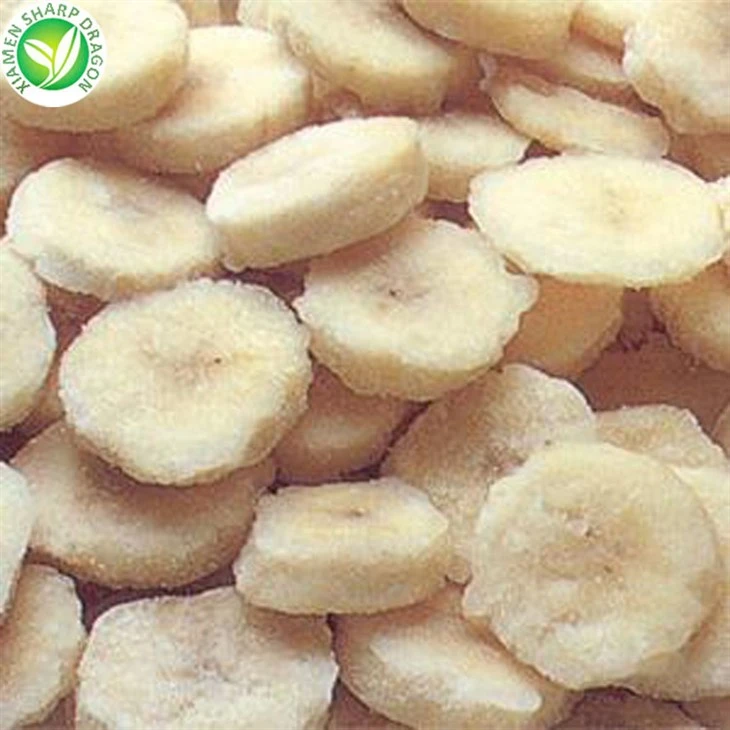
Read the ingredient list before inferring a process. "Bananas, coconut oil, sugar" is a formulated snack. "Bananas" may be dried without added ingredients but remains concentrated. Both differ from an IQF slice.
For a smoothie, the water may return through ice or milk, but the energy from all ingredients remains. Blending does not erase the second banana, juice or nut butter.
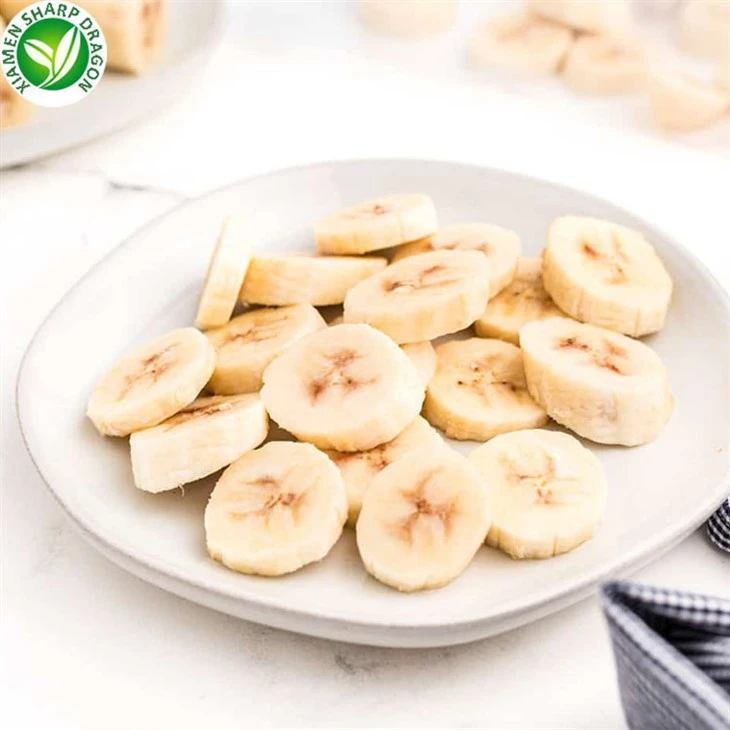
Therefore, never answer the weight question from the front image alone. Use serving mass, ingredients and the complete Nutrition Facts or recipe calculation.
Representative Scenario 1: A Household Snack Swap
Representative scenario: this is not a named customer case. Practical example: a household member wants to replace a weekday packaged dessert with fruit. The decision function is personal substitution and adherence.
The person records the dessert label, weighs five typical bananas and chooses an average 120 g edible portion. The banana replaces the dessert at the same eating occasion; it is not offered as an additional "healthy" course.
For two weeks, the record includes hunger before dinner, any later snack, digestive comfort and body-weight trend under consistent conditions. If a larger evening snack appears, the net substitution is smaller than the lunch arithmetic.
The action is adjusted from evidence: keep the swap, change the portion or choose another fruit. The person does not conclude that bananas "burn fat."
Representative Scenario 2: Breakfast Bowl Portion Control
Representative scenario: this is not a named customer case. Example: a café tops 12 breakfast bowls from a 1.2 kg inner pack. The decision function is recipe consistency rather than a consumer weight-loss plan.
The planned banana portion is 1,200 ÷ 12 = 100 g. Six observed scoops weigh 91, 96, 102, 108, 116 and 121 g. Their average is 105.7 g, and the 30 g range shows that the utensil is not controlling the recipe closely.
The café changes the scoop and trains staff to level rather than compress it. Yogurt, granola, syrup and nuts remain in the finished-bowl calculation. Banana control does not make the rest of the recipe disappear.
The result is a repeatable 100 g target and more reliable pack yield. The foodservice and catering supply page gives the relevant commercial context.

XMSD Experience 1: Cut and Maturity Affect the Scoop
In our XMSD experience, portion drift often begins with geometry rather than nutrition data. Thin rounds, thick rounds and irregular pieces occupy a scoop differently. Small fragments fill gaps and can raise mass without looking like a larger serving.
We ask the buyer to define the application and gram target before reviewing cut. A smoothie tolerates broken pieces; a bowl needs visible, separated slices. The sample is portioned with the buyer's utensil, not merely photographed.
Maturity affects softness, color and perceived sweetness. A sweeter perception can allow a formula team to reduce another sweetening ingredient, but that choice must be tested in the complete recipe.
Buyers reviewing an IQF frozen banana range should therefore request cut, maturity and portion together.
XMSD Experience 2: Finished Recipes Need One Data Basis
A separate XMSD lesson is to lock the weighing basis before an application trial. Frozen-as-sold, thawed and drained weights can differ. The formula must say which is used and how thaw liquid is handled.
We record pack code, portion mass, thaw method, other ingredients and finished yield. That record allows a later lot or recipe to be compared with the same method.
Incoming inspection answers whether the lot matches the specification; recipe testing answers whether it works in the bowl or beverage. A frozen-fruit sampling plan supports the first question but does not calculate the finished meal.
Keeping the two records linked but separate prevents a good lot result from being mistaken for a weight-management claim.

Separate Scale Noise from a Weight Trend
Day-to-day body weight responds to water, sodium, carbohydrate storage, bowel contents, menstrual cycle and measurement conditions. A banana eaten yesterday cannot be identified as body fat from one reading this morning.
Use the same scale, similar clothing and a consistent time if a trend is being monitored. Compare weekly averages or another clinician-approved method. Do not react to the highest or lowest isolated number.
A two-week substitution test can show whether the behavior is practical, but meaningful body-composition conclusions usually need more time and broader context. The first outcome may simply be hunger and adherence.
If weight changes rapidly without an intended diet change, or swelling, illness or other symptoms occur, seek medical assessment. A food experiment is not the right tool for unexplained clinical change.
This distinction prevents normal fluctuations from becoming a reason to remove a useful whole fruit.
Commercial Recipe Changes Must Reopen the Calculation
Lock the ingredient list, serving and yield when a café calculates a bowl or beverage. A change from 100 g to 120 g banana, sweetened yogurt instead of plain, or a larger cup alters the result.
Keep each ingredient on one weight basis and record edible output. If a 12-serving batch produces only 10 full cups, dividing recipe totals by 12 understates the served amount. Use actual standardized yield.
Artwork, menu boards and online nutrition should identify the same version. Date the calculation and assign an owner to review ingredient or portion changes. Otherwise an old estimate can survive several formula revisions.
Procurement can support this control by maintaining item codes, pack sizes and supplier specifications. It should not independently promise a consumer weight outcome from the presence of fruit.
The practical finish is a version-controlled bowl, not a slogan that banana makes the recipe light.
A Two-Week Test Is More Useful Than a Food Ban
Choose one banana portion and one food to replace. Keep the rest of the plan as stable as practical. Record the actual substitution, hunger, later eating and weekly weight trend. Two weeks will not prove a biological effect, but it exposes whether the intended swap occurred.
If the plan is satisfying and supports the goal, keep it. If the banana is repeatedly added rather than substituted, redesign the eating occasion. If the person dislikes banana or experiences symptoms, another whole fruit can fill the role.
People with a medical nutrition plan should use its carbohydrate, potassium and energy instructions. A blog cannot calculate insulin, renal exchanges or an individualized calorie prescription.
The test is deliberately modest. It replaces a claim about "fattening bananas" with observable behavior.
Final Weight Decision
A measured banana can fit a weight-maintenance or weight-loss pattern. It can also add energy when eaten on top of the existing diet. No contradiction exists: addition and replacement are different operations.
Use a four-line decision card: banana grams, complete recipe energy, food removed and actual eating frequency. Add a fifth line only when a later snack appears. This small record makes the mechanism visible without requiring a complicated tracking app.
For a whole-fruit swap, preserve the advantages that made it work-visible portion, convenient preparation and acceptable taste. Replacing it with a larger blended drink changes the intervention even if the main ingredient name remains banana.
For a café, keep the controlled recipe beside the item specification and menu version. Recalculate after a change in scoop, cup, yogurt, syrup, topping or frozen-fruit input. Customers see the finished bowl, so the commercial answer must follow that bowl.
If the measured substitution is clear but the expected trend does not occur, review the complete pattern with a qualified professional instead of cutting fruit automatically. Sleep, activity, medicines, illness and unrecorded intake can all change the interpretation. The banana log is evidence about one behavior, not a diagnosis of metabolism.
Weigh the fruit once, name the replaced food, count the entire recipe and look at a multi-week pattern. Do not judge the outcome from a one-day scale movement.
For foodservice, control grams at service and include every topping. The finished bowl, not the banana's healthy image, is what the customer receives.
Keep the conclusion attached to that measured version and reopen it whenever the portion or recipe changes materially.
Send XMSD the application, gram target, cut, maturity, pack and weighing basis. We will review the supply-side sample and portion variables.

The final visual check should agree with the written product and serving basis. If the pieces or pack change, repeat the weighing before reusing the calculation.
References
- U.S. Department of Agriculture, Agricultural Research Service. National Nutrient Database, fruits report, release 28. Banana energy, carbohydrate and household measures.
- U.S. Centers for Disease Control and Prevention. About healthy weight and growth. Long-term weight-management context.
- U.S. Department of Agriculture. MyPlate fruit group. Fruit-pattern and variety guidance.