


Raw Broccoli Harvest Maturity, Head Compactness and Yield Guide
Apr 24, 2019

The old version of this page ranked broccoli above other vegetables and compared vitamin and mineral values. That consumer nutrition framing does not help a processor decide whether a farm lot will make bright, compact and economical IQF florets. This replacement focuses on Brassica oleracea var. italica identity, cultivar, harvest stage, closed beads, head compactness, color, stem condition, field defects, cut-to-cool time, receiving release and raw-to-frozen yield.
Broccoli heads are immature inflorescences. UC Davis says the individual florets or beads should be closed, the head should be compact and firm under hand pressure, and color should be uniformly dark or bright green for the cultivar. Yellowing can result from overmaturity, high temperature, ethylene or excessive storage. Harvest timing therefore determines more than appearance; it affects trimming, breakage, blanching behavior and finished yield.
This guide covers raw broccoli from field selection through factory receiving. A separate finished-product specification must still control floret diameter, stem ratio, defects, blanching, free flow, cooked texture, packing and cold chain. Approve the raw and finished gates together without merging their measurements.
The short answer: Lock cultivar, farm and harvest lot, target head diameter, compactness score, closed-bead requirement, color, stem length and diameter, hollow-stem and field-defect limits, harvest-to-cool time, receiving temperature, sampling plan and raw-to-IQF yield formula. Compare reliable finished kilograms, not raw truck price.

Lock Cultivar, Field and Intended Frozen Style
Specify Brassica oleracea var. italica and the approved cultivar or documented equivalent. Cultivars differ in head dome, bead size, branching, stem fiber, hollow-stem susceptibility, brown bead, heat tolerance and postharvest yellowing. A substitution may change processing yield even when raw heads look green.
Define field lot by grower, farm, block, cultivar, planting date, harvest date or shift and vehicle. Record weather and irrigation events that can influence development. Preserve allocation when several blocks are collected into one load; a factory receiving number alone cannot identify the source of a maturity or defect problem.
Start from the finished style. Short spears, florets, cut broccoli, pieces and chopped product require different raw geometry. Large domed heads can support uniform florets; a long-stem style values sound tender stem; chopped product can use sound smaller material but should not absorb decay, excessive leaves, coarse fiber or foreign matter.
Connect the planting and harvest plan to processing capacity. Record transplanted area, stand count, expected head size, weekly maturity forecast and number of harvest passes. A concentrated block can exceed cutting or cooling capacity even when the seasonal tonnage is adequate. Commit finished volume from the lowest validated daily capacity, then keep a reserve for field rejection and maturity spread.
The XMSD frozen broccoli category helps identify the commercial direction. Use it to select a style, then confirm the raw-head program and partner-facility evidence for the actual order.
Harvest Closed Beads before Loosening and Flowering
Broccoli should be harvested while the flower buds remain closed. UC Davis describes head diameter and compactness as maturity indices and provides a firmness scale from very tight and firm to loose and soft. Build a farm photo scale with the same logic and define the minimum accepted score for the processing route.
Sample across rows, bed positions and harvest crews. Record head diameter, dome shape, bead development, compactness, color and stem condition. Show the distribution; a load with 80% tight heads and 20% visibly loosening heads is different from a uniformly acceptable lot even if the average score passes.
Separate true yellowing from lighter tissue that was shaded during growth. UC Davis warns that senescence yellowing should not be confused with light green-yellow areas not directly exposed to light. Use location, bead condition and a signed color atlas. Open yellow flowers, expanding beads or generalized yellowing indicate a different maturity decision.
Harvest frequency matters in fast development. Record field checks and the reason for advancing or delaying a pass. Hot conditions can shorten the acceptable window; a missed day can shift more heads from compact to loose. Update the raw forecast by maturity class rather than assuming all planted area will reach the factory at the target stage.
Control harvest-crew interpretation. Train with the signed photo scale, then compare acceptance among crews on the same marked sample. If one crew consistently leaves acceptable heads or cuts loosening heads, the block data will reflect operator bias rather than crop condition. Record retraining and supervisory checks. A maturity standard works only when the field decision and receiving decision use the same anchors.
Worked example: A farm samples 200 heads from eight row sections. The signed requirement allows compactness scores 4 or 5, closed beads and no open flowers. Results are 126 heads at score 5, 54 at score 4, 16 at score 3 and 4 with opening flowers. The accepted maturity rate is 90%. The project requires at least 95%, so the block is not released as one lot. Tighter zones are harvested separately; loose zones are rechecked for a lower-value validated route rather than mixed into premium IQF florets.

Measure Head Geometry and Stem Condition
Record maximum head diameter, height or dome, stem diameter at the defined point, and harvest stem length. UNECE FFV-48 uses head or floral-stem diameter for fresh sizing and includes a head-to-stem diameter relationship. Processing contracts can use different dimensions, but the method must be explicit.
USDA processing inspection instructions trim stems to a defined length for grading and separate leaves, foreign material, short stalks and coarse or damaged material. Use that disciplined separation to build a raw yield study. Do not compare farms when one delivers long leafy stems and another delivers trimmed heads without adjusting net usable material.
Inspect hollow stem by longitudinal cuts across the sample. Record opening width, length, discoloration and decay separately. UC Davis notes that growing conditions and cultivar affect the disorder. A clean hollow may create trim and visual loss; discolored or decayed tissue requires a stricter action.
Assess stem tenderness at the portion intended for use. Knife resistance, bend behavior or cooked sensory anchors can support the specification. A thick stem is not automatically coarse, and a thin stem is not automatically tender. Approve the actual cut after blanching and cooking.
Use a mixed composite for measurement. Randomize heads from multiple bins, vehicles and positions, then trim every sample under one rule before recording dimensions and mass. Show median and distribution as well as average. A few very large heads can make the average diameter look acceptable while most heads are too small for the required crown or floret style.
The XMSD IQF broccoli floret example shows finished-piece direction. Link its floret and stem requirements backward to raw head geometry and harvest trim.
Classify Raw Defects without Double Counting
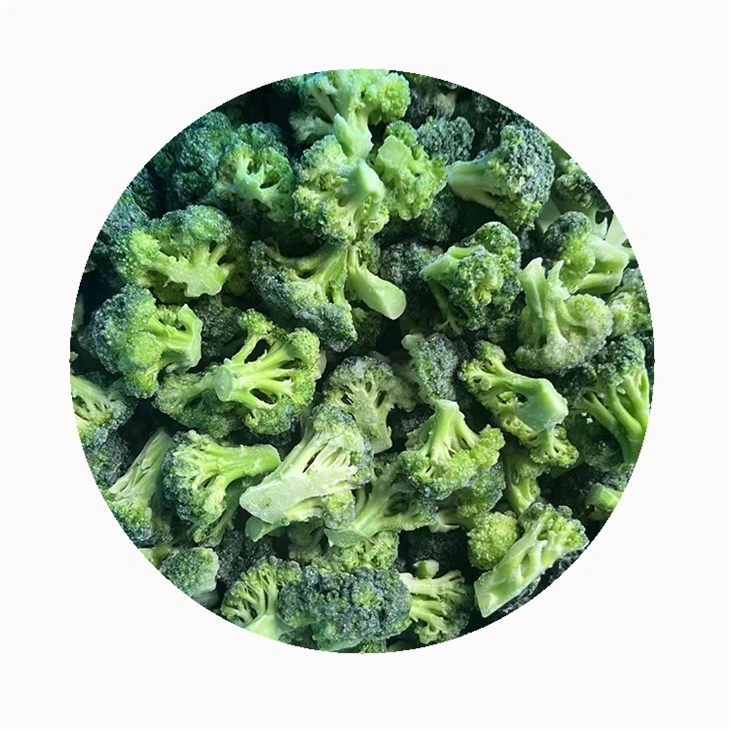
Use separate categories for decay, insects or larvae, disease lesions, yellow or brown beads, flowering, dirt or grit, foreign material, coarse stems, leaves, mechanical damage, hollow stem and off-color. Define severity with photographs, area, affected units or mass. One broad defect percentage hides the cause and corrective action.
Set classification priority. A head with insect damage and decay should trigger the safety and decay rule, while the same affected area should not be deducted again as discoloration. Commercial trim allowance cannot make decayed or contaminated material acceptable.
Open representative heads. Dense crowns can conceal caterpillars, frass, soil, water or decay. Check inner branches, stem cavities and cut surfaces. Increase sampling after a field pest event, heavy rain or unusual receiving finding.
Keep the unsorted composite, defect containers, weights and photos. Separate recoverable sound trim from cull material. If small or irregular florets can enter chopped product, define that route in advance and maintain lot identity; do not divert questionable material silently.
Escalate live or repeated pest findings. Record organism or provisional description, life stage, location inside the head, affected units, field block and immediate hold. Review crop-monitoring and treatment records, then confirm identification where the decision requires it. Washing and sorting may reduce visible material, but they do not replace a root-cause review or destination-specific pest and residue assessment.
The existing broccoli sourcing overview provides broader context. This raw-harvest guide goes deeper on field and receiving decisions that determine processing yield.

Remove Field Heat Quickly and Protect Humidity
Broccoli has a high respiration rate and deteriorates quickly when warm. UC Davis gives 0 degrees C as the optimal storage temperature and more than 95% relative humidity. It estimates that postharvest life falls from at least a month near 0 degrees C to about 14 days at 5 degrees C and roughly five days at 10 degrees C, with cultivar and season variation.
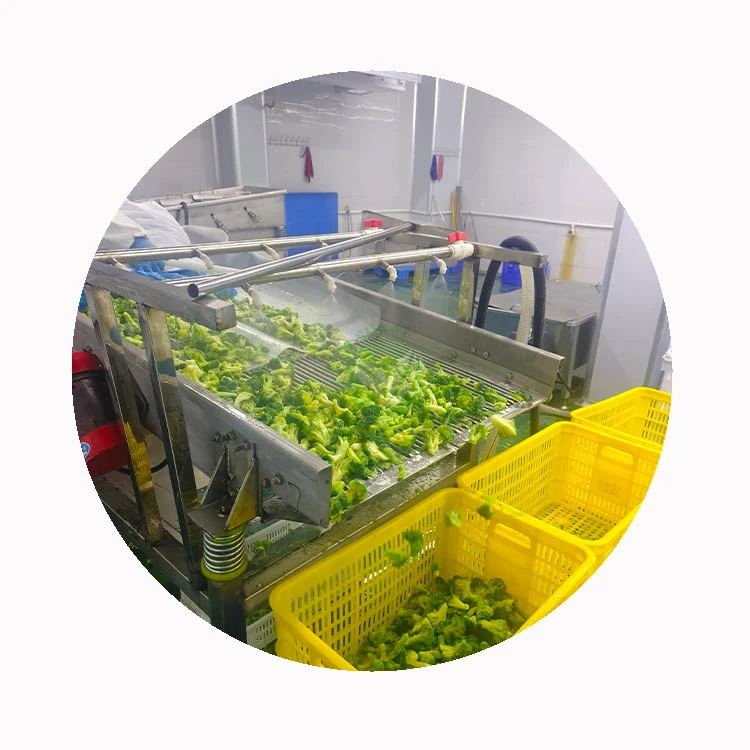
Record cut-to-shade, cut-to-cool and cut-to-factory times. Measure product temperature across bins or pallets, not only air. Validate hydrocooling, hydro-vacuum cooling or forced-air cooling for the packaging and load. Where water contacts broccoli, sanitation and water-quality control are critical.
Protect against water loss without trapping uncontrolled free water. UC Davis notes that cumulative water loss of 3% to 4% produces noticeable firmness loss. Thin liners may reduce dehydration in iceless distribution, but liner design, temperature, condensation and decay need validation.
Keep broccoli away from ethylene sources. UC Davis describes it as extremely sensitive; exposure accelerates floret yellowing. Record mixed-load commodities, vehicle history, storage-room segregation and ventilation. Low temperature is the primary control, not a justification to ignore ethylene.
Separate temperature-abuse yellowing from field overmaturity. Review harvest photos, incoming color and logger history. The corrective action differs: change harvest timing for overmaturity, or improve cooling and distribution for postharvest senescence.
Validate cooling under peak load. Empty-room temperature or a small trial does not prove performance when the line receives a full hot harvest. Place calibrated probes in warm, cold and central product positions; record cooling curves, water or air condition, flow, load mass and time. Approve a maximum product-temperature distribution at release, not only a room set point or one surface reading.

Reconcile Raw Mass to Saleable IQF Output
Raw delivered mass can include long stems, leaves, dirt, yellow or loose heads, pests, decay, hollow or coarse tissue and off-size material. Processing adds trimming, cutting, washing, blanching, cooling, freezing and inspection loss. Define each category and prevent double counting.
Practical example: Farm A delivers 10,000 kilograms at USD 0.55 per kilogram. Receiving removes 6% leaves and long trim, 4% overmature or defective heads, and finished processing yields 58% from accepted raw material, producing about 5,220 kilograms. Raw cost is about USD 1.05 per usable kilogram. Farm B costs USD 0.59 per raw kilogram, loses 3% trim and 2% defects, and yields 60%, producing 5,700 kilograms. Its raw cost is about USD 1.04 per usable kilogram. The higher truck price supports lower finished cost and more reliable volume.
Calculate by finished route. Premium florets, short spears and chopped broccoli recover different portions of the same head. Show permitted secondary routes and their value, but exclude decay, foreign material and unapproved tissue from recovery.
Trend yield by cultivar, block, harvest date, compactness class and receiving temperature. High leaf loss points to field trim; high off-size to head geometry or cutting; yellowing to maturity or temperature; hollow stem to cultivar and growing conditions. Use the cause to improve the next crop contract.
Run a witnessed production trial before a new farm or cultivar enters a large program. Keep raw sample, defect weights, cut settings, blanch record, frozen output and finished evaluation. Reconcile accepted raw mass to every output and loss category. Use the result to set the quotation yield, daily allocation and evidence frequency; do not scale a hand-cut laboratory recovery directly to commercial production.
Verify Food Safety, Residues and Traceability
Review crop-protection records and residue monitoring against destination and customer requirements. Match active substance, block, application date, pre-harvest interval and sampled lot. Verify laboratory method, scope and reporting limits; one generic broccoli result cannot release every field lot.
Trace finished carton to packing, inspection, freezer batch, blanching, cutting, receiving, vehicle, harvest shift, farm and block. Preserve split and merge quantities. A pest or residue issue in one block should not force a hold on unrelated production when records are complete.
Define intended use and microbiological criteria by organism, method, sample unit, plan and lot action. Frozen broccoli is commonly cooked, but "ready to cook" still requires controlled raw material, wash water, blanching, post-blanch hygiene, foreign-material controls and cold chain. Freezing is not sterilization.
USDA frozen-broccoli standards evaluate style, varietal characteristics, flavor and odor, grit, brightness, bud development and defects. Use this as shared vocabulary where appropriate, then write the exact customer tolerance, sampling and cooking method.
The XMSD IQF definition guide explains individual freezing. IQF separation does not prove correct harvest maturity, cleanliness, blanching or food-safety release.

Use Stage Gates from Block to Freezer
Reopen the relevant gate after cultivar, field, harvest window, cooling method, facility, cut or pack changes. Tight heads cannot compensate for residues outside destination limits; good raw yield cannot excuse insects or decay; a bright frozen sample cannot reconstruct missing field and receiving records.
- Lock identity: cultivar, farm, block, planting, harvest lot and intended frozen style.
- Lock maturity: closed beads, compactness, color, head geometry and harvest window.
- Lock raw defects: insects, disease, decay, yellowing, hollow stem, leaves, grit and damage.
- Verify cooling: cut-to-cool time, product temperature, humidity, water sanitation and ethylene exposure.
- Verify conversion: raw trim, accepted mass, cut distribution, blanching and finished yield.
- Verify release: brightness, grit, defects, sensory, microbiology, pack and frozen chain.
- Close evidence: residues, traceability, facility scope, corrective action and change control.
Keep one release sheet with requirement, method, sample, result, evidence, owner and decision date for every gate. A failure at one stage determines the next action: reharvest timing after loose beads, field investigation after pests, cooling correction after warm product or cut adjustment after poor yield. Do not average unrelated failures into a general score, because that prevents targeted correction.
Send the raw compactness and color anchors, head and stem geometry, target frozen style, defect limits, pack, destination, monthly volume and evidence list. We can compare a suitable farm, harvest window and partner-facility route before the raw and finished prices are treated as equivalent.
The broader XMSD frozen vegetable range can support mixed-vegetable programs. Align broccoli maturity, cut and cooking behavior with cauliflower, carrots, peppers and other components.
XMSD sourcing note: Tell us the broccoli cut, raw compactness, head and stem limits, pack, destination, volume and field-lot evidence. We will review a suitable IQF route.
Discuss Your Frozen Broccoli RequirementFrequently Asked Questions
Should broccoli beads be open at harvest for freezing?
No. Broccoli is harvested as an immature inflorescence with closed beads. Opening or flowering signals overmaturity and changes appearance, texture and yield.
Is all light green-yellow broccoli overmature?
Not necessarily. Shaded florets can be lighter. Distinguish localized growth color from senescence yellowing using bead condition, location and a signed photo atlas.
Why measure raw broccoli stem and leaves?
Long stems, leaves and coarse tissue add delivered weight but may not enter the contracted style. Measuring them supports fair usable-yield and price comparison.
How fast should raw broccoli be cooled?
As quickly as the validated cooling system safely allows. Define cut-to-cool time, target product temperature, packaging, method and water sanitation for the actual route.
Does raw-head approval release the frozen broccoli lot?
No. Finished broccoli still needs style, size, brightness, grit, defects, blanching, cooked texture, food-safety, packing and cold-chain release.
References
- UC Davis Postharvest Research and Extension Center, Broccoli. Maturity, compactness, color, temperature, humidity, ethylene, water loss, hollow stem and yellowing.
- USDA Agricultural Marketing Service, Broccoli for Processing Grades and Standards. Raw processing-broccoli grade vocabulary.
- USDA, Broccoli for Processing Inspection Instructions. Sampling, trimming, classification and defect evaluation.
- UNECE Standard FFV-48 for Broccoli. Fresh identity, minimum quality, sizing, tolerances and marking.
- USDA Agricultural Marketing Service, Frozen Broccoli Grades and Standards. Finished styles, brightness, grit, buds, flavor, odor and defects.
- USDA, Grading Manual for Frozen Broccoli. Finished-lot sampling and inspection procedures.
Disclaimer: This article provides general frozen-food sourcing and raw-material information, not agronomic, legal or process-validation advice. Confirm cultivar, farm controls, cooling, food safety, processing, labeling and destination compliance on the actual product, partner facility and shipment.