


Strawberry Growing Requirements for IQF Supply | Buyer Guide
Aug 21, 2026

A strawberry farm is suitable for IQF supply when its site, cultivar, production system, soil, water, crop protection, harvest maturity, picking discipline, cooling route, and lot records can repeatedly deliver fruit that survives washing, hulling, cutting, freezing, grading, packing, and the buyer's application. Sunlight and fertile soil are not enough. Procurement has to connect field conditions to measurable frozen output.
Start with the frozen product you need. Whole retail berries, bakery slices, yogurt dice, puree, and freeze-dried feedstock do not reward the same fruit characteristics. Define the accepted size, color, maturity, firmness, flavor, defect, residue, microbial, cut-yield, breakage, and traceability results; then qualify farms and cultivars against that target. There is no single planting formula that fits every region and end use.

A farm audit should connect the real field, variety, water, crop records, harvest route, and processing lot.
Define the Frozen Application Before the Farm Standard
Whole IQF fruit needs recognizable shape, controlled size, sound shoulders, strong red development, acceptable calyx removal, and enough firmness to withstand handling. Sliced and diced programs care about internal color, cavity, flesh uniformity, cut integrity, fines, and yield. Puree programs may tolerate shape variation but still need controlled maturity, flavor, color, decay, foreign material, ingredient status, and process safety. Freeze-dried programs add structure, moisture-removal behavior, crispness, color retention, and raw-material safety priorities.
Write the acceptance test before asking which farm is "best." Name the commercial form, cultivar policy, target size distribution, raw color stage, finished color, minimum usable firmness, soluble-solids and acidity method, defect definitions, cut or whole yield, frozen separation, thaw or application test, ingredient statement, residue plan, microbiological plan, packing, and lot evidence. If the supplier cannot translate a farm attribute into one of these outcomes, the attribute may not decide your order.
Example: cultivar fit changes by format. A large, attractive cultivar performs well as whole fruit but develops a pale internal core and excessive breakage when cut into 10 mm dice. A smaller, firmer cultivar gives a higher accepted dice yield and more even color. The buyer approves one source for whole retail packs and the other for industrial dice instead of forcing one "premium" cultivar into both programs.
Use the XMSD frozen strawberry range to identify whole, cut, puree, organic, and packing directions, then issue an application-specific approval sheet. The product listing is a commercial starting point; the production lot still has to meet your agreed evidence and test method.
Qualify Climate, Light, and the Production System
Strawberry growth and flowering respond to cultivar, temperature, day length, and production system. June-bearing, day-neutral, annual plasticulture, perennial matted-row, protected, and open-field programs have different planting calendars and risk profiles. A farm should explain why its cultivar and system fit the local climate, target harvest window, labor plan, and frozen-factory schedule.
Penn State commercial production guidance recommends a sunny, well-drained site close to irrigation and shows how system choice changes with regional temperature and growing season. High temperatures can reduce flowering or pollination in some day-neutral systems, while early bloom can expose flowers to frost. Do not copy one extension calendar into another latitude. Ask for site weather records, cultivar response, frost history, heat periods, bloom dates, harvest pattern, and mitigation capacity.
Protected tunnels or covers can alter rainfall exposure, temperature, earliness, disease pressure, irrigation demand, and labor. They are tools, not automatic proof of quality. Review ventilation, humidity, pollination, cover handling, water delivery, and crop scouting. For open-field production, review drainage, rainfall risk, wind, splash contamination, harvest access, and the ability to pick and transport during wet periods.

The harvest route must protect maturity, color, firmness, cleanliness, and lot identity from field to intake.
Use Soil Tests, Drainage Evidence, and Root-Zone Records
Good drainage is a first-line farm qualification condition because waterlogged root zones can reduce plant vigor and increase root-disease risk. Surface slope alone does not prove drainage through the profile. Review soil texture, infiltration, water-table or standing-water history, bed height, drainage works, compaction, erosion, and access after rain. Map problem areas rather than averaging the entire farm into one result.
Published pH guidance illustrates why local validation matters. Penn State cites 6.0–6.5 for its production guidance, the University of Minnesota nutrient guide cites 5.3–6.5, and Oregon State guidance cites 5.6–6.5. These are region- and method-specific agronomic references, not three competing global contract limits. The farm should use a qualified local laboratory, the relevant analytical method, and locally supported amendments.
Ask for georeferenced or field-block soil results, sampling depth, date, laboratory, method, pH, organic matter, key nutrients, salinity where relevant, amendment plan, and verification. Review rotation history and known soilborne disease risks. Penn State and Minnesota both warn about planting after Verticillium-susceptible crops in their systems; the exact rotation interval and mitigation should follow local pathology evidence and farm history.
Example: the average hides a wet block. A 20-hectare farm reports an acceptable mean pH and nutrient result, but two low blocks remain saturated after rain and supply most of the soft, decayed fruit. The buyer requires block-level sampling, intake-lot mapping, drainage correction, and separate freezer results. Farm-wide averages no longer release fruit from the high-risk blocks.
Approve Cultivar and Planting Material by Identity
Planting material should arrive with supplier identity, cultivar, lot, plant type, health status, dispatch and receipt dates, quantity, and any applicable certification or inspection evidence. A farm should segregate lots and record where each was planted. If several cultivars share one field or harvest container, frozen-lot identity and application consistency become harder to defend.
Cultivar approval should use the real harvest and process. Record berry size distribution, shape, internal and external color, cavity, firmness, flavor balance, calyx behavior, picking damage, disease susceptibility under the site program, hulling loss, cut integrity, frozen breakage, drip, and accepted application yield. A nursery description or fresh-market reputation cannot establish IQF performance.
GLOBALG.A.P. plant propagation material guidance emphasizes plant health, quality, traceability, soil and water management, fertilizer, integrated pest management, and plant-protection records. Certification can support farm qualification only when the certificate holder, location, crop or activity scope, standard version, status, and validity match the offered program. It does not replace the buyer's cultivar and freezer trial.

Cultivar, plant lot, field block, harvest lot, and freezer result should remain connected.
Control Irrigation Water and Moisture by Risk
Strawberries have a shallow root system, so both under-watering and poor drainage can affect yield and fruit condition. Irrigation design should fit soil texture, bed design, climate, system, growth stage, and water source. Fixed weekly volumes from another region are useful for orientation, not automatic operating limits. Review field moisture measurements, weather, irrigation logs, uniformity, maintenance, and corrective action.
The University of Minnesota irrigation guide compares drip and overhead systems and recommends using moisture and weather data rather than visual guessing. Overhead irrigation can support frost protection but wets foliage and fruit, potentially changing disease and harvest conditions. Drip can give more targeted water control, yet its filtration, pressure, emitter function, line placement, and monitoring still require evidence.
Water safety requirements depend on jurisdiction and intended use. The U.S. FDA pre-harvest agricultural water rule uses systems-based assessments for covered produce to identify and manage foreseeable hazards. For an export program, define the destination rule, water sources, distribution system, contact route, assessment frequency, test method where required, risk signals, mitigation, and records with a qualified food-safety reviewer.
Link Crop Nutrition and Protection to Destination Limits
A strong farm program bases fertilizer on soil, tissue, crop stage, yield expectation, and local agronomic guidance. Too little nutrition can reduce vigor and yield; excessive or poorly timed inputs can affect plant balance, cost, leaching, and fruit behavior. The buyer does not need to prescribe every fertilizer rate, but should verify that recommendations, applications, equipment calibration, responsible personnel, field block, date, rate, and preharvest implications are recorded.
Plant-protection approval needs the crop, pest justification, product identity, active ingredient, legal registration, field and date, rate, applicator, equipment, preharvest interval, re-entry rule, and harvest release. Compare the program with the destination's applicable maximum residue limits and customer restrictions. A generic "pesticide compliant" declaration cannot show whether the offered harvest lot fits the market.
Sampling and testing should follow a risk plan that considers farm history, destination, active ingredients, season, weather, supplier change, and buyer program. Record who sampled, where and when, the composite design, laboratory, method, reporting limit, sample ID, harvest lot, and disposition. The report protects the order only when it can be linked to the fruit used in the shipped frozen lot.
For a deeper raw-material safety and lot-linkage review, use the FD strawberry raw-material control guide. Its safety and traceability focus complements the agronomic suitability and IQF-performance decisions here.
Set Harvest Maturity for the Frozen Result
Strawberries should be harvested near the maturity needed because they do not respond to ethylene by completing normal ripening after harvest. The UC Davis strawberry postharvest sheet uses surface color for maturity and lists appearance, firmness, flavor, soluble solids, acidity, and volatiles among quality factors. Those fresh-market references are useful evidence, but you still need to validate the raw-color stage and finished result for your frozen program.
Define the harvest unit and method: field block, cultivar, pick date and shift, weather, color-stage distribution, firmness method, soluble-solids and acidity sample, defects, container, fill depth, hold time, and transport condition. Separate under-ripe, over-soft, moldy, fermented, insect-damaged, badly bruised, dirty, or foreign-material-contaminated fruit under written definitions. Keep food-safety defects separate from cosmetic grading.

Farm qualification is incomplete until harvest timing, intake, processing, testing, packing, and shipment can be linked.
UC Davis reports that cooling delay reduces marketable fresh fruit and describes 0°C as the fresh postharvest optimum in its cited system. Do not turn that number into a universal IQF-factory contract. Map the actual time and temperature from picking through field shade, transport, intake, staging, washing, preparation, and freezing, then correlate the route with decay, firmness, drip, breakage, color, and accepted yield.
Example: harvest delay defeats a good field. Two blocks use the same cultivar and pass the same field inspection. Fruit from Block A reaches processing in two hours and retains better firmness. Fruit from Block B waits through a warm afternoon and produces more soft pieces and drip. The buyer adds maximum route time, container fill, shade, intake temperature, and exception handling rather than approving both blocks on agronomy alone.
Translate Raw Fruit into IQF Acceptance
A typical route can include receiving, raw inspection, washing, hulling, trimming, cutting, dewatering, rapid freezing, grading, inspection, metal detection, packing, and frozen storage. The actual plant should supply its validated process and hazard controls. The frozen strawberry process overview can frame the sequence, while the order specification controls methods and limits.
Inspect representative frozen samples for whole or cut identity, color, size distribution, character, flavor and odor, calyx or stem residue, foreign vegetable material, sand or grit, bruised or damaged fruit, undeveloped fruit, decay, excessive ice, fused units, breakage, and package condition. The USDA frozen strawberry standard evaluates color, defects, and character after defined thawing. Use it only when applicable or incorporated into the contract; otherwise build an equivalent buyer method.
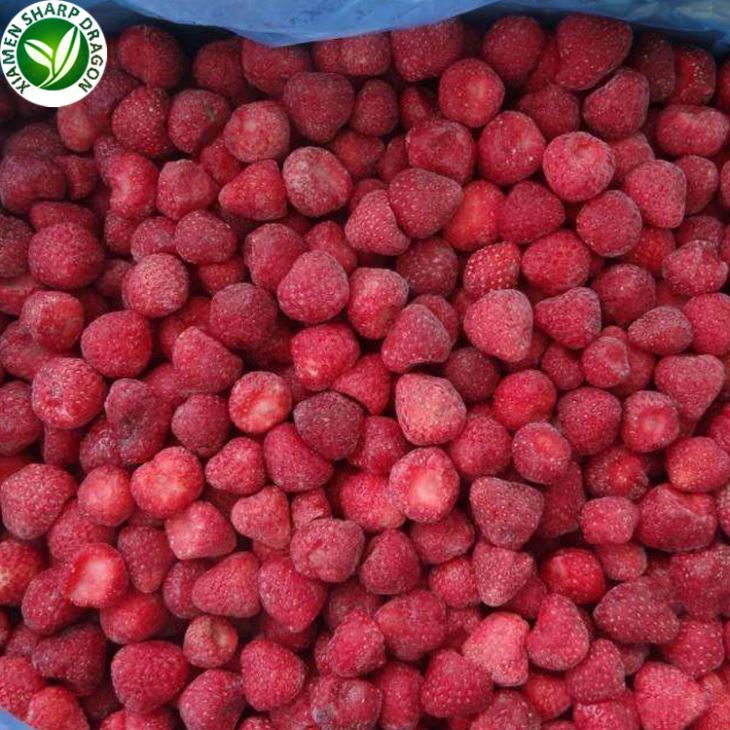
The frozen lot reveals whether farm, maturity, handling, and processing decisions produced usable whole fruit.
For cut fruit, measure the distribution within target, oversize, undersize, fines, fused pieces, and broken material by an agreed weight or count method. For whole fruit, state diameter bands, whole-unit definition, partial berries, surface damage, and acceptable shape. Test the intended thaw, bake, blend, dairy, dessert, or repacking route because a visually sound frozen sample can still fail through excessive drip, color loss, weak flavor, nozzle blockage, or unstable piece identity.

Cut yield, internal color, fines, and application performance can reverse a raw-fruit price comparison.
Compare Farms by Accepted Frozen Yield
Raw price per kilogram ignores intake rejection, hulling and trimming, cutting loss, freezing loss, grading rejection, breakage, and application failure. Build a conversion sheet from raw delivery to accepted frozen output. Keep the sampling unit, process line, shift, cut, pack, thaw, and defect method comparable between farm trials.
Farm A supplies 10,000 kg at USD 1.05/kg delivered, a raw cost of USD 10,500. Intake accepts 94%, leaving 9,400 kg. Hulling and trimming retain 88%, leaving 8,272 kg. Frozen grading accepts 94%, giving 7,775.68 kg. Raw-fruit cost is USD 10,500 ÷ 7,775.68 = USD 1.35 per accepted frozen kilogram.
Farm B costs USD 1.12/kg delivered, or USD 11,200 for 10,000 kg. Intake accepts 97%, hulling and trimming retain 91%, and frozen grading accepts 97%, giving 8,562.19 kg. Raw-fruit cost is USD 11,200 ÷ 8,562.19 = USD 1.31 per accepted frozen kilogram. The higher raw price saves about USD 0.04/kg on this denominator.
Add processing, energy, labor, testing, packing, freight, storage, rework, disposal, and claims cost when they differ. For dice, use accepted in-size output; for whole retail packs, use saleable whole berries; for puree, use accepted single-strength mass or finished formula output. A farm ranking is valid only for the product and denominator tested.
Audit Traceability, Change Control, and Supply Capacity
From a finished carton, the supplier should identify production batch, freezing run, raw intake, farm or grower group, field block where feasible, cultivar, harvest date, crop-protection records, relevant test sample, packing run, pallet, and shipment. From a field or raw intake lot, it should identify every finished lot that received the fruit. Mixed sourcing should have a declared policy and a recorded input map.
Use the farm-source framework to organize growing-region, source, crop-window, and supply questions. Order approval still requires the exact source program assigned to the lot. A general farm photograph, certificate, or region statement cannot replace block, batch, test, and shipment linkage.
Define changes that need notice and reapproval: farm, field expansion, grower-group structure, cultivar, nursery source, production system, water source, crop-protection program, process facility, cut line, specification, pack, or destination. Set the evidence and lead time for each change. Seasonal renewal should review crop outlook, farm capacity, labor, harvest-to-factory route, trial results, corrective actions, and forecast coverage.
Capacity should be expressed as approved fruit, not planted hectares alone. Estimate harvest by week, planned allocation, raw rejection, process yield, accepted grade, frozen inventory, and buyer volume. Stress-test rain, heat, frost, labor shortage, disease, transport delay, and factory interruption. A multi-region plan can improve continuity, but each substitute source needs its own approval and lot identity.

A source change is complete only after the representative frozen and application results remain acceptable.
Use a Practical Farm-Approval Sequence
First, lock the buyer application and frozen acceptance method. Second, screen the proposed region, system, cultivar, soil, drainage, water, crop protection, harvest route, and farm records. Third, observe a representative harvest and trace the raw lot into processing. Fourth, measure raw, process, frozen, and application yields. Fifth, close gaps through corrective action and repeat evidence where needed.
For private-label and retail whole-fruit programs, emphasize whole shape, color, size, surface condition, separation, package presentation, residues, food safety, recall linkage, and seasonal consistency. For bakery, dairy, and industrial dice, emphasize internal color, cavity, firmness, cut distribution, fines, thaw drip, heat or formula performance, and accepted yield. For puree, emphasize maturity, flavor balance, color, ingredient status, screen, viscosity, treatment, drum or bag, and formula output.
When your program is processing-focused, use the food-processing supply framework to align raw supply, specification, production scheduling, and industrial use. Keep the commercial farm, processor, and lot evidence in the quality agreement rather than assuming one general capability statement applies to every source.
Send the required frozen form, size or cut, application, destination, volume, harvest window, cultivar policy, maturity and defect limits, residue and food-safety plan, pack, certification scope, and sample test. We can review suitable strawberry sourcing and processing routes and identify the evidence needed for approval.
Frequently Asked Questions
Is there one ideal soil pH for every strawberry farm?
No single number should be copied worldwide. University guidance commonly places strawberries in a slightly acidic range, but cited limits and methods vary by region. Use a qualified local soil laboratory, the relevant production guidance, field-block results, amendment timing, and plant response, then verify the frozen output.
Does GLOBALG.A.P. approval prove a farm is suitable for IQF strawberries?
It can support assurance when the holder, location, product scope, option, version, status, and validity match the source. It does not prove cultivar fit, cut yield, color, firmness, freezer performance, or application acceptance. Verify the certificate and run the buyer-specific trial.
Can fruit from several strawberry farms be mixed?
Mixing may be permitted under an approved program, but the input lots, quantities, cultivars, harvest dates, test status, and finished batches need records. Define whether unapproved farms or cultivars are prohibited and whether a mixed lot needs a new sample or label review.
Should the farm sample be frozen on the commercial line?
Prefer a representative harvest processed through the proposed production route. A hand-selected or pilot sample can screen an option, but it may not reproduce intake rejection, line handling, cut distribution, freezing load, sorting, or pack condition. Require production-lot confirmation before shipment.
How often should an approved strawberry farm be reviewed?
Set frequency by risk, certification cycle, crop season, destination, performance, and change. At minimum, review the new crop plan and approval evidence before supply. Trigger additional review after material source, water, cultivar, crop-protection, traceability, safety, yield, complaint, or regulatory changes.
References
- Penn State Extension - Strawberry Production: site selection, soil, roots, irrigation, and production systems.
- University of Minnesota Extension - Planting a New Strawberry Field: site, drainage, rotation, soil testing, and planting material.
- University of Minnesota Extension - Strawberry Nutrient Management: soil testing, pH, organic matter, and nutrient planning.
- University of Minnesota Extension - Irrigating Strawberries: drip and overhead systems, moisture monitoring, and scheduling.
- Oregon State University Extension - Growing Strawberries: soil pH, testing, drainage, root-zone, and amendment context.
- UC Davis Postharvest Research and Extension Center - Strawberry: maturity, quality, cooling, temperature, and decay guidance.
- USDA Agricultural Marketing Service - U.S. Standards for Grades of Frozen Strawberries.
- U.S. FDA - FSMA Final Rule on Pre-Harvest Agricultural Water.
- GLOBALG.A.P. - Integrated Farm Assurance for Plant Propagation Material.