


Is Freeze-Dried Fruit Crispy and Nutritious?
Dec 09, 2021

Freeze-dried fruit can be both crisp and nutritious. Removing much of the water leaves a light, porous structure that often breaks easily when you bite it. Many of the fruit's nutrients remain, but the amount retained varies with the fruit, preparation, drying conditions and storage. A crisp bite is a texture observation, not proof that every vitamin has survived unchanged.
For a useful comparison, look at the ingredients and the quantity you actually eat. A small bag of dried strawberries contains far less water than the same weight of fresh strawberries. Comparing both foods per 100g therefore answers a different question from comparing an ordinary portion of each. Drying concentrates the remaining fruit solids into a lighter product; it does not create extra fruit or make unlimited portions a sensible assumption.
Plain freeze-dried fruit also differs from a coated fruit snack, sweetened fruit pieces or vacuum-fried chips. All may look appealing in a pouch. The process name, ingredient list, nutrition panel and condition of the opened product tell you different things. Read them together before deciding whether the product suits a snack, cereal mixture or dessert topping.
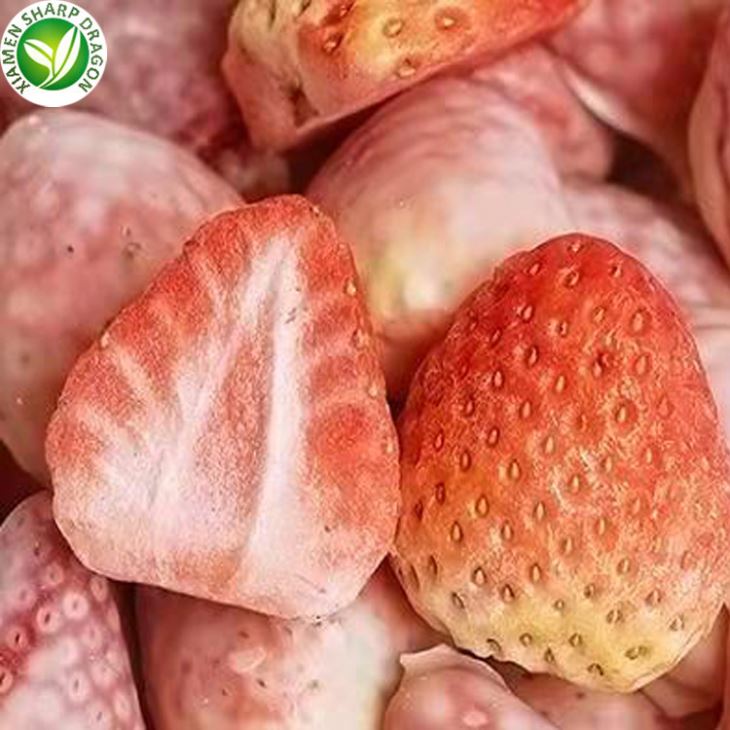
Why the fruit becomes light and crisp
During freeze-drying, ice in the frozen fruit changes into water vapor under reduced pressure. This is sublimation. The spaces left as water is removed help explain the porous structure. UF/IFAS describes freeze-dried peach slices as light and crisp, while conventionally dehydrated peaches are generally denser and chewier. Use that peach comparison as a description of structure, then assess the fruit and cut you intend to buy.
Try describing the texture more precisely than simply calling it crunchy. A strawberry slice may fracture in several thin layers. A whole berry can offer more resistance before breaking. Small raspberry fragments give a finer texture scattered through a cereal mixture. These are useful distinctions when choosing a format, even when the pieces come from the same fruit and were processed by the same general method.
The intended use changes what counts as a good result. A delicate slice can be attractive as a finishing garnish yet break during vigorous mixing. A small fragment may disappear visually in a bowl but distribute fruit flavor more evenly. We would choose the cut around that job first, then compare samples in the actual food. Paying for large, intact pieces makes little sense if the next production step intentionally crushes them.
Our freeze-dried fruit range provides a starting point for reviewing available fruit forms. For a specific application, we review the fruit, cut and required product information together before discussing a suitable option.

What the nutrient evidence actually supports
Freeze-drying can preserve nutritional quality well, but the evidence is more specific than the claim that nothing changes. A 2018 study in Food Chemistry compared several drying methods across blueberries, tart cherries, strawberries and cranberries. Freeze-dried samples retained several measured compounds better than the other methods studied. However, another drying method retained more total vitamin B than freeze-drying. The authors reported that outcomes depended on both the product and the drying method.
A 2022 strawberry study adds another useful distinction: sliced fruit and pulp were tested under different freeze-drying conditions. Their measured properties were not identical across treatments. These results support looking at the actual product and process. For a product comparison, ask which nutrient was measured, on what weight basis, and at which stage of preparation or storage.
There are also several different questions hidden inside the word nutritious. Does the product contain fruit solids? How much fiber or vitamin C is present in the portion? Has sugar been added? Is the product replacing another snack or being added on top of everything else? A statement about one of these questions cannot answer all the others. Choose the information that matches the decision you are making.
For example, a laboratory measurement of an antioxidant compound describes that compound in the tested sample. It is not a clinical result showing that a snack prevents illness. Likewise, a photograph of bright red berries shows appearance, not their vitamin content. When a nutrient amount matters to a menu or product claim, use suitable product-specific nutrition information rather than estimating it from color, price or the word premium.

Compare portions before comparing nutrition panels
Start with the serving weight on the package, then decide how much you expect to eat or use. If you compare two products with different serving sizes, either calculate both for the same weight or calculate both for your intended portion. Keep the purpose clear. Equal-weight comparison helps examine concentration; realistic-portion comparison helps plan an actual snack or recipe.
Worked example: imagine a snack label that lists 70 calories and 12g total sugars per 20g serving. These are hypothetical numbers for calculation, not an XMSD product specification. If you weigh a 30g portion, the multiplier is 30 divided by 20, or 1.5. That portion would provide 105 calories and 18g total sugars using the example label. The decision is whether that amount fits your snack plan, rather than whether the pouch feels light in your hand.
The same arithmetic is useful for recipe development. If the example fruit is used at 5g per dessert, the multiplier is 5 divided by 20, or 0.25. Its contribution would be 17.5 calories and 3g total sugars before accounting for the other ingredients. Record the fruit contribution separately, then calculate the complete recipe. Do not describe the nutrition of the whole dessert using only the fruit's panel.
A fresh-to-dried comparison needs an additional basis. If a supplier gives a raw-material equivalent, ask what that figure includes and how it was calculated. Trimming, edible yield, final moisture and ingredients added during preparation can affect interpretation. Without that information, the dried serving weight is the clearer starting point. A bag volume, a handful and a fresh-fruit count are three different measures and should not be silently substituted for one another.

Read ingredients separately from the process name
Freeze-dried describes a method. It does not, by itself, tell you the complete recipe. A product can consist of fruit alone, or fruit may be combined with another ingredient before or after drying. Check the actual ingredient list when you want an unsweetened product, a particular flavor profile or a product suitable for a restricted diet.
On a US Nutrition Facts label, total sugars include both naturally occurring sugars and added sugars. The added-sugars line is part of the total, not an extra amount to add to it. Fruit naturally contains sugars, so a product with no added sugar can still list total sugars. Conversely, a fruit ingredient in a snack does not mean that the complete snack has no added sugar.
The difference matters in purchasing descriptions too. A request for plain strawberry pieces is clearer when it explicitly states the expected ingredient declaration. If a coating, sweetener or seasoning is acceptable, identify it as part of the product brief. This prevents two very different recipes from being compared as though the only difference were price. Review the finished specification and label together before approving the sample.
For a crisp snack comparison, the vacuum-fried fruit and vegetable options represent a different processing route. Vacuum frying involves oil; freeze-drying removes water from frozen food under vacuum. Neither name alone establishes the finished fat content, ingredient declaration or nutrient profile. Use the relevant product information for each, and avoid treating every crisp fruit product as a freeze-dried product.
Why an opened pouch may lose its crispness
Freeze-dried foods readily absorb moisture from their surroundings. University of Maine Extension emphasizes protective storage because this uptake can affect quality. A pouch opened repeatedly in a humid kitchen faces a different exposure from a sealed pack kept according to its instructions. The useful question is how well the product performs through your actual opening and serving routine.
Look at when the change occurs. If a newly opened, undamaged pack is already soft, record the lot, condition of the seal and storage history, and ask the supplier to review it. If a product starts crisp and softens after standing beside a steaming preparation area, the exposure during use is relevant. Those two observations lead to different investigations, so do not combine them into a single complaint that the fruit is not crispy.
At home, take out the amount needed and close the pack promptly using the closure and storage instructions provided. In a commercial kitchen, plan the working quantity around the service period and keep the remaining stock protected. A large open bowl can be convenient, but convenience should be weighed against texture changes and the amount left at the end of service.
An after-opening instruction needs to match the fruit, pouch and expected conditions of use. Ask for the product's instructions and test the practical workflow within them. Write down the opening time, serving conditions and observation time when reviewing a sample. That short record is more useful than judging a bag from memory several days later.

Test toppings at the time they will be eaten
Dry cereal, yogurt and a hot drink expose fruit pieces to very different amounts of moisture. The fruit's appearance straight from the pouch is only the first observation. For a topping, the important result is the texture at the point of eating. If a soft fruit inclusion is intended, moisture uptake may be welcome; if a crisp finish is promised, the timing of addition becomes part of the recipe.
Practical example: consider a hypothetical cafe preparing 30 yogurt portions with 3g of freeze-dried strawberry per portion. The planned fruit requirement is 90g. The cafe compares two serving methods under the same established food-safety controls: add the fruit immediately before service, or assemble the topping 60 minutes earlier. The 60-minute interval is a texture-trial condition, not a statement that any yogurt can be held safely without temperature control.
The staff compare appearance, bite and ease of service at the intended eating time. If the preassembled sample softens more than the menu allows, they can keep the fruit separate until service or choose a deliberately soft fruit topping. The result of the trial is a serving-method decision. Record which method met the cafe's texture target, the portion used and any extra assembly work needed during service.
Our preference is to make this comparison before approving an attractive sample photograph. The product has to work in the dish, with the staff and equipment that will actually handle it. A beautifully intact slice that is repeatedly crushed by the dispenser may be less useful than a smaller cut chosen for that dispenser. The finished serving gives the specification a practical meaning.

Whole pieces, slices and crumble serve different purposes
Whole fruit and broad slices can give a recognizable appearance. Crumble and smaller pieces are useful when even distribution matters more than an intact outline. Powder is another format again and should be assessed for the way it disperses or clumps in the intended recipe. A purchase description that merely says freeze-dried strawberry leaves these differences unresolved.
For an initial comparison, the freeze-dried strawberry product information can help you identify the format you want to discuss. Then examine an actual representative sample. Spread it on a clean surface so that whole pieces, fragments and fine material can be seen separately. Photograph the complete sample as well as the close-up detail; selecting only the best pieces gives an incomplete view.
Suppose a hypothetical 100g sample contains 8g of fine material that your whole-piece garnish cannot use. On that definition, 92g remains usable for the garnish. That is an illustrative acceptance calculation, not an observed XMSD breakage rate. If the same fine material is acceptable in a cereal blend, the usable amount for that application could be different. State the application and the separation method before comparing percentages.
Avoid describing all small pieces as waste. Some are an intentional cut, while others may be breakage from handling. A crumble specification and a whole-fruit specification need different descriptions. Keep records of the sample as received, how it was handled and how it was separated. Otherwise, a difference caused by your own mixing or transport trial may be mistaken for the original delivered condition.

Crispness and food safety need separate checks
A dry, crisp product should still be handled as food. University of Minnesota Extension explains that freeze-drying does not reliably destroy illness-causing microorganisms. Low water activity helps limit their growth, but organisms present before drying may survive. This is why raw-material controls, hygienic handling and appropriate processing remain relevant even when a product is intended to be shelf-stable.
A sensory check answers whether the sample meets your quality expectations. It does not replace the supplier's food-safety controls or any required verification for the product and market. Do not taste a suspicious, moldy or damaged product to decide whether it is safe. Record the issue and follow the appropriate disposal or supplier-review process.
The distinction becomes especially important when dry fruit is added to a moist food. The finished mixture has its own handling requirements. Treat a yogurt bowl as yogurt with fruit added, rather than assuming the dry ingredient makes the bowl shelf-stable. The same principle applies to rehydrated fruit preparations: use the instructions and controls appropriate to the finished food.
A useful specification describes the eating result
For a retail snack, describe the intended bite, piece presentation, portion and package use. For an ingredient, describe the food it enters, the point of addition and the condition at serving. These details let the supplier understand what success looks like. They also make it easier to distinguish an essential requirement from a preference that could be adjusted after sampling.
Keep nutrition and texture records connected to the same product identity. A nutrition sheet for one recipe should not be paired with a sample of another recipe simply because both contain strawberries. Check the fruit name, ingredient version and format. When a formulation changes, review the associated information instead of carrying every earlier statement into the new version automatically.
Use the same review conditions when comparing two samples. If one pouch is opened just before tasting and the other has been open through a busy service, the comparison includes handling differences. Prepare matching portions, label them clearly and note when each pack was opened. Keep an unopened reference where the sampling plan permits. This makes a repeat comparison easier when an observation is disputed.
Price comparison also benefits from that discipline. Compare the quoted quantity and format with the amount that serves the intended purpose, while keeping the required quality limits fixed. A lower-priced crumble and a whole-fruit garnish are different purchases. Decide whether the application can use the crumble before treating its lower price as a saving.
For sample feedback, be specific about what you observed and what you want to change. "Slices stayed identifiable but softened before service" gives a useful starting point. "Not premium enough" does not explain whether the problem is color, size, flavor, breakage or timing. Include the portion, handling method and observation point so the next sample addresses the actual issue.
Freeze-dried fruit is a useful choice when its light texture, fruit flavor and convenient format fit the intended use. Judge the nutrient information on a clear serving basis, read the complete recipe and protect the product during use. Then make the final choice with the snack or finished dish in front of you, rather than relying on an absolute promise of unchanged nutrition.
For menu development, our foodservice and catering information provides additional application context. Send the fruit, cut, intended use, ingredient requirements and destination. We can review the relevant product information and sample options with you.
References
- University of Minnesota Extension: Freeze-Drying and Food Safety
- UF/IFAS: Dehydrated and Freeze-Dried Peach Fruit
- University of Maine Extension: Tips for Freeze Drying
- Food Chemistry: Fruit Quality Under Different Drying Methods
- Processes: Strawberry Preparation and Freeze-Drying Conditions
- FDA: Added Sugars on the Nutrition Facts Label
- FDA: Serving Size on the Nutrition Facts Label