


Are Peaches a Healthy Fruit? A Form and Label Guide
Aug 07, 2019

Yes, plain peaches can be a healthy fruit choice, but "healthy" describes how the food fits your diet, not a medical effect guaranteed by the fruit. A medium raw peach is a recognizable serving of whole fruit with water, carbohydrate, fiber and vitamin C, and it contains no added sugar. Unsweetened frozen peach and canned peach with no or very limited added sugars can also fit. Syrup-packed fruit, sweetened peach preparation, pie filling, juice and a large smoothie need a separate decision because ingredients, serving size and the amount consumed can change substantially.
Use three checks. First, name the product: whole fresh fruit, plain frozen pieces, canned fruit, or a formulated peach food. Second, compare the serving and label on the same edible basis. Third, consider your own tolerance. Peach allergy, pollen food syndrome and sorbitol-sensitive IBS can make an otherwise ordinary fruit unsuitable for a particular person or portion.
The flesh is the food; the hard stone and its kernel are not. That safety boundary matters in homes and in pitted commercial products. A sound conclusion therefore looks beyond the word "peach" and asks what is actually in the pack, how much is served, what it replaces in the meal and whether any individual restriction applies.
The short answer: Choose plain whole, unsweetened frozen or low-added-sugar canned peach in a visible serving. Read syrup and sweetened products as formulated foods, not as automatic equivalents. "Healthy" does not mean detoxifying, slimming, curative or suitable for every person.

What "Healthy Fruit" Can and Cannot Mean
A useful health judgment starts with dietary role. The current Dietary Guidelines for Americans encourage a variety of whole fruits and say frozen, dried or canned fruit with no or very limited added sugars can also be good options. For a 2,000-calorie pattern, the guideline gives a goal of two fruit servings per day, adjusted for individual energy needs. That makes peach one possible contributor to a wider fruit pattern; it does not give peach a unique therapeutic status.
Composition data answer a narrower question: what is present in a defined amount of a defined food. USDA SNAP-Ed lists one medium peach at 150 g with 58 calories, 14 g carbohydrate, 13 g total sugars, 2 g dietary fiber, 11 mg vitamin C and 0 g added sugars. These figures are a practical reference for raw peach, not a promise for every variety, maturity, frozen lot, canned product or recipe.
Fiber has normal physiological roles, vitamin C is an essential nutrient, and fruit contributes water and plant compounds. Those facts do not prove that a peach detoxifies the body, treats edema, cures constipation, prevents wrinkles, reverses a hangover or prevents a named disease. A nutrient in a food is not the same evidence as a controlled clinical outcome from that food. Keep the wording proportional: peach can contribute to a varied diet; it is not a treatment.
The detailed peach nutrition and benefits discussion examines nutrients and evidence limits. For the "healthy fruit" decision, the next step is more practical: compare a serving of the product you will actually eat, not an idealized picture of fresh peach.
Start with a Real Serving, Not a Halo
One medium peach is a useful household reference because the unit and edible portion are easy to see. A bowl of slices, a pouch of frozen dice, a can and a smoothie are not self-defining. Their nutrition numbers apply to the label serving, which may be smaller than the package or menu portion. Before comparing products, put each number on the amount you will actually serve.
Serving context also changes the judgment. Peach can contribute fruit and flavor at breakfast, but it does not provide every component of a complete meal. If a fruit-only breakfast leaves you hungry, add the protein, fat or grain appropriate to your plan instead of concluding that peach is unhealthy. If peach replaces a heavily sweetened topping, the meal changes differently than when syrup, sweetened yogurt and granola remain and peach is added on top.
Practical example: build the comparison around substitution. You normally add 80 g of sweetened pie filling to plain yogurt. Test 80 g of thawed unsweetened peach dice with cinnamon in the same yogurt, keeping the yogurt quantity constant. Compare the two ingredient lists, calories and Added Sugars for the actual 80 g amount, then judge taste and satisfaction. The result comes from the product and substitution, not from a special property of the word "peach."
Variety still matters. A healthy eating pattern uses more than one fruit, and one food does not need to be highest in every nutrient. Peach can be chosen for taste, availability, portionability and application while other foods supply protein, fats and nutrients found in smaller amounts in peach. This is a stronger standard than calling peach either a clinical solution or "just sugar."

Fresh, Frozen, Canned and Syrup Forms Are Not One Product
Fresh, frozen and canned describe preservation, not health by themselves. The American Heart Association treats all three as potentially healthy choices and recommends checking for added sugar. The current U.S. dietary guidance likewise accepts frozen and canned fruit with no or very limited added sugars. We therefore start with ingredients and serving basis before ranking a form.
| Peach form | Reasonable starting judgment | Decision-changing check |
|---|---|---|
| Fresh whole peach | Plain whole fruit with a visible unit | Edible size, ripeness, skin preference, pit removal and personal tolerance |
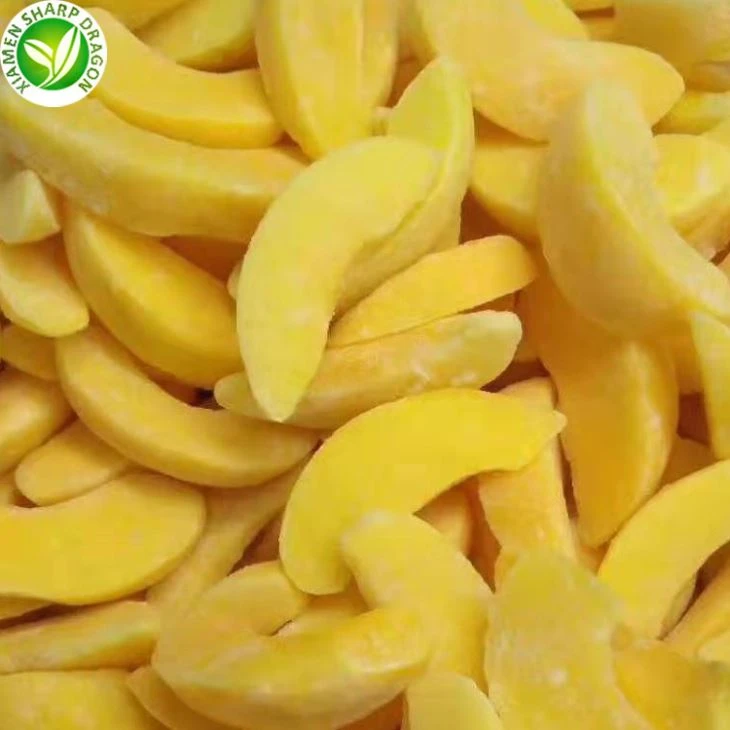
| Unsweetened frozen peach | A practical plain-fruit option when ingredients contain peach without added sweetener | Serving weight, cut, peeling, thaw loss, clumping and recipe additions |
| Canned in water or juice | Can fit when the serving and added-sugar profile suit the meal | Packing liquid, drained versus net weight, serving count and Added Sugars |
| Syrup-packed peach | A sweetened formulated choice, not a direct plain-fruit equivalent | Light or heavy syrup, drained amount, added sugar per serving and actual use |
| Pie filling, jam or sweetened preparation | Judge as the finished formulated food | Fruit percentage, sweeteners, thickeners, serving and total recipe |
Freezing changes texture after thawing, but softness does not make the fruit nutritionally worthless. It changes application fit: firm frozen slices may work in bakery or topping systems, while thawed dice may suit yogurt, oatmeal, sauce or puree. For peeling, texture and storage details, use the guide to frozen peach quality and use. The decisive point here is that plain frozen fruit and a sweetened frozen dessert require different labels and portions.
Do not infer "unsweetened" from the freezer aisle or from an IQF description alone. IQF describes how separate pieces are frozen; it does not tell you whether a later glaze, sauce or sweetener was added. The ingredient statement resolves that question. For canned products, the packing medium and drained basis perform the same job. For bakery or dairy preparations, request the complete formulation or specification because the peach may be only one component of a sweetened system.

Read the Label in the Right Order
For a packaged peach product, start with serving size and servings per container. FDA explains that Nutrition Facts usually describe one serving, while some packs also show the whole container. If you eat two servings, multiply the calories and each nutrient by two. This simple step prevents a small label serving from being mistaken for the full cup, can or smoothie.
Next read the ingredient list. "Peaches" alone or peaches plus an allowed anti-browning ingredient is different from peaches with sugar, syrup, juice concentrate, sauce or sweetened dairy. Ingredient order tells you relative predominance by weight under the applicable labeling system, while the Nutrition Facts panel quantifies the declared serving. Use both; neither one replaces the other.
Then separate Total Sugars from Added Sugars. FDA states that Total Sugars includes sugars naturally present in fruit and any added sugars. Added Sugars is a subset included within Total Sugars, so do not add the two lines together. FDA also uses 5% Daily Value or less as a low level and 20% or more as a high level for Added Sugars. Those percentages are label reference tools, not a verdict on the entire diet.
A nutrient-content claim on the front of a pack is a regulatory statement, not a synonym for a favorable impression. Words such as "high," "good source," "low," "reduced," "no added sugar" and similar claims can have defined conditions in the destination market. Match the claim to the final serving, formula and applicable rule. A peach photograph, a clean ingredient list or a true statement about the raw fruit does not authorize a different claim for the finished product.
Worked example: compare a batch on the actual serving basis. Suppose a foodservice program is choosing between two documented 100 g peach portions for 200 cups. Product A declares 0 g Added Sugars per 100 g; Product B declares 8 g per 100 g. The batch difference is 200 × 8 g = 1,600 g, or 1.6 kg of added sugar. This does not by itself select the recipe, but it makes the trade-off visible. Decide whether sweetness is needed, then compare fruit content, flavor, yield and cost on the same 100 g edible basis.
Juice and smoothies deserve their own portion check. The current Dietary Guidelines prefer whole fruit and advise limiting 100% juice portions. A smoothie may contain several fruit servings, juice, sweetened yogurt or syrup even when sold as one drink. Measure every ingredient before blending and state the finished serving; a cup in your hand is not automatically one fruit serving.

Allergy, FODMAP and Peach-Stone Safety Change the Answer
A food can fit general dietary guidance and still be wrong for one person. Peach is a recognized trigger in pollen food syndrome, especially as raw fruit. NHS guidance describes mouth, lip, tongue or throat itching and swelling soon after a trigger; some people tolerate a cooked or canned form because heating changes the relevant proteins. That pattern requires an individual diagnosis, not a general instruction to test cooked peach after a serious reaction.
Hives, facial swelling, wheezing, breathing difficulty, throat tightness, trouble swallowing, faintness or collapse can indicate a serious food-allergy reaction. Follow your emergency allergy plan and obtain urgent emergency help for breathing or throat symptoms. Moving the peach to another meal or peeling it is not a safe substitute for medical assessment.
Digestive intolerance is different from allergy. Monash University lists peaches among fruits particularly rich in sorbitol. In people with IBS, dose, other FODMAPs eaten the same day and individual sensitivity can affect bloating, pain or altered bowel habit. If peach causes repeatable digestive symptoms, compare a smaller measured portion under similar meal conditions rather than assuming all fruit is unhealthy. The dedicated discussion of whether peaches act as a laxative covers bowel effects without turning them into a treatment promise.
Keep the flesh and stone separate. FDA states that amygdalin is present in seeds of stone fruits including peaches, not in the fruit flesh. Accidentally swallowing a seed or pit is not expected to harm you, but consuming large amounts of seeds or pits can be problematic because digestion can release cyanide. Do not crack, grind or deliberately eat peach kernels. For pitted retail and foodservice products, pit and pit-fragment control is also a physical-hazard specification issue.
Safety note: Normal peach flesh is not the cyanogenic part. Reject the false choice between fearing the fruit and eating the kernel for supposed health effects: eat the flesh if it suits you, remove the stone, and do not consume cracked kernels.

For Retail and Foodservice, Define the Product Behind the Claim
A front-of-pack peach picture cannot establish the health profile. For a retail pouch, link the product name, ingredient statement, Nutrition Facts serving and claims to one approved formulation. If the product is plain IQF peach, the label should not borrow a syrup product's nutrition data. If a sweetener or fruit preparation is added, it belongs in the ingredient and nutrition review even when the finished pack still looks fruit-forward.
For foodservice, define whether the menu portion is weighed frozen, thawed, or thawed and drained. A 120 g scoop as packed may yield less edible peach after drip loss, while a canned net weight can include packing liquid. Compare cost and nutrition on the edible portion used in the recipe. Record thaw temperature, time, drainage screen and duration during the test so another shift can reproduce the basis.
Cut form changes use, not the basic evidence standard. Halves make a visible dessert or fruit-cup portion; slices support toppings; dice distribute through yogurt and bakery fillings; softer pieces may suit sauce or puree. Review color, maturity direction, cut tolerance, broken pieces, pit fragments, separation, drip loss and sensory performance against the intended application. The frozen yellow peach range provides the relevant forms, while the order specification must define the accepted one.
Practical example: approve the claim and product together. A private-label brief requests "healthy peach snack" for a 150 g pouch. Before accepting that front claim, choose the actual product: plain thaw-ready peach pieces or a sweetened preparation. Build the ingredient statement and Nutrition Facts from the approved formula and 150 g serving, review claim rules for the destination market, and test the eating quality after the intended thaw. If the formula changes, reopen the label rather than carrying the claim forward.
The same discipline applies to allergy communication and cross-contact controls. Peach itself may cause a reaction even though it is not one of the major allergens singled out by every labeling system. Use the destination's applicable rules, the actual facility allergen assessment and approved artwork. Do not imply that "natural," "IQF," peeled or unsweetened means suitable for someone with a peach allergy.
XMSD label-planning note: For a peach pouch or foodservice pack, connect cut, ingredient requirement, target serving, thaw basis and market-specific label text through the private-label workflow. The approved sample and formula should match the artwork basis.

Use a Six-Question Decision Test
First, is the product mostly recognizable peach, or is it a sweetened preparation, dessert or drink? This separates the fruit ingredient from a formula before a health halo forms. Second, what is the actual serving in grams or a visible whole-fruit unit? Use the amount eaten, not only the label's smallest number.
Third, what does the ingredient list add? Look for syrup, sugar, juice concentrate, sweetened dairy, pastry, cream or sauce. Fourth, on what basis are calories, carbohydrate, fiber, Total Sugars and Added Sugars declared? Compare like with like: as packed, drained, thawed or finished recipe.
Fifth, does the serving fit the meal and the rest of your fruit variety? Peach does not need to supply protein or every micronutrient to be useful, but it also does not complete the whole diet. Sixth, is there a personal or product safety exception? Allergy, pollen food syndrome, diagnosed IBS management, an intact-stone requirement or pit fragments can change the answer more than a generic nutrition score.
If those six answers are clear, the word "healthy" becomes less important. You can describe the product accurately, place it in a suitable serving, avoid treatment claims and choose the form that works. If any answer is missing, obtain the label, formula, sample or tolerance guidance that resolves it before making a claim.
Plan the peach product on one basis. Share the intended cut, ingredient statement, serving size, application, pack, destination and annual volume through the XMSD inquiry page. We can review the frozen form and sample brief against the proposed use.
Final Answer
Peaches can be a healthy fruit choice in plain whole, unsweetened frozen or appropriately labeled canned forms. A medium raw peach supplies a defined whole-fruit serving with modest energy, carbohydrate, fiber and vitamin C, but composition does not prove detoxification, disease treatment, automatic weight loss, skin changes or universal tolerance.
Judge the product you actually have. Check serving size, ingredients, Total Sugars, Added Sugars and whether the weight is as packed or drained. Treat syrup-packed peach, sweetened preparation, pie filling, juice and large smoothies as different foods rather than disguising them under a fruit label.
Finally, keep the exceptions proportionate. A peach allergy, pollen food syndrome or sorbitol-sensitive IBS can change personal suitability. The flesh is edible, while the stone and kernel should be removed and not deliberately consumed. With those boundaries in place, peach can take a normal, useful place in a varied diet without exaggerated promises.
References
- U.S. Department of Agriculture and U.S. Department of Health and Human Services. The Scientific Foundation for the Dietary Guidelines for Americans, 2025–2030.
- USDA SNAP-Ed. Peaches: Nutrition Information and Serving Size.
- American Heart Association. Fresh, Frozen or Canned Fruit and Vegetables: All Can Be Healthy Choices.
- U.S. Food and Drug Administration. Added Sugars on the Nutrition Facts Label.
- U.S. Food and Drug Administration. Serving Size on the Nutrition Facts Label.
- Monash University FODMAP. FODMAP Food List and Sorbitol-Rich Fruits.
- Guy's and St Thomas' NHS Foundation Trust. Pollen Food Syndrome.
- NHS. Food Allergy: Symptoms and Emergency Signs.
- U.S. Food and Drug Administration. Natural Toxins in Food: Amygdalin in Stone-Fruit Seeds.