


Are Peaches a Laxative? Fiber, Forms and Constipation
Aug 07, 2019

Are peaches a laxative? No-not in the sense of a medicine designed to treat constipation. A peach is a food. One medium raw peach weighing 150 grams provides about 2 grams of dietary fiber, according to USDA's peach profile. That fiber can contribute to an eating pattern that supports normal bowel function, and MedlinePlus includes peaches among fruits that may help when constipation self-care calls for more fiber. Neither source establishes a predictable laxative dose, a time to effect, or a guaranteed bowel movement from one peach.
The distinction matters because constipation has many possible causes. Low fiber or inadequate fluid can contribute, but so can medicines, changes in routine, pelvic-floor problems, irritable bowel syndrome, hypothyroidism, diabetes, obstruction and other conditions. A food may improve one part of the diet without addressing the real cause. If symptoms are mild and brief, whole or plain frozen peach can be one fruit choice in a gradual, well-hydrated increase in fiber. It should not replace medical assessment when symptoms persist or warning signs appear.
Product form changes the answer. Whole and cut peaches retain fruit solids and their intrinsic fiber. A filtered juice may provide little fiber, while a purée or nectar varies with processing and formulation. Canned fruit may be packed in water, juice or syrup. Sweetened frozen fruit and peach preparations can contain added sugar. Read the actual label, serving and drained basis; the word "peach" alone does not tell you the fiber or the likely digestive response.
The short answer: Peaches can add a modest amount of fiber and may fit food-based constipation self-care, but they are not a laxative medicine. Use a measured whole-fruit serving, increase fiber gradually, drink appropriate fluids, and judge the complete symptom pattern-not a "natural laxative" label.

A Peach Is Food, Not a Constipation Medicine
Constipation is more than missing a preferred daily routine. NIDDK describes symptoms that may include fewer than three bowel movements a week, hard, dry or lumpy stool, difficult or painful passage, or a feeling that not all stool has passed.[3] People have different normal patterns, so one day without a bowel movement does not by itself prove constipation. Look at stool form, difficulty, discomfort, duration and change from the usual pattern.
A laxative medicine has a defined active ingredient, dose, directions and treatment purpose. Clinical guidance separates fiber supplements, osmotic laxatives, stimulant laxatives and prescription medicines because they work differently and carry different evidence and cautions.[7] Peaches do not become an equivalent drug category because a search page calls them a "natural laxative." Their defensible role is dietary: they can add fruit solids, fluid from the food and some fiber to the total diet.
USDA lists 2 grams of dietary fiber in one medium 150-gram peach.[1] NIDDK says adults generally need 22 to 34 grams of fiber a day depending on age and sex, advises increasing fiber little by little, and recommends enough liquids to help fiber work better.[2] The peach therefore makes a modest contribution rather than delivering a medicine-like dose.
Worked example: put 2 grams in context. The reference peach supplies 2 grams of fiber. Compared with the NIDDK adult range, 2 ÷ 34 × 100 = 5.9% of the upper 34-gram figure, while 2 ÷ 22 × 100 = 9.1% of the lower 22-gram figure.
One medium peach therefore supplies roughly 6% to 9% of that adult daily range. The result supports "contributes fiber," not "works as a laxative." Age, sex, medical needs and the rest of the day's food still determine the appropriate total.
Do not respond by eating several peaches rapidly to reach an arbitrary fiber target. A sudden increase can cause gas or bloating, and one fruit serving cannot replace the whole grains, legumes, vegetables, nuts and other foods included in varied fiber guidance. Start with a normal food serving, count the rest of the diet and increase gradually. If constipation continues, adding more peaches is not a substitute for finding the cause.

What Fiber, Fluid and Sorbitol Can-and Cannot-Explain
Fiber is the clearest food-level mechanism. Intrinsic plant fiber contributes to stool bulk and water-holding properties across the diet. NIDDK pairs fiber advice with adequate liquids because fluid helps the fiber work and can make stool softer and easier to pass.[2] A juicy texture does not remove the need to drink according to your health, activity and environment. Nor does it mean that peach fluid has a special pharmacological action.
Peaches also contain sorbitol, a sugar polyol. Monash University identifies peaches among fruits rich in sorbitol and explains that FODMAP polyols can draw water into the intestine and can be fermented by gut bacteria.[5] That mechanism can contribute to gas, bloating, cramps or looser stool in a sensitive person. It does not create a standard laxative dose for fresh peaches. Analytical research has found pronounced differences in sorbitol among peach cultivars, so one variety or product cannot stand in for every other one.[6]
| Factor | Reasonable interpretation | Decision limit |
|---|---|---|
| 2 g fiber in 150 g raw peach | Adds to total daily fiber | Does not predict a bowel movement |
| Liquid with a fiber-rich diet | Helps fiber function and avoids dehydration | No universal peach-specific drink volume |
| Sorbitol in peaches | May affect stool and gas in a dose-sensitive person | Variety, portion and tolerance vary |
| A repeatable personal response | Can inform future food choice | Cannot diagnose the cause of constipation |
That split response explains why simple internet claims fail. A modest whole-fruit portion may help someone whose diet lacks fruit and fiber. The same portion may cause bloating in someone who is sensitive to sorbitol, especially in a larger mixed meal. Another person may notice no bowel change at all. Record the edible amount, product form, other foods and symptoms instead of assuming that "no effect" means the peach has no fiber or that loose stool proves a desirable cleanse.
Practical example: a cautious food trial. An adult has a brief change to harder stool, no warning signs and a low-fruit eating pattern. They test one medium whole peach as a fruit serving, keep normal meals, drink the amount of fluid appropriate to their usual health plan and avoid adding several other high-fiber foods at the same time. If stool comfort improves without troublesome gas, the peach can remain one part of a varied pattern. If symptoms worsen, the sensible action is to stop the experiment and reassess rather than increase the portion.

Whole, Frozen, Canned and Juice Forms Need Separate Judgments
Whole fresh peach is the simplest reference because the fruit tissue remains present and the edible amount can be weighed. A medium fruit is only a reference unit; actual peaches vary in size. If you remove the pit and leave part of the fruit uneaten, the consumed weight is lower than the purchase weight. For a precise food record, weigh the edible portion rather than counting the pit.
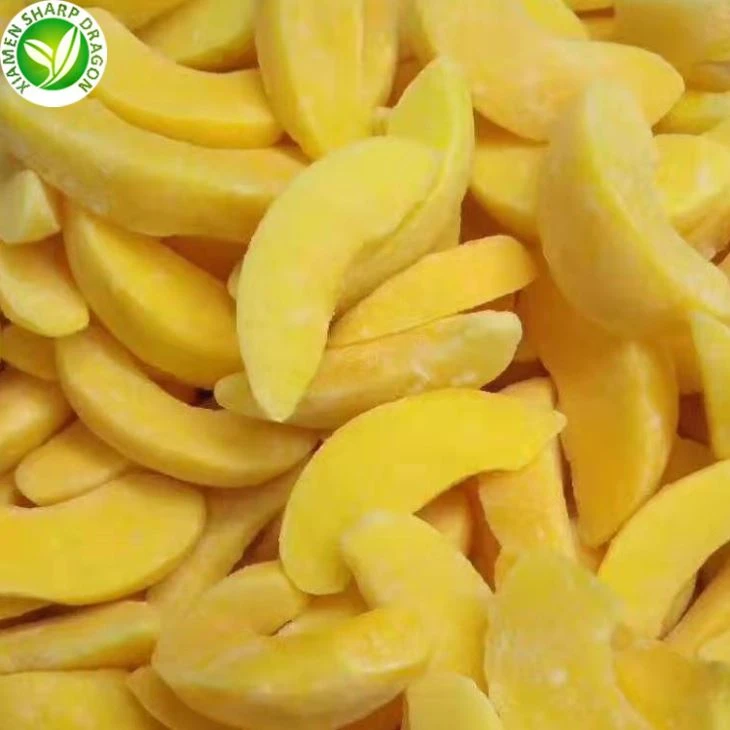
Plain frozen halves, slices or dice retain the fruit solids and can make portioning easier. Freezing does not turn peach into a laxative, and it does not justify a claim that every nutrient is fully retained. Check the ingredient statement and product nutrition basis. The frozen-peach quality and form guide addresses thawed texture, peel and storage questions; for bowel context, the decisive facts remain consumed grams, fiber and tolerance.
Canned peaches can still contain fruit fiber, but the label must identify the serving and packing medium. Fruit packed in water, its own juice or 100% juice differs from fruit in heavy syrup. Draining changes how much liquid and possibly how much dissolved sugar enters the recipe, while the edible fruit weight may be expressed as drained weight. The XMSD canned yellow peach presentation shows this distinct shelf-stable form; its actual packing medium and nutrition panel, not the photograph, decide the dietary comparison.
Juice, nectar and purée are not interchangeable. A filtered juice may have little or no declared fiber. A purée may retain more fruit solids. Nectar or a peach drink may combine fruit content, water, sugar and other ingredients. Do not assume that a beverage is more helpful simply because it adds liquid: the label may show low fiber and substantial added sugar. Conversely, a purée with measurable fiber cannot be treated as filtered juice merely because both are pourable.
FDA explains that total sugars include naturally occurring fruit sugars plus added sugars, while Added Sugars identifies sugars introduced during processing.[8] Syrup is therefore a formulation issue, not a bowel-benefit shortcut. Added sugar does not replace missing fiber, and a sweet peach preparation should be evaluated as the complete product.
Read the Label Before You Infer a Digestive Effect
Begin with five items: product name, ingredient statement, serving weight, dietary fiber and added sugars. For canned fruit, add net and drained weight. For a beverage or preparation, add fruit percentage when declared. Those fields tell you far more than "with real peaches" on the front panel. A claim that a product "supports regularity" may also require destination-specific substantiation and regulatory review; a picture of fruit does not supply that evidence.
Worked example: normalize two hypothetical labels. Product A is plain frozen peach pieces and lists 2 grams of fiber per 150-gram serving. Product B is a 240-milliliter peach drink and lists 0 grams of fiber plus 12 grams of added sugar. Drinking Product B adds liquid, but its label gives no fiber contribution. Product A provides the same 2-gram fiber amount as the USDA medium-peach reference in this teaching example. The action is to choose by the nutrient and form you actually need, not by the shared peach flavor.
That example does not establish values for all frozen products or drinks. Some purées and nectars retain fiber; some frozen products contain sweeteners. If the package uses a different serving, compare equal masses or volumes for technical work, then return to the labeled serving when preparing consumer communication. Keep mass and volume distinct: 150 grams of fruit is not automatically equivalent to 150 milliliters of beverage.
Home recipes need the same discipline. A smoothie made from whole peach pieces, oats and yogurt differs from a strained peach drink. A dessert made from syrup-packed fruit, ice cream and sauce differs from plain canned fruit after draining. If a symptom diary just says "peach," it hides the amount and the rest of the recipe. Record the complete food so the pattern can be interpreted.

Self-Care Has a Boundary
For mild, occasional constipation without warning signs, authoritative self-care guidance emphasizes the pattern: adequate fiber, appropriate liquids, physical activity where suitable, regular meals and responding to the urge to pass stool.[4] Peach can occupy one fruit slot in that pattern. It should not crowd out other fiber sources or encourage a large, sudden increase.
A short food-and-symptom record can make the trial useful. Note the date, peach form, edible grams, meal context, fluids, stool difficulty and any gas, pain or urgency. Change one major dietary variable at a time. If you add whole peach, bran cereal, beans and a fiber supplement on the same day, a good or bad response cannot be assigned to the peach. A slow adjustment is also more consistent with NIDDK advice.
Some situations require individualized advice before increasing fiber. A clinician may prescribe a low-fiber or modified diet around certain bowel conditions, surgery or obstruction risk. Medicines and supplements can also cause constipation; NIDDK lists examples that include some antacids, iron supplements, narcotic pain medicines and medicines used for several chronic conditions.[3] Do not stop a medicine or override a clinical diet because peaches are promoted online.
Sorbitol sensitivity and irritable bowel syndrome add another boundary. Monash notes that polyols may draw water into the gut and be fermented, producing gas and altered stool in susceptible people.[5] A large portion, dried fruit or a concentrated fruit preparation can deliver a different exposure from a modest fresh portion. If you are following a clinician- or dietitian-led FODMAP plan, use its tested portion guidance rather than a generic "eat more peaches" rule.
Seek medical advice instead of adding more fruit when the pattern is persistent or concerning. NIDDK advises seeing a doctor when symptoms do not go away with self-care. It advises prompt care for constipation with rectal bleeding or blood in stool, constant abdominal pain, inability to pass gas, vomiting, fever, lower back pain or unintentional weight loss.[3]
Those signs do not prove a specific diagnosis, but they make a peach trial the wrong next step. Seek urgent local care when symptoms are severe or rapidly worsening.

Turn the Question into a B2B Form and Label Decision
A commercial peach ingredient should be selected for its food function, not positioned as a laxative. Halves and slices preserve visible fruit identity. Dice distribute evenly in yogurt, bakery filling and prepared meals. Purée gives body and flavor but changes visible structure. Juice, nectar and sweetened preparation follow different formula and label logic. The closest XMSD frozen yellow peach category shows product-form context; the order still needs its own ingredient and nutrition basis.
If your team is considering bowel-function positioning, separate three evidence layers. First, ingredient identity: how many grams of peach are present? Second, nutrient declaration: how many grams of fiber does the finished serving actually provide? Third, claim: what exact wording is lawful and substantiated in the destination? A raw-fruit database entry may help formulate an estimate, but it cannot silently become a finished-product guarantee after dilution, draining, concentration or sweetener addition.
For an industrial recipe, run the fruit through the actual process before approving the label. Measure thaw loss for frozen pieces, drained yield for canned fruit, solids for purée or preparation, and the final batch yield. The food-processing application route can frame the cut and process questions, but the final numbers must come from the selected SKU and the finished recipe.
Practical example: calculate drained fruit, not can weight. A hypothetical foodservice recipe needs 75 kilograms of drained peach halves. The approved can format produces a measured 60% drained yield under the agreed draining method.
Required incoming canned product is 75 ÷ 0.60 = 125 kilograms. Buying 75 kilograms gross would provide only 45 kilograms of drained fruit and leave a 30-kilogram shortfall.
The 60% yield is illustrative, not an XMSD value or universal can standard. Measure the actual pack under a written time, screen and temperature method, then use that result for cost, fruit percentage and nutrition work.
Specify the Evidence Behind the Finished Product
Start the technical sheet with the peach form and ingredient statement. State fresh, frozen, canned, purée, juice or preparation; yellow or white peach where relevant; halves, slices or dice; peel and pit status; any added sugar, syrup, acid, antioxidant or other ingredient; and the serving or use basis. These details affect fiber calculation, sweetness, texture, yield and consumer interpretation.
Then identify the nutrition-data method. It may be a legally accepted database calculation, recipe software, laboratory analysis or another destination-compliant method. Record the data source, edible or drained basis, retention or processing assumptions and rounding rules. If the label says zero fiber, do not imply a fiber-led bowel effect elsewhere on the pack. If it declares a meaningful amount, keep the claim within the evidence and applicable rules.
Application testing also matters. Visible frozen peach dice may remain identifiable in yogurt, while a purée distributes throughout the serving. A canned half brings packing liquid and drained-yield questions. A sweetened preparation may be easier to meter but changes added sugars. Decide acceptance from the finished use: piece integrity, distribution, drained or thaw yield, ingredient declaration, nutrition result and sensory fit all need an observable test.
Packaging preserves the approved basis. Keep the inner pack, net weight, serving information, lot code, storage statement and artwork aligned with the specification. The frozen packaging overview shows format and labeling context. It does not substantiate a digestive claim; that responsibility remains with the formulation, data and destination review.
Use change control when crop, cultivar, cut, process, sweetener, fruit percentage or serving changes. Sorbitol and other composition values can differ between cultivars, while recipe changes can alter declared fiber and added sugar. Recalculate or retest when the change could affect the label. A generic peach specification is not enough for a product making a nutrition or bowel-function statement.

XMSD project note: Share your required peach form, cut, fruit percentage, ingredient statement, nutrition-data basis, application, pack and destination market. We can review the sourcing inputs and sample questions without presenting a conventional fruit ingredient as a laxative medicine.
The Practical Answer
Peaches are not laxative medicines. A medium 150-gram raw peach supplies about 2 grams of fiber, which is roughly 6% to 9% of NIDDK's general 22-to-34-gram adult daily range. That makes peach a modest fiber-contributing food, not a predictable constipation treatment.
If mild constipation has no warning signs, a normal whole-fruit serving can fit a gradual increase in varied dietary fiber alongside appropriate liquids and other self-care measures. Large or concentrated peach portions may instead produce gas, bloating or loose stool in a sorbitol-sensitive person. Judge your own measured food response, but do not use it to diagnose the cause.
Whole, plain frozen, canned, puréed, juiced and syrup-packed peaches require separate label checks. For a commercial product, calculate fruit and fiber on the actual finished serving, control the drained or thaw basis, and keep claims within the evidence. Persistent symptoms or NIDDK warning signs need medical care, not a larger peach portion.
References
- USDA Food and Nutrition Service, Peaches. Medium 150-gram serving and 2-gram fiber reference.
- NIDDK, Eating, Diet, and Nutrition for Constipation. Adult fiber range, gradual increase and liquid guidance.
- NIDDK, Symptoms and Causes of Constipation. Symptom definition, possible causes and warning signs.
- MedlinePlus, Constipation-Self-Care. Peaches among fiber-containing fruit choices and self-care boundaries.
- Monash University, High- and Low-FODMAP Foods. Peaches, sorbitol and individual gut-tolerance context.
- Peach and nectarine cultivar composition study, PMID 27990650. Analytical evidence of large sorbitol variation among cultivars.
- AGA and ACG, Pharmacological Management of Chronic Idiopathic Constipation. Treatment categories and evidence levels.
- U.S. FDA, Added Sugars on the Nutrition Facts Label. Total-sugar and added-sugar distinction.