


Why Do Carrots Turn Black? Fresh, Frozen, and Buyer Quality Guide
Aug 14, 2019

A black mark on a carrot is a symptom, not a diagnosis. It may come from freeze injury in a fresh root, a gray-black sunken disease lesion, oxidation on a wounded cut surface, severe dehydration, or a defect that entered a frozen-carrot line with the raw material. Those causes do not have the same safety meaning, corrective action, or commercial consequence.
For a buyer, the useful question is not simply whether black color exists. You need to know where it appears, whether the tissue is firm or soft, when the color developed, how widely it occurs in the lot, and whether the affected tissue can be separated under an agreed inspection method. That evidence turns an alarming photograph into a controlled release decision.
Direct answer: Carrots can turn black after accidental freezing and thawing, fungal decay, or oxidation of damaged tissue. In commercially frozen carrots, dark pieces can also reflect incoming defects, incomplete trimming, process damage, or storage abuse. Do not assume that every dark mark proves chemical treatment, and do not approve a lot from color alone. Classify the defect, inspect a representative sample, and check texture, odor, temperature history, and lot records.

Start with the Location, Timing, and Texture of the Black Area
Location is the first practical clue. A dark ring visible after a fresh carrot has accidentally frozen is different from a dry surface line at a cut edge. A localized, sunken lesion around the crown or a wound is different again. In frozen dice or slices, one discolored surface may be peel residue or damaged tissue, while discoloration through the whole cross-section suggests the condition existed before cutting or progressed within the tissue.
Timing narrows the possibilities. Ask whether the roots were black at receiving, became dark after refrigeration, changed after a freezing incident, or looked normal frozen but darkened during a standardized thaw. A photograph taken after hours at room temperature cannot be compared fairly with a frozen retention sample. Record the date, sample code, product temperature, thaw method, lighting, and time between opening and photography.
Texture and odor change the decision. Firm tissue with a shallow, stable surface stain is not equivalent to a soft, wet, spreading or moldy lesion. A sour, fermented, musty or otherwise abnormal odor requires escalation even when the visible area is small. Do not cut away a suspicious section and then use the remaining root as proof that a commercial lot is acceptable. The inspection must represent the supplied form and the agreed defect definition.
Practical example: A complaint photo shows one dark carrot coin but no package code, scale or thaw details. We would not assign a cause from that photo. We would request the carton and lot codes, unopened retained packs, receipt and storage temperatures, photographs of the frozen sample, and results after the same controlled thaw used for the approved reference. Those items may show whether the event is isolated, package-specific, shipment-related, or present across production.
Accidental Freezing Can Produce a Black Ring in Fresh Carrots
Fresh roots can be injured if they freeze unintentionally during field exposure, storage, transport, or contact with an excessively cold surface. UC Davis reports that freezing injury is likely at about -1.2°C or lower and describes an outer ring of water-soaked tissue that can blacken in two to three days. This is a fresh-carrot injury description, not a claim that correctly processed commercial frozen carrots should blacken.
The distinction matters. Intentional frozen-carrot production prepares the roots, usually controls enzyme activity according to the selected route, freezes the chosen cut rapidly, and maintains the finished product under frozen conditions. Accidental freezing of an intact fresh root happens without that designed sequence. Ice damage may become apparent only after the root warms and the damaged tissue loses structure.
When investigating suspected freeze injury, examine a cross-section rather than only the outside. Compare the affected root with sound roots from the same lot and with temperature records from the coldest positions: near evaporators, doors, floor contact, truck walls, or exposed pallet edges. A single average room temperature may hide local cold spots. Calibrated sensors and pallet-position records are more useful than a general statement that the warehouse was cold.
Avoid a second common error: treating any blackened root as proof of sulfur fumigation or another undeclared chemical. Appearance alone cannot establish that history. If chemical compliance is in question, review the supplier declaration, process description, applicable residue or additive requirements, and targeted accredited-laboratory testing where justified. A dramatic causal claim without evidence can distract from the real storage or disease problem.

Black Rot Is a Disease Pattern, Not a Name for Every Dark Spot
The plant pathogen Alternaria radicina can cause carrot black rot. A peer-reviewed first report from Michigan described grayish-black, sunken lesions on stored roots and reproduced similar lesions after controlled inoculation. The study supports the identity of that disease under its test conditions; it does not justify calling every dark carrot lesion Alternaria from a photograph.
Disease diagnosis requires the pattern, affected tissue, lot history and, when the commercial decision warrants it, laboratory examination. Other molds, soft rots and injuries can also discolor roots. UC Davis lists gray mold, watery rot, Rhizopus rot, bacterial soft rot and sour rot among important postharvest disease concerns. Buyers therefore need a defect category broad enough to hold or reject objectionable decay even when the organism is not yet identified.
Raw-material wounds increase commercial risk because damaged areas can lose moisture, oxidize and become entry points for decay. Receiving controls should record broken tips, cracks, bruising, crown condition, soil load, firmness, odor and visible lesions. Sorting and trimming must remove unacceptable tissue before cutting, because one affected root can become many defective pieces that are harder to recognize after dicing.
If you see a wet, soft, sunken, spreading or moldy black area, place the affected lot on hold under your procedure. Do not rely on cooking to make a visibly decayed raw material commercially acceptable. Confirm the affected quantity, sampling boundary, adjacent pallets or production intervals, traceability, sanitation implications, and final disposition. The commercial action can be taken on the defect evidence even before a species-level diagnosis is complete.
Cutting and Abrasion Can Trigger Browning Reactions
Carrot tissue remains biologically active after cutting. Wounding exposes cells to oxygen and changes phenolic metabolism. Research on shredded carrots found more pronounced browning in peel tissue, where polyphenol oxidase activity was higher than in inner tissue under the study conditions. A 2024 fresh-cut study likewise describes PPO-catalyzed oxidation of phenolic compounds to quinones after mechanical injury or contamination.
This evidence explains why blade condition, peeling result, cut style, exposed area, oxygen, time, temperature, and surface moisture can affect appearance. It does not mean that all discoloration is harmless enzymatic browning. A clean, firm cut surface that gradually darkens under a defined exposure test is a different pattern from a deep lesion, soft rot, foreign staining or black tissue already present inside the root.
Do not confuse blackening with the white blush often seen on abrasion-peeled fresh-cut carrots. UC Davis associates white blush with dehydration of cut or abrasion-peeled surfaces and notes that sharp blades and residual free moisture can delay it. White blush, orange fading, brown oxidation and black lesions should be separate defect terms, because the likely causes and corrective actions differ.
During supplier qualification, compare cut samples under one lighting setup at defined times. Include an immediately cut reference, a sample after the agreed refrigerated exposure, and the actual finished product after its specified thaw or cook. A colorimeter may support trending, but photographs and instrument values still need a written visual limit linked to what your customer will accept.

What Black Pieces Mean in a Commercial Frozen-Carrot Lot
A frozen pack can contain dark pieces for several reasons: an incoming lesion was missed, peeling left objectionable surface tissue, trimming failed to remove a damaged end, a cut exposed an internal defect, process conditions allowed unacceptable color change, or the package experienced dehydration or temperature abuse. The frozen state itself does not reveal which stage failed. Trace the defect backward through raw, prepared, post-freeze and packed inspections.
The frozen carrot production control guide follows receiving, sorting, washing, peeling, trimming, cutting, blanching where applicable, cooling, drainage, quick freezing, inspection and packing. For a discoloration investigation, add a checkpoint at each transfer. Record where dark tissue first becomes detectable and whether its frequency rises after a specific shift, raw lot, blade change, process deviation or cold-chain event.
Commercial frozen carrots are commonly blanched to control enzymes and stabilize quality, but the correct process depends on the cut, dimensions, raw condition, equipment, throughput and validated endpoint. A machine temperature display alone does not prove the product exposure. Review residence time, product loading, representative temperature, cooling, dewatering and the facility's verification method. Avoid copying one published time-temperature combination as a universal setting.
Finished color should be checked in the condition specified by the method. USDA's frozen-carrot grade framework includes color, size and shape uniformity, freedom from defects, normal flavor and odor, and tenderness. It assesses a complete quality profile rather than using one attractive frozen photograph. Your contract may use different limits, but it should be equally explicit about sample state, preparation and defect scoring.
Build a Defect Specification That Another Inspector Can Repeat
"No black carrots" sounds clear but is difficult to apply. Define the product style, sample size, frozen or thawed condition, lighting, observation distance, whether pieces are cut open, minimum objectionable area, and whether the result is measured by mass, piece count, affected surface area, or presence in individual sample units. Separate dark discoloration from decay, peel residue, green top, white blush, foreign material and ordinary color variation.
Use a critical category for decay, mold, foreign contamination or another condition that makes the unit unacceptable under your risk assessment. Use major and minor categories for appearance defects according to application. A dark spot that is visually obvious in a clear retail pouch may have a different commercial effect from a shallow removable mark in a product that will be pureed, but neither use case permits decayed tissue.
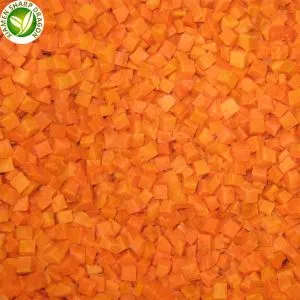
The general frozen vegetable inspection guide can organize arrival checks. For carrots, add cut-specific defect photographs, an approved retained sample, and a cooked or application test. A 10 mm dice, crinkle slice and flower cut expose different surfaces and are not fairly judged from the same piece-count rule without considering size.
Worked example: A hypothetical inspection opens 20 bags of 500 g, giving a 10.0 kg composite. Sorting finds 18 g of firm superficial dark pieces, 7 g of peel residue and one 3 g soft dark piece. The superficial discoloration is 0.18% by mass and peel residue is 0.07%, but the soft piece is recorded separately as a potential decay defect. It cannot be averaged away by 9.972 kg of acceptable orange carrots. The lot decision follows the separate critical rule and the agreed escalation plan.

Investigate by Lot, Process Interval, and Distribution Pattern
A useful complaint file answers three questions: how much product is affected, where the affected units are located, and what event could explain that pattern. Inspect unopened cases from different pallet positions, not only the complained bag. Compare top, center, edge and door-side positions when temperature exposure is suspected. Map the findings against production time, raw-material lot, line, shift, packing lane and shipment location.
Retained samples help separate production from distribution. If the factory retention and destination sample show the same defect frequency, investigate raw material and process first. If retention is acceptable but affected cases cluster at one pallet edge, review loading exposure, reefer airflow, packaging damage and local temperature history. If both are acceptable under the same test, verify the user's storage and preparation before closing the case.
Use the current IQF frozen carrot range to confirm the ordered cut and pack, then compare the complaint with the signed specification rather than a different product photograph. Product identity matters because small dice present many more surfaces per kilogram than large slices, and a decorative cut may reveal crown or outer tissue differently.
Corrective action should match the evidence. Raw-lot lesions point toward source approval, harvest handling, receiving or sorting. Surface oxidation may require blade, peeling, exposure-time or process review. Local package dehydration points toward seals, barrier or handling. Shipment clustering calls for route and loading review. A broad instruction to "improve inspection" is not enough unless it identifies the detection point, sample, limit, frequency, responsibility and held quantity.

Protect Color Through Packaging and the Frozen Route
Packaging protects the product from moisture loss, oxygen exposure, contamination and physical damage, but only when the material, seal and handling match the route. Review the inner film, seal integrity, headspace where relevant, net weight, case strength, pallet pattern and code legibility. A torn liner or weak seal may create local dehydration and color change that looks like a process defect.
The frozen packaging overview frames common options, but the chosen pack still needs validation at the real fill weight, storage duration, case stack and handling cycle. Inspect seals during production and at receipt. A package that looks intact from the front may have a crease leak at the back seal or puncture where hard frozen pieces contact the film.
Frozen-route evidence should include storage, loading and transport records appropriate to the order. The frozen-food shipping guide explains how reefer settings, loading, VGM, documents and arrival evidence connect. A set point does not prove every carton stayed at the same temperature, so combine equipment records with representative product checks and package condition.
Buyer example: Two hypothetical suppliers both report 0.20% superficial dark pieces at dispatch. Supplier A ships free-flowing product in intact liners and shows the same result at arrival. Supplier B arrives with torn liners, loose ice, clumps and 0.75% dark or dehydrated pieces. The second issue is not solved by debating the original color score; packaging and route evidence show that delivered quality changed.

What to Put in a Frozen-Carrot Purchase Specification
Name the carrot style and dimensions first. State the variety or color basis when relevant, peeling requirement, blanching or cooking status, intended use, pack, frozen-condition requirement, and destination rules. Then define dark discoloration, decay, peel residue, green top, white discoloration, mechanical damage, fragments, clumps, loose ice and foreign material as separate categories.
For each defect, state the inspection condition and limit. Identify the number of cases or bags, sample mass, selection method, preparation, lighting and scoring unit. Add a critical-defect rule that cannot be diluted into a general percentage. Where the final application reheats the carrot in sauce, validate color and texture through that process rather than approving only a thawed sample.
The evidence pack should connect the result to the lot: raw-material and production traceability, receiving and sorting checks, peel and trim verification, process records, product-temperature release, final inspection, detector challenges, packaging checks, testing required by the agreed plan, frozen storage, shipment records, and corrective actions. Ask for documents that prove the stated control instead of a generic certificate bundle.
Finally, agree on the complaint method before shipment. Specify the notification window, sample retention, photographs, temperature and package evidence, joint or third-party inspection where needed, and disposition of held goods. This prevents one isolated piece, an unrepeatable thaw, or an untraceable image from becoming the entire commercial case.
XMSD sourcing note: Send your carrot cut, dimensions, discoloration and critical-defect rules, thaw or cooking test, pack, destination, quantity and document requirements. We can match the request to an available frozen-carrot product and coordinate the confirmation points with a suitable partner factory.
Frequently Asked Questions
Are black spots on carrots always mold?
No. Freeze injury, wounded-tissue oxidation, dehydration and other defects can darken carrots. Gray-black sunken lesions, softness, moisture, spreading growth or abnormal odor increase concern for decay, but a specific organism should not be named from color alone. Hold suspicious product and investigate under the agreed defect and safety procedure.
Can fresh carrots turn black after freezing in a refrigerator or truck?
Yes. UC Davis describes accidental freezing injury in fresh carrots as a water-soaked outer ring that may blacken after two to three days. Check a cross-section and the coldest storage positions. This is different from carrots intentionally prepared and quick-frozen under a controlled commercial process.
Does a black carrot prove sulfur treatment?
No. Appearance alone cannot prove a chemical history. Review declarations, processing records, applicable legal requirements and targeted accredited testing when the question is justified. First inspect for freeze injury, decay, wounding, dehydration and distribution patterns that have direct physical evidence.
How should a buyer measure dark pieces in frozen carrots?
Define the sample plan, frozen or thawed state, lighting, minimum objectionable area, and whether measurement uses mass, piece count, surface area or affected sample units. Record decay separately from superficial discoloration, and retain approved photographs or samples so future lots use the same interpretation.
Should a frozen-carrot lot be rejected for one black piece?
The answer depends on the cause and the contract. One critical decay or contamination defect may trigger a hold even when its mass is tiny. One firm superficial mark may instead be evaluated under a defined major or minor tolerance. Never average a critical defect into a broad appearance percentage.
Final Thoughts from XMSD
A black carrot is not one problem with one explanation. The fastest reliable path is to classify the location, timing, texture, odor and distribution, then connect those findings to the raw lot, cutting and trimming, process, packaging and route. That approach removes unsupported assumptions and gives both buyer and supplier a repeatable decision.
For frozen carrots, write the decision into the specification before production. Separate discoloration from decay, use a representative sample, control the thaw or cook method, preserve traceability, and compare delivered usable quality. A clear defect system protects your application more effectively than a promise that every piece will simply look perfect.
References
- UC Davis Postharvest Research and Extension Center. Carrot: Maturity, Quality, Freezing Injury and Postharvest Disorders.
- USDA Agricultural Marketing Service. Frozen Carrots Grades and Standards.
- USDA Agricultural Marketing Service. Commercial Item Description: Fresh Ready-to-Eat or Ready-to-Use Carrots.
- Saude C, Hausbeck MK. First Report of Black Rot of Carrots Caused by Alternaria radicina in Michigan. Plant Disease.
- Simões ADN, et al. Peel Removal, Wound-Induced Phenolic Biosynthesis and Browning in Shredded Carrot. Postharvest Biology and Technology.
- Zhang M, et al. Effects of Different Cutting Styles on Physiological Properties in Fresh-Cut Carrots.