


When Should You Throw Out Cauliflower? Condition Guide
Aug 28, 2019

Do not eat cauliflower that looks rotten, has spreading mold, slime, soft wet collapse, a strong sour or putrid odor, leaking or swollen packaging, known contamination, an active recall that includes its lot, or an unsafe time-temperature history. When the history is unknown and the condition is questionable, discard it rather than taste it.
Not every color change means danger. A small dry tan mark, surface bruise, light cream color or slight leaf yellowing can be a quality defect rather than proof of unsafe food. Judge the whole pattern: extent, moisture, texture, odor, package, date and handling. Cauliflower's branched curd can hide decay between florets, so broad or deep defects deserve more caution than one shallow trim mark.
Use the right clock for the form. Whole fresh heads, refrigerated pre-cut florets, cooked leftovers and frozen product have different handling evidence. FoodSafety.gov advises refrigerating perishable food within two hours-or one hour above 90°F/32°C-and using cooked leftovers within four days. A label date never repairs missed refrigeration, cross-contamination or visible rot.
Stop-and-discard rule: rot, spreading mold, slime, abnormal wet softness, strong off-odor, recall match or unsafe handling outweighs an attractive date or the hope that washing and cooking will fix it.

Use Four Checks Before You Taste Anything
First, identify the product. Is it a whole raw head, a bag of fresh-cut florets, a cooked dish or a frozen SKU? Read any use-by, best-before, preparation, refrigeration and cooking directions. Keep the lot code and package until the decision is complete. An unlabeled leftover or product moved into a new container loses useful evidence.
Second, reconstruct handling. Record purchase or receiving time, refrigeration, cutting, cooking, cooling, opening, thawing and any power or door event. "It was in the kitchen for a while" cannot support release. If a perishable dish has crossed the two-hour or one-hour rule, smell and appearance cannot prove it safe.
Third, inspect without tasting. Look for mold, slime, watery breakdown, dark wet lesions, pests, contamination, leaking liquid, gas or swelling, and damaged closures. Smell after opening only from a normal distance; do not inhale mold closely. A strong fermented, sour or rotten odor is a discard signal, but absence of odor is not proof of safety.
Fourth, check external instructions. A recall notice, supplier hold or facility deviation can override an apparently sound sample. Match exact brand or SKU, pack size, UPC where applicable, lot, date and distribution area. Follow the notice; do not give recalled food to another person, a food bank or a pet.

Mold, Slime and Soft Wet Decay Are Stop Signs
Discard a cauliflower head with spreading fuzzy mold, multiple affected areas, moisture-soaked decay, slime, or soft collapse between florets. UC Davis describes postharvest disorders including bacterial soft rot, black spot, gray mold and other rots. A bacterial soft-rot invasion can leave curd brown and gelatinous. These are not defects to rinse away.
USDA says a small mold spot may be cut at least one inch around and below on firm, low-moisture produce such as cabbage, peppers or carrots. Cauliflower's tightly branched curd makes the boundary harder to see and cleanly trim. For a tiny spot confined to a solid stem, that general rule may inform a careful home decision; for mold within florets, broad growth, a soft head or any high-risk consumer, discard the whole item.
Do not simply break off visible mold and serve the remaining raw florets. The knife or hands can move material into sound tissue, and mold can coexist with bacteria. Commercial kitchens should follow their food-safety plan and local code, which may require discard rather than salvage even when a home guide discusses trimming.
Practical example: broad decay. A head has two fuzzy gray patches on opposite sides, wet browning deep between the curds and a sour odor. The defects are neither small nor isolated. Bag and discard the whole head, clean the storage area and check nearby produce instead of building a meal around trimmed pieces.

Brown or Yellow Does Not Answer the Safety Question Alone
Mechanical bruising can cause localized browning. Sun exposure or aging can contribute to yellowing. UC Davis lists severe yellowing, handling defects, decay and "riciness" as separate quality indices, which is important: color, physical damage and microbial decay are related in some cases but are not identical.
A small dry tan spot on an otherwise firm, fresh-smelling head can be cut away generously before cooking. A dark area that is wet, sunken, fuzzy, rapidly spreading or accompanied by softness and off-odor should be discarded. If many florets show the defect, the time saved by trimming rarely justifies the uncertainty and loss.
Black specks cannot be diagnosed from color alone. They can arise from disease, physical damage or other causes. Do not label every speck harmless "oxidation," and do not claim every speck is toxic. Compare depth, texture, spread and lot pattern; ask the supplier when a commercial shipment shows a repeated defect.
Leaves provide supporting evidence. Wilted or yellow wrapper leaves signal age or poor holding but do not alone prove the curd unsafe. Slimy leaves, liquid, mold or odor that reaches the curd changes the decision. Remove normal outer leaves during preparation and inspect the head again under good light.
Fresh Whole and Fresh-Cut Need Different Clocks
Choose a whole head that is firm and compact without obvious decay or severe handling damage. UC Davis describes a white-to-cream curd with turgid green leaves as a quality reference. Refrigerate promptly. Its commercial optimum of 0°C/32°F and high relative humidity describes controlled postharvest storage, not permission to keep a retail head for a fixed number of weeks.
Pre-cut cauliflower has more exposed tissue and handling surfaces. FDA advises buying pre-cut or packaged produce only when it is refrigerated or surrounded by ice, and refrigerating all pre-cut or packaged produce. Follow its use-by date and storage direction, while still discarding for rot or unsafe handling before the date.
Once a pack is opened, record the date and close it cleanly. Do not mix new florets into an older undated container. If condensation, leaking liquid or slime develops, discard it. A dry edge can be a quality issue, but a wet, sticky surface with odor is a different pattern.
Receiving example: two refrigerated bags carry the same use-by date. One is cold, sealed and dry; the other has a broken seal, pooled liquid and slimy pieces. The printed date does not make them equivalent. Reject or discard the damaged bag and retain the sound one only if its own handling and condition meet the applicable rule.

Time and Temperature Can Require Discard
FoodSafety.gov advises discarding perishable food left at room temperature for more than two hours, or more than one hour when ambient temperature is above 90°F/32°C. Apply that rule to cut produce and cauliflower-containing dishes that require refrigeration. Refrigerating later does not erase the warm holding time.
Worked example: buffet clock. A cauliflower-and-cheese dish leaves refrigeration at 1:30 p.m. in a 77°F/25°C room and is noticed at 5:00 p.m. Warm exposure is 3 hours 30 minutes: 5:00 − 1:30 = 3.5 hours. That exceeds the two-hour limit by 1.5 hours, so discard it rather than refrigerating it for tomorrow.
At temperatures above 90°F/32°C, the same calculation uses the one-hour limit. A picnic salad out from noon to 1:20 p.m. has been out 80 minutes, which is 20 minutes beyond that limit. Ice under a serving bowl counts only when it actually maintains the food within the approved cold condition; appearance of ice nearby is not a temperature record.
For a business, write the start time on the pan or use an electronic record. Do not restart the clock when the pan moves from prep table to service line. If multiple components were assembled, use the earliest relevant exposure. Missing time is not a harmless blank; hold or discard according to the food-safety plan.
Cooked Cauliflower Becomes a Leftover Decision
Once cauliflower is steamed, roasted, mashed, baked in sauce or mixed into soup, the finished food controls the decision. FoodSafety.gov advises refrigerating leftovers promptly in shallow containers and using cooked leftovers within four days. Some detailed charts use three to four days for soups and stews; a stricter local rule takes precedence.
Write preparation and discard dates. A container marked only "cauliflower" lacks the cooking time, recipe and owner needed for safe rotation. Deep pots cool slowly, so divide large batches or use a validated rapid-cooling process. Cover and protect from raw-meat drips and dirty utensils.
Reheating does not make an over-age or temperature-abused leftover acceptable. FoodSafety.gov advises reheating leftovers to 165°F/74°C, but that instruction belongs after correct cooling and storage. Heat may kill many bacteria; it does not reliably remove every toxin or reconstruct missing history.
Date example: a cauliflower soup is cooked and cooled correctly on Monday evening. A four-day rule places the final use on Friday, not the next Monday. If the container was repeatedly left out, mixed with a new batch or never dated, the calendar estimate is no longer enough to release it.

Frozen Cauliflower Needs Temperature Evidence
A little freezer burn is generally a quality defect, not an automatic safety reason to discard. Unknown thawing, torn packs, leaking liquid, contamination, mold after thawing or food held above 40°F/4°C too long raises a different question. The freezer-specific cauliflower storage guide provides power-loss, refreezing, frost and remaining-life decisions.
Do not use the date alone. XMSD's frozen cauliflower category and representative floret listing normally state 24 months at ≤−18°C, subject to the exact SKU and label. Continuous frozen storage and intact packaging are part of that commercial life.
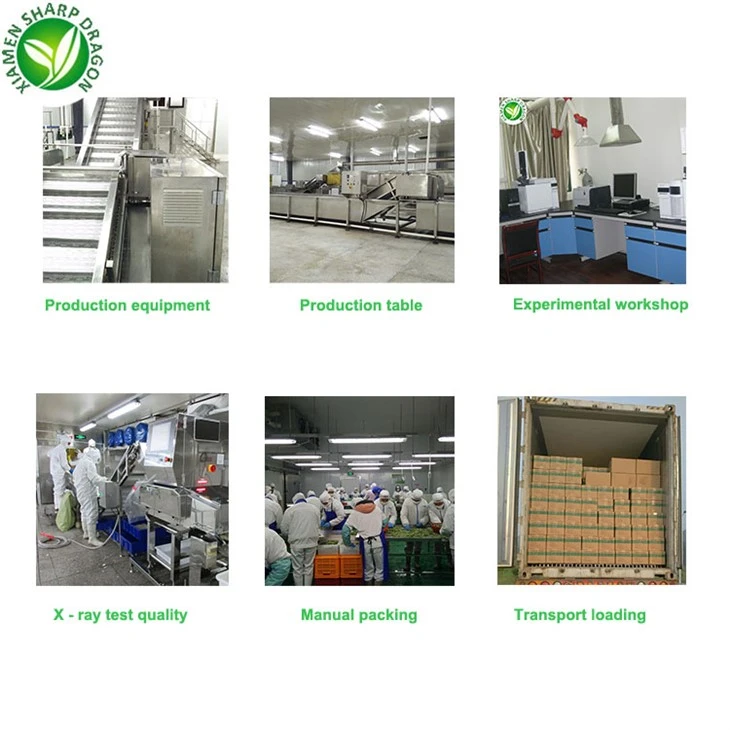
Hold a commercial case for unexplained wet cartons, severe fusion, missing lot code, broken liner or logger excursion. The correct result can be release, restricted use, rejection or disposal after evidence review. Do not blend questionable cases into sound stock before disposition; that destroys traceability and broadens the uncertainty.
Washing and Cooking Cannot Rescue Every Problem
FDA advises washing fresh produce thoroughly under running water, even when you plan to cut or peel it, and washing hands for at least 20 seconds before and after preparation. It does not recommend soap, detergent or commercial produce wash. Produce is porous, and residues can remain.
Washing can reduce surface bacteria but does not eliminate them. It also cannot reverse rot, remove a recall, repair an unsafe time-temperature history or make mold deep in the curd acceptable. Cut away ordinary bruised areas before preparation, but throw away produce that looks rotten.
Prevent cross-contamination. Keep cauliflower that will be eaten raw separate from raw meat, poultry and seafood. Wash cutting boards, dishes, knives and counters with soap and hot water between those tasks. A clean-looking knife used on raw chicken can make fresh florets unsafe without changing their color or odor.
Ready-to-eat or pre-washed instructions matter. FDA says packaged produce labeled pre-washed and ready-to-eat can be used without additional washing. If you choose to rewash it, prevent contact with unclean sinks and tools. More washing steps create more handling opportunities; they are not automatically safer.

Recall and Allergy Information Override Appearance
FDA recall notices identify affected product name, pack, UPC or other code, lot, date and distribution. Match all available fields. If your food is included, follow the notice for return or disposal and cleaning. Do not cook, donate or feed it to animals unless the official instruction specifically permits an action.
An apparently fresh product may also be inappropriate for a person with a diagnosed allergy to an ingredient or documented cross-contact risk. Prepared cauliflower can contain milk, wheat, egg, sesame, soy or other allergens. That is a label and individual safety issue, not spoilage. Plain cauliflower tolerance and medical-diet questions are covered in the cauliflower tolerance guide.
When a recalled or contaminated product has been stored in a refrigerator, clean and sanitize according to the notice and public-health guidance. Keep the affected label or a photograph long enough to document lot and date. Report illness through the appropriate local health or regulatory channel and seek medical care when symptoms are serious.
Preserve evidence without preserving food for accidental use. Photograph the label, lot, date, product condition and receipt if available. Write what was eaten, quantity, preparation time, symptom start and who else ate the same food. Keep a sealed sample only when a public-health authority, laboratory or company instructs you how; otherwise follow the recall or disposal direction.
Foodborne illness symptoms can begin quickly or days later, depending on the cause. FDA lists vomiting, diarrhea, abdominal pain, fever, headache and body aches among possible signs. Infants, older adults, pregnant people and those with weakened immune systems can face greater risk. Contact a healthcare provider or local emergency service for severe symptoms, dehydration, bloody stool, persistent vomiting, high fever or other urgent concerns.
Do not conclude that cauliflower was the cause merely because it was visible in the meal. Record every ingredient and shared food, then report the useful details. That helps investigators connect cases and lots. It also prevents an unsupported accusation against a sound product while a contaminated sauce, utensil or other ingredient goes unexamined.
Build a Commercial Hold-and-Release Record
At receiving, capture supplier, SKU, lot, production and best-before dates, quantity, seal, vehicle or container condition and temperature under the approved sampling method. Inspect representative cases across pallet positions. One perfect top bag does not represent a wet door-side layer or crushed lower cases.
Describe a defect with measurable language: percentage affected, lesion size, wet or dry, firm or soft, surface or deep, number of cases, pallet position, odor after the defined opening method and cook-test result. "Looks bad" is hard to investigate; "6 of 30 sampled bags show fused product and broken inner liners" points to package and handling evidence.
Separate food-safety release from commercial quality waiver. A minor color defect might be accepted for soup if safety and traceability are established, but nobody can waive a regulatory recall or known unsafe exposure. Record who has authority, what evidence was reviewed, quantity and lot disposition, and how affected stock is physically blocked.
Connect packaging evidence to the case. The frozen packaging workflow helps define liner, closure, coding and case controls. A punctured liner can accelerate dehydration and permit contamination; an intact outer carton does not prove the food-contact pack is intact.
The Practical Answer
Throw out cauliflower for rot, spreading mold, slime, soft wet collapse, strong off-odor, known contamination, a matching recall or unsafe time-temperature history. Do not taste-test it. Washing, trimming, cooking or freezing cannot repair all of those failures.
A small dry bruise or light color change on an otherwise firm, correctly handled fresh head can be a quality issue; trim generously and cook it if the condition is clearly localized. Cauliflower's complex curd makes deep mold or wet decay difficult to isolate, so discard when the boundary is uncertain.
Keep form-specific dates and temperature records. Refrigerate cut produce and leftovers promptly, use cooked leftovers within four days, and follow frozen label and cold-chain evidence. For commercial lots, isolate first and release only against the written specification, food-safety plan and traceable evidence.
For a cauliflower specification, send form, cut, pack, quantity, destination, defect limits and temperature-record requirements through the XMSD inquiry form. We can align inspection and lot evidence before shipment.
References
- U.S. Food and Drug Administration. Selecting and Serving Produce Safely. Accessed August 27, 2026.
- FoodSafety.gov. People at Risk of Food Poisoning. Accessed August 27, 2026.
- FoodSafety.gov. Cold Food Storage Chart. Accessed August 27, 2026.
- USDA Food Safety and Inspection Service. Molds on Food: Are They Dangerous?. Accessed August 27, 2026.
- UC Davis Postharvest Research and Extension Center. Cauliflower Produce Facts. Accessed August 27, 2026.
- U.S. Food and Drug Administration. Food Recalls: What You Need to Know. Accessed August 27, 2026.