


What Is the Nutrition of Frozen Sweet Potato?
Mar 04, 2019

Plain frozen sweet potato is mainly a carbohydrate food. It also provides dietary fiber and a small amount of protein, while naturally containing very little fat. Orange-fleshed types can contribute beta-carotene, which the body can convert to vitamin A, but the exact amount depends on the variety, processing, storage, and cooking method.
The product form matters as much as the word "frozen." The USDA reference for frozen sweet potato cubes cooked without salt lists 88 calories, 21 g carbohydrate, 2 g fiber, 8 g sugars, 2 g protein, 0 g fat, and 7 mg sodium per 88 g serving. Those figures should not be applied automatically to sweet potato fries, seasoned wedges, sweetened puree, or a supplier-specific product.
The short answer: Plain frozen sweet potato is a low-fat starchy vegetable that supplies carbohydrate, fiber, and color-dependent micronutrients. Use a product label or specification-not a generic web table-for commercial nutrition declarations.

Frozen Sweet Potato Nutrition Facts: Start with a Defined Product
Nutrition numbers need a clear basis. The table below uses the USDA Foods reference for frozen sweet potato cubes, cooked without salt. Its stated serving is 1/2 cup, or 88 g. It is a useful benchmark for a plain cooked product, not a guaranteed specification for every frozen sweet potato sold in the market.
| Nutrient | Amount per 88 g | What the figure means |
|---|---|---|
| Calories | 88 kcal | Energy comes mainly from carbohydrate |
| Total carbohydrate | 21 g | Sweet potato is a starchy vegetable |
| Dietary fiber | 2 g | Included within total carbohydrate |
| Total sugars | 8 g | The reference is plain, with no added salt |
| Protein | 2 g | Not a high-protein food |
| Total fat | 0 g | Oil added later changes this |
| Sodium | 7 mg | Seasoning can raise sodium substantially |
Water content, cut size, cooking loss, skin-on or peeled preparation, and serving weight can all change the concentration reported per 100 g or per portion. A commercial nutrition panel should therefore come from the actual formula and the labeling rules for the destination market.

Which Nutrients Deserve Attention?
Carbohydrate, fiber, and protein
Sweet potato should be treated as a starchy vegetable rather than a protein food. Its carbohydrate contributes energy, while its fiber contributes to the fiber content of the complete meal. The USDA serving above contains only 2 g protein, so statements that sweet potato is "rich in protein" are not supported by this reference.
For meal planning or product development, the practical question is what accompanies the sweet potato. Beans, eggs, fish, meat, dairy, tofu, or another protein source changes the nutritional balance of the finished dish. Oil, syrup, butter, coating, and sauces can change energy, fat, sugars, or sodium even more than freezing itself.

Beta-carotene, vitamin A, and flesh color
Orange-fleshed sweet potatoes are recognized sources of beta-carotene. Beta-carotene is a provitamin A carotenoid, meaning the body can convert part of it into vitamin A. Vitamin A has normal roles in vision, immune function, growth, and cell development. This is a nutrient function, not evidence that sweet potato prevents disease or delays aging.
Purple-fleshed sweet potatoes are associated with anthocyanin pigments rather than the orange color of beta-carotene-rich varieties. Variety, growing conditions, peeling, heat treatment, and storage can all affect the measured pigment and vitamin profile. Buyers who plan to print a vitamin A claim should verify the selected variety and finished product rather than infer a value from color alone.

Does Freezing Destroy Sweet Potato Nutrition?
Freezing does not make sweet potato nutritionally empty. Research comparing fresh and frozen fruits and vegetables has found that retention varies by commodity and nutrient. Some measured nutrients were comparable after frozen storage, while beta-carotene declined in some commodities. A broader review of freezing also notes that freezing can preserve nutrients and sensory quality, although ice formation and thawing can affect texture.
For sweet potato, the full process matters: raw-material variety and maturity, peeling, cutting, blanching or precooking, freezing rate, storage time and temperature, thawing, and final cooking. It is therefore safer to say that freezing can help preserve a useful food ingredient than to promise "100% nutrient retention" or a fixed retention percentage.

Plain Frozen Sweet Potato Is Not the Same as Fries or Sweetened Puree
A nutrition answer is only meaningful when the product is identified. Plain cubes, slices, or chunks may have a one-ingredient declaration. A prepared product may add oil, batter, salt, sugar, syrup, dairy ingredients, or sauces. Those additions can change both the nutrient panel and the way the product fits a menu.
| Product form | Nutrition question | Best evidence to check |
|---|---|---|
| Plain IQF cuts | Is anything added? | Ingredient declaration and product specification |
| Seasoned or coated pieces | How much oil, sodium, or coating is present? | Finished-product nutrition panel and formula |
| Sweetened puree or mash | Are sugar, syrup, fat, or dairy ingredients added? | Complete ingredient list and serving basis |
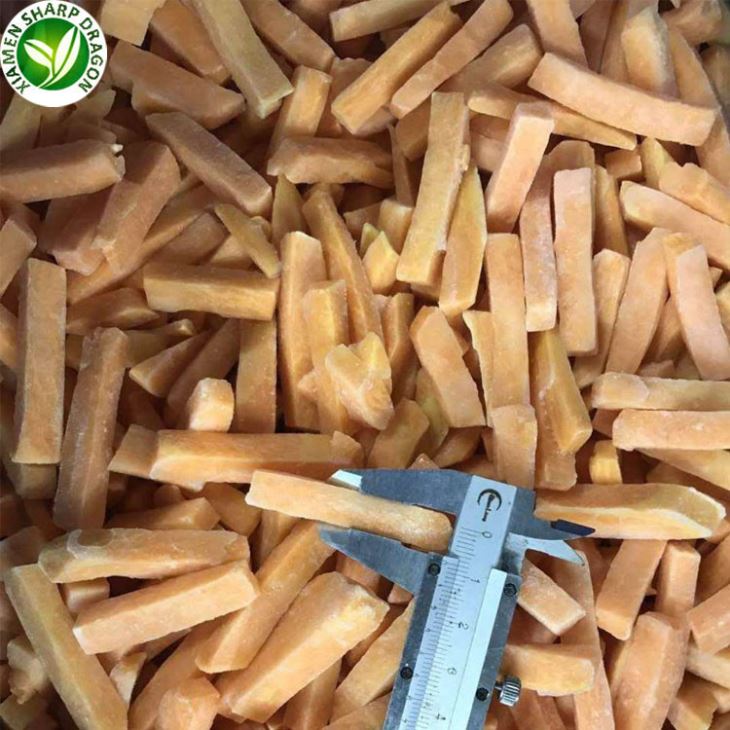
The supplied frozen sweet potato slices page is a useful product-form reference. For an actual purchase, the agreed specification and sample should resolve the preparation state, ingredient declaration, cut, and intended cooking method.
What Food Buyers Should Confirm
Importers, foodservice distributors, retail teams, and food manufacturers need a product-specific answer. Before using a nutrition value in product development or marketing, confirm:
- the sweet potato variety and flesh color;
- whether the product is peeled, blanched, steamed, baked, coated, seasoned, or pre-fried;
- the ingredient declaration and the basis used for nutrition data;
- cut size, size tolerance, portion target, and performance in the intended application;
- packing format, label requirements, storage instructions, and cold-chain controls;
- which laboratory report, supplier document, or destination-market calculation supports the final label.
The current XMSD frozen sweet potato range shows that cuts and colors serve different applications. Buyers should also align the agreed inner pack, outer carton, labeling, and transport conditions with the intended market; our overview of frozen-food packaging explains the operational context.

XMSD sourcing note: Tell us the required flesh color, cut, preparation state, pack format, destination market, and final application. We can then discuss the appropriate specification and the product evidence needed for your nutrition and labeling review.
Final Thoughts from XMSD
Frozen sweet potato nutrition is best described with a defined product and serving. Plain cooked frozen cubes provide mainly carbohydrate, some fiber and protein, and very little fat. Variety, processing, additions, and cooking determine the rest of the story. For consumers, the package label is the most relevant source; for food businesses, the actual specification and supporting documents should control every nutrition claim.
References
- USDA Foods: Sweet Potatoes, Cubes, Frozen-Nutrition Facts for an 88 g Cooked Serving
- NIH Office of Dietary Supplements: Vitamin A and Carotenoids
- Review on the Nutritional Composition of Orange-Fleshed Sweet Potato
- Research Review of Purple Sweet Potato Anthocyanins
- Vitamin Retention in Refrigerated and Frozen Fruits and Vegetables
- Mineral, Fiber, and Total Phenolic Retention in Refrigerated and Frozen Produce
- Recent Developments in Freezing of Fruits and Vegetables