


What's the Nutrition of Frozen Spinach? | XMSD
Mar 13, 2019

Plain frozen spinach is a compact way to add dark-green vegetables to soups, sauces, pasta, egg dishes, fillings, and prepared meals. Its nutrition is useful, but the serving form matters: cooked and drained spinach is not directly comparable with a loose cup of raw leaves, and spinach in a cream sauce is not the same product as plain frozen spinach.
The short answer: Plain frozen spinach is low in calories and supplies fiber, protein, vitamin K, carotenoids, folate, iron, magnesium, calcium, and potassium. A USDA reference serving of 1/2 cup (95 g), cooked and drained without salt, provides 32 calories, 5 g carbohydrate, 4 g fiber, 4 g protein, 1 g fat, and 92 mg sodium. Actual labels can differ by product and preparation.

Frozen Spinach Nutrition at a Glance
The table below uses the USDA Foods reference for frozen chopped spinach, cooked, drained, and prepared without salt. It is a practical comparison point, not a substitute for the Nutrition Facts panel or specification of a particular retail, foodservice, or industrial product.
| Nutrient | Per 1/2 cup (95 g) | How to read it |
|---|---|---|
| Calories | 32 | For plain cooked and drained spinach |
| Carbohydrate | 5 g | Includes naturally occurring carbohydrate |
| Dietary fiber | 4 g | Part of the total carbohydrate |
| Protein | 4 g | Useful, but not a complete meal's protein by itself |
| Total fat | 1 g | Added oil, butter, cheese, or cream changes this |
| Sodium | 92 mg | A representative unsalted value; check the product label |
USDA values are rounded and representative. Water retained after cooking, draining pressure, leaf-to-stem ratio, formulation, and serving weight can all change the result. Compare products on the same weight and prepared basis whenever possible.

Which Micronutrients Stand Out?
Vitamin K and carotenoids
Spinach is a concentrated food source of vitamin K. The body uses vitamin K in normal blood clotting and bone-related functions. Spinach also contains carotenoids, including compounds the body can convert to vitamin A. These composition facts support a role in a varied diet; they do not mean spinach prevents or treats a medical condition.
Folate, iron, and other minerals
Frozen spinach also contributes folate, nonheme iron, magnesium, calcium, and potassium. Plant-source iron is not absorbed as efficiently as heme iron from animal foods, so the iron number on a database or label does not make spinach a treatment for iron-deficiency anemia. Overall diet, absorption, health status, and individual requirements still matter.
Composition is not a medical outcome: A food can supply a nutrient without curing the conditions associated with nutrient deficiency. Frozen spinach can contribute to a balanced diet, but it should not be presented as a remedy for anemia, diabetes, hypertension, constipation, night blindness, skin disease, or other diagnoses.

Does Freezing Change Spinach Nutrition?
Freezing does not turn spinach into a nutritionally identical copy of raw leaves, nor does it remove all nutritional value. Commercial frozen vegetables are commonly blanched before freezing. Blanching helps control enzymes and prepare the product, but time, temperature, cooling, frozen storage, and later cooking can influence nutrient retention.
Water-soluble nutrients such as vitamin C and some B vitamins can be more sensitive to blanching and prolonged boiling. Fiber, minerals, protein, and fat-soluble components behave differently. This is why a simple claim that frozen spinach is always better or always worse than fresh spinach is not defensible without defining harvest age, storage time, preparation, serving weight, and the nutrient being compared.

Preparation Changes the Final Nutrition
Plain frozen spinach can go into soups, sauces, stir-fries, egg products, filled pasta, savory bakery items, and ready meals. For a dish where water release matters, thawing and draining may improve texture. For a soup or sauce, direct addition may be practical if the product instructions allow it. Follow the package directions because frozen vegetables may be sold as ready-to-cook rather than ready-to-eat.
The finished recipe can change the nutrition more than the spinach format does. Cream, cheese, butter, oil, salt, pastry, or a large sauce portion can raise calories, fat, or sodium. When comparing products, separate the nutrition of plain spinach from the nutrition of creamed spinach, a prepared side dish, or a complete meal.

Who Should Be Cautious?
Safety note: People taking warfarin are generally advised to keep vitamin K intake reasonably consistent rather than making sudden large changes. People with a history of calcium oxalate kidney stones may receive individualized advice to limit high-oxalate foods such as spinach. A clinician or registered dietitian can tailor guidance to the medication, stone type, and overall diet.
These cautions do not justify a universal list of people who must avoid spinach. Kidney-stone advice depends on the stone type, and dietary treatment should not be guessed from symptoms alone. Likewise, frozen spinach should not be recommended as a treatment for diabetes, kidney disease, anemia, or gastrointestinal disease.

What Food Buyers Should Verify
For importers, foodservice operators, and processors, "frozen spinach" is not one universal specification. Ball, pellet, brick, leaf, and chopped formats can perform differently in portioning, thawing, mixing, filling, and moisture control even when the ingredient list is similar.
- Confirm the product form, cut size, portion weight, leaf-to-stem expectation, and defect tolerance.
- Check whether the product is plain, salted, seasoned, sauced, or blended with other ingredients.
- Verify the declared preparation status and label instructions instead of assuming that blanching makes the product ready-to-eat.
- Request the current specification, ingredient statement, nutrition declaration, microbiological criteria, and destination-market documents.
- Evaluate pack size, inner liner, carton strength, frozen condition on arrival, and application performance with a representative sample.
At XMSD, we discuss the intended application before recommending a format. A spinach ball may simplify portion control, chopped spinach may distribute more evenly in a filling, and a brick format may suit another production flow. The right choice depends on the buyer's process and agreed specification.
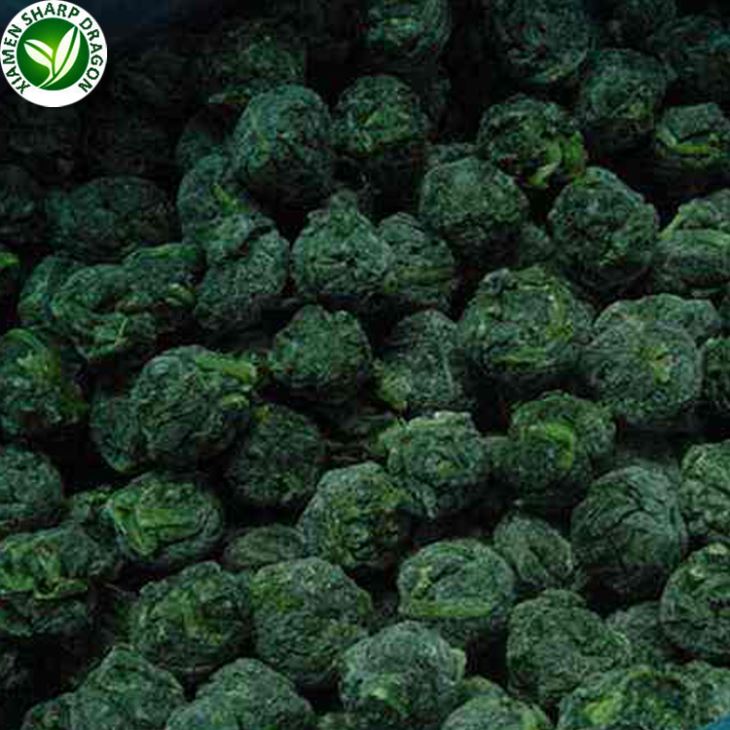
XMSD sourcing note: Buyers evaluating BQF frozen spinach balls can ask us to review product form, packing format, application needs, and the documents required for the destination market. Our frozen packaging information provides additional context for bulk and private-label discussions.
Frequently Asked Questions
Is frozen spinach nutritious?
Yes. Plain frozen spinach supplies fiber, protein, vitamin K, carotenoids, folate, iron, magnesium, calcium, and potassium. Processing and cooking can change some nutrients, so use the product label or specification for exact values.
How many calories are in half a cup of frozen spinach?
A USDA reference serving of 1/2 cup (95 g) frozen spinach, cooked and drained without salt, provides 32 calories. A branded product or prepared recipe may differ.
Is frozen spinach high in protein?
The same USDA serving provides 4 g protein. That is useful for a vegetable, but frozen spinach should not be treated as the only protein source in a complete meal.
Is frozen spinach high in iron?
Frozen spinach contributes nonheme iron. Plant-source iron is generally less readily absorbed than heme iron, so its presence does not mean spinach alone can prevent or treat iron-deficiency anemia.
Does frozen spinach contain a lot of vitamin K?
Yes. Spinach is a concentrated vitamin K source. People taking warfarin should discuss vitamin K intake with their health professional and avoid sudden large changes in intake.
Is frozen spinach as nutritious as fresh spinach?
Neither form is always superior for every nutrient. Harvest age, fresh-storage time, blanching, frozen storage, cooking method, water loss, and serving weight all affect the comparison.
Does blanching destroy all the vitamins in spinach?
No. Blanching can reduce some water-soluble nutrients, and the effect varies with time and temperature. Frozen spinach still contains a range of vitamins, minerals, fiber, and other food components.
Can frozen spinach treat anemia?
No single food should be presented as an anemia treatment. Spinach can contribute nonheme iron to the diet, but anemia has different causes and may require testing and individualized medical care.
Can I eat frozen spinach every day?
Many people can include spinach regularly as part of a varied diet. Portion, total dietary pattern, medication use, and medical history matter; people taking warfarin need particular consistency with vitamin K intake.
Does spinach cause kidney stones?
Spinach is high in oxalate, but that does not mean it causes stones in every person. People with a history of calcium oxalate stones may be advised to limit spinach as part of an individualized plan.
Should frozen spinach be thawed before cooking?
It depends on the application and product instructions. Thawing and draining can help fillings and baked dishes, while direct addition may suit soups or sauces. Follow the package directions for safe preparation.
Is creamed spinach nutritionally the same as plain frozen spinach?
No. Cream, butter, cheese, salt, starches, and serving size can substantially change calories, fat, sodium, and other values. Read the label for the finished product.
Do spinach balls, chopped spinach, and spinach bricks have the same nutrition?
The format alone does not guarantee a nutritional difference. Ingredient list, leaf-to-stem ratio, added salt or seasoning, processing, moisture, and serving weight are more informative than shape.
What should bulk buyers request from a frozen spinach supplier?
Request the current ingredient and product specification, format and cut details, nutrition declaration, pack options, microbiological criteria, destination-market documents, and a representative sample for application testing.
Final Thoughts from XMSD
Frozen spinach is a low-calorie, fiber-containing vegetable with vitamin K, carotenoids, folate, iron, and several other minerals. The most reliable comparison uses the same weight and prepared form, while the best sourcing decision also considers format, moisture behavior, ingredient declaration, packaging, and the buyer's final application.
References
- USDA Foods: Spinach, Chopped, No Salt Added, Frozen (IQF)
- University of Rochester Medical Center: Frozen Spinach Nutrition Facts
- USDA National Nutrient Database: Vitamin K Food List
- NIH Office of Dietary Supplements: Vitamin K Fact Sheet for Consumers
- NIH Office of Dietary Supplements: Iron Fact Sheet for Consumers
- NIDDK: Eating, Diet, and Nutrition for Kidney Stones
- U.S. FDA: Are You Storing Food Safely?
- Effect of Blanching Time-Temperature on Potassium and Vitamin Retention/Loss in Kale and Spinach
- XMSD: BQF Frozen Spinach Ball Product Page
- XMSD: Frozen Spinach Brick Product Page