


Where Does Dragon Fruit Come From? Origin & Buyer Guide
Aug 21, 2026

Dragon fruit sold internationally comes from climbing cacti native to tropical parts of the Americas, but commercial fruit is now grown in many regions across Asia, the Americas, and elsewhere. That distinction matters in frozen procurement. Botanical origin explains what the fruit is; the country and region of cultivation identify where the raw fruit grew; the processing and packing sites identify where the lot was converted into the form you will receive.
A purchase description that says only "dragon fruit from Asia" leaves too many decisions open. You still need flesh and skin identity, crop and growing region, raw-fruit maturity basis, processing site, packing site, frozen format, ingredient statement, lot linkage, application performance, and destination evidence. Origin should therefore be treated as a chain of verified facts, not a flag printed on a carton.

Country names are useful only after flesh type, raw-fruit identity, growing region, and lot linkage are defined.
Separate Native Origin from Commercial Origin
Kew's Plants of the World Online accepts Selenicereus undatus and reports its native range from Mexico to Honduras. Commercial literature may use Hylocereus undatus, an older name retained as a synonym in Kew's record. Other cultivated pitaya types and hybrids have related but not identical names and geographic histories. A claim that every dragon fruit species has one precise birthplace is therefore too simple.
Cultivation has spread far beyond the native range. The FFTC production and marketing review describes commercial growing in Vietnam, China, Mexico, Colombia, Nicaragua, Ecuador, Thailand, Malaysia, Indonesia, Australia, the United States, and other suitable regions. A frozen lot can be grown in one country, processed in another, packed at the same or a different site, and shipped through a third country. The preferential or non-preferential origin declared for customs must follow the applicable destination rule rather than a buyer's assumption about botanical history.
Use four separate fields in your sourcing file: native botanical range, raw-material growing country and region, processing country and facility, and packing/export country and facility. The first field is stable background. The other three can change by season, supplier program, or lot and therefore require order-specific confirmation. If a tender restricts origin, define which field the restriction governs.
Example: country-of-growth ambiguity. An importer requests "Asian-origin red dragon fruit." Supplier A offers fruit grown and frozen in Vietnam. Supplier B offers fruit grown in one country and cut and frozen in China. Both may fit the casual wording, yet customs documentation, tariff treatment, label statements, audit scope, and retailer declarations can differ. The importer replaces the casual wording with separate growing, processing, packing, and shipment fields before comparing price.
Lock the Name, Flesh Type, and Commercial Identity
Dragon fruit, pitaya, and pitahaya are common trade names, not complete product identities. Scientific naming has also changed as botanical research has developed. A supplier may use Hylocereus in specifications while an accepted plant database uses Selenicereus. Do not reject a lot only because a valid synonym appears, but do require the supplier to explain the name used in farm, processing, laboratory, and export records.
The visible combination of skin and flesh is essential. Red or pink skin can contain white, red, or magenta flesh. Yellow-skinned pitaya is commercially distinct and should not be grouped with a red-skinned type without an approved specification. Flesh color affects beverage shade, dessert appearance, blend ratios, label description, raw-material cost, and the usefulness of seeds as a visible identity cue.

Record skin color, flesh color, seed pattern, cultivar or commercial type, and the name used in each document.
For a robust material code, state the supplier's botanical or cultivar identification where available, accepted synonym, skin and flesh colors, natural seed expectation, single-type or blended policy, country and region of growth, and crop window. Add a photograph taken under controlled neutral lighting and an approved physical sample when the visual function is important. Color names alone are not enough because "red" can describe skin, flesh, or both.
The XMSD frozen dragon fruit range can help you identify available whole, piece, pulp, and puree directions. Use the commercial listing as a starting point, then attach your identity and performance limits to the purchase specification. A picture or catalog name does not replace lot evidence.
Build a Farm-to-Finished-Lot Origin Chain
Traceability should move in both directions. From a finished carton code, the processor should be able to identify the packing run, freezing or puree batch, raw-fruit intake lot, approved grower or collecting area, intake date, and relevant inspection and test records. From a raw intake lot, the system should identify every finished batch and shipment that received the material. A list of farm names without finished-lot linkage is not a complete chain.
Ask how smallholders, collection stations, or mixed orchard sources are controlled. The practical traceability unit may be a farm, registered grower group, collection route, receiving day, or raw batch. The unit must be honest and usable. If several approved farms enter one receiving hopper, a claim of one-farm identity is not supportable unless segregation and records demonstrate it.
Review the source map, approved-grower list, agricultural-input controls, harvest records, raw delivery ticket, intake grading, production batch sheet, packaging run, laboratory sample identity, pallet code, certificate link, and shipping marks. The evidence does not need to be sent in one enormous file for every order. A practical program defines what is supplied before shipment, what is retained and available on request, and what is verified during an audit.

The raw receiving lot must remain linked to the finished cut, production batch, carton code, pallet, and shipment.
A farm-source evidence framework helps structure questions about source regions and raw-material programs. Your order approval still depends on the farm or source group actually assigned to the lot, the facility that handled it, and the evidence named in the sales contract or quality agreement.
Judge Growing Origin Through Product Performance
Country reputation is a weak substitute for measured performance. Variety, orchard conditions, crop timing, rain, irrigation, harvest maturity, handling time, grading, and processing delay can vary inside one region. U.S. Department of Agriculture cultivar research shows meaningful quality differences among dragon-fruit cultivars. The lesson for procurement is not to copy one research number into every contract; it is to qualify the exact commercial type and source program offered.
The UC Davis dragon-fruit postharvest sheet describes the fruit as non-climacteric, meaning it should be harvested near the intended maturity because normal ripening does not continue after harvest in the way it does for climacteric fruit. As fruit matures, skin color develops, soluble solids rise toward a peak, and firmness and acidity can decline. These are fresh-fruit observations, not universal frozen-lot limits. Translate them into a supplier-specific raw intake standard and validate the frozen result.
Agree how maturity is judged: days after flowering where reliable, external color coverage, flesh color, firmness, soluble solids, titratable acidity, flavor, defects, or a combination. State the sample size, sample preparation, instrument, temperature, calibration, composite method, and acceptance rule. A Brix reading from selected sweet fruit cannot represent a production intake without a sampling plan.
Example: maturity changes frozen yield. Two raw programs use the same red-flesh type. Program A freezes fruit at a suitable maturity and produces firm pieces with controlled drip. Program B receives over-soft fruit after a long collection route; the average Brix looks acceptable, but the thawed pieces collapse and release more liquid. The buyer adds firmness, visible defect, time-to-process, thaw-yield, and application acceptance instead of using origin and Brix alone.
Specify the Frozen Form Before Comparing Origins
Origin comparisons become meaningless when the offers are different products. Whole or half fruit carries skin and more preparation labor. IQF dice or chunks supports portioning and visible inclusion. Block-frozen pulp can suit full-batch blending. Puree can simplify pumping or dosing, but seed content, viscosity, particle size, added ingredients, concentration, heat treatment, and package format have to be named.
For pieces, set the nominal cut and a measured distribution for in-size, undersize, oversize, broken pieces, fines, fused units, peel residue, brown or translucent tissue, and excess surface ice. For pulp or puree, set single-strength or concentrated status, seeds retained or controlled, sieve or particle basis, soluble-solids and acidity method, color reference, viscosity method where needed, and whether sugar, acid, water, antioxidant, or stabilizer is permitted.

Compare growing regions only after format, cut distribution, separation, defect, and application requirements are aligned.
Use a consistent frozen fruit category comparison when dragon fruit is weighed against another fruit base, inclusion, or blend. Do not approve a substitute merely because it fills the same menu slot. Its color strength, seed visibility, flavor intensity, pH, freeze-thaw behavior, yield, and label identity can be different.
Approve Origin with an Application Trial
A representative sample connects documentary origin to commercial value. The sample label should identify supplier, material code, botanical or commercial type, flesh color, growing region, processing facility, production lot, production date, format, pack, and storage condition. The supplier should confirm whether the sample came from production material or a specially selected laboratory portion.
For beverages, record inclusion rate, thaw state, mixing method, Brix, pH, acidity, color, flavor, seed suspension, filtration behavior, sediment, and stability over the relevant evaluation period. For smoothie, bowl, and dessert applications, record piece identity, color after thawing, bite, drip, breakage, seed appearance, portioning, and holding time. For bakery, sauce, or dairy-alternative use, include the real heat, shear, acidity, fat, and storage conditions.
Keep an approved reference sample where the product and storage program allow it, plus controlled photographs and numerical results. Define which differences require reapproval: growing-region change, cultivar or flesh-type change, new factory, process change, pack change, ingredient change, or a result outside the agreed range. A certificate stating country of origin does not demonstrate that a substitute lot will run correctly on your line.
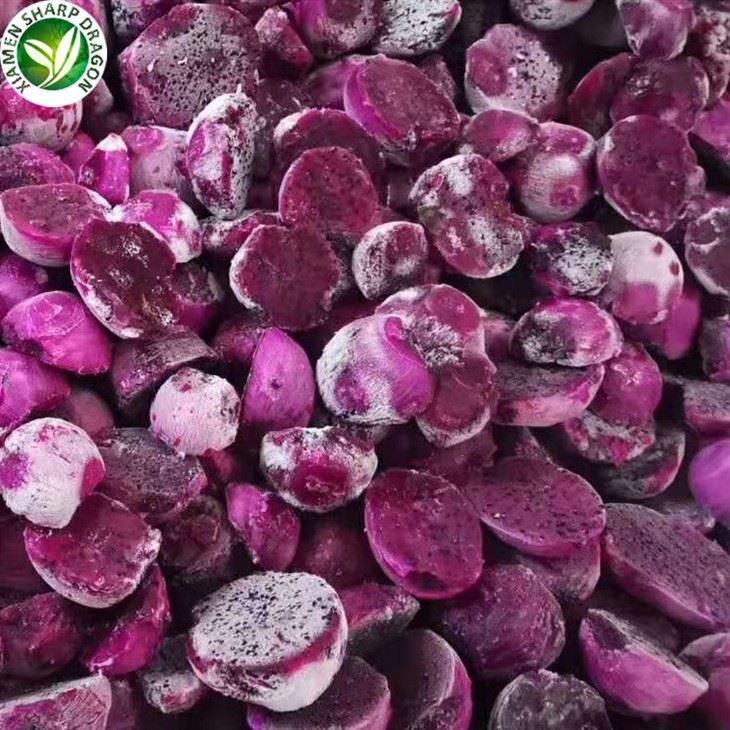
Inspect frozen separation, ice, breakage, color, aroma, and the outcome after the exact thaw or processing route.
Calculate Usable Yield, Not Just Invoice Price
A lower-priced growing origin can become more expensive when out-of-size pieces, breakage, peel residue, excessive drip, weak color, or rejected cartons reduce usable output. Record gross frozen weight, free ice or packaging loss where contractually relevant, thaw drip under one method, accepted piece fraction, formula inclusion rate, and finished output. Compare offers on the same denominator.
A 1,000 kg shipment costs USD 2,450 delivered. The agreed receiving assessment classifies 18 kg as non-usable because of excess free ice and damaged product, leaving 982 kg. Under the agreed thaw method, retained fruit is 91%, giving 893.62 kg. The buyer's cut and color screen accepts 94% of that fruit, giving 840.00 kg after rounding. Usable cost is USD 2,450 ÷ 840.00 kg = USD 2.92/kg.
A competing lot costs USD 2,520 delivered but yields 930 kg after the same loss, thaw, cut, and color checks. Its usable cost is USD 2.71/kg. The higher invoice offer saves about USD 0.21 per usable kilogram. Replace these sample figures with pilot and receiving data from your own application.
The calculation is only useful when both offers use the same sampling and acceptance rules. State whether the denominator is thawed fruit, accepted pieces, accepted puree, finished beverage, or saleable packs. Include freight, duties, inspections, relabeling, laboratory tests, storage, rework, disposal, and line losses when they differ materially between routes.
Apply the same evidence, sample, specification, and commercial-term logic used in a frozen fruit supplier qualification. Origin becomes commercially useful when it explains a controlled supply route and measurable performance, not when it acts as a quality shortcut.
Verify Processing, Safety, and Lot-Release Evidence
Request the actual process flow for the offered form. A piece route may include raw receiving, washing, peeling, trimming, cutting, rapid freezing, grading, metal detection, packing, and frozen storage. Pulp or puree routes can add crushing, pulping, sieving, deaeration, blending, heat treatment, or aseptic operations. The facility should identify the real sequence and validated hazard controls rather than rely on a generic flow diagram.
Do not infer ready-to-eat status from fruit type, country, IQF wording, or a clean photograph. Define intended use, consumer group, cooking or kill step, label instructions, and destination regulation. Agree microbiological, pesticide-residue, heavy-metal, foreign-material, allergen cross-contact, authenticity, and additive requirements according to the product and market. State the laboratory method, sampling plan, reporting limit, test frequency, release responsibility, and action for a failure.
Match every certificate and report to the legal entity, address, activity, product scope, and validity period. A food-safety certificate for a different packing site does not automatically qualify the processor handling the lot. A laboratory report without the supplier's lot code does not release the shipment. Where destination authorities require phytosanitary, health, origin, or other documents, confirm exact wording and responsibility before production.
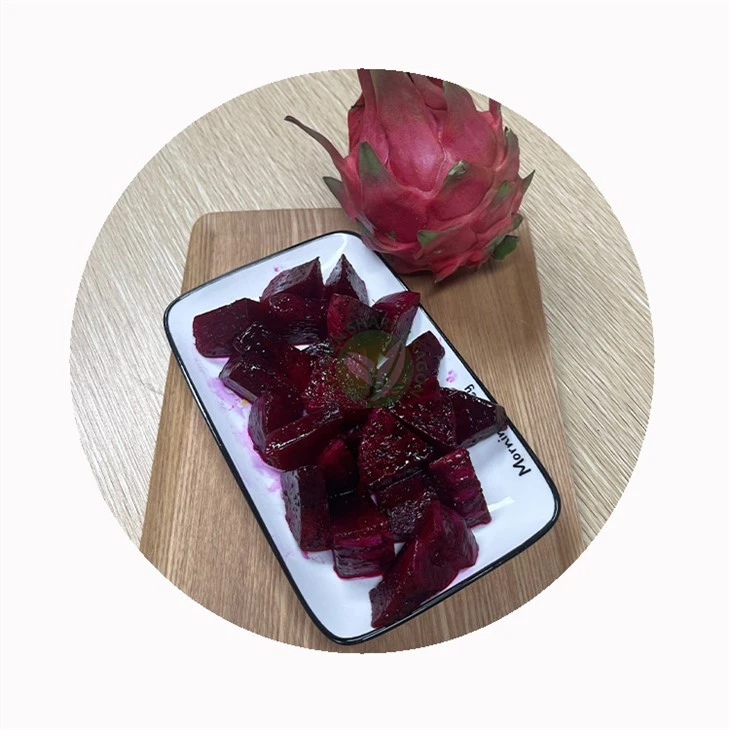
A lot-release decision links origin documents to the sampled lot, process status, safety evidence, and application result.
Protect Identity Through Packing and Cold Chain
Packaging has to preserve the identity and condition approved during sampling. Confirm inner material, food-contact declaration where required, seal type, net weight, carton strength, liner color if it affects inspection, label fields, lot-code legibility, pallet pattern, and container loading plan. For puree, confirm bag or drum configuration, closure, aseptic status where applicable, and handling after opening.
Frozen product should remain under the agreed temperature program through storage, loading, ocean or land transport, receipt, and distribution. Define set point, loading temperature, data-logger placement, acceptable excursion policy, inspection on receipt, and claims evidence. Frost, fused pieces, dehydration, damaged liners, wet cartons, collapsed pallets, or unusual color can signal handling problems, but the cause and disposition should follow evidence rather than appearance alone.

Packaging, code legibility, frozen separation, and logger evidence protect the identity approved at source.
Use a frozen packaging framework to structure the pack discussion. Ask for order-specific material, print, legal marking, pallet, and loading confirmation because pack choices depend on product form, destination, channel, and handling route.
Use a Buyer-Ready Origin Approval Sequence
Start with intended use and the function dragon fruit performs: visible pieces, natural red color, seed appearance, mild fruit base, puree flow, or label identity. Then lock the commercial type, flesh color, growing-region policy, processing and packing sites, frozen format, ingredient status, specification, application trial, safety program, packing, and shipment evidence. Only after those decisions are aligned should price and origin alternatives be ranked.
Before sample dispatch, ask the supplier to complete a one-page origin map showing farm or source group, raw intake code, production batch, finished code, carton and pallet marks, processing site, packing site, and export entity. During sample review, confirm that the label and supporting records follow the same map. Before shipment, require the agreed release documents and a traceability exercise or supporting extracts when the risk profile justifies it.
For importer and private-label programs, add label-origin wording, regulatory responsibility, approved facility, audit access, document retention, change notification, and recall contact. For beverage and puree users, prioritize flesh color, Brix and acidity methods, seed or particle control, viscosity, treatment status, pack format, and formula yield. For retail or dessert piece programs, prioritize cut distribution, visual color, seed appearance, breakage, drip, texture, separation, packaging presentation, and shelf handling.
Send your required flesh type, growing-origin policy, format, cut or puree specification, intended use, destination, annual volume, pack, certification needs, and sample test. We can review suitable frozen dragon fruit routes and confirm the evidence that can accompany the offered lot.
Frequently Asked Questions
Must a retail origin label name the dragon fruit farm?
Not necessarily. Mandatory consumer-label wording and the traceability detail retained by the supply chain are different layers. Confirm the destination's legal label rule with a qualified reviewer, while keeping farm or source-group linkage in the buyer, processor, and supplier records needed for verification and recall.
Can a supplier change the dragon fruit growing region without reapproval?
Only if your approved specification and change-control agreement permit it. When region affects legal origin, flesh type, crop timing, maturity, color, residues, logistics, or label wording, require notice and evidence before the change. A new-region sample trial is appropriate when finished-product performance could move.
Can a COA prove where dragon fruit was grown?
A certificate of analysis reports specified test results for an identified sample or lot; it does not prove the complete farm-to-finished origin chain by itself. Link the COA lot code to raw-intake, production, pack, pallet, origin declaration, and shipment records, then verify that the issuing laboratory and tested parameters match your requirement.
How should mixed-origin dragon fruit lots be handled?
Define whether mixing is prohibited, allowed only within one approved region, or allowed across named sources. The processor should record the quantity and identity of each input lot and link the blend to the finished code. Label, customs, certification, and retailer rules still govern what origin statement is permitted.
Should an origin sample come from commercial production?
Prefer a production-representative sample with the offered type, region, factory, process, and grade. If only a pilot or hand-prepared sample is available, record the difference and require a production-lot confirmation before shipment. Otherwise the approved color, cut, yield, or frozen condition may not represent routine supply.
References
- Royal Botanic Gardens, Kew. Plants of the World Online: Selenicereus undatus, accepted name, native range, and synonyms.
- Royal Botanic Gardens, Kew. Plants of the World Online: Selenicereus, genus distribution and synonymy.
- UC Davis Postharvest Research and Extension Center. Dragon Fruit Produce Facts Sheet: maturity, quality, physiology, and storage information.
- Food and Fertilizer Technology Center for the Asian and Pacific Region. Dragon Fruit Production and Marketing.
- USDA Agricultural Research Service. Fruit quality and antioxidant variation among dragon-fruit cultivars.
- Peer-reviewed phenotypic diversity study of dragon fruit accessions and taxonomic identification.