


A 24-Hour Pineapple Load Check: Total Every Form First
Nov 19, 2019

A large pineapple exposure can leave the mouth raw, add substantial meal volume, or coincide with nausea, cramping, loose stool, heartburn, or other digestive discomfort. The first useful action is to stop eating and total every pineapple form consumed during the day. Breakfast juice, fruit pieces, salsa, dessert, and a bromelain product are separate entries, not one memorable bowl.
Quantity alone does not classify the reaction. Local soreness after prolonged fresh-fruit contact is different from itching, hives, rapidly increasing lip or tongue swelling, wheezing, throat tightness, faintness, or symptoms across several body systems. Possible allergy warning signs require prompt action according to local emergency guidance and any prescribed allergy plan, regardless of how few pieces were eaten.
There is no universal cup count at which pineapple becomes "too much" for everyone. Use the USDA one-cup, 165-gram chunk reference to reconstruct food amount, not to declare a safety ceiling. Form, eating speed, co-ingredients, existing mouth injury, reflux history, allergy, and individual clinical plans can change the decision.
24-hour check: inventory each form and its units; order symptoms by time; separate irritation, digestive overload, and possible allergy; then choose stop-and-observe, professional review, or urgent help.
Build the Inventory before Naming the Cause
Start at waking and move forward. Write time, product, edible grams or beverage milliliters, recipe ingredients, and the amount actually finished. Include juice in marinades, puree in yogurt, fruit topping, canned pieces, dried strips, and any labeled bromelain supplement. Do not convert a supplement into "pineapple equivalents"; record its label separately.
Gross fruit weight is not edible exposure. Crown, rind, core discarded as trim, and waste do not enter the serving. For a shared dish, record batch input and the fraction eaten. For a smoothie, list the whole recipe and the volume consumed rather than assigning every effect to its pineapple component.
Next mark the first symptom, its location, severity, progression, and when it eased. If discomfort began before the final pineapple occasion, that last serving may have worsened the event but cannot explain the beginning. A chronological inventory prevents memory from collapsing an entire day into one dramatic last bite.
Convert Pieces, Cups, and Drinks into Comparable Units
USDA SNAP-Ed lists one cup of uncooked pineapple chunks as 165 grams. Use 165 grams as a reference unit when the food resembles plain chunks. One 330-gram intake is therefore two reference cups by weight: 330 ÷ 165 = 2. The calculation describes amount; it does not diagnose why a person feels unwell.
Cut size changes cup packing. Small tidbits occupy gaps differently from large irregular chunks, and a heaped household bowl is not a standardized cup. Weighing the edible food gives a better reconstruction. When only package data exists, multiply labeled serving weight by the number of servings consumed.
Keep drinks in milliliters and ingredient grams. A 500-milliliter beverage is not 500 grams of pineapple. It may contain water, juice, dairy, sweeteners, and other fruit. Recipe composition belongs beside total volume so the mouth and digestive exposure can be interpreted without pretending every component is identical.

Fresh Pieces, Juice, Dessert, and Supplements Are Separate Lines
Plain pieces preserve a visible amount and require chewing. Juice can extend acid contact when sipped slowly and may be consumed in a larger volume. Syrup-packed fruit or dessert adds other sugars and ingredients. Dried pineapple concentrates solids in a small package and can be easy to eat quickly.
Bromelain products belong in a different category from food. Research on supplemental or pharmaceutical bromelain uses labeled enzyme preparations and dosing schemes that cannot be inferred from a bowl of fruit. NCCIH notes that orally used bromelain has limited evidence for several promoted purposes and reports potential gastrointestinal and allergic problems.
If a person took a supplement, preserve the package name, labeled amount, time, and other medicines or supplements. Do not advise a medication change from a food page. A pharmacist or clinician needs the actual label and health context to assess interactions or adverse effects.
Map Mouth Contact across the Entire Day
Fresh pineapple is acidic and contains proteolytic enzymes. Repeated contact can contribute to a tender, scraped, or burning sensation, especially when the mouth is already dry, cracked, ulcerated, or recovering from dental work. Long sipping and repeated small snacks extend contact even when no single occasion looks large.
Record contact pattern: pieces eaten in ten minutes, juice sipped for an hour, or several exposures across the afternoon. Stop when the mouth becomes sore. Rinsing with plain water can remove residues; do not keep eating to prove tolerance. Ongoing lesions, severe pain, bleeding, or symptoms unrelated to exposure deserve professional assessment.
Do not automatically label every oral symptom an enzyme burn. Itching, swelling, hives, throat symptoms, and rapid progression point toward a different safety pathway. The pineapple warning-sign guide separates common discomfort from possible allergy signs.

Separate Meal-Volume Effects from Pineapple-Specific Effects
Fullness, nausea, cramping, or loose stool after a very large eating day may reflect total volume, eating speed, sugar, fiber, fat from a dessert, alcohol, another food, or illness. Pineapple can be part of that load without being the sole cause. List the complete meals and their timing.
A four-course dinner followed by 300 grams of fruit asks a different digestive question from the same fruit replacing a rich dessert after a light meal. The inventory should say "added" or "replaced." That word often explains more than the fruit name.
For mild, self-limited discomfort, stop the exposure and return to ordinary hydration and meals as tolerated. Do not use the episode to justify an extreme fast or an intentional high-dose rechallenge. Persistent pain, repeated vomiting, dehydration concerns, blood, black stool, trouble swallowing, or unexplained weight change calls for clinical evaluation.
Use an Allergy Branch That Ignores the Portion Argument
Allergy can occur without an "excessive" amount. Published literature identifies bromelain as capable of IgE-mediated reactions, including respiratory and gastrointestinal manifestations in sensitized individuals. The decision therefore turns on symptom pattern and progression, not whether the serving exceeded one cup.
Stop eating immediately for itching, hives, spreading rash, face or tongue swelling, wheeze, throat tightness, marked dizziness, or fainting. Rapid breathing difficulty, throat closure, collapse, or a severe multi-system reaction is an emergency. Follow the local emergency pathway and any prescribed epinephrine plan.
Do not deliberately repeat a suspected allergic event to find a personal threshold. Preserve the ingredient list, packaging, timeline, amount, symptom order, and treatment given. That record is more valuable to an allergy professional than a confident claim that acid or bromelain alone caused the event.
Treat Reflux as a Personal Trigger Pattern
Acidic foods can worsen reflux for some people, but triggers vary. Large meal volume, high-fat companions, alcohol, and lying down soon after dinner may matter. Record burning, regurgitation, the full meal, and the interval to bed rather than declaring pineapple universally unsuitable.
A 24-hour inventory may reveal repeated acid exposure: juice at breakfast, fruit after lunch, and a pineapple dessert near bedtime. Reducing the number of exposures can answer a different question from merely halving the final bowl. Change one meaningful variable at a time when symptoms are mild.
Frequent nighttime symptoms, pain, difficulty swallowing, persistent vomiting, bleeding signs, or reliance on repeated self-medication deserves medical review. A food log can support that conversation, but it cannot establish a diagnosis.
Do Not Convert a Nutrition Reference into a Maximum
USDA's 165-gram cup is useful because it connects a known weight with food-composition data. It does not say that 164 grams is safe and 166 grams is excessive. Individual appetite, total diet, form, symptoms, and medical needs prevent that kind of universal boundary.
Daily frequency creates another decision. A modest serving repeated every day may narrow fruit variety or repeatedly expose a sensitive mouth even when no acute binge occurs. The daily pineapple routine guide addresses frequency rather than one overloaded day.
Benefits also do not cancel excess. Vitamin C or other desirable components cannot make an uncomfortable amount necessary. The pineapple benefit guide explains composition and evidence without turning a large exposure into a therapeutic dose.

Review the Next 24 Hours without Overcorrecting
When symptoms are mild and settling, avoid more pineapple while the pattern is assessed and resume ordinary foods according to comfort. A punitive fast, "detox" drink, or another large dose does not clarify the event. Note whether symptoms resolve and whether hydration and normal meals are tolerated.
The next action can be simple: reduce the number of pineapple occasions, choose one visible portion, eliminate a sweetened product, or stop until a suspected allergy is evaluated. Choose the action that corresponds to the observed pattern, not the most dramatic theory.
If a later, cautious food trial is appropriate for mild portion-linked discomfort, do not repeat it while tissue remains sore or gastrointestinal symptoms continue. Keep the form plain and the portion measured. A prior severe or allergic-looking reaction is not suitable for unsupervised testing.
Use Three Action Bands instead of One "Too Much" Label
The first band is mild, localized, and improving after you stop. Examples include ordinary fullness or a tender mouth without swelling, hives, breathing change, faintness, or rapid progression. Record the event, avoid extending the exposure, and watch whether it settles. The result supports a portion or contact-time adjustment, not a diagnosis.
The second band is persistent, recurring, or clinically concerning. Repeated reflux, ongoing mouth lesions, worsening abdominal pain, dehydration risk, regular vomiting, swallowing difficulty, or a pattern that disrupts eating deserves professional review. Bring your timeline, quantities, product labels, co-ingredients, and any treatment used.
The urgent band involves breathing difficulty, throat closure, rapidly enlarging tongue or facial swelling, collapse, or another severe reaction. Use the emergency pathway immediately. Do not spend critical time calculating whether you consumed one or two reference cups; an allergic emergency is not resolved by portion arithmetic.

Check for Double Counting and Missing Ingredients
A recipe log can count the same pineapple twice. If 300 grams of puree went into a one-liter batch and you drank 250 milliliters, your estimated share is one quarter of the batch, or 75 grams, assuming even mixing. Do not add the full 300 grams again because it appears on the recipe sheet.
Missing ingredients create the opposite error. A purchased smoothie may include apple juice, sweetener, dairy, stabilizers, or another fruit even when pineapple dominates the name. Preserve the label or request the formulation where available. If composition is unknown, mark it unknown rather than inventing a pineapple percentage.
Shared platters need an allocation method. Weigh the bowl before and after if the event matters, or estimate your share from a known number of equal portions. State that the value is estimated. A transparent range is more useful than false precision built from an unmeasured communal dish.
Translate the Record into a Prevention Plan
For an ordinary amount-related episode, reserve pineapple for one eating occasion rather than allowing it to appear across drinks, snacks, sauce, and dessert. Pre-portion the edible grams and remove the retail container. This does not guarantee comfort, but it makes the exposure easier to see and stop.
For mouth contact, reduce prolonged sipping and repeated grazing. Choose a serving method that finishes within a normal meal rather than extending acidic contact across hours. If soreness recurs despite a modest measured portion, stop treating quantity as the only explanation and obtain appropriate advice.
For foodservice, place every pineapple component on the recipe card: main fruit, puree, sauce, garnish, and beverage. The approved grams should reflect the diner's full meal exposure, while purchasing calculations remain based on accepted yield. One visible portion rule can correct both hidden over-serving and unexplained cost variance.
Representative Scenario: A Multi-Form Household Day
Representative scenario: Worked example: an adult consumes 240 milliliters of a breakfast drink containing 90 grams pineapple, 140 grams of chunks after lunch, and a dessert estimated at 110 grams pineapple. Total edible pineapple is 90 + 140 + 110 = 340 grams, about 2.06 USDA reference cups by weight.
Mouth tenderness begins during the dessert after three separated exposures, without hives, swelling, breathing change, vomiting, or faintness. The decision function is exposure aggregation. The action is to stop, rinse with water, avoid another acidic exposure while sore, and retain the full timeline. If allergy signs appear or symptoms escalate, the response changes immediately.
This invented example does not diagnose the cause or set 340 grams as a threshold. It demonstrates why summing all forms yields a stronger record than counting only the last bowl.
Representative Scenario: Foodservice Batch Exposure Control
Representative scenario: Practical example: a café produces 1,600 fruit cups with a stated 80-gram pineapple target. Accepted fruit requirement is 1,600 × 80 g = 128 kilograms. At a verified issue-to-accepted yield of 96 percent, planned issue is 128 ÷ 0.96 = 133.33 kilograms.
The decision function is menu-dose control. A trial shows wide irregular pieces create an average cup of 94 grams because staff add "one more piece," while calibrated dice average 81 grams. The café selects the calibrated format, updates the scoop instruction, and removes a separate pineapple garnish that had not been included in the stated serving.
These are planning figures, not a completed XMSD project. Actual action requires measured piece distribution, thawed yield, scales, employee practice, hold conditions, waste, and the approved recipe.

XMSD Experience: Cut Distribution Controls Hidden Over-Serving
In our foodservice reviews, the nominal cut is only the starting point. Broad piece-size distribution changes how staff fill a cup, how many pieces look sufficient, and how much fruit is actually dispensed. Visual generosity can create persistent over-portioning even when the written recipe is correct.
We compare a weighed multi-cup trial, not one display sample. The useful results include average grams, high and low cup weights, fines, breakage, and operator correction. A cut that doses consistently can reduce both uncontrolled exposure and food cost.
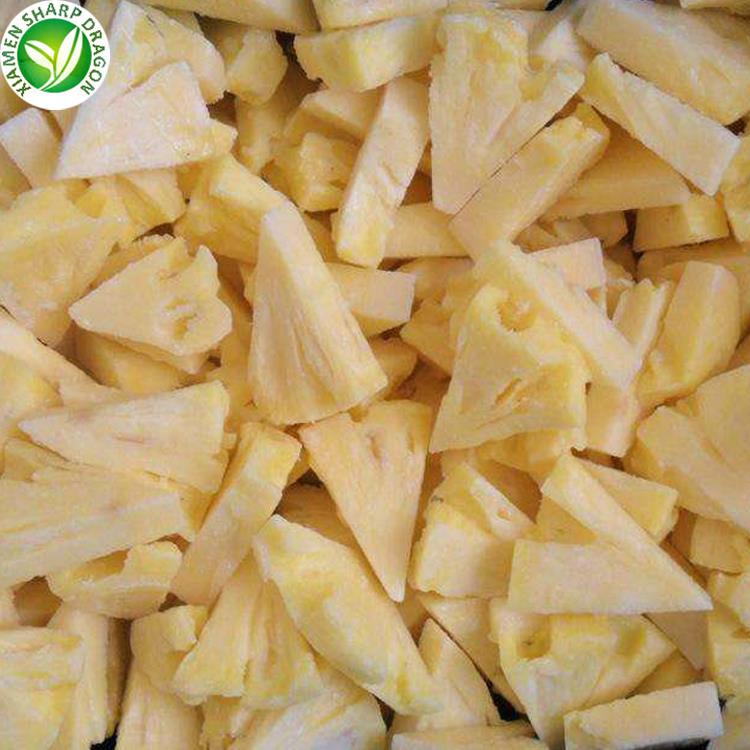
For format context, the frozen pineapple range provides a starting point. The buyer's finished-cup test remains the deciding evidence.
XMSD Experience: Accepted Yield Is the Correct Batch Basis
A carton's net weight does not automatically equal accepted fruit delivered to the recipe. Clumps, fines, drip, damaged pieces, and material outside the visual specification can reduce usable output. That difference matters when the serving target is designed to be consistent.
We ask the kitchen to define thaw state, draining method, accepted piece range, service hold, and treatment of juice or fines. Then issue-to-accepted yield can be measured on the same basis used in production. Without a shared method, two yields may look comparable and describe different products.
The action is operational, not medical: calculate purchasing from accepted kilograms and maintain the approved dose. A supplier specification cannot determine an individual allergy or digestive tolerance, but it can stop hidden menu variation from confusing the exposure record.

End with One Clear Action
A reconstructed day should finish with a choice. Stop and observe a mild exposure-linked irritation. Seek professional review for persistent, recurring, or clinically concerning symptoms. Use urgent care for breathing difficulty, rapidly progressing swelling, collapse, or another severe allergic pattern.
For future ordinary meals, define one pineapple occasion, one form, and one edible weight. Remove unnoticed duplicates across drinks, garnishes, and dessert. That keeps the conclusion proportional and makes another overloaded day less likely.
The phrase "too much" becomes useful only after the exposure is visible. Total the day, separate the symptom pathway, and take the action that matches the evidence.
For a portion-controlled pineapple menu, send XMSD the cut, grams per serving, thaw-and-drain method, accepted-piece rule, daily covers, pack format, and destination through our inquiry page. We can review the format against the stated recipe.
References
- USDA SNAP-Ed, Pineapples serving reference. The 165-gram cup supports amount reconstruction and is not a universal tolerance limit.
- National Center for Complementary and Integrative Health, Bromelain: Usefulness and Safety. The source distinguishes studied bromelain preparations from ordinary fruit exposure.
- Leelakanok and colleagues, systematic review and meta-analysis of bromelain efficacy and safety. Reported adverse events supply supplement context rather than a fresh-fruit threshold.
- Baur and Fruhmann, allergic reactions to bromelain following occupational exposure. The report supports the possible-allergy branch and does not establish prevalence among ordinary consumers.