


What Happens If You Eat Too Much Pumpkin? Read the Portion Signals
Nov 08, 2019

Eating a very large amount of pumpkin at one sitting may leave some people uncomfortably full, gassy, or loose-stooled, especially when the portion is much larger than usual. The experience is often shaped by volume, fiber, the person's normal eating pattern, and everything served with the pumpkin. A rich pumpkin dessert, creamy soup, spiced drink, plain roasted cubes, and unsweetened puree are different foods even though all carry the same ingredient name.
For most healthy adults, the practical response is simple: stop when comfortably full, return to a normal varied pattern, and identify the exact dish before blaming pumpkin alone. Persistent pain, repeated vomiting, breathing difficulty, facial swelling, or severe symptoms need appropriate medical attention. A normal-food question can be answered without turning pumpkin into either a cure or a poison.
The useful distinction: "Too much pumpkin" can mean too much food volume, a rapid increase in plant foods, an unusually concentrated puree, or too much sugar, fat, sodium, spice, or dairy in a pumpkin recipe. Reconstruct the serving before drawing a conclusion.

Start With the Exact Pumpkin Food
Plain cooked pumpkin is mostly water by weight and contributes carbohydrate, fiber, orange color, and provitamin A carotenoids. The USDA SNAP-Ed pumpkin guide gives a reference serving of 1 cup, or 116 g, of cubed pumpkin. That reference describes one food amount rather than a hard ceiling for every person. Seeds, pie filling, concentrated puree, bread, soup, and a café drink each need their own serving basis.
Pumpkin seeds are energy-dense and have a very different nutrient profile from the orange flesh. Sweetened pie mix contains ingredients that plain puree may not contain. Restaurant soup may include cream, butter, stock, salt, or garnish. Bakery products add flour, sweeteners, and fat. A discomfort that follows two bowls of rich soup could reflect the total fat, dairy, sodium, spice, temperature, or volume rather than one vegetable.
The label or recipe gives the first reliable clue. Name the form, record the amount, and list the major additions. "I ate pumpkin" is too broad for a useful assessment. "I ate about 450 g of roasted pumpkin with oil" or "I drank a 500 ml sweetened pumpkin beverage with cream" gives enough detail to compare the exposure with the person's usual meal.
From our food-application perspective, product identity matters for the same reason. A defined frozen dice, a concentrated puree, and a formulated filling create different solids, water, sweetness, and serving behavior. The product name belongs beside the specification and recipe basis, not in place of them.
Preparation history completes that identity. Pieces simmered until they dissolve deliver a different concentration per spoonful from pieces briefly steamed and served intact. A puree reduced on an open kettle contains less water than the starting puree. A soup diluted to a final batch weight is different again. Record the condition in which the food was eaten: raw or cooked weight, drained or undrained, reduced or diluted, and hot-held or freshly served. Those details turn a vague quantity into an amount that another person can understand and reproduce.

What a Very Large Portion May Feel Like
The most immediate effect may simply be physical fullness. A large bowl of pumpkin adds food volume and water to the stomach. Eating quickly makes it easier to pass the point of comfortable satisfaction before the eater notices. The sensible action is to slow down, pause, and compare the portion with the rest of the meal.
Some people notice gas, bloating, or a change in stool when they suddenly eat a much larger amount of plant food than usual. Fiber is valuable within a varied diet, but digestive tolerance is personal and the rate of change matters. The same person may tolerate one cup of cooked pieces in a meal and dislike a much larger concentrated bowl eaten quickly. That observation supports portion adjustment; allergy requires a separate symptom pattern and medical assessment.
A sweetened pumpkin dessert or drink can produce a different experience. A large sugar-rich portion may be followed by thirst, energy fluctuation, or simple regret about the richness of the meal. A cream-heavy preparation may be difficult for someone who reacts to dairy. Strong spices can bother a sensitive stomach. The practical test is to compare the full formulation, not to remove every pumpkin food automatically.
Orange or yellow skin tone is sometimes raised in discussions of very high carotenoid intake over time. A one-off pumpkin meal is not the usual setting for that observation, and a visible color change deserves professional evaluation rather than self-diagnosis. Do not use an internet color chart as a substitute for care when the eyes also look yellow or when other symptoms are present.

A Portion Is More Useful Than the Word "Too Much"
USDA MyPlate places cooked mashed pumpkin in the red and orange vegetable subgroup and uses 1 cup as a cup-equivalent example. MyPlate recommendations describe overall vegetable intake by age, sex, activity, and other factors, so a single pumpkin number is not a universal prescription. Variety across vegetable subgroups is the more useful principle.
Use the cup reference as a measuring starting point. If a person normally eats half a cup of cooked vegetables and suddenly consumes four cups of dense pumpkin puree, the change in volume and concentration is large. If the person eats one cup of pumpkin within a plate that also contains protein food, grain, and another vegetable, the context is different. A measured description makes the comparison honest.
| Question | Record | Why it changes the judgment |
|---|---|---|
| Which form? | Dice, puree, filling, seed, soup, bakery food, or drink | Water, concentration, and other ingredients differ |
| How much? | Grams, cups, milliliters, or fraction of the batch | A measured amount can be compared with the usual meal |
| What else? | Sugar, oil, dairy, salt, spice, flour, toppings | The finished recipe may explain the experience |
| What happened? | Fullness, bloating, allergy signs, pain, or no symptom | Different signals require different actions |
Practical example: Someone feels bloated after a large holiday portion. The plate contained pumpkin casserole with cream, sugar, butter, and a second dessert. The next comparison is a smaller serving of plainly roasted pumpkin in an ordinary meal, not a permanent ban on the ingredient. Recording the recipe separates a volume problem from a repeatable reaction.
Do not run a home re-challenge after a serious allergic-type response. Hives, facial swelling, wheezing, or breathing difficulty belong in a different safety category from ordinary fullness. The symptom pattern determines the next step.
Large Portions and Medical Diets Need Exact Data
People managing diabetes, kidney disease, digestive conditions, food allergy, or another medically prescribed diet need advice tied to their care plan and the exact pumpkin food. Plain cubes and sweetened filling have different carbohydrate and ingredient profiles. A serving of flesh and a serving of seeds are not interchangeable. Restaurant soup may not reveal every ingredient unless the kitchen provides it.
Use the product label when it exists. Record serving size, servings consumed, total carbohydrate, added sugars, sodium, and ingredients relevant to the care plan. For a homemade food, calculate the whole recipe and divide by the actual number of portions. A broad nutrient claim about pumpkin cannot replace those numbers.
Vitamin A language also needs precision. The NIH Office of Dietary Supplements explains that plant foods provide provitamin A carotenoids, which the body can convert into vitamin A. That is not the same exposure as taking a high-dose preformed vitamin A supplement. Food and supplement questions require separate assessment, especially during pregnancy or when a clinician has set a specific limit.
When symptoms repeat with small, plainly prepared portions, keep a concise food-and-symptom record and seek qualified guidance. Include the product, amount, preparation, timing, other foods, medicines when relevant, and the exact symptom. Good records are more useful than a broad internet list of possible side effects.

Concentration Changes Both Eating and Recipe Behavior
Pumpkin dice carry visible water and piece identity. Puree concentrates the eating experience into a smaller visual volume and mixes easily with other ingredients. Drying concentrates further. Seeds are a different anatomical part. The amount on the spoon therefore cannot be compared by appearance alone.
In foodservice, puree can be portioned into soup, batter, filling, or sauce, but the solids and moisture balance affect texture. More puree can thicken a base until it feels pasty; added liquid can restore flow while diluting flavor and changing yield. With dice, the main issues may be piece count, softness, water release, and visible distribution. The suitable format follows the finished food.
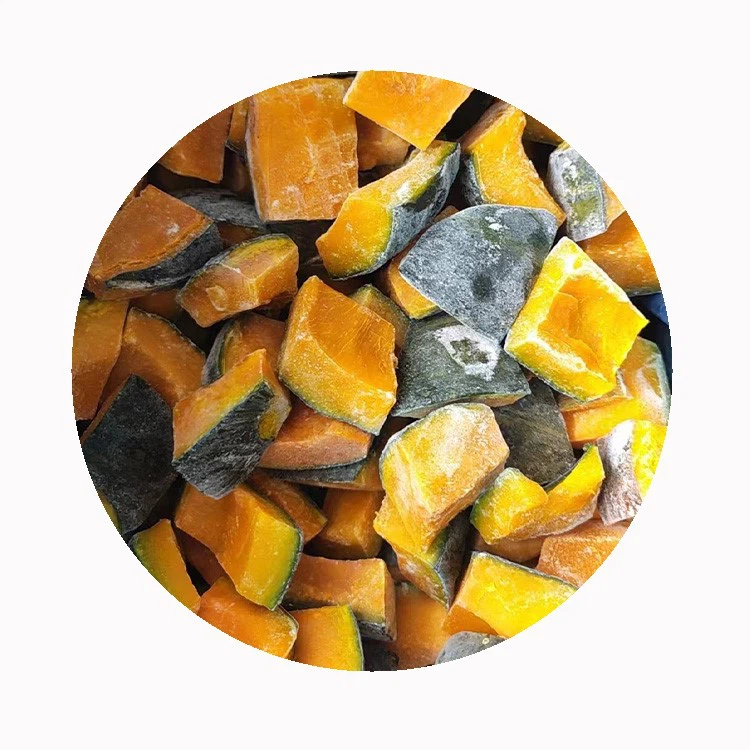
A related XMSD guide explains the handling decision around freezing pumpkin puree. For visible-piece applications, the frozen pumpkin diced format offers a different control point: a specified cut can be weighed and distributed through the batch.
We treat concentration as an application variable, not a quality adjective. More pumpkin solids may be useful in a dense filling and undesirable in a clear soup. The acceptance method has to name the target viscosity, piece identity, flavor strength, and serving basis.

Scale a Recipe Without Accidentally Multiplying the Serving
Batch size creates a common mistake: the kitchen scales pumpkin input but changes the number of finished portions or loses more water than the small trial. The ingredient percentage then rises even though the formula looked correct on paper. Record input weight, usable cooked weight, total batch yield, and number of servings.
Worked example: A kitchen plans 80 bowls with 90 g of cooked pumpkin pieces in each bowl. The target is 80 × 90 g = 7,200 g of usable pieces. A controlled test shows that 1,000 g of frozen dice gives 900 g that still meets the visible-piece standard after cooking and draining. The illustrative usable-yield factor is 0.90. Dividing 7,200 g by 0.90 gives 8,000 g, so the production pull is tested at 8.0 kg. If the kitchen serves only 64 bowls, each bowl would average 112.5 g before other losses; the serving has silently increased by 25%.
The 90% yield is an example measured under one cooking method, not a product guarantee. A smaller cut, longer hold, stronger boil, or stricter intact-piece rule may change the usable result. Re-run the calculation when the product specification or process changes.
For manufacturing, the food-processing application framework helps connect ingredient input with formula control and finished-product acceptance. Keep the yield basis with the approved recipe so procurement, quality, and production compare the same number.

Separate Eating Signals From Product Defects
Fullness after an oversized but normal meal is not evidence that the frozen ingredient is defective. Product concerns have different signals: damaged packing, thaw-and-refreeze signs, abnormal odor, foreign material, unexpected discoloration, severe clumping, or results outside the agreed specification. Keep the personal symptom record and the lot-quality record separate until facts connect them.
At receipt, inspect the frozen state and package integrity before opening representative units. Compare cut distribution, piece separation, color, visible defects, and ice condition with the approved reference. Then run the same cooking trial used during sample approval. A complaint can be investigated only when the lot, preparation, recipe, amount, and symptom or application failure are documented.
Packing size also affects exposure. A kitchen that opens a large inner bag and uses it slowly faces repeated handling and temperature control. A pack aligned with one shift or one batch can reduce partial-pack handling. Review frozen packaging and handling options against the actual use rate, storage space, and pull procedure.
Food safety remains separate from nutrition. Follow the product label and the operation's validated procedures for receiving, frozen storage, preparation, cooking, cooling, holding, and disposal. A desirable nutrient profile never repairs temperature abuse or damaged packaging.
Reconstruct the previous 24 hours before changing the menu
A useful review begins before the pumpkin meal. Record earlier food, fluid intake, an unusually late or fast meal, alcohol, exercise, travel, and any familiar trigger food. The goal is not to create a complex diagnosis. It is to avoid assigning a cause from one ingredient name when several conditions changed at the same time. If the person had already eaten heavily, the pumpkin serving may simply have been the point at which total volume became uncomfortable.
Next, separate immediate sensations from delayed ones. Fullness during the meal, bloating several hours later, and a skin reaction within minutes carry different information. Record the time in plain language and avoid estimating an exact mechanism. A clinician or dietitian can use a clear sequence more effectively than a conclusion such as "pumpkin is bad for me."
If the event was mild and isolated, the practical change may be as small as returning to the usual portion, eating more slowly, and choosing a simpler preparation. Repeated discomfort after the same measured food deserves a more structured review. Serious symptoms bypass experimentation and move directly to appropriate care.
For a kitchen complaint, preserve the batch facts
A foodservice team needs a record that can connect a serving to a batch. Keep the recipe version, ingredient lot, frozen input weight, cooking start and finish times, finished yield, holding condition, portion tool, and number of servings. Photograph the pack code and representative finished portion. These details let quality staff distinguish an oversized scoop, a formula change, handling deviation, and a product concern.
Practical example: A canteen receives two reports of unusually heavy pumpkin soup. The batch record shows that the intended 12 kg yield finished at 9.8 kg after an extended uncovered hold, while the same amount of puree remained in the formula. The soup was more concentrated and the 300 ml ladle delivered more pumpkin solids per bowl. The kitchen restores the covered hold and final-yield check before evaluating the ingredient lot. The action follows the measured batch change.
When the finished yield and portion tool match the approved method but the texture, aroma, or frozen condition differs, preserve unopened units and the cold-chain record. Compare them with the retained acceptance standard. That sequence protects both the eater and a fair supplier investigation.
Use a Four-Step Response
1. Describe the exposure. Record the exact pumpkin food, grams or cups, recipe, other ingredients, preparation, and eating speed. Keep flesh, seed, puree, filling, and flavored foods separate.
2. Classify the signal. Ordinary fullness and mild temporary gas invite a portion review. Repeated symptoms invite a food record and professional guidance. Breathing difficulty, facial swelling, severe pain, persistent vomiting, or other alarming symptoms need prompt care.
3. Compare a normal basis. Use a measured portion in an ordinary meal or the exact medical-diet basis provided by a qualified professional. Do not turn a holiday plate or sweetened drink into a rule for every pumpkin format.
4. For commercial use, test the application. Record cut, input weight, cooked or drained yield, recipe percentage, holding time, portion count, and acceptance result. The related XMSD overview of pumpkin's nutritional roles answers the ingredient question; the batch record answers how much works in the finished food.
XMSD sourcing note: For a frozen pumpkin review, send the intended dish, cut, recipe percentage or grams per serving, cooking and hold method, usable-yield rule, packing size, destination, and the result that will count as acceptable.
References
- USDA SNAP-Ed - Pumpkin Seasonal Produce Guide and Nutrition Information
- USDA MyPlate - Vegetable Group and Cup-Equivalent Guidance
- NIH Office of Dietary Supplements - Vitamin A and Provitamin A Carotenoids
- XMSD operational perspective on pumpkin form, cut, concentration, cooking behavior, usable yield, packing, and application trials.