


What Are the Disadvantages of Mango? Risks and Limits
Jul 22, 2019

Mango is safe for most people in ordinary food portions, so its disadvantages are not a universal list of harms. The practical concerns are amount, product form, digestive tolerance, rare allergy, contact with peel or sap, and the way a finished mango product is formulated and handled. A cup of plain fruit is a different exposure from a large smoothie, sweetened dried mango, mango nectar, or a dessert made with syrup.
That context matters because the same symptom can have several explanations. Abdominal discomfort after a large portion may reflect carbohydrate tolerance, while hives and facial swelling shortly after eating raise a different concern. An itchy rash hours after peeling fruit may be delayed contact dermatitis. Those situations should not be collapsed into the claim that mango is "bad" for everyone.
The short answer: the main everyday disadvantage of mango is that portions can become large quickly, especially in drinks, dried fruit, or sweetened recipes. Some people with IBS are sensitive to mango's excess fructose, and a small number of people have immediate food allergy or delayed peel/sap contact reactions. Plain fresh or unsweetened frozen mango is not inherently dangerous.

Start with the Amount: What Mango Actually Contains
The USDA FoodData Central record for raw mango reports 60 kilocalories, 14.98 grams of carbohydrate, 13.66 grams of total sugars, and 1.6 grams of fiber per 100 grams of edible fruit. A one-cup reference amount weighs 165 grams and supplies about 99 kilocalories, 24.7 grams of carbohydrate, 22.5 grams of total sugars, and 2.6 grams of fiber. These are composition values, not a warning threshold and not a prescription for every person.
The sugars in plain mango occur naturally in the fruit matrix. Calling them natural does not make the carbohydrate invisible, but it also does not make a cup of fruit equivalent to a sugar-sweetened beverage. Whole pieces retain water, cell structure, and fiber. The appropriate question is how the amount fits the meal, not whether one number makes the fruit good or bad.
| Reference amount | Energy and carbohydrate | Useful interpretation |
|---|---|---|
| 100 g raw mango | 60 kcal; 14.98 g carbohydrate; 13.66 g sugars; 1.6 g fiber | A reproducible basis for calculation, not a personal limit |
| 1 cup, 165 g | About 99 kcal; 24.7 g carbohydrate; 22.5 g sugars; 2.6 g fiber | A practical household reference; individual plans can differ |
| 2 cups, 330 g | About 198 kcal; 49.4 g carbohydrate; 45.1 g sugars; 5.2 g fiber | Twice the one-cup exposure, not a toxic dose |
Worked example: a bowl that becomes two cups. Using the USDA values, 330 g ÷ 100 g × 60 kcal = 198 kcal. Carbohydrate is 330 g ÷ 100 g × 14.98 g = 49.4 g, while total sugars are 330 g ÷ 100 g × 13.66 g = 45.1 g. The bowl is not poisonous; it simply contributes twice as much as the one-cup reference. If it is added after a full meal rather than replacing another dessert or snack, the extra energy and carbohydrate also remain part of the day's total.
For a wider explanation of vitamins, minerals, and basic serving data, the XMSD guide to mango nutrition owns that broader question. Here, the numbers matter because they show why portion and form are the first disadvantages to assess.

Sugar, Blood Glucose, and Weight: Context Changes the Answer
Mango contains carbohydrate, and carbohydrate can raise blood glucose. That does not mean people with diabetes must automatically avoid the fruit. NIDDK includes fruit among foods that can fit a healthy diabetes meal plan and describes carbohydrate counting and the plate method as practical ways to manage amount. The relevant variables are the portion, the other carbohydrate in the meal, medication or insulin plan, glucose response, and advice from the person's care team.
A useful comparison is one cup of plain mango eaten with unsweetened yogurt and nuts versus a large mango drink made with fruit, juice concentrate, syrup, and sweetened yogurt. The first meal still contains carbohydrate, but the second may deliver a much larger amount in a form that is easy to consume quickly. You cannot infer the drink's nutrition from the raw-fruit table; its recipe and serving size control the result.
Weight change also depends on sustained energy balance, not on a special fattening property in mango. A portion that replaces cake, candy, or another energy-dense snack may fit a person's plan. The same portion added every day without replacing anything is additional energy. A page focused on that separate intent is available in the XMSD discussion of mango and weight-management limits. No fruit guarantees weight loss, and no ordinary mango portion automatically causes fat gain.
Why juice, nectar, and smoothies need their own calculation
Liquids change pace and portion visibility. Strained juice removes much of the intact fruit structure, while a smoothie can retain pulp yet still contain several servings plus sweetened ingredients. "Made with mango" says nothing about fruit percentage, added sugar, cup size, or calories. For a commercial drink, the correct calculation starts with the actual bill of materials and finished serving, followed by laboratory or validated database values appropriate to the formula.
This distinction also prevents an unfair comparison. Plain frozen mango with no added ingredients is nutritionally much closer to the raw fruit than it is to mango sorbet or a sweetened frozen dessert. Freezing is a preservation step; syrup, cream, concentrated juice, and other additions are formulation decisions.
Digestive Discomfort Is Possible, but It Is Not Universal
Claims that mango inevitably causes diarrhea are too broad. Many people digest an ordinary portion without difficulty. When we examine a complaint, the first checks are the amount, the full recipe, the timing, and whether the person already has a relevant sensitivity. Symptoms are more plausible after a large serving, a combination of several trigger foods, or a finished product containing other ingredients that affect tolerance.
Monash University lists mango among fruits high in excess fructose for the low-FODMAP framework. FODMAPs are short-chain carbohydrates that can contribute to gas, bloating, pain, and altered bowel habits in some people with irritable bowel syndrome. The word "some" is essential. A low-FODMAP approach is a structured short-term restriction, reintroduction, and personalization process, ideally supported by a dietitian. It is not evidence that everyone should remove mango indefinitely.
If mango seems to trigger recurring symptoms, record the edible amount, product form, accompanying foods, timing, and symptom pattern. Testing half a usual portion on a different day can provide more useful information than changing five foods at once, provided there is no history suggesting allergy. Persistent pain, ongoing diarrhea, blood in stool, dehydration, unexplained weight loss, or symptoms that disrupt daily life warrant medical assessment rather than repeated self-testing.
Do not use digestive tolerance as an allergy test.
Bloating after a large serving and rapid hives, facial swelling, wheezing, or throat symptoms after eating are not the same risk. A suspected immediate allergic reaction needs clinical guidance; breathing difficulty, throat swelling, faintness, or a rapidly progressing multi-system reaction needs emergency care.
Mango Allergy and Peel Contact Reactions Are Different Problems
Mango can cause true food allergy, although published medical literature describes it as uncommon. A 2024 review identifies several mango proteins, including Man i 1, Man i 2, and Man i 4, that may be involved. Reported reactions range from oral itching and swelling to hives, wheezing, gastrointestinal symptoms, and anaphylaxis. Cross-reactivity with pollens, other foods, or latex has been reported, but having one of those allergies does not by itself prove mango allergy.
Immediate protein-mediated reactions generally develop within minutes to a few hours of eating. Reproducible mouth itching can be associated with pollen-food allergy syndrome, while generalized hives, lip or tongue swelling, breathing symptoms, dizziness, or reactions affecting more than one body system are more concerning. Diagnosis should be based on history and appropriate clinical evaluation, not an unsupervised challenge with a larger portion.
Delayed contact dermatitis follows another pathway. A 2021 review of the published literature found 12 case reports and four case series comprising 37 patients. Reported exposure involved mango peel, stem, sap, fruit, or the tree, and the rash could be local or more widespread. Symptoms often began hours after contact and could include itching, eczema-like rash, swelling, or blisters. Prior sensitization to poison ivy or poison oak may help explain some cases, but the review still concludes that mango-induced contact dermatitis is rare.
Peeling may reduce contact, but processing does not guarantee safety
Avoiding direct handling of peel, sap, and stem may reduce the exposure route for a person with diagnosed contact sensitivity. That does not prove peeled flesh is safe for someone with an immediate mango protein allergy. Likewise, freezing, pureeing, heating, or pasteurizing should not be described as an allergen-removal process. The 2024 review notes that processing can alter allergen structure, but complete elimination of mango allergen immunoreactivity has not been achieved. An earlier study of purees and nectars also found mango allergens stable through common processing conditions.
The FDA advises people with a known food allergy who develop symptoms to stop eating the food and assess the need for their emergency medication and medical attention. Trouble breathing, throat or tongue swelling, faintness, loss of consciousness, or a rapidly worsening reaction should be treated as an emergency. A mild earlier reaction does not make a later exposure predictably mild.

Fresh, Frozen, Dried, and Sweetened Mango Do Not Share One Risk Profile
Fresh pieces
Fresh mango offers visible pieces and an edible weight that can be measured. Its practical drawbacks are the pit and peel waste, ripeness variation, short usable window after cutting, and possible peel or sap contact for sensitive handlers. A whole fruit can also be much larger than the amount a person assumes from the word "one mango," so grams or cups are more useful than fruit count.
Plain frozen mango
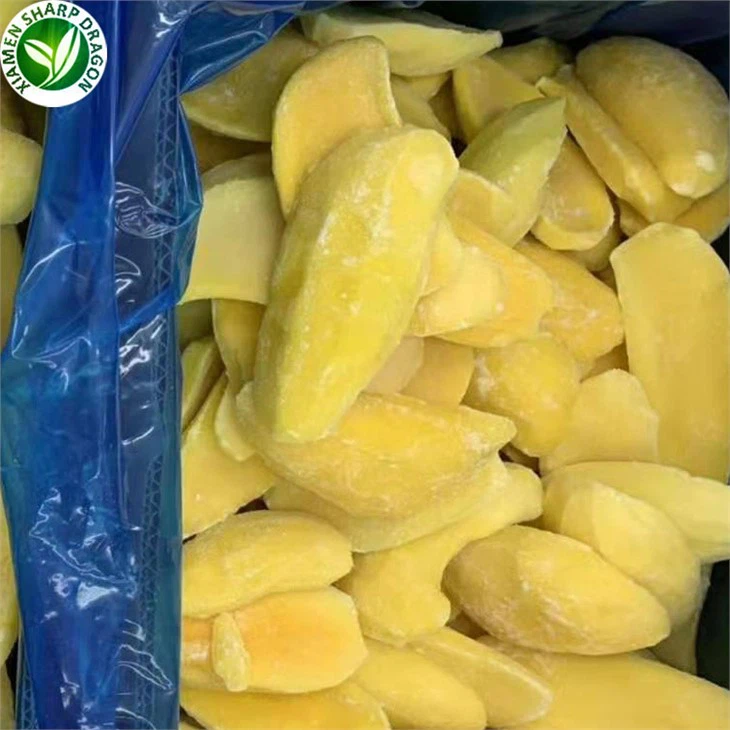
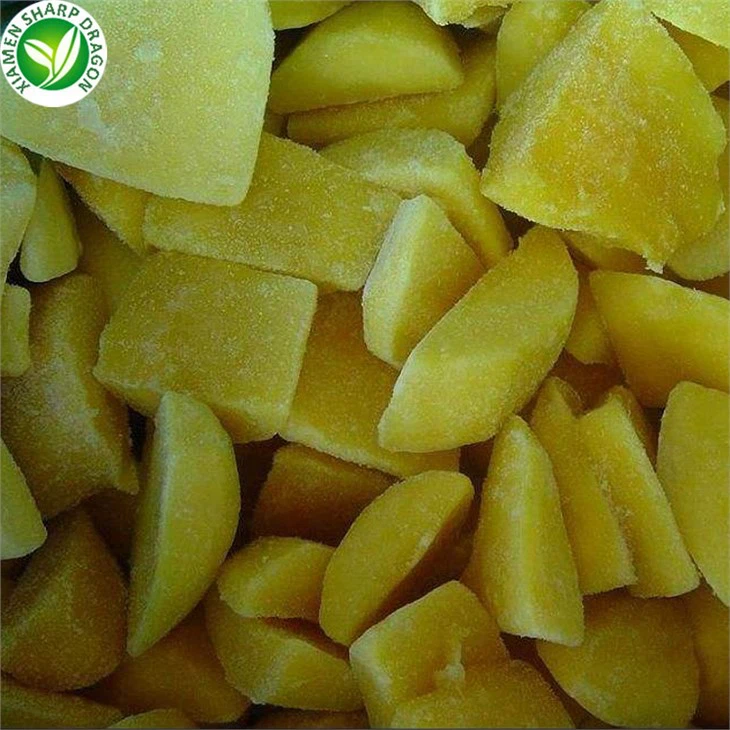
Unsweetened frozen mango can make portioning easier and reduce ripeness waste. Its disadvantages are mainly functional: frozen pieces are hard, thawed texture is softer than fresh, drip can reduce usable yield, and broken pieces or clumping can affect dosing. Freezing does not erase mango carbohydrate and should not be represented as protection from mango allergy. For intended use, thawing, and direct-eating decisions, see the XMSD guide to eating and using frozen mango.
Dried mango
Removing water makes dried fruit smaller and more energy-dense by weight. It is therefore easy to eat the equivalent of a much larger fresh-fruit amount before volume signals the difference. Some products also contain added sugar, sulfites, oil, or flavor coatings. The correct comparison uses the declared serving and ingredient list for the actual product, not raw mango values and not a generic assumption that all dried mango is sweetened.
Juice, nectar, puree, jam, sorbet, and desserts
These names describe different formulations. Puree may be 100% fruit, nectar may include water and sweeteners, jam is concentrated with sugar, and sorbet or dessert can contain a substantial amount of added carbohydrate. Portion, mango percentage, total sugars, serving size, and intended use must be checked separately. Pureeing also does not establish that an allergenic protein has disappeared.

Quality Defects Are a Separate Disadvantage from Nutrition
A mango product can be nutritionally ordinary yet commercially unsuitable. Overripe raw material may be soft and intensely aromatic; underripe material can be firm, pale, or sour; mixed maturity can produce uneven flavor and thaw behavior. Freezer burn, dehydration, clumping, excessive broken pieces, off-color, and uncontrolled thawing affect usability. These are specification and handling problems, not proof that mango as a fruit is unhealthy.
Odor needs the same discipline. Ripe mango naturally has a strong aroma, and variety changes the profile. Fermented, alcoholic, sulfurous, or otherwise abnormal odor combined with leakage, gas, mold, or severe tissue breakdown may indicate a quality or food-safety concern. The XMSD guide to mango odor and quality faults separates normal aroma from rejection evidence.
A Practical Decision Framework for Eating Mango
- Identify the form. Fresh pieces, plain frozen fruit, dried fruit, juice, and dessert require different serving and ingredient checks.
- Measure the amount once. Cups or grams reveal whether the real portion is one reference amount or several.
- Place it in the meal. Decide whether mango replaces another carbohydrate-rich food or is additional to it.
- Separate tolerance from allergy. Dose-related bloating is not the same as rapid hives, swelling, wheeze, or faintness.
- Check the peel-contact route. A delayed rash after handling peel, stem, or sap deserves a different history from symptoms after swallowing the flesh.
- Escalate persistent or severe symptoms. Repeated restriction without diagnosis can make the diet narrower while leaving the actual cause unresolved.
For most people, the result of this framework is simple: enjoy a measured portion of the form you tolerate and vary fruit choices across the week. There is no evidence-based universal maximum that applies equally to a healthy adult, a child, a person counting carbohydrate, and someone under specialist care for IBS or food allergy.
The decision also changes when the pattern changes. One episode of fullness after an unusually large smoothie is weak evidence against mango itself because volume, speed, dairy, sweeteners, and other fruit may all contribute. Repeated oral itching after a small amount of plain mango is more specific and should not be tested by deliberately eating more. A rash limited to the hands after peeling points toward contact history, while a spoiled or temperature-abused product raises a lot-handling question. Record what happened before assigning one cause.
A sensible action is proportionate to the signal: adjust and observe a portion when the issue is mild dose-related tolerance; check the ingredient list when the form is composite; stop exposure and seek allergy advice when symptoms are reproducible and rapid; and discard or isolate product when packaging, odor, temperature, or appearance suggests a quality failure. This keeps a manageable disadvantage from becoming a blanket food ban.

What the Disadvantages Mean for a Mango Product Program
For a buyer, developer, or food-service operator, we start risk control with the finished use. Confirm whether the material is diced, sliced, chunked, halved, or pureed; whether it is unsweetened; the cut tolerance and broken-piece limit; maturity and color expectations; Brix range where relevant; pack format; microbiological criteria; storage temperature; and thaw instructions. The XMSD frozen mango range provides a starting point for matching product form to an application.
Nutrition and allergy statements should follow documented composition and the market's labeling rules. Raw-fruit data cannot validate a sweetened yogurt, smoothie base, sorbet, or fruit preparation. A supplier specification can identify ingredients and process, but it cannot support an "allergy-safe" promise when mango is present. If a label or sales claim depends on a numeric nutrient value, use the finished recipe, serving size, and an appropriate verification method.
Worked example: usable yield after thawing. Suppose a trial starts with 100 kg of frozen mango and measured drip plus unusable fragments equal 8% of incoming weight. Usable fruit is 100 kg × (1 − 0.08) = 92 kg. At 150 g per finished serving, 92,000 g ÷ 150 g = 613 complete servings, with 50 g left. The theoretical count before loss would be 100,000 g ÷ 150 g = 666 complete servings. That 53-serving gap is a commercial disadvantage even though the nutrition per 100 g has not caused it. The trial percentage is illustrative; acceptance must use actual lot data and the agreed thaw method.
The strongest purchase decision therefore combines product-form suitability, sensory acceptance, thaw yield, portion economics, documentation, and the finished label. It avoids two costly assumptions: that all mango forms behave like raw fruit, and that an appealing health story can replace formula-level evidence.
Planning a frozen mango application?
Send XMSD your target cut, intended use, pack format, serving or dosing basis, quality limits, destination market, and required documents through the inquiry form. We can review the specification and sample checks needed before you treat price per kilogram as the final cost.
References
- USDA FoodData Central: Mangos, raw, FDC ID 169910
- NIDDK: Healthy Living with Diabetes
- Monash University: FODMAP Food List and Personalization Guidance
- Zhao et al. (2024): A Comprehensive Review on Mango Allergy
- Berghea et al. (2021): Contact Allergy Induced by Mango
- Dube et al. (2004): Effect of Technological Processing on Mango Allergenicity
- U.S. FDA: Food Allergies, Symptoms, and Emergency Response