


What are the disadvantages of Apple?
Nov 06, 2019

Apples have few disadvantages for most people when they are eaten as an ordinary portion of whole fruit. The drawbacks become relevant in particular situations: fermentable carbohydrates may bring gas or bloating; a true allergic reaction may cause mouth, throat, skin, breathing, or systemic symptoms; repeated acidic or sugary exposure can be unhelpful for teeth; and juice, sweetened sauce, pie filling, or a large smoothie can deliver a very different eating experience from a whole apple. A food that causes discomfort is not automatically harmful, but recurring symptoms deserve a more exact look than the statement that apples are simply "good" or "bad."
The quickest way to judge a disadvantage is to separate four facts: the person, the amount, the product form, and the symptom. Gas after a large raw apple calls for a different response from lip swelling after one bite. Heartburn after apple pie late at night says more about the complete meal and timing than about plain apple alone. Compare a concentrated drink with intact fruit only after defining the actual serving.
The short answer: Start with form and symptom. Reduce or change the portion for mild digestive discomfort, stop eating and obtain appropriate help for allergy signs, and judge juice or dessert as the finished food it actually is.

Digestive Discomfort Is Usually a Dose-and-Tolerance Problem
Gas is the most ordinary apple drawback. NIDDK includes apples and fruit juices among foods whose carbohydrates may increase gas for some people. Carbohydrate that is not fully digested in the small intestine can reach the large intestine, where bacteria break it down and produce gas. Fiber can add to symptoms when intake rises rapidly. That mechanism explains why one person may eat an apple comfortably while another notices pressure, rumbling, or bloating after the same-looking snack.
Amount changes the test. "I ate apples" could mean several bites, one small fruit, two large fruits, or a bowl containing apple plus yogurt, sweetener, nuts, and dried fruit. Those exposures are not equivalent. Eating speed and the rest of the meal also matter. If discomfort follows a crowded meal, it is premature to assign the entire response to the apple. Repeat the observation under simpler conditions instead of removing an otherwise useful fruit after one ambiguous episode.
Preparation may alter comfort without making universal promises. Peeling reduces some of the structural material, cooking softens tissue, and a smaller serving lowers the total carbohydrate load. Those changes can make an apple easier for some people, but they do not diagnose the cause. Persistent pain, major changes in bowel habits, weight loss, bleeding, or symptoms that keep returning warrant qualified medical assessment rather than a long sequence of self-imposed exclusions.
Practical example: Suppose a normally healthy adult feels bloated after eating one large raw apple immediately after a substantial dinner. The useful comparison is not "apple versus no apple forever." On separate days, try half an apple as a standalone afternoon snack and record the amount, peel status, eating speed, and symptoms for several hours. If the smaller, simpler exposure is comfortable, the likely action is portion and meal adjustment. If symptoms recur reliably even at the reduced amount, bring that pattern to a clinician or dietitian rather than guessing at the underlying condition.

Allergy Signals Are Not the Same as Gas
Digestive fermentation tends to produce pressure, gas, or changes in bowel comfort. Allergy is an immune reaction and needs a different threshold for action. Itching or tingling in the mouth after raw apple, hives, swelling, wheezing, breathing difficulty, dizziness, or a rapidly spreading reaction should not be treated as ordinary "indigestion." Stop the exposure. Breathing difficulty, throat tightness, collapse, or other severe symptoms require urgent emergency care.
Do not use a frozen, peeled, cooked, or processed apple as an unsupervised challenge after a suspected serious reaction. Processing may change proteins and exposure, yet safety remains uncertain. An allergy professional can interpret the history and decide whether testing or a supervised food challenge is appropriate. The practical distinction is simple: mild gas invites a portion experiment; signs involving the mouth, skin, airway, or circulation call for avoidance and medical direction.
Safety note: Do not keep tasting an apple to see whether swelling or breathing symptoms become worse. Treat a suspected allergic reaction according to its severity and seek qualified care.
Labels and shared preparation surfaces matter once allergy is suspected. A plain frozen apple ingredient and a prepared dessert containing apple may have very different co-ingredients. Nuts, milk, wheat, spices, coatings, or processing aids can complicate the history. Keep the package or ingredient list, note the product form, and record the time from eating to symptoms. That evidence is more useful than a broad declaration that all apple products are responsible.

Whole Apple, Juice, Sauce, and Dessert Are Different Foods
The disadvantage most often hidden by a health label is concentration. Whole fruit requires chewing and retains its physical structure. Juice removes much of that structure and can be consumed quickly. Sweetened applesauce adds ingredients that plain apple does not contain. Pie, crumble, fritter, caramel apple, and ice cream topping combine apple with varying amounts of sugar, flour, fat, or syrup. Any judgment that ignores the finished recipe is incomplete.
USDA FoodData Central is useful here because it records foods as defined entries rather than as a single mythical apple value. A raw apple with skin, an unsweetened sauce, a branded sweetened product, and apple juice belong to different records. The database basis, edible amount, and ingredient statement must match the food in front of you. A value quoted per 100 grams also cannot be compared directly with a full glass or a large restaurant dessert until serving weight is included.
This form distinction also protects against exaggerated benefits. A systematic review of randomized trials examined whole apples and several apple-derived products across defined interventions. Its outcomes varied by marker, comparator, product, population, and duration. The review gives no basis for treating every apple-flavored food as cardioprotective or for predicting the effect of one snack tonight. The reasonable conclusion is narrower: whole apples can fit a sound eating pattern, while the final formulation determines the nutritional trade-off of processed forms.
For a home decision, read the ingredient list before debating the fruit. For a commercial recipe, calculate the fruit, added sugar, fat, and final serving together. The apple may be a minor share of a dessert that is promoted through fruit imagery. Conversely, plain cut apple or an unsweetened frozen ingredient may provide portionable fruit without the additions that created the concern.

Nighttime Symptoms Need Meal Context
An apple is not a universal reflux trigger, and the clock does not make fruit inherently harmful. The relevant issue is whether eating near lying down worsens symptoms in a person who has nighttime reflux. NIDDK notes that people with GERD symptoms at night or while lying down may improve by eating meals at least three hours before bed. That guidance is about diagnosed or recurring reflux patterns, not a rule that every healthy person must stop eating apples three hours before sleep.
Look at the event as a whole. A modest apple snack eaten upright differs from a large pie serving after a heavy dinner followed immediately by bed. Portion volume, added fat, individual triggers, and posture may all move the result. If heartburn occurs repeatedly, record the complete meal and the interval before lying down. A symptom log that says only "apple" discards the very details needed to make a useful change.
The same caution applies when gas is mistaken for reflux. Pressure and belching can feel related, but self-diagnosis is unreliable when symptoms are persistent or severe. Chest pain, trouble swallowing, vomiting, unexplained weight loss, or recurrent nighttime disturbance deserves professional assessment. Food adjustments may be part of management, yet they should not delay evaluation of important symptoms.
A fair personal test changes one variable at a time. Move the apple earlier while keeping the portion and preparation stable. On another occasion, reduce the amount without changing the time. This avoids the common mistake of changing dinner, dessert, beverage, posture, and sleep time together and then crediting one fruit for the outcome.
Teeth See Frequency as Well as Quantity
Apples contain naturally occurring sugars and acids. A whole apple remains different from candy, while the mouth still experiences an exposure. How often teeth are exposed can matter as much as the amount consumed at one sitting. Slowly sipping apple juice over a long period or repeatedly grazing on sweetened dried pieces keeps renewing contact in a way that a defined snack avoids.
Practical habits are unremarkable but useful: keep apple foods within normal meals or snacks, drink water afterward, and maintain routine dental care. Do not treat aggressive brushing immediately after every acidic food as a cure-all; personal dental advice should come from a dental professional, especially for existing erosion, dry mouth, orthodontic appliances, or high cavity risk.
Product form changes exposure again. A frozen apple piece eaten as part of a bowl is different from a sweetened apple beverage consumed sip by sip. A sauce used as an ingredient differs from a sticky fruit confection. The useful question is not whether apple "damages teeth" in isolation, but what preparation, contact pattern, and oral-health context are present.
For parents and foodservice planners, portioning can prevent a supposedly healthy option from becoming a constant grazing item. Offer a defined serving, account for added ingredients, and make water available. This preserves the fruit choice while controlling the exposure pattern that created the disadvantage.
Frozen Apple Solves Some Problems and Creates New Specifications
Frozen apple can make year-round portioning and preparation easier, but freezing leaves product-form differences intact. Slices and dice behave differently after thawing. Cut size affects visible identity, heating rate, distribution, and the amount of free liquid a recipe must handle. Blanching or anti-browning treatment may influence color and texture. A formulation that expects crisp fresh cubes may fail if it receives a softer piece with greater drip release.
When we assess frozen apple for an application, our first concern is not a broad nutrition slogan. We look at the piece as an ingredient: slice or dice, peel and core condition, firmness while frozen, behavior after thawing, color on the cut surface, broken pieces, and how the fruit carries through mixing or heating. Those observations determine whether the form belongs in a bakery filling, beverage base, fruit preparation, or retail frozen mix.
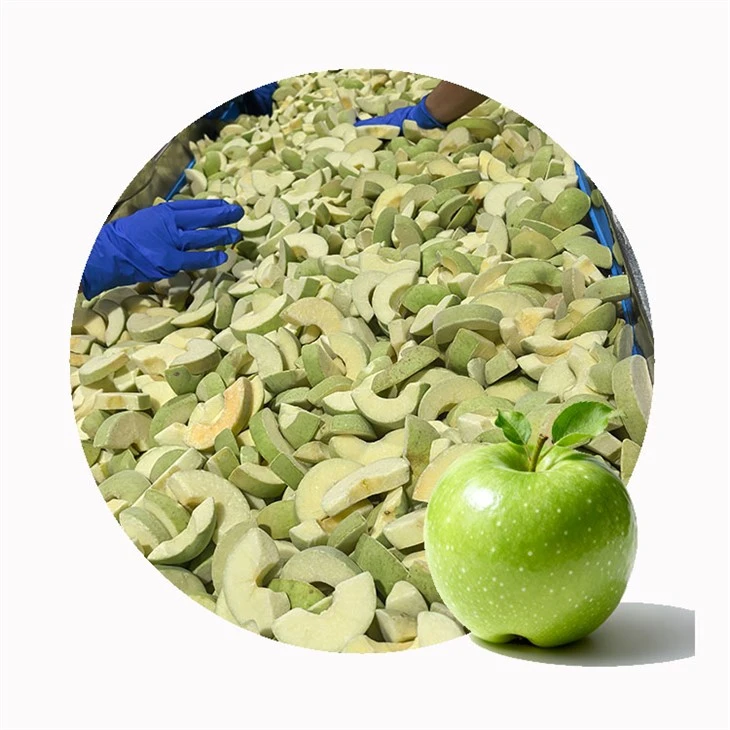
The available frozen apple range provides the starting product family, while IQF green apple slices suit applications that need a visible curved piece. An application that needs even distribution and faster incorporation may be better served by frozen diced apple. The choice is functional, not a hierarchy in which one cut is always superior.
For us, a thaw test earns more confidence than a frozen photograph. We weigh a defined sample, hold it under the intended time and temperature, observe released liquid, and then run the actual mixing or heating step. This lets the purchasing team reject a form for the right reason before volume purchasing: that particular cut and process miss the finished-product target.
Convert Apple Drawbacks Into Acceptance Tests
For commercial use, a disadvantage is valuable only when it can be observed or measured. Browning can be checked under agreed lighting at defined product states. Excess free liquid can be measured after a stated thaw method. Broken pieces can be separated and weighed. Core fragments, peel condition, piece-size distribution, odor, and package integrity can be assessed against the intended use. Vague claims about premium quality do not resolve any of those decisions.
Test the ingredient in three states when the application justifies it: frozen on receipt, thawed under a reproducible method, and processed in the real recipe. A cube that looks clean while frozen may soften too far in a hot filling. A slice that releases liquid during thawing may still work in a cooked sauce if the formula accounts for it. Acceptance should follow the consequence, not a defect name copied from another application.
Worked example: Consider a foodservice operation preparing 120 dessert portions, each designed to contain 75 grams of apple. The theoretical apple requirement is 120 × 75 g = 9,000 g, or 9 kg. If a trial shows that the chosen thaw method produces enough drainable liquid and breakage to leave only 90% usable fruit for that presentation, the purchase basis becomes 9 kg ÷ 0.90 = 10 kg. The action is to test yield with the actual cut and method before setting the order quantity. The result is a defensible usable-cost calculation instead of blaming apple after portions run short.
Packaging enters the same logic. An inner bag that is too large for the daily rate may be opened repeatedly, inviting clumping, dehydration, odor pickup, and handling inconsistency. A smaller bag reduces open-pack exposure but adds packaging units and handling. Review frozen packaging formats against the operation's use rate, freezer space, label needs, and portion method rather than choosing a pack by habit.

Use a Symptom Record or a Product Brief, Not a Verdict
A consumer symptom record needs the date, apple form, approximate edible amount, other foods, timing, preparation, symptom, severity, and duration. It should also note whether the response repeated. That small set of facts separates a plausible pattern from memory shaped by the most recent uncomfortable event. It also gives a clinician or dietitian something specific to evaluate.
A concise purchasing brief uses parallel discipline: product form, cut or thickness, intended recipe, thermal step, desired visible identity, thaw method, daily use rate, packing, destination, and the evidence needed at sample review. It should name failure signals such as excessive browning, soft texture, free liquid, broken pieces, or core residue. The brief turns a general concern into an acceptance decision understood by supplier and customer alike.
The next review should compare like with like. Photograph the same sample state, use the same thaw interval, weigh the same starting amount, and apply the same recipe conditions to each candidate. Record observations before discussing preference. This simple discipline separates a real performance difference from changes introduced by handling. It also leaves a usable record for colleagues who were not present during the trial, so a later purchasing decision rests on the product's behavior rather than on a vague recollection of which sample looked better.
Neither document needs to prove that apples are universally suitable. It needs to show what happened under defined conditions and what action follows. Mild discomfort may lead to a smaller amount or a different form. Allergy signs lead to avoidance and clinical direction. A commercial texture mismatch leads to another cut, process, or formula. Precision removes more uncertainty than stronger adjectives ever will.
That is the balanced conclusion. Apples are not disadvantage-free, but their drawbacks are usually specific rather than global. Keep ordinary use proportionate, take allergic symptoms seriously, judge processed foods by their complete composition, and test frozen ingredients in the state in which they will actually be used.

XMSD sourcing note: Send the apple form, cut size, application, thaw or cooking step, target texture, packing format, destination, and sample questions. We can review which frozen apple option should enter your application test.
References
Apple is not only rich in nutrients, but also delicious.But you can't eat too much apples, because apples are rich in malic acid. Eating too much may cause too much stomach acid, which can cause stomach pain.And you can't eat apples on an empty stomach, which can cause stomach bloating and you feel discomfort, and the best time to eat apples is 15 minutes after eating in the morning.
