


Mango Fruit Benefits: Nutrition, Evidence and Food Uses
Oct 17, 2019

Mango contributes fruit, carbohydrate, fiber, vitamin C, folate and carotenoid pigments, while also providing sweetness, aroma, color and fruit solids in a recipe. Those are useful food-level benefits. They do not make mango a treatment for immunity, digestion, eye disease, cancer or any other condition.
The answer changes with form. Fresh edible flesh and plain IQF pieces can be compared as fruit ingredients. Sweetened puree, nectar, dried mango, candy and bakery fillings must be judged as finished products. Their added sugar, water, portion and processing may dominate the nutrition result.
For buyers, ingredient benefit is measurable: usable yield, color after processing, cut integrity, aroma, soluble solids, acidity, thaw loss and distribution in the finished food. A "premium mango" description is not a substitute for those acceptance points.
Benefit rule: use composition to describe the food, human evidence to discuss a tested outcome, and application trials to prove ingredient performance. Do not let one evidence type impersonate another.
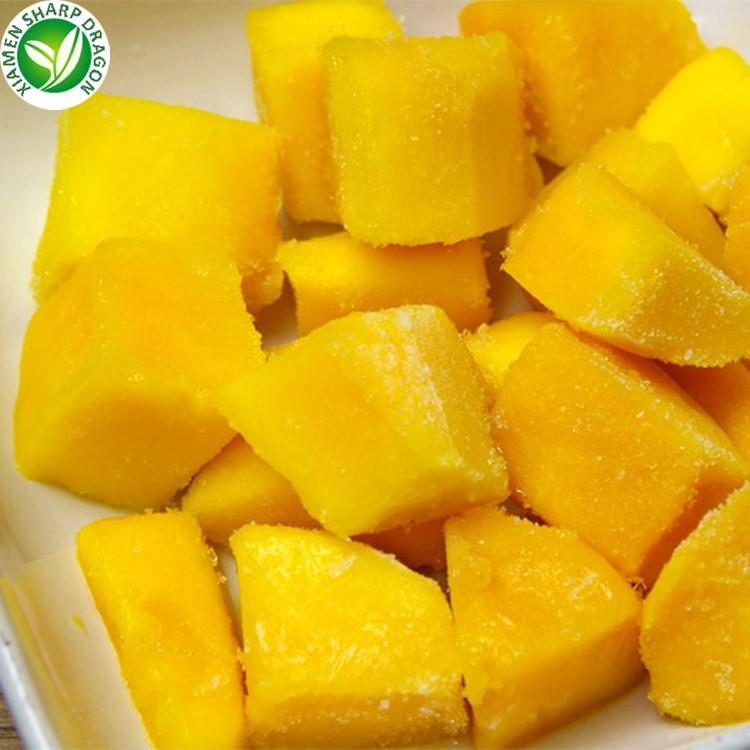
Start with What the Edible Fruit Contains
USDA reference data list raw mango per 100 g at about 60 kcal, 14.98 g carbohydrate, 1.6 g fiber, 36.4 mg vitamin C and 43 micrograms dietary folate equivalents. These figures are a planning basis, not a lot specification.
Vitamin C has established roles in collagen synthesis, antioxidant function and iron absorption. Folate participates in cell division and nucleic-acid metabolism. Naming those normal nutrient functions is different from promising that mango cures disease.
Yellow-orange pigments include carotenoids, but color alone does not quantify vitamin A activity. Cultivar, maturity and analytical method matter. A label claim requires the final product and applicable destination rules.
Fiber is a legitimate composition value. It does not prove that a mango portion will resolve constipation for a particular person. The complete diet, fluid, amount and clinical cause remain relevant.
A buyer should therefore separate typical database values, product-specific laboratory data and contractual specifications. They serve different decisions.
Food Benefit Is Not a Disease Claim
"Provides fruit and vitamin C" is narrower than "boosts immunity." The first can be supported by product identity and qualified composition. The second implies a human outcome and requires a defined claim route and relevant evidence.
Cell or antioxidant assays may help researchers compare extracts. They do not show that eating a normal portion prevents aging or chronic disease. Read the tested material, amount, population and endpoint before using a paper.
Mango peel, kernel and leaf research also cannot be transferred automatically to edible flesh. Plant part and extraction method are evidence identities, not minor details.
When evidence supports only composition, stop at composition. A precise modest sentence is more defensible than a softened medical promise.
Destination-market review remains necessary for commercial labels. This article explains evidence logic, not legal approval.
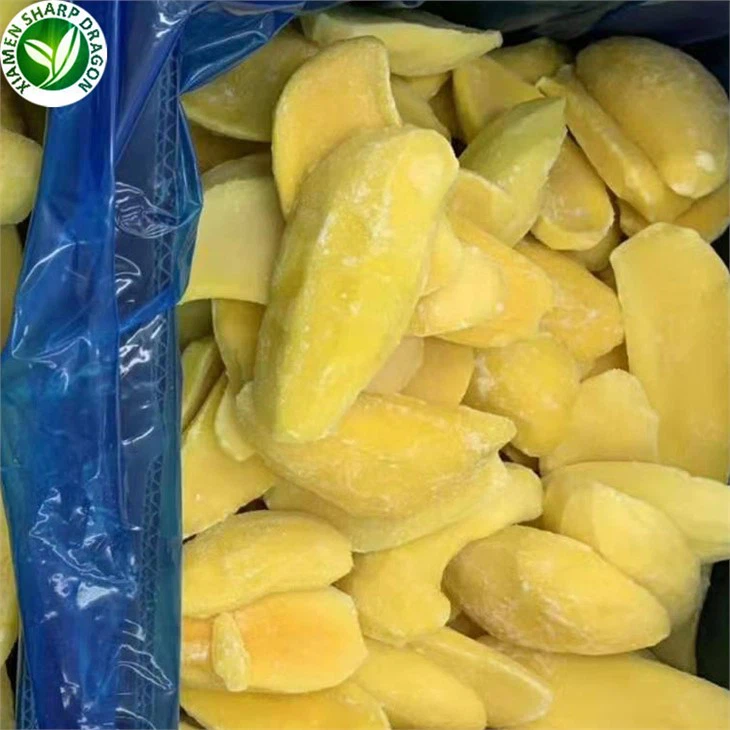
Ingredient Benefits Need Their Own Measures
Mango can add recognizable fruit pieces to yogurt, bakery fillings, sauces and bowls. It can provide color and aroma to beverages or desserts. These application functions are observable and can be tested without making a health claim.
Cut geometry changes distribution. Small dice spread through a cup; large chunks create stronger visual identity but fewer pieces per portion. Slices suit display applications and may break under mixing.
Maturity changes sweetness perception, aroma, firmness and color. Soluble solids measured as Brix can support comparison, but Brix does not describe acidity, aroma or texture by itself.
Thaw behavior matters. Released juice can be useful in a sauce and undesirable in a dry topping. Define whether juice is included in recipe yield or treated as loss.
The XMSD frozen mango range provides format context; the application trial selects the appropriate item.
Fresh, IQF, Puree and Sweetened Products Differ
Fresh mango includes peel and pit at purchase, so whole-fruit weight is not edible yield. Ripeness and cutting skill affect the recovered flesh. Fresh fruit also has a shorter operational window.
IQF pieces arrive with peel and pit already removed and can be portioned from frozen. They require frozen storage, pack control and an intended-use decision. Texture becomes softer after thawing.
Puree provides even distribution and pumpable solids but removes visible piece identity. Screen size, viscosity, Brix, acidity and thermal treatment are relevant specification fields.
Sweetened puree, nectar and syrup-packed products add formulation variables. Read ingredients and total/added sugar instead of applying the plain-fruit composition.
Dried mango concentrates fruit solids per 100 g and may include sugar or sulfites. It is another serving decision, not a shelf-stable equivalent weight.
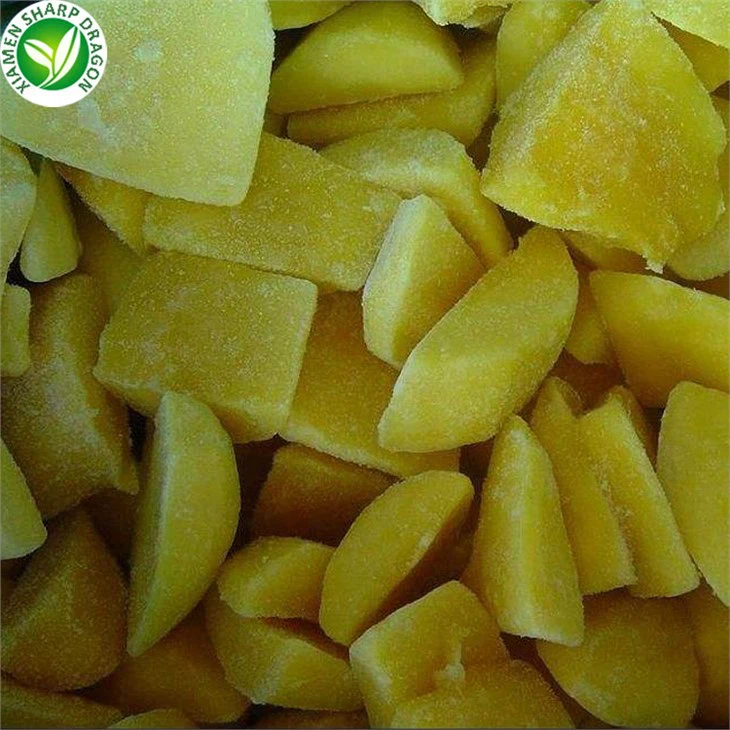
Choose the Benefit Before Choosing the Form
Begin with one finished-product job. If the job is visible fruit identity, score piece count, color contrast and breakage. If it is flavor delivery, compare aroma, sweetness-acidity balance and dose. If it is label composition, work from the final formula and validated nutrition data. Those three jobs can point to different mango forms even when the fruit name is identical.
You can make the comparison fair by holding the recipe, mango addition rate, mixing sequence and evaluation time constant. Changing both fruit form and dose in one trial produces an attractive sample but weak evidence. A controlled bench run should reveal what the mango changed and whether the difference lasts through the commercial process.
For beverages, puree may provide smoother dispersion than chunks, yet its viscosity can alter pumping and mouthfeel. For a layered dessert, an intact slice can deliver a stronger visual cue, but the same slice may be too large for automatic dosing. For bakery filling, released juice may contribute useful moisture until it migrates into the surrounding crumb.
Write the acceptance statement in observable language: at least a defined number of recognizable pieces per cup; no line blockage at the chosen screen; target color after heating; or a specified drained yield after the approved thaw. "Good mango performance" cannot guide receiving when two teams interpret good differently.
This sequence protects the most useful benefit. The form is selected because it survives the actual recipe and handling path, while nutrition wording is calculated from the amount that reaches the consumer. Procurement then has both an ingredient specification and a reason for every important field.
Worked Example: Convert Gross Input to Usable Fruit
Worked example: a pilot measures 94% usable yield from a 500 kg frozen mango input under its stated thaw and defect method.
Usable fruit = 500 × 0.94 = 470 kg.
At 80 g conforming mango per serving, theoretical output = 470,000 ÷ 80 = 5,875 servings.
If released juice is included in the formula, the yield definition must say so; otherwise another team may deduct it twice.
The 94% value is an illustrative measured pilot input, not an XMSD guarantee. Actual yield changes with cut, condition, sampling and acceptance criteria.
This calculation translates ingredient benefit into production output. Nutrition still uses the served 80 g, while procurement plans from the required gross input.
Representative Scenario 1: Visible Dice in Yogurt
Representative scenario: not a named customer case. Practical example: a yogurt developer compares 8–10 mm dice with larger chunks. The decision function is visual distribution and spoon texture.
The team fixes mango grams, yogurt mass, mixing time and thaw condition. It counts visible pieces per cup, records breakage, color bleed and firmness, and checks the product after the intended shelf interval.
Small dice distribute evenly but may soften faster. Large pieces produce strong fruit identity but fewer pieces and greater portion variance. The developer selects the format that meets the target, not the one with the strongest health wording.
The frozen mango cube format becomes a candidate only after the test basis is clear.
Representative Scenario 2: Slice Yield for a Dessert
Representative scenario: not a named customer case. Example: a dessert plant needs 470 kg usable slices from a 500 kg delivery. The decision function is lot release and production yield.
Receiving samples the lot, uses the approved thaw method and separates nonconforming pieces. The pilot must achieve at least the operation's 94% criterion without counting packaging or unrelated material as fruit.
If yield is low, the team checks breakage, peel, severe softness, clumping and drain method. It holds the lot or adjusts production only through the agreed process.
For a visible topping, the IQF mango slice format is reviewed for intact geometry as well as total kilograms.

Use a Maturity and Sensory Scorecard
Mango has no single maturity setting that is best for every application. A riper profile can strengthen tropical aroma and sweetness perception but may reduce cut strength. A firmer profile can survive handling yet taste less developed. The right window is the one that produces the intended sensory result after processing, not only at receipt.
A useful scorecard separates appearance, aroma, flavor and texture. Record yellow-orange color against an agreed visual reference; note ripe, green, fermented or oxidized aroma; score sweetness and acidity independently; then assess bite, fibrousness and softness. Combining all observations into one overall number hides the reason a sample succeeds or fails.
Evaluate the mango at relevant checkpoints. A developer may inspect pieces while frozen, immediately after thawing, after mixing and after the finished food's holding interval. Color that looks vivid in the bag can become pale against yogurt. Firm dice can soften after acid exposure. The time course turns an impression into application evidence.
Panel discipline matters even for a small internal trial. Use coded samples, the same serving temperature and the same preparation. Ask each evaluator to record attributes before discussing them. A short written vocabulary produces cleaner feedback than a room where the most senior voice defines the result first.
Connect the scorecard to action. If aroma is right and breakage is high, adjust cut or mixing rather than rejecting the flavor profile. If pieces remain intact but taste flat, maturity and acidity deserve attention. If performance varies by case, widen sampling before changing the recipe. Each observation should direct the next controlled check.
XMSD Experience 1: Brix Never Travels Alone
In our XMSD experience, buyers sometimes ask for a Brix number as if it fully defines mango quality. We review it beside maturity, aroma, acidity, firmness, color and cut.
Two lots with similar soluble solids can taste different when acidity or aroma differs. A soft mature piece and a firm piece may behave differently in mixing even when the instrument reading is close.
We confirm sample temperature, method and whether the reading uses expressed juice or another preparation. Without a shared method, the number does not support a clean comparison.
The final specification prioritizes variables that change the buyer's recipe. That gives Brix a job rather than turning it into a marketing badge.
XMSD Experience 2: Thawed Yield Connects Quality to Cost
A separate XMSD lesson is to measure the fruit in the state used by production. Frozen-as-sold weight, thawed weight, drained fruit and conforming pieces are different bases.
We ask whether released juice enters the recipe. If it does, calling all liquid "loss" understates useful output. If the application requires dry visible pieces, the same liquid may be excluded.
Pack opening, clump separation and partial thawing can change line loss. A full trial tracks input, each removal category and final kilograms.
For food-processing applications, this yield record often adds more value than another generic benefit paragraph.

Protect the Benefit Through Packing and Cold Handling
Free-flowing pieces reduce labor only when the pack reaches production in a workable condition. Clumping, crushed cartons, torn liners or unstable temperature can turn a convenient format into extra sorting and thaw loss. Receiving therefore checks both product attributes and the physical condition that preserves them.
Inner-pack size should match the batch. A line using 10 kg per formula can handle a 10 kg inner without holding a partly opened bag. A pilot kitchen using 1 kg at a time may create repeated exposure, frost and inventory ambiguity from that same pack. Pack convenience is an application variable, not a decorative detail.
Define how frozen cases are staged. Long uncontrolled tempering may soften outer pieces while the center remains hard, producing uneven mixing. Opening fully frozen clumps with force can break slices. The handling instruction should name the target product state, the permitted interval and what the operator does when the case is outside it.
Lot traceability completes the record. Keep case code, receipt condition, sample identity, trial result and production disposition connected. If a later cup shows unexpected color or texture, the team can compare it with a retained result instead of relying on memory or a generic certificate.
This control is part of the ingredient benefit because it protects the characteristic selected during development. An aromatic, evenly cut mango lot has limited value when storage or staging removes those advantages before dosing. The commercial route must preserve the test condition closely enough for routine output to remain credible.
Build a Benefit File for the Finished Product
Save the product code, ingredient list, serving, recipe percentage, nutrition basis, analysis, destination wording and artwork version. A claim belongs to that controlled version.
Keep application evidence separately: cut, trial formula, process, sensory result, yield and acceptance. A successful yogurt trial does not approve a nutrient claim.
Set reopening triggers for cultivar, maturity, supplier, recipe, serving, process or market changes. Old data should not drift onto a new product.
Packaging also affects the delivered benefit. Seal failure, temperature abuse or oversized inners can reduce usable fruit and consistency. The frozen packaging overview supports that control.
Record rejected claims and the reason. This prevents an extract study or obsolete recipe calculation from returning later.
Consumer Limits Remain Ordinary
Mango contains carbohydrate and naturally occurring sugar. Portion it within the complete meal. People using an individualized diabetes plan should count the actual edible amount.
Large portions or abrupt dietary changes may cause digestive discomfort in some people. Persistent or severe symptoms need medical assessment.
Allergic reactions to mango are possible, including contact reactions involving peel in susceptible people. Stop after allergy symptoms; airway or systemic symptoms require emergency care.
Follow storage and preparation instructions for frozen products. Freezing does not erase every food-safety hazard.
Translate the Ingredient into a Serving
Ingredient kilograms do not tell a consumer how much mango is present. Establish the finished serving, recipe addition and process yield first. An 80 g mango bowl portion, a 20 g inclusion in yogurt and a small puree addition in a beverage describe different contributions even when all use plain fruit.
For nutrition calculation, use the form actually added and the quantity expected in the finished food. Keep moisture changes and recipe losses on the same mass basis. If a laboratory analyzes the complete product, record the analyzed formula and serving so later reformulation does not inherit an obsolete value.
For menu or product communication, describe what the serving visibly delivers before reaching for broad wellness language. "Made with 20 g mango pieces" or "contains mango puree" can be checked against the formula. Any nutrient declaration then follows the relevant calculation, analysis and destination-market requirements.
Portion consistency also affects value. Count or weigh the mango across several units from the beginning, middle and end of a production run. If pieces settle in a hopper or float in a mix, the average formula may be correct while individual servings vary. Agitation, feed geometry or cut choice may need adjustment.
Once the serving basis is stable, the benefit story becomes simpler. The consumer sees a defined amount of fruit; the developer has evidence that it distributes correctly; the nutrition owner has a controlled calculation; and purchasing understands which cut, pack and yield assumptions support the promise.
Final Benefit Decision
Mango is valuable as fruit, a source of measured nutrients and a functional ingredient. None of those roles requires a miracle claim.
Consumers can choose a visible portion within a varied diet. Developers can select form, cut, maturity and yield for the finished product. Claim owners can keep wording within the evidence.
A repeatable benefit is specific: 80 g fruit in the serving, intact dice after mixing, or 94% usable yield under a named method. Precision makes the value credible.
Send XMSD the application, cut, maturity, yield basis, pack and destination. We will review the sample and supply-side variables that should be controlled.

The final sample should match the intended commercial cut and pack before results are transferred to routine production.

References
- U.S. Department of Agriculture, Agricultural Research Service. National Nutrient Database, fruits report, release 28. Raw mango composition.
- National Institutes of Health, Office of Dietary Supplements. Vitamin C fact sheet for consumers. Established nutrient functions.
- National Institutes of Health, Office of Dietary Supplements. Folate fact sheet for consumers. Established nutrient functions.
- Lebaka V R, et al. Nutritional composition and bioactive compounds in mango. Review used for evidence scope and cultivar variation.