


Cherry Tomatoes: Nutrition, Lycopene and Frozen Buyer Guide | XMSD
Apr 04, 2019

Short answer: Cherry tomatoes provide water, modest vitamin C, potassium and carotenoids such as lycopene, but they do not prevent colds, erase pigmentation or treat cancer. For frozen purchasing, the decisive questions are whole versus half or slice, diameter, ripeness, Brix and acidity where relevant, skin cracking, broken fruit, free-flowing condition, thaw drip, cooking performance and intended use. Frozen cherry tomatoes soften after thawing, so they fit cooked applications better than a crisp fresh salad unless your test proves otherwise.
XMSD sourcing note: Send your required whole, half, slice or dice format, target diameter, application, pack, destination, volume and document list. We will review a suitable IQF frozen tomato specification and current project conditions.
Claims that cherry tomatoes act as medicine for colds, aging, cholesterol, high blood pressure, cancer and skin pigmentation go far beyond the evidence. Lycopene is a tomato carotenoid and antioxidant, but a food constituent is not the same as a proven treatment. The U.S. National Cancer Institute states that human findings are inconsistent and that there is not enough evidence to know whether lycopene prevents or treats prostate cancer.
A useful rewrite therefore has two jobs. First, it gives a correctly sourced nutrition reference without turning it into a medical promise. Second, it explains how high water content, maturity, cut surface and freezing change commercial performance. That combination helps you evaluate the ingredient as food, not as a slogan.

Start with the actual frozen format: a whole cherry tomato, half, slice and dice do not deliver the same texture or yield.
What Is a Cherry Tomato in a Commercial Specification?
Cherry tomato is a market class of Solanum lycopersicum, not one fixed variety or size. Round red fruit is common, but yellow, orange, oval and grape-shaped cultivars also exist. Color, diameter, skin strength, soluble solids, acidity, seed cavity, flesh ratio and harvest maturity vary. A quotation that says only "IQF cherry tomato" leaves too much open.
For whole fruit, diameter and crack resistance drive presentation. For halves, the cut must be clean and the two pieces need an agreed orientation only if your line depends on it. Slices introduce more exposed surface, faster thaw drip and greater breakage risk. Dice may be the most economical format for sauces and fillings because perfect whole-fruit appearance no longer creates value.
Decide whether the product is intended as a visible component or a flavor and color ingredient. A premium tray meal may need recognizable halves with even red color. A soup can tolerate more broken pieces. A sauce line may prefer higher solids and smaller cuts. The application determines which defects change value.
| Format | Best commercial fit | Main failure signal |
|---|---|---|
| Whole cherry tomato | Roasted sides, premium ready meals, visible inclusions | Cracked skins, collapse or mixed diameter |
| Halves | Pizza, pasta, tray meals and fast roasting | Ragged cuts, detached skin and excess drip |
| Slices | Toppings and controlled layer coverage | Sticking, thin fragments and uneven thickness |
| Dice or pieces | Sauces, soups, fillings and industrial recipes | Fines, variable cut and excessive purge |
The frozen cherry tomato halves format illustrates why cut definition belongs in the signed specification. Use a representative sample and a dimensional method rather than relying on the product name alone.

Inspect diameter, cut face, skin attachment, broken percentage and color under the same thaw or cook protocol.
Cherry Tomato Nutrition: What the Numbers Actually Support
USDA FoodData Central record 170457 covers red, ripe, raw tomatoes as a year-round average. Per 100 g, it lists 18 kcal, 0.88 g protein, 0.20 g fat, 3.89 g carbohydrate, 1.2 g fiber, 2.63 g total sugars, 237 mg potassium, 13.7 mg vitamin C and 2,573 micrograms of lycopene. This is a general tomato reference, not a certificate for every cherry tomato cultivar or frozen lot.
Cherry tomato values vary with variety, maturity, growing conditions and analytical method. XMSD has also published a cherry tomato reference table with 29 kcal and 28 mg vitamin C per 100 g, illustrating that different data sources and samples do not produce one universal number. Choose the database and food state that match your labeling rule, or test the actual product.
| USDA reference per 100 g | Amount | What it does not prove |
|---|---|---|
| Energy | 18 kcal | A weight-loss effect |
| Vitamin C | 13.7 mg | Prevention or treatment of colds |
| Potassium | 237 mg | Treatment of hypertension |
| Lycopene | 2,573 micrograms | Cancer prevention or treatment |
| Fiber | 1.2 g | A cholesterol-lowering drug effect |
Worked example: nutrition for a 150 g recipe portion
If a recipe uses 150 g and the USDA raw-tomato reference is appropriate, the arithmetic is 1.5 × 18 = 27 kcal, 1.5 × 13.7 = 20.55 mg vitamin C and 1.5 × 2,573 = 3,859.5 micrograms of lycopene. That is a development calculation, not a finished label. Frozen storage, thaw loss, heating, recipe yield, cultivar and regulatory rounding may change the declared values.

Nutrition calculations need the correct food state and recipe yield; visual similarity does not make two data records interchangeable.
Lycopene Is Relevant, but Disease Claims Need a Boundary
Lycopene is a red carotenoid found in tomatoes and several other foods. Laboratory antioxidant activity explains why it receives research attention, but laboratory mechanisms do not establish a clinical outcome. NCI reviews human studies and describes inconsistent findings. It also notes that the U.S. FDA has not approved lycopene as a treatment for cancer or another medical condition.
Processing changes bioavailability. NCI reports that lycopene is more bioavailable from processed tomato products such as paste and puree than from raw tomatoes, and dietary fat can improve absorption. That does not mean every frozen tomato delivers a fixed health effect. Frozen whole fruit, cooked sauce and concentrated paste have different solids, serving sizes and matrices.
For marketing, separate a composition statement from a disease statement. "Contains lycopene" may be supportable with a valid analytical or database basis and compliant local wording. "Prevents cancer," "repairs cells," "lowers blood pressure" or "removes dark spots" requires evidence and regulatory authorization that a normal frozen tomato specification does not provide.
The practical action is to maintain a claims file. Record the product identity, analytical method or database, serving basis, calculation, jurisdiction and approved wording. If a health or nutrient-content claim is proposed, have the destination-market regulatory reviewer approve it before artwork release.

Red color is useful for product evaluation, but it is not a substitute for a lycopene test or an authorized label claim.
Why Frozen Cherry Tomatoes Soften and Release Liquid
Fresh tomatoes contain roughly 94.5% water in the USDA reference. During freezing, ice forms within and between cells. Cell walls, membranes and turgor no longer behave like fresh tissue after thawing. Research on frozen cherry tomatoes reports that untreated samples can show higher drip loss and tissue softening. This is a normal product-physics constraint, not automatically a defect.
Freezing rate, fruit maturity, skin integrity, cut surface, dewatering, package pressure, storage temperature and thaw method affect the result. Faster freezing generally creates smaller ice crystals than slow freezing, but a delicate high-water fruit still will not recover fresh-picked crispness. Whole fruit may crack as internal ice expands; cut fruit exposes more surface and may release liquid faster.
Use the product frozen or partly frozen when the process allows. Adding frozen halves directly to a pizza, tray meal, roast or sauce may reduce handling damage. Complete thawing before a long hold increases purge and collapse. A chilled fresh-style salad is a higher-risk application because the customer expects firmness and a dry surface.
Practical example: application fit after a thaw test
Suppose a 1,000 g frozen sample yields 820 g drained tomato after your standard thaw, producing 180 g of purge. The apparent drip fraction is 180 ÷ 1,000 × 100 = 18%. That result may fail a chilled salad program but remain workable in a sauce where the liquid becomes part of the recipe. The action is not to label the lot "good" or "bad" in isolation; compare the result with the signed application-specific limit.
If slice coverage matters, inspect an IQF sliced cherry tomato sample under the exact heating sequence. A frozen slice that looks uniform may fragment after transport, topping placement and baking.

Thaw drip, fragment rate and final cooked appearance are application results, not features visible in one frozen photograph.
Build an Inspectable IQF Cherry Tomato Specification
Write the specification around identity and performance. Define botanical identity, cultivar or type if material, whole or cut format, diameter or cut dimensions, color, maturity, Brix and acidity when the recipe depends on them, skin condition, stem and calyx, foreign material, defects, free flow, surface frost, net weight, microbiological criteria, packaging, shelf life and frozen storage.
Brix is useful for soluble-solids comparison, but it does not fully describe sweetness or cooked flavor. Acidity, sugar-acid balance, variety and ripeness also matter. A single Brix reading from expressed liquid may not represent a heterogeneous lot. Define sample preparation, temperature correction and number of readings.
| Control | Definition | Verification |
|---|---|---|
| Size and cut | Diameter, half, slice thickness or dice dimensions | Defined count and measuring method |
| Color and maturity | Red range, green or yellow limits, approved sample | Fixed lighting plus cooked comparison |
| Defects | Cracks, broken pieces, detached skins, stems, blemishes | Representative sample by weight or count |
| Frozen condition | Free flow, blocks, frost and dehydration | Immediate frozen inspection |
| Thaw or cook result | Drip, integrity, color, flavor and texture | Fixed bench method for the final application |
Keep tolerances realistic. A specification that requires every whole frozen cherry tomato to remain crisp after complete thaw conflicts with the material. A better requirement states the intended cook and acceptable integrity at the evaluation time. Review an actual IQF cherry tomato sample before locking the limit.

Use a retained reference sample to align acceptable red color, crack level, cut quality and broken percentage.
Food Safety, Process Status and Intended Use
Tomatoes are produce and can be contaminated before or after harvest. FDA guidance covers growing, washing, handling and cross-contamination controls. For fresh operations, the agency treats cut tomatoes as time-and-temperature-control food and recommends refrigeration at 41°F, or 5°C, or below after cutting unless a validated alternative applies.
A frozen product is not automatically ready to eat. Confirm whether the ingredient is raw, washed, blanched, cooked or otherwise processed, and whether the supplier supports ready-to-eat use. Freezing stops growth of many organisms but does not reliably eliminate pathogens. FDA notes that Listeria can survive freezer temperatures.
If your application has no validated kill step, the facility, raw-material program, wash system, hygienic zoning, environmental controls, microbiological criteria and intended-use statement require closer review. Do not convert a cooking ingredient into a ready-to-eat topping based on appearance or a generic certificate.
Ask for the process flow and identify any blanching or heating step with its validated purpose. Some frozen tomato formats may be processed without a full cook to preserve fresh flavor. The label and customer instruction have to match the actual process. When in doubt, design the end product with an adequate cooking step and validate it for the relevant hazards.
The process flow and intended-use statement decide whether a frozen tomato is a cooking ingredient or suitable for another use.
Sample Approval, Cook Testing and Usable-Cost Math
Approve from a representative sample from the proposed crop, factory, format and grade. Inspect it frozen before any thawing changes the evidence. Record block formation, frost, carton damage and product temperature. Then use the written sampling method for size, color, defects and foreign material.
Run a separate application test. For pizza, measure coverage, bake loss, skin detachment, scorching and final bite. For a sauce, record cook time, color, solids, acidity and flavor. For a tray meal, repeat the full freeze, storage and reheat cycle. For a puree, compare usable solids and required concentration time.
Worked example: cost per usable cooked kilogram
Offer A lands at USD 1.10/kg and gives 78% usable cooked output after purge and rejected fragments. Its cost per usable kilogram is 1.10 ÷ 0.78 = USD 1.41. Offer B lands at USD 1.18/kg and gives 88% usable output, so 1.18 ÷ 0.88 = USD 1.34. Offer B costs seven cents less per usable kilogram despite the higher invoice price. Insert your own trial yields, labor and energy costs.
When small cuts fit the recipe, compare a frozen tomato cube against halves. A lower-value appearance grade may perform equally well after cooking, while a uniform dice can reduce line labor and portion variation.
Retain the approved sample and record its lot. One attractive pre-order sample does not prove repeat performance across crop changes. Set a notification rule for changes to cultivar, origin, harvest window, factory, process, cut equipment, packaging or specification. Reapprove when the change can alter your finished product.
Packing, Cold Chain, Documents and Lot Release
Pack size affects damage and thaw exposure. A large foodservice inner bag reduces packaging cost but increases pressure on soft fruit and may be opened repeatedly. Smaller packs improve portion control but add material and packing cost. Define inner-bag thickness, seal, carton strength, net weight, label, pallet pattern and loading basis.
Frozen storage is commonly specified at -18°C or below, subject to the contract and destination rule. At receipt, distinguish reefer air temperature, recorder reading, carton surface and product core measurements. Thaw-refreeze history may appear as solid blocks, large ice, crushed fruit, detached skins or stained cartons. Refreezing does not reverse structural damage.
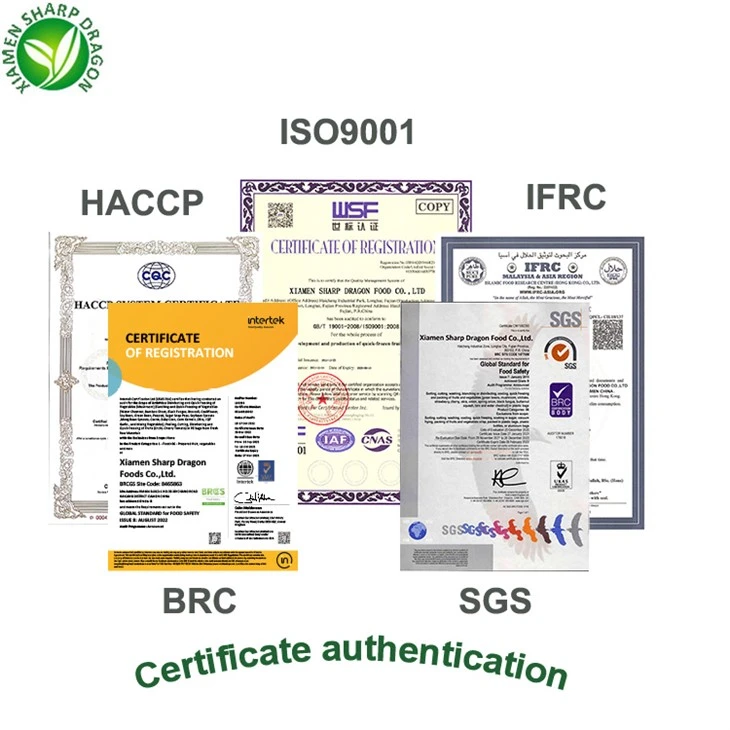
The supplier file begins with the product and facility. Review specification, process flow, HACCP-related controls, certificate holder and scope, microbiological limits, pesticide-residue plan, allergen and cross-contact statement, packaging declaration, traceability, shelf-life basis, COA format and destination documents. Request controlled certificate copies when your approval system requires them.
Before shipment, connect the lot code to production records, test results, inspection, carton marks and loading documents. Sample across the lot rather than from one convenient carton. Record the frozen inspection and application result. Release only after deviations are resolved against the signed acceptance rule.
Frequently Asked Questions
1. Are cherry tomatoes more nutritious than regular tomatoes?
The result depends on cultivar, maturity, serving weight and data source. A general USDA tomato record is a useful reference, but it does not prove a universal cherry-tomato advantage. Use a matching database entry or product-specific analysis for label decisions.
2. Does lycopene in cherry tomatoes prevent cancer?
No prevention or treatment conclusion is justified from the food alone. NCI reports inconsistent human findings and insufficient evidence to know whether lycopene prevents or treats prostate cancer. Keep composition statements separate from medical claims.
3. Can frozen cherry tomatoes replace fresh ones in salads?
Usually not when crisp fresh texture is essential. Freezing damages cell structure and thawing releases liquid. A cooked salad component or marinated application may work, but approve it through a realistic thaw and hold test.
4. Which format gives the lowest cost?
Compare cost per usable cooked kilogram, not invoice price alone. Whole fruit may command a presentation premium. Halves or dice may reduce cooking and labor. Include purge, broken material, line yield, pack, energy and rejects.
5. What gives XMSD enough information for a useful quotation?
Send form, dimensions, color and maturity target, Brix or acidity need, defect limits, cooked application, pack, quantity, destination, delivery window, certification scope, test criteria and document list. An approved reference or clear product photos reduce interpretation risk.
Procurement conclusion: Cherry tomatoes contribute useful nutrients and red color, but the frozen purchasing decision is controlled by format, maturity, cut, thaw drip, cooked performance, safety status and usable yield. Replace broad benefit claims with a product-specific test plan.
To compare an order, send XMSD your frozen cherry tomato requirement. We will review feasible format, specification, pack, factory scope, testing and shipment details for the current project.
References
- USDA FoodData Central. Tomatoes, red, ripe, raw, year round average, FDC ID 170457.
- National Cancer Institute. Prostate Cancer, Nutrition, and Dietary Supplements: Lycopene evidence and limitations.
- UC Davis Postharvest Research and Extension Center. Tomato produce facts, temperature, humidity, ripening and chilling injury.
- U.S. Food and Drug Administration. Retail Food Protection: Storage and Handling of Tomatoes.
- U.S. Food and Drug Administration. Food safety tips, including survival of Listeria at freezer temperatures.
- Dermesonlouoglou and colleagues. Osmodehydrofreezing of Tomatoes: Optimization of Osmotic Dehydration and Shelf Life Modeling. Foods. 2024;13(17):2744.