



Frozen Tomato Cube
Frozen cherry tomato, often called the small tomato in the north of China, is officially known as the small tomato fruit. It is an annual herb and belongs to the genus Solanaceae. Plants can grow up to 2 meters at the highest. It has the effects of stimulating thirst, strengthening stomach and digestion, clearing away heat and detoxifying, cooling blood and calming the liver, nourishing blood and increasing appetite.
Product Details

1. General Information
| Item | Specification / Description |
|---|---|
| Product Name | Frozen Tomatoes / IQF Tomatoes (Whole, Diced, Sliced, Puree Blocks) |
| Botanical Name | Solanum lycopersicum |
| Product Category | IQF Frozen Vegetable / Industrial Ingredient |
| Supplier | XMSD |
| Production Model | Direct factory supply + seasonal contracted farms + global distribution |
2. Available Product Forms (High-Resolution Classification)
| Form Type | Specifications (mm) | Typical Applications |
|---|---|---|
| Whole Tomatoes | 30–60mm / 60–90mm | Sauces, roasting, ready meals |
| Diced Tomatoes | 10×10 / 12×12 / 15×15 / 20×20 mm | Pizza, pasta sauces, soups |
| Sliced Tomatoes | 5–8 mm thickness | Sandwiches, salads, HORECA |
| Tomato Wedges | 1/4, 1/6, 1/8 cuts | Frozen meals, roasting |
| Cherry Tomatoes (IQF) | 10–25 mm | Salads, premium HORECA |
| Peeled Tomatoes | Whole / diced | High-end sauce manufacturers |
| Seedless Tomato Cuts | Customized | Juice extraction, purees |
| Crushed Tomatoes | Coarse/fine | B2B sauces, paste blending |
| Tomato Puree Blocks | 500 g / 1 kg | Beverage factories, OEM |
| Semi-Roasted Tomatoes | Low-moisture | Western restaurants |
| B-grade Tomatoes | Industrial-grade | Ketchup, paste, puree factories |


3. Raw Material & Origin
| Region | Key Advantages |
|---|---|
| Xinjiang | High brix, strong color, thick flesh |
| Gansu | Large-scale industrial tomato belt |
| Inner Mongolia | Stable supply & cool climate |
| Shandong | Flexible supply, short lead time |
All farms operate under GAP guidelines.
4. Physical & Chemical Characteristics
| Attribute | Specification |
|---|---|
| Appearance | Uniform bright red, fresh texture after thawing |
| Flavor | Natural tomato aroma, balanced acidity |
| Brix | 4 – 7° (variety dependent) |
| Acidity | 0.30 – 0.50% |
| pH | 3.8 – 4.5 |
| Moisture | 85 – 95% |
| Seeds | Present unless seedless specified |
| Metal Detection | Fe ≤ 1.5 mm / SS ≤ 2.5 mm |

5. Microbiological Standards
| Test Item | Standard |
|---|---|
| TPC | ≤ 10,000 CFU/g |
| Coliforms | ≤ 100 CFU/g |
| E. coli | Negative |
| Yeast & Mold | ≤ 300 CFU/g |
| Salmonella | Negative |
| Listeria monocytogenes | Negative |
6. Heavy Metal & Pesticide Standards
| Heavy Metal | Limit |
|---|---|
| Lead (Pb) | ≤ 0.1 mg/kg |
| Cadmium (Cd) | ≤ 0.05 mg/kg |
| Mercury (Hg) | ≤ 0.02 mg/kg |
| Arsenic (As) | ≤ 0.1 mg/kg |
Pesticide Residue:
Fully compliant with EU MRL, Korea, and Japan import standards
Full COA + third-party test reports available
7. Processing Flowchart (XMSD Standard)
Raw tomato selection
Sorting & washing
(Optional) steam peeling
Cutting / slicing/dicing
Blanching (optional)
IQF freezing
Metal detection
Manual inspection
Packing & palletizing
Cold storage at -18°C
8. Packaging Options
| Pack Type | Specifications |
|---|---|
| Bulk Pack | 10 kg carton / 1×10kg bag |
| Foodservice Pack | 1 kg / 2.5 kg / 5 kg |
| Retail Pack | 300 g / 400 g / 500 g / 1 kg |
| Puree Blocks | 500 g / 1 kg |
| OEM / Private Label | Available |
Inner: PE food-grade bag
Outer: Export carton
9. Storage & Shelf Life
| Condition | Specification |
|---|---|
| Storage Temperature | ≤ -18°C |
| Shelf Life | 24 months |
| Transport | Reefer container -18°C constant |
10. Supply Chain & Lead Time
| Item | Details |
|---|---|
| Annual Supply Capacity | 3,000 – 5,000 MT/year |
| Lead Time | 10–15 days after order confirmation |
| Loading Ports | Xiamen, Qingdao, Tianjin |
| MOQ | Full container (can mix multiple tomato forms) |
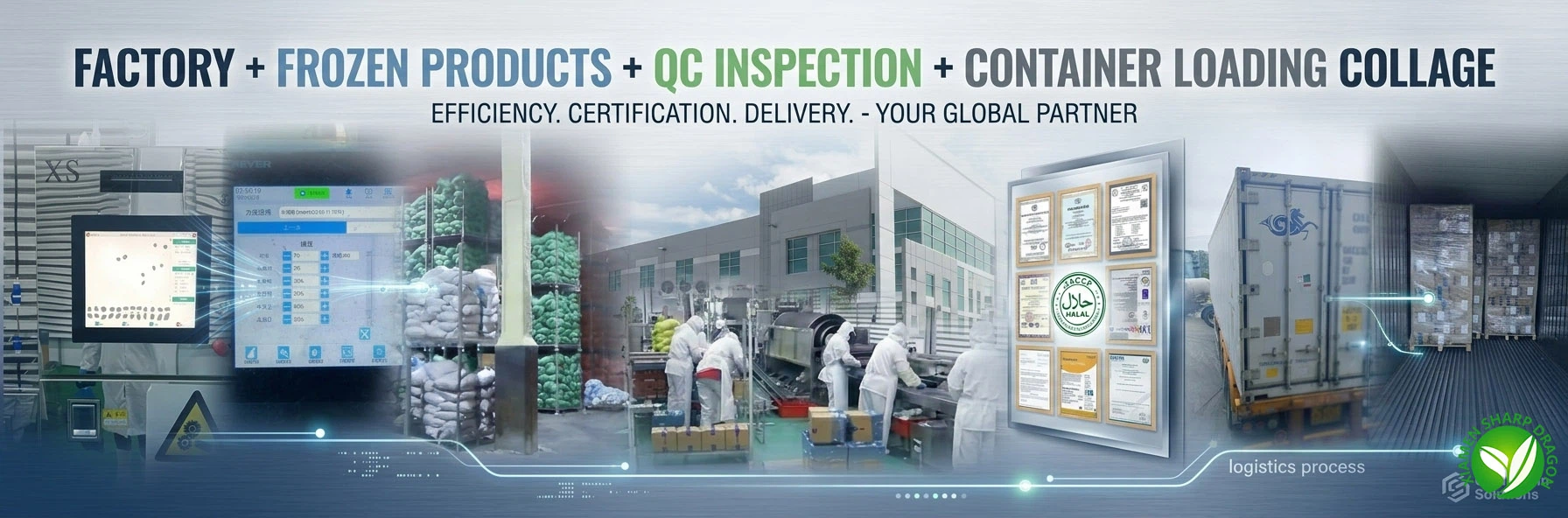
11. Certifications
HACCP
ISO22000 / ISO9001
BRC
KOSHER
ECO CERT (for organic tomato products)

12. Applications (For B2B Buyers)
1) Food Processing Factories
• Pasta & pizza sauces
• Ketchup, puree, paste
• Ready meals & soups
• Salsa, dips, spreads
2) Beverage & Juice Plants
• Tomato juice
• Blended vegetable drinks
• Functional beverages
3) HORECA / Foodservice Chains
• Pizzerias
• Western restaurants
• Fast-food chains
• Cafeterias & catering
4) Retail & Supermarket
• IQF vegetable category
• Ready-to-cook mixes
• Private label frozen tomatoes
5) Industrial Ingredient Users
• Seasoning factories
• Canned food plants
• Snack seasoning sauce base
13. Why Choose XMSD (For Professional B2B Buyers)
Industrial-grade supply capability
Large-scale farms + factory + cold storage = stable all-year supply
Zero-risk quality assurance
Full traceability / metal detection / microbiological & MRL compliance
Flexible product customization
Forms, sizes, seed level, roasting degree, puree thickness-fully customizable
Global export experience
Exported to EU, USA, Canada, Korea, Japan, Middle East, Australia etc.
Strategic supplier for food factories
Stable volumes, strong peak-season capacity, and fast lead times

Why Choose Us
The Nutrition of Cherry Tomato
The small tomato is a kind of vegetable, and it can also be said to be a fruit. Even though the cherries are a type of tomato, the nutritional value is higher than that of the usual tomatoes. The research material pointed out that the dry matter content of tomatoes is 7.7%, the sugar content is 1.8-5%, the acid is 0.15%-0.75%, the protein is 0.7%-1.3%, the vitamin is 0.6%-1.4%, and the mineral is 0.5-0.8%. The gum is 1.3% to 2.5%, and the vitamin C is 25 to 45 mg/100 g. It also contains other carotenes, vitamin B1, B2, tomato pigment, and so on.
FAQs: Frozen Tomato Cubes
1. Q: What tomato variety do you use, and how does it affect flavor and texture?
A: We use specific industrial varieties bred for processing, such as plum or Roma types. These varieties offer a higher solids content, richer flavor, firmer flesh, and fewer seeds compared to slicing tomatoes, ensuring consistent quality, vibrant color, and optimal performance in cooked applications.
2. Q: What is the dice size and processing method? Are the cubes IQF?
A: Our standard is a consistent 10mm (3/8") cube. The tomatoes are washed, cored, diced, and then Individually Quick Frozen (IQF), ensuring a free-flowing product. This prevents clumping and allows for easy, portion-controlled dispensing directly from the bag.
3. Q: How do you preserve the fresh tomato flavor and color? Is any additive used?
A: No additives, preservatives, or citric acid are added. The fresh flavor and bright red color are preserved through rapid freezing at peak ripeness, which locks in the natural lycopene and acidity. This delivers a cleaner, fresher taste profile than many canned alternatives.
4. Q: What is the Brix level (sweetness/solids content), and is it consistent?
A: We select and blend tomatoes to maintain a consistent Brix level of 5.0° or higher, ensuring reliable sweetness and rich tomato flavor in every batch. This controlled solids content also leads to less water separation during cooking.
5. Q: Are there any added calcium for firmness, or is the product peeled?
A: Our standard product is unpeeled to retain nutrients and texture, and does not contain added calcium chloride. The natural firmness of the selected varieties, combined with our processing, provides an excellent texture for sauces, salsas, and cooked dishes. Peeled options are available upon request.
6. Q: What certifications do you hold (food safety, quality, ethical)?
A: Our processing facility is BRCGS or SQF certified with stringent HACCP protocols. We can provide products with Kosher and Halal certifications. Full traceability and batch-specific Certificates of Analysis (CoA) are standard.
7. Q: What are the key advantages over canned diced tomatoes?
A: Key advantages include: 1) Superior fresh flavor without a "cooked" or metallic note. 2) No added calcium chloride or preservatives. 3) No liquid brine, resulting in higher tomato yield per weight purchased. 4) More versatile for cold applications (e.g., salsas) due to the fresher taste.
8. Q: How do I use frozen tomato cubes? Is thawing required?
A: No thawing is required. For cooked sauces, soups, or stews, add directly from frozen. For fresh-style applications like salsas or bruschetta, a quick rinse under cold water can remove excess ice crystals while keeping the cubes firm. They cook down beautifully for a rich sauce.
9. Q: What are the cost and operational benefits compared to using fresh tomatoes?
A: Benefits include: 1) Massive labor savings from eliminating washing, coring, and dicing. 2) Dramatically reduced spoilage waste (up to 40-50% of fresh tomatoes can be lost). 3) Consistent year-round price and supply, independent of seasonal fluctuations and weather events. 4) Superior food safety profile through pasteurization during processing.
10. Q: What is the packaging, shelf life, and MOQ?
A: Standard packaging is 5 kg or 10 kg polyethylene bags within master cartons. The shelf life is 24 months at ≤ -18°C / 0°F. Minimum order is typically one 20-foot container, with private label packaging options available for qualified volumes.
Hot Tags: frozen tomato cube suppliers, frozen tomato cube manufacturers, wholesale frozen tomato cube, best frozen tomato cube, sweet orange cherry tomato, sweet bite tomato, frozen cherry tomatoes, cherrytomatoes, ripe cherry tomatoes, sakura cherry tomato
Send Inquiry
