


Chestnut Nutrition Compared with Walnuts: Why Uses Differ
Jun 10, 2020

Chestnuts are unusual among familiar culinary nuts because their composition is dominated by carbohydrate rather than fat. They bring a starchy, mildly sweet character to a dish, while walnuts provide a much more fat-rich ingredient. That difference helps explain why cooked chestnuts can give body to a soup or filling but will not reproduce every function of chopped walnuts in a recipe.
An official food-table comparison makes the contrast concrete. Japan's MEXT database lists 152 kcal, 36.7 g carbohydrate and 0.6 g fat per 100 g of boiled Japanese chestnuts. Its roasted walnut entry lists 713 kcal, 11.7 g carbohydrate and 68.8 g fat on the same edible-weight basis. These are two specified prepared foods, with different moisture contents; they are not measurements of every chestnut or walnut product.
Neither food wins every nutritional comparison. The better choice follows the meal and the ingredient's job. Use chestnuts when their flavor and starchy texture suit the dish, count the portion as part of the complete recipe, and read the ingredients of sweetened preparations. A low fat content in a plain kernel says little about a dessert made with sugar, cream or chocolate.

Compare named foods, not just the word nut
The following values come from MEXT's Japanese food composition database, food numbers 05011 and 05014. Both columns describe 100 g of edible material. The chestnut is boiled Japanese chestnut, Castanea crenata, and the walnut is roasted walnut, Juglans regia. Their preparation states are intentionally named so the comparison remains usable.
| Per 100 g edible food | Boiled Japanese chestnut | Roasted walnut |
|---|---|---|
| Energy | 152 kcal | 713 kcal |
| Carbohydrate | 36.7 g | 11.7 g |
| Fat | 0.6 g | 68.8 g |
| Protein | 3.5 g | 14.6 g |
| Water | 58.4 g | 3.1 g |
| Dietary fiber | 6.6 g | 7.5 g |
The strongest difference is the balance between carbohydrate, fat and water. It would be misleading to call these foods nutritionally interchangeable simply because both are commonly grouped as nuts. Equally, the table is not a controlled experiment in which a single cooking method was applied to two identical starting materials. Species, food form and preparation all belong in the interpretation.
A practical comparison starts with the food you intend to serve. Boiled chestnuts may suit a soft side dish, while roasted walnuts may suit a crisp topping. For that decision, their composition as served is informative. If you want to compare raw nuts specifically, use two appropriate raw-food entries instead of silently changing the names above the columns.
For a packaged ingredient, read the product's own declaration and ingredient list. The Japanese chestnut reference is useful for understanding a prepared chestnut, but it is not a test of Chinese chestnuts, an XMSD shipment or a sweetened commercial puree. Keep that distinction clear when you move from general food knowledge to a purchasing or recipe decision.
What a 30 g comparison tells you
Illustrative example: a recipe writer compares 30 g of each of the two reference foods. The multiplier is 30 divided by 100, or 0.30. The boiled-chestnut estimate is 45.6 kcal, about 11.0 g carbohydrate and 0.18 g fat. The roasted-walnut estimate is 213.9 kcal, about 3.5 g carbohydrate and 20.6 g fat. These calculations use the values above and describe only the named ingredients.
The decision is whether the recipe needs a small starchy component or a fat-rich nut component. The writer weighs the edible amount, checks the preparation state and carries the appropriate ingredient into the full recipe calculation. The result is a transparent comparison. It does not establish that 30 g is a required serving or that the lower-energy option is the better ingredient for every person or dish.
Consider the rest of the recipe before drawing a conclusion. A chestnut topping with added butter and sugar will differ from plain boiled kernels. A small walnut garnish will also differ from a large bowlful. Comparing one food at 30 g and another at 100 g, without saying so, can make a food appear much lighter or heavier than the actual portion warrants.
Higher energy density can be useful when a small garnish is intended to contribute richness. Lower fat can be useful when the recipe needs a starchy base and will obtain fat from another ingredient. Decide what the dish needs before treating either characteristic as an advantage. The comparison supports that decision rather than replacing it.
For repeatable kitchen portions, weigh the edible ingredient after the preparation step used in the recipe. Shell-on purchasing weight is not the amount eaten. Whole kernels also vary in size, so a count of four chestnuts can give a different result from one pack to another. Use a count for appearance where useful, and a weight for the recipe calculation.

Chestnut starch changes its role in a dish
Michigan State University Extension describes chestnuts as much lower in fat than other common nuts and notable for their starch. The University of California, Davis also identifies starch as the main part of chestnut carbohydrate. That composition helps explain the floury character of cooked kernels and their usefulness in dishes that need a soft, substantial ingredient.
A cooked chestnut can be broken into a stuffing, blended into a soup or mashed for a filling. A walnut usually contributes a different combination of bite, flavor and oil. Substituting one for the other changes more than the nutrition calculation. It can alter the thickness of a mixture, the way it handles on a spoon and the contrast between a topping and the food underneath.
We would start a substitution trial by naming the job the original nut performs. Is it there for crunch, recognizable pieces, flavor, or the body of a puree? If crunch is essential, a soft cooked chestnut may be a poor direct replacement even when its taste is welcome. If a smooth, starchy filling is the objective, chestnut may deserve a separate recipe built around its own behavior.
This is also why chestnuts should not automatically be treated as a low-carbohydrate alternative to other nuts. The reference food contains substantially more carbohydrate than the walnut entry. If you are following a specific carbohydrate plan, use the information and portion for the actual product within that plan. The word nut is not a reliable shortcut for its macronutrient profile.
Sweetness and added sugar are different questions
Chestnuts can taste sweet without sugar being added. UC Davis describes the conversion of starch to sugars during postharvest handling, while MSU Extension discusses how curing changes sweetness. This helps explain why two chestnut lots can taste different. It does not let you determine the sugar content of a pack by tasting a kernel.
For a purchased chestnut preparation, inspect the ingredient list. Plain cooked kernels, chestnuts packed in syrup and sweetened chestnut cream have different formulas. A dessert product may use chestnut alongside sugar, water, dairy ingredients or other additions. Its name and picture are useful for recognizing the flavor, but the ingredient statement describes what is actually present.
The carbohydrate value in the comparison table is not a sugar value. Do not label the entire amount as sugar, and do not assume that no added sugar means no carbohydrate. The separate questions are how much carbohydrate the food contains, whether sugar has been added, and how much of that product goes into the finished dish.
When developing a sweet filling, record added sugar independently from the chestnut ingredient. If the chestnut base changes from plain puree to a sweetened preparation, reassess the formula before adding the previous sugar quantity. Otherwise a seemingly simple ingredient substitution can change sweetness and consistency together, leaving the kitchen unsure which adjustment caused the result.

Vitamins and minerals belong to the whole food picture
Chestnuts contribute more than starch. The MEXT boiled Japanese chestnut entry includes dietary fiber, potassium and vitamin C, among other nutrients. Those contributions are useful to recognize, but they should not be turned into claims that chestnuts outperform every fruit or serve as a tonic. Different foods provide different combinations, and the amount eaten affects the contribution.
The NIH Office of Dietary Supplements notes that prolonged storage and cooking can reduce vitamin C in foods. A raw reference therefore should not be treated as a guaranteed amount after every preparation method. At the same time, cooking does not mean that a chestnut has lost all nutritional value. Look at the relevant prepared-food information and the complete meal rather than using an all-or-nothing description.
For most recipe choices, the first practical distinctions are the amount of chestnut, its moisture and whether other ingredients have been added. A long list of vitamins with no serving basis can obscure those decisions. If a specific nutrient declaration is needed for a commercial product, use evidence and calculations appropriate to that finished product and its market.
Avoid choosing a chestnut ingredient to treat a symptom or correct a diagnosed deficiency without clinical guidance. Its role in a menu can be described accurately through flavor, texture and food composition. That is enough to support a useful food choice without claiming an effect on circulation, immunity or another medical outcome.
Boiling, roasting and pureeing give different results
Preparation changes the food being compared. Roasting can remove water, while boiling and draining produce another moisture balance. A value per 100 g therefore reflects the material in that 100 g, including water. A change in concentration is not automatically a gain or loss of the same proportion of nutrients from the original batch.
For a puree, account for the liquid added during blending and any material removed by sieving. A thick plain puree and a thin soup may start from the same kernels but contain very different amounts of chestnut in each spoonful. Write the formula by weight and keep the final batch weight so the ingredient contribution remains understandable.
The frozen chestnut nutrition and processing guide covers the effects of product identity and processing in more detail. For a direct chestnut-versus-walnut substitution, focus first on the finished texture and the composition of the whole recipe. That is where the difference is most likely to affect the person preparing or eating the dish.
With purchased frozen kernels, follow their preparation instructions and establish whether they are raw, partly cooked or ready for the intended use. A frozen kernel's appearance does not answer that question. Use the specified handling method in the trial so that texture, portion and recipe observations refer to the same process you intend to use later.
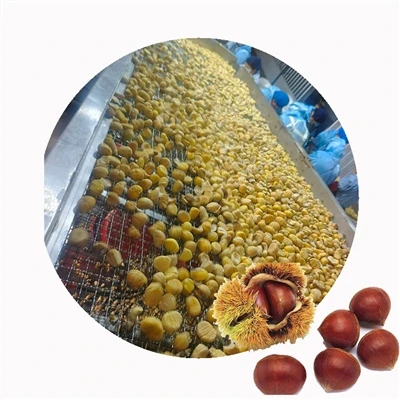
A filling trial is more useful than a one-for-one promise
Illustrative example: a bakery is developing a savory filling containing 2 kg of cooked chestnut puree in a 10 kg finished batch. Chestnut puree represents 20% of the batch by weight. If the mixture is evenly distributed, a 100 g filling portion contains 20 g of that puree. This is a hypothetical formula, not an XMSD product specification or an estimate of nutrient content.
The bakery is considering chestnut in place of a chopped-walnut component. Its decision is whether to preserve the original texture or develop a softer filling. It first makes a small trial and records the puree's ingredient statement, added liquid, final batch weight and texture after the intended bake. The result tells the bakery whether to revise the recipe, rather than assuming the same mass of two different nuts will behave alike.
If the puree itself contains added water or sugar, the 20 g contribution is puree, not automatically 20 g of plain chestnut kernel. This distinction matters when the recipe is described or calculated. Keep the nested formula available so that the finished filling can be traced back to its actual ingredients, including any changes made by the puree supplier.
For food-processing applications, we would compare the filling after the complete process. A mixture that is easy to pipe when freshly made may become too firm or too loose after the intended heating and cooling steps. Record the result at the stage when the product is used, not just at the first mixing bowl.
Match kernel form to the appearance you need
The choice among frozen chestnut kernels and prepared forms should follow the dish. Whole kernels are useful when the chestnut needs to remain recognizable. Broken pieces may suit a mixture or puree if they meet the other quality requirements. A higher whole-kernel proportion is not automatically worth more to a process that will grind every piece.
We would check residual skin, damaged areas and breakage alongside the required form. Skin fragments can affect appearance and the smoothness of a puree. Large and small pieces may also reach the intended texture differently during preparation. Evaluate these features in the actual recipe, using a sample large enough to show the range of pieces in the product.
Do not infer composition from color alone. A pale or golden kernel is a visual observation, not a reading of its sugar, starch or vitamin content. Use photographs to understand the supplied form and a physical sample to assess handling. Use the appropriate product information for ingredients and nutrition.

Storage differs from a dry nut-bowl habit
Fresh chestnuts contain substantial moisture. UC Davis treats them as a perishable crop that needs prompt cooling and protection from excessive drying and decay. They should not be left out indefinitely simply because familiar dry nuts are sometimes kept in a bowl. Follow suitable fresh-chestnut storage advice and inspect the condition before preparation.
Commercial frozen chestnuts belong in their specified frozen storage conditions. Preserve the product identification and preparation directions after opening. A frozen product and a shelf-stable roasted snack can look similar in a photograph but have different processing, packaging and storage requirements. Read the exact pack rather than borrowing the instructions from another chestnut product.
For a kitchen that opens only part of a pack, consider how the remaining ingredient will be protected and identified. Our frozen packaging information supports that discussion. A workable pack should fit the amount used in a batch and the available storage routine, as well as protecting the kernels during handling.

Food identity and allergy still matter
Edible chestnuts belong to the genus Castanea. Horse chestnut is a different plant, and NCCIH warns that its raw seeds and other parts are unsafe to consume. Buy food-grade edible chestnuts from an identifiable source. Do not use a nutrition comparison or a photograph to decide that an unfamiliar foraged seed is safe to eat.
A chestnut substitution also should not be presented as automatically suitable for someone with a nut allergy. Individual allergies and the complete ingredient and handling information matter. Follow the person's medical advice and the kitchen's allergy procedure. The FDA advises avoiding a suspected trigger and obtaining medical evaluation when symptoms suggest food allergy; severe breathing or throat symptoms need emergency attention.
For a commercial recipe change, update the ingredient information and review relevant allergen requirements for the destination. Removing walnut from a formula does not by itself establish an allergen-free claim. Check the replacement ingredient and the preparation environment before making any assurance to the person who will eat the food.
Keep the carton and inner-pack identification available when the ingredient is transferred to a kitchen container. If a question arises about the replacement, the exact product and lot details make it easier to retrieve the relevant ingredient information instead of relying on a staff member's recollection of the delivery.

If you are considering chestnuts for a commercial filling, side dish or puree, send us the required form and recipe use. Include the preparation state, packing needs and ingredient-information requirements so we can review a suitable product option with you.